Rectangular Shank Ejector Blades
Ejector blades with full rectangular shank (not round) that provides maximum anti-rotation capability. Prevents torsional loading on the blade.
Products
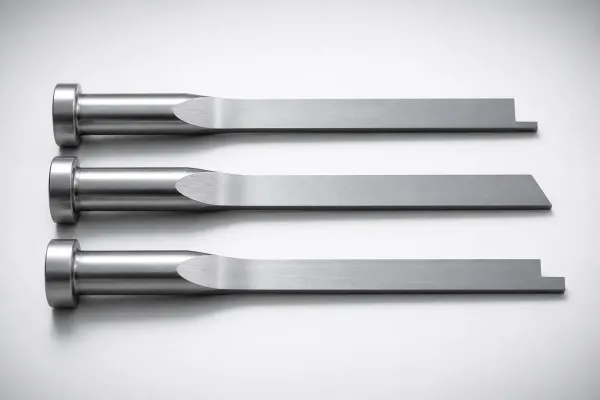
JIS Standard SKH51 Steel Precision Rectangular Ejector Pins with Tip Processed | Configurable Features
JIS Standard SKH51 steel Precision Rectangular Ejector Pins with Tip Processed for stable ejection in precision molds. Tip trimming improves control a
View Details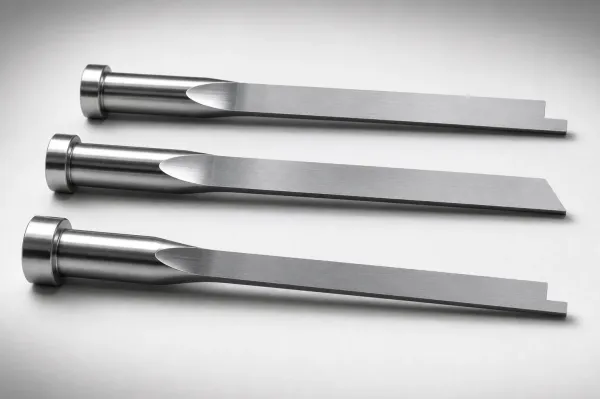
JIS Standard SKH51 Steel Tip-Processed Rectangular Ejector Pins | Configurable Dimensions
JIS Standard SKH51 steel tip-processed rectangular ejector pins for stable ejection. Built-in tip processing with controlled tolerances for mold assem
View Details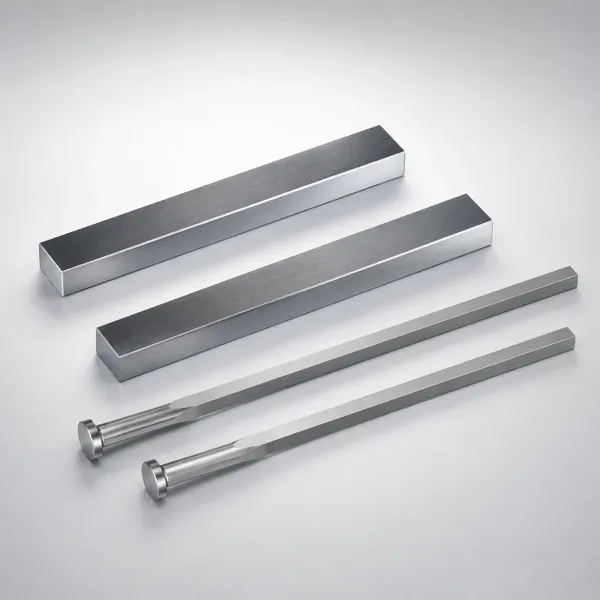
JIS Standard SKH51 Steel Rectangular Ejector Pins with Engraving | Precision Mold Parts
Rectangular ejector pins with engraving in SKH51 steel for precision mold assembly. Stable rectangular guidance supports accurate ejection and alignme
View Details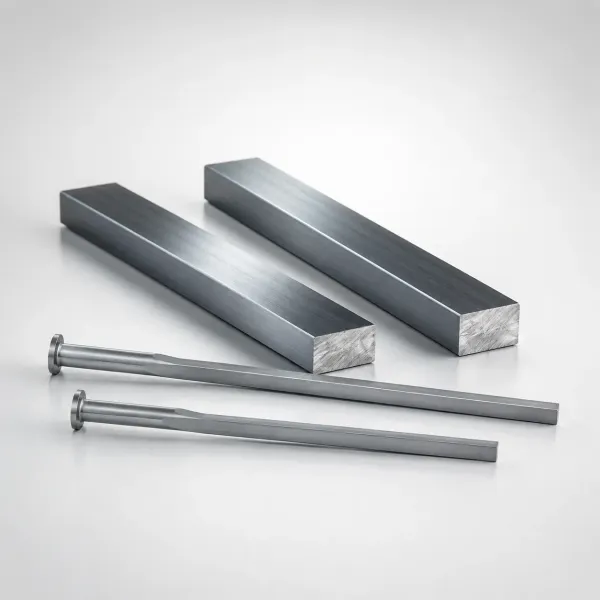
M2 Steel Rectangular Ejector Pins with Engraving - Flat-Head | Tapered Trimming | Made for Precision Molds
M2 Steel Rectangular Ejector Pins with Engraving for precise mold part ejection. Built with flat head T=4 mm and controlled trimming for stable fit. R
View Details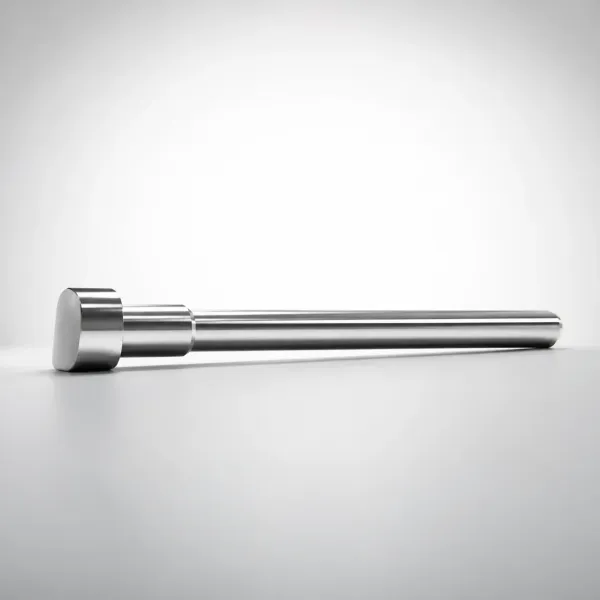
JIS Standard SKH51 Steel D-Shaped Ejector Pins | Precision Stepped Option
JIS Standard D-shaped ejector pins for mold ejection (SKH51 steel). Features precision tolerances, durable hardened construction and stepped shoulder
View Details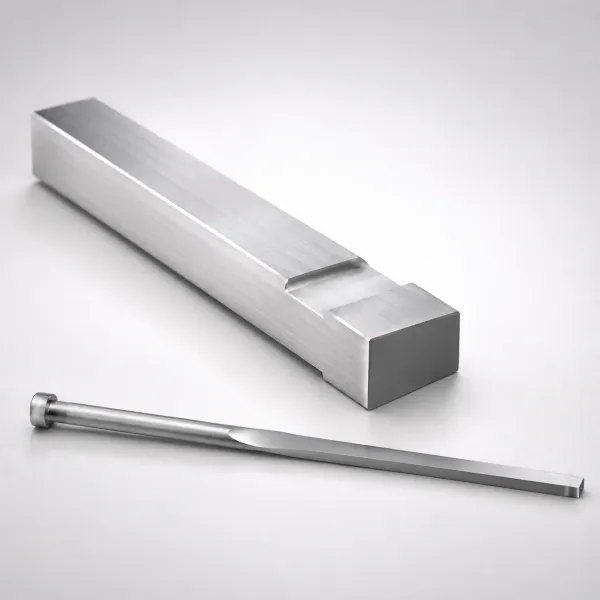
JIS Standard M2 Steel Gas Release Rectangular Ejector Pins | Reliable Mold Exhaust | Fast Supply
JIS Standard M2 Steel Gas Release Rectangular Ejector Pins with gas vent design for efficient mold exhaust and stable ejection accuracy. Request a quo
View Details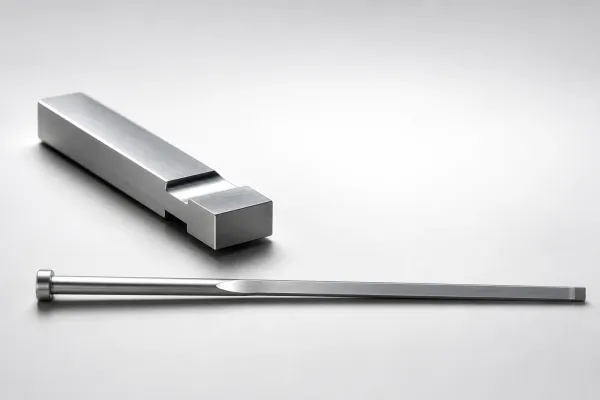
JIS Standard SKH51 Steel Gas Release Rectangular Ejector Pins | Flat Sides | Fast Assembly
Gas Release Rectangular Ejector Pins for precision mold ejection (SKH51 steel) with flat sides and JIS manufacture. Request a quote.
View Details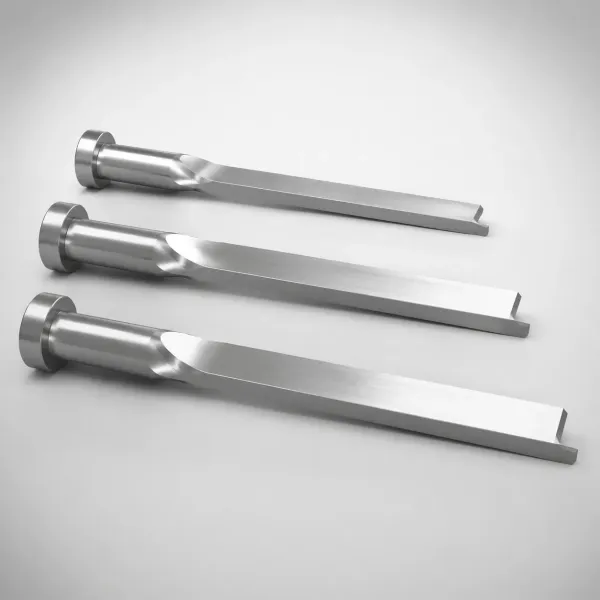
JIS Standard M2 Steel Precision Rectangular Ejector Pins with Tip Processed | Fast Delivery
JIS Standard M2 Steel Precision Rectangular Ejector Pins with Tip Processed for stable rectangular guidance in dies and molds. Request a quote.
View Details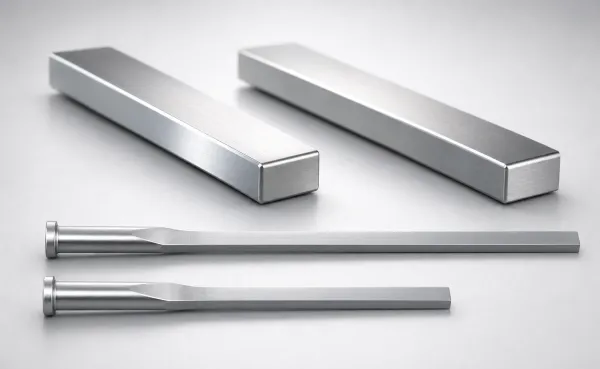
M2 Steel Precision R-Chamfered Rectangular Ejector Pins with Engraving | SKH51 Hardened Steel
M2 steel R-Chamfered rectangular ejector pins with engraving for clean, traceable mold part identification. Hardened SKH51 steel construction.
View Details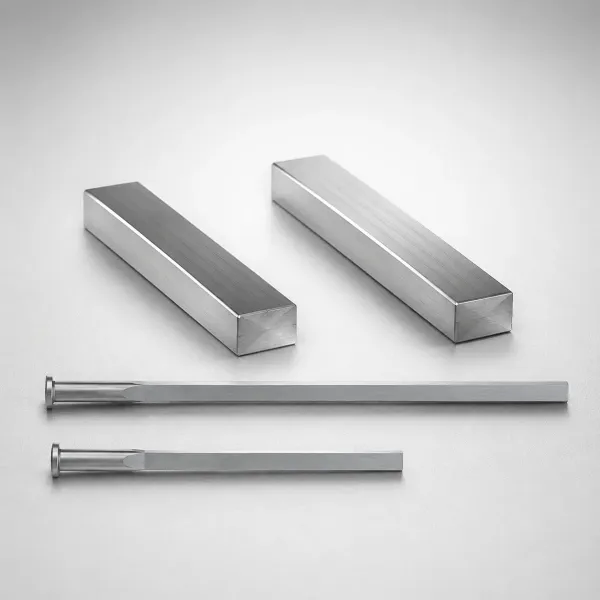
M2 Steel R-Chamfered Rectangular Ejector Pins with Engraving | JIS Fit for Mold Bases
M2 Steel R-Chamfered Rectangular Ejector Pins with Engraving for mold build-ups. Stable trimming and engraved identification support traceability. Req
View DetailsRectangular Shank vs Round Shank: When Anti-Rotation Is Critical
| Factor | Round Shank (standard) | Rectangular Shank |
|---|---|---|
| Bore type | Round bore + anti-rotation feature | Full rectangular bore |
| Anti-rotation | Depends on added feature (flat, keyway) | Inherent — rectangular bore prevents any rotation |
| Torsional load resistance | Limited by anti-rotation feature | Maximum — full cross-section engagement |
Choose rectangular shank when: High ejection forces cause blade rotation in round bores, or when the part geometry subjects the blade to torsional loads during ejection.
Rectangular Shank vs Round Shank: Which Do You Need?
Rectangular shank provides absolute anti-rotation at higher plate machining cost. Confirm you need it:
✅ Rectangular shank is the right choice if:
- Blade orientation must be maintained within ±0.5° over millions of cycles
- The ejection feature has asymmetric geometry (e.g., text, logos, directional ribs)
- Set screw anti-rotation has failed in the past due to vibration loosening
- The mold runs 24/7 production where maintenance access for set screw adjustment is limited
🔄 Use round shank (with set screw) if:
- The rib is symmetrical → rotation orientation doesn't matter
- Plate machining budget is limited → round bore takes 5 min vs 30-45 min for rectangular EDM
- You need easy blade replacement → round bores accept standard pins as emergency substitutes
- Consider D-Type Blades as a middle ground → round bore + flat ejection face
Decision rule: Rectangular shank is justified when anti-rotation failure would cause part defects or mold damage. For 80% of rib ejection applications, round shank with a set screw is adequate and much cheaper to implement.
About
Rectangular shank ejector blades extend the rectangular cross-section through the entire shank length (not just the blade tip). This provides maximum anti-rotation resistance, as the full rectangular bore engagement prevents any rotational movement under load. Standard round-shank blades rely on added anti-rotation features (flats, keyways) which can fail under high torsional loads.
Application Scenarios
High-Force Blade Ejection
Large automotive parts with deep, wide ribs requiring high ejection force that subjects blades to torsional loading.
Why it fits: Full rectangular shank engagement eliminates rotation risk under high force. No separate anti-rotation feature to maintain.
Recommended: Rectangular shank H13 for high-force PA+GF applications
Frequently Asked Questions
What is the advantage of rectangular shank vs round shank on ejector blades?+
Does rectangular shank prevent blade rotation in the plate?+
What plate bore geometry is required for rectangular shank?+
Engineering Resources
Need a Custom Quote?
Specify your requirements — we respond within 1 business day.