Large Mold & Die Casting Components
Products
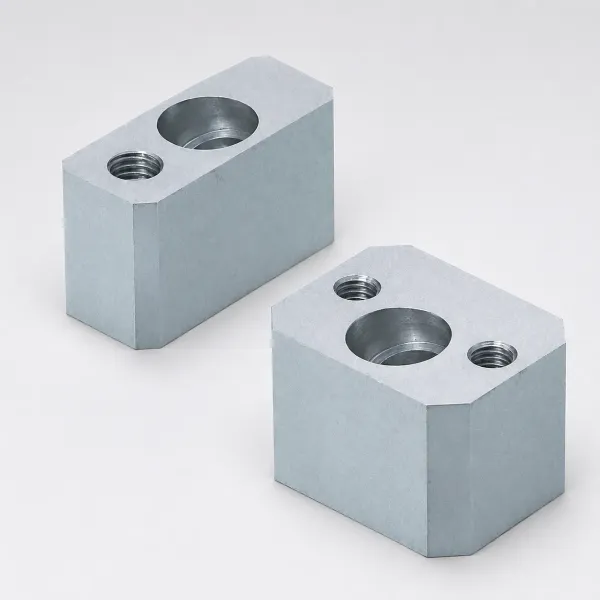
Components for Large Mold
Guiding and ejection components for injection molds over 800 mm — rectangular ejector pins, leader pins, leader bushings, return pins, and gas vent inserts.
View 7 Sub-Categories →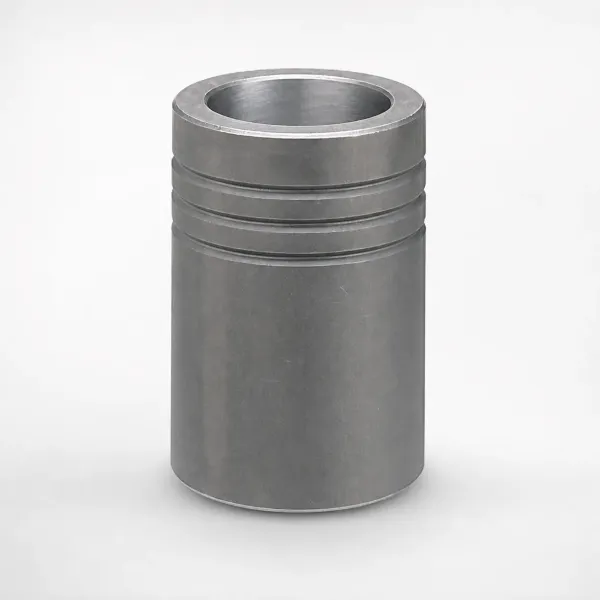
Die Casting for Large Molds
H13 nitrided steel components for aluminum, zinc, and magnesium die casting — ejector pins, core pins, ejector sleeves, cooling units, trimming pins, and date marks.
View 7 Sub-Categories →Which Branch Do You Need?
Large mold components split into two branches based on your casting process. The material requirements, operating temperatures, and failure modes are fundamentally different.
Large Injection Mold
Your mold base exceeds 800 × 800 mm and uses thermoplastic resins (ABS, PA, PC, POM). You need guiding components that handle thermal expansion across large plate spans and ejection components rated for long strokes.
Why specialized parts: Standard press-fit leader pins pull out when plates expand 0.1–0.3 mm across 800+ mm spans. Bolt-fixed leader pins maintain alignment under differential thermal expansion of ΔT = 40–80°C.
Large Mold Components →Die Casting Mold
Your mold injects molten aluminum (660°C), zinc (420°C), or magnesium (650°C) at high pressure (70–140 MPa). Standard injection mold pins erode within 5,000–10,000 shots.
Why specialized parts: Die casting requires H13 (SKD61) steel with nitriding surface treatment (900–1,100 HV) to resist thermal fatigue cracking, aluminum soldering, and erosive wear from high-velocity molten metal.
Die Casting Components →Decision rule: Choose the injection mold branch for thermoplastic resins at mold temperatures below 300°C. Choose die casting for molten metal injection at 420–710°C. For detailed guidance, see our How to Select Die Casting Mold Components — Complete Guide.
Is Your Mold "Large Enough" for These Components?
| Parameter | Standard Mold | Large Mold Threshold |
|---|---|---|
| Mold Base Size | ≤ 500 × 500 mm | > 800 × 800 mm |
| Clamping Force | ≤ 500 tonnes | > 1,000 tonnes |
| Ejection Stroke | ≤ 100 mm | > 150 mm |
| Leader Pin Diameter | Ø20–Ø40 mm | Ø50–Ø80 mm |
| Part Weight | ≤ 2 kg | > 5 kg |
Not sure if your mold qualifies? The 500-tonne / 800 mm threshold represents a shift in infrastructure requirements — overhead cranes exceeding 100 tonnes, reinforced floor loading, and specialized utilities. For a detailed classification framework, see our Mold Size Classification Guide.
Large Mold vs Standard Components — Key Differences
| Feature | Standard Components | Large Mold Components |
|---|---|---|
| Leader Pin Retention | Press-fit (interference fit) | Bolt-fixing (mechanical retention) |
| Ejector Pin Material | M2 (SKH51), various grades | H13 (SKD61) with nitriding |
| Maximum Pin Length | Up to 300 mm standard | Up to 600 mm+ configurable |
| Cooling Design | Drilled channels + baffles | Dedicated cooling units (core/cover) |
| Ejector Plate Guidance | Simple bushings | Bolt-fixed leader pins + return pins |
| Cost Level | $ | $$–$$$ |
Key insight: The transition from standard to large mold components is not just about size — it is driven by the physics of thermal expansion, ejection force, and plate deflection. A 1,000 mm steel plate expands ~0.12 mm per 10°C rise, enough to pull out press-fit leader pins. For a detailed engineering comparison, see our Large Mold vs Standard Mold Components — What Changes Above 800mm?
About Large Mold & Die Casting Components
Large mold and die casting components serve two distinct but overlapping markets. Large injection molds (automotive bumpers, appliance housings, logistics pallets) require oversized guiding systems that maintain alignment under significant thermal expansion — a 1,000 mm steel plate expands approximately 0.12 mm per 10°C temperature increase. Die casting molds for aluminum, zinc, and magnesium alloys operate at metal temperatures of 420–710°C and injection pressures of 70–140 MPa, demanding H13 nitrided steel components that resist erosion, thermal fatigue cracking, and molten metal soldering.
All components in this cluster are manufactured to JIS and DIN dimensional standards, ensuring drop-in compatibility with existing mold bases from major suppliers. H13 steel components are vacuum heat-treated to 44–48 HRC and ion-nitrided to a surface hardness of 900–1,100 HV with a compound layer depth of 0.05–0.15 mm.
Frequently Asked Questions
What qualifies as a "large mold"? What are the size and tonnage thresholds?+
What is the difference between large mold components and standard injection mold parts?+
Are die casting mold components compatible with injection mold bases?+
What minimum order quantity do you offer for large mold components?+
Engineering Resources
Large Mold vs Standard Mold Components — What Changes Above 800mm?
Detailed comparison of material, retention, and cooling differences when mold base size exceeds 800 mm.
Large Mold vs Standard Mold Components — What Changes Above 800mm?
Detailed comparison of material, retention, and cooling differences when mold base size exceeds 800 mm.
How to Select Die Casting Mold Components — Complete Guide
Step-by-step guide covering ejector pins, core pins, cooling, and trimming systems for aluminum, zinc, and magnesium die casting.
When to Switch to Large Mold Components — Mold Size Classification Guide
Industry thresholds for small, medium, and large molds — how to determine when standard components are no longer sufficient.
Need Large Mold or Die Casting Components?
Tell us your mold base size, casting process (injection or die casting), and operating temperature. We will recommend the right components and quote within 24 hours.