Power Tool Injection Mold Manufacturing
Specialized tooling for heavy-duty professional power tools. Engineered for high-glass-fill (PA66+GF50) abrasion resistance, extreme drop-impact durability, and vibration fatigue mitigation.
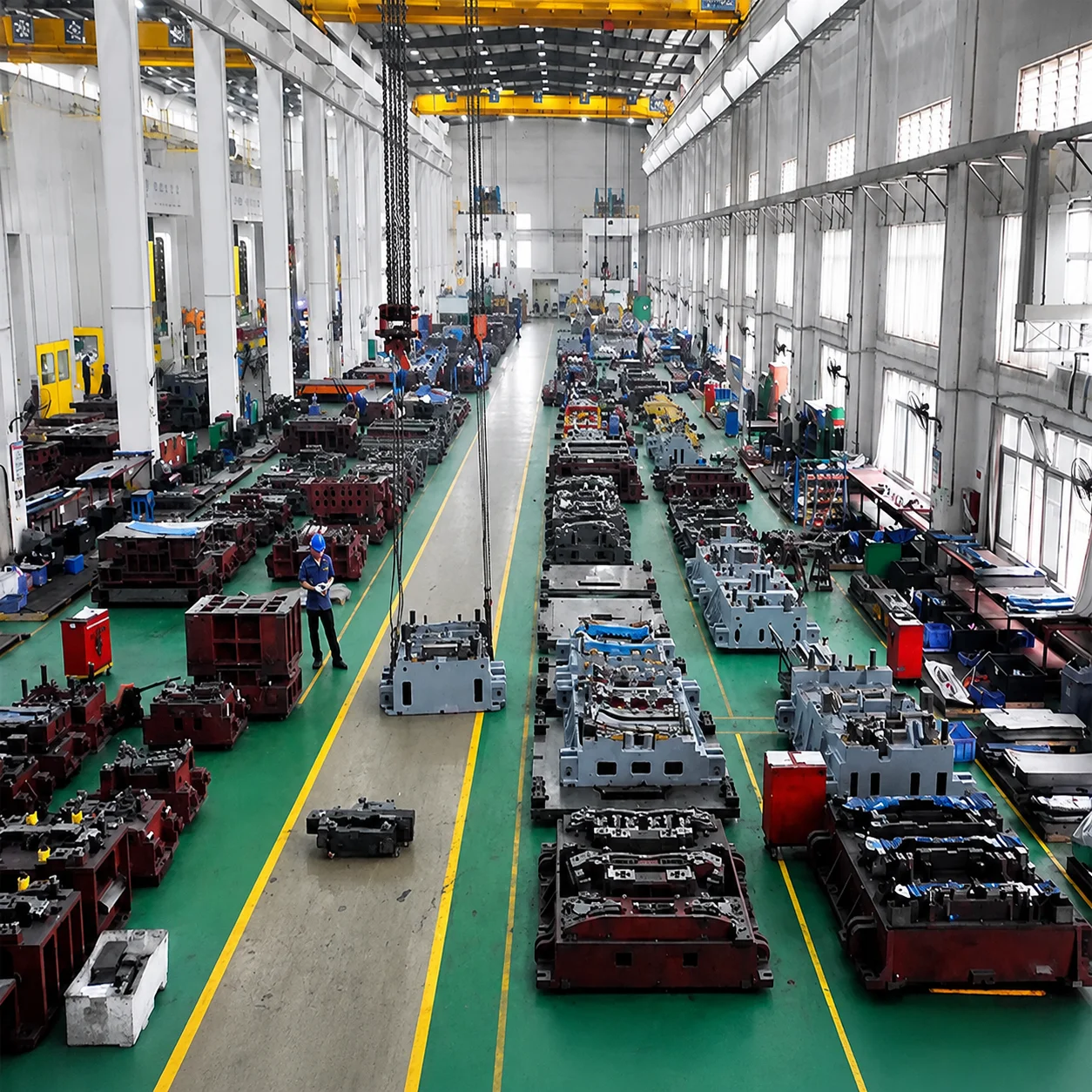
PA66+GF50 Impact & Vibration Engineering
High glass fiber loading (up to 50%) is essential for power tool durability but presents severe molding challenges. Our specialized tooling approach ensures dimensional stability and extended mold life:
Hardened Tool Steel Base
50% glass fiber demands ultra-hardened tool steel. We utilize premium 1.2343 ESR steel (52-54 HRC; compare alloys in our injection mold steel selection guide), resisting the aggressive abrasive wear of filled polyamides.
Fiber Orientation Control
Through predictive Moldflow analysis, we optimize gate placement to align glass fibers along primary load paths, maximizing impact strength and vibration fatigue resistance.
Anisotropic Shrinkage Compensation
Glass fibers restrict shrinkage in the flow direction. Learn how fiber orientation and gate placement counteract distortion in our guide on how to control warpage in glass-filled nylon.
Conformal Crystallization Control
PA66 is highly crystalline. We utilize deep-hole drilled conformal cooling to ensure uniform temperature gradients, preventing warpage and localized brittle zones.
⚠️ Wear Protection: PA66+GF50 gate orifices wear up to 3x faster than unfilled resins. We integrate interchangeable tungsten carbide inserts at all high-velocity flow gates to extend mold life.
Power Tool Component Applications
We manufacture precision tooling for the most demanding professional-grade power tool applications:
Cordless Drill Clamshell Housing
Molded in PA66+GF50. Requires exceptional concentricity (±0.02mm) for gearbox alignment and multiple strengthening ribs to prevent torque-induced twisting.
SDS-Plus Rotary Hammer Body
Engineered to withstand intense high-frequency hammering vibrations. Tooling incorporates hardened replaceable inserts at primary stress points to combat severe glass fiber erosion.
Angle Grinder Motor Housing
Designed with complex ventilation louvers requiring precise slider actions. Dimensional stability is critical to maintain narrow air gaps between the stator and rotor at high RPMs.
Reciprocating Saw Body + 2K Grip
Multi-shot tooling integrating a rigid PA66 housing with a soft-touch TPU/TPE overmolded handle. Learn how to achieve permanent chemical bonding in our technical guide on ensuring strong elastomer-to-substrate bond strength.
Material & Durability Specifications
Selecting the right glass-filled polymer and matching it with the appropriate tool steel is critical for power tool longevity:
| Performance Metric | PA66 + 30% GF | PA66 + 50% GF (Heavy Duty) | PA6 + 30% GF |
|---|---|---|---|
| Tensile Strength | 180 - 190 MPa | 230 - 250 MPa | 140 - 160 MPa |
| Flexural Modulus | 8,500 - 9,500 MPa | 15,000 - 16,500 MPa | 7,000 - 8,000 MPa |
| HDT (at 1.8 MPa) | 250°C | 255°C | 210°C |
| Vibration Fatigue Cycles | ~500K Cycles | ~800K+ Cycles | ~300K Cycles |
| Recommended Tool Steel | H13 / 1.2344 (48-50 HRC) | 1.2343 ESR (52-54 HRC) + Carbide Inserts | H13 / 1.2344 (48-50 HRC) (or P20 for prototype <10K shots) |
For a deeper breakdown of tensile performance and thermal deflection across nylon grades, explore our PA6 vs PA66 vs PA6-GF30 material comparison.
Prototyping to Mass Production Journey
Our structured 5-step engineering process ensures a smooth transition from CAD design to reliable global export production within a 35-50 day timeline:
Material Characterization
Analyzing the specific resin grade (e.g., impact-modified PA66+GF50) to determine exact shrinkage rates, flow characteristics, and mechanical limits before any steel is cut.
DFM & Drop/Vibration Analysis
Evaluating parting lines and optimizing mold filling helps eliminate costly tooling rework—see how DFM analysis cuts mold modification costs.
Hardened Steel Machining
Precision CNC milling and wire EDM (±0.002mm tolerance) of premium 1.2343 ESR hardened tool steel to withstand extreme glass-fiber abrasion.
T1 Sampling & Impact Testing
In-house T1 trial molding followed by rigorous dimensional CMM inspection and physical drop/impact testing to validate housing structural integrity.
Export with Spare Inserts
Preparing molds for global shipment in ISPM-15 crates, complete with comprehensive documentation and serialized spare parts kits for high-wear components.
Related Engineering Guides & Technical Resources
How to Design Power Tool Housing Molds for Impact and Vibration Resistance
IEC 62841 2m drop-test resistance, PA66+GF50 fiber alignment, and 2K soft-touch TPU grip integration.
PA6+GF30 vs PA66+GF50: Material Selection for Power Tool Components
Impact toughness vs high-temperature stiffness, anisotropic shrinkage, and venting for motor housings.
TPE vs TPU Overmolding: Which Elastomer for Your Product
Shore 15A-90A TPE vs 60A-75D TPU: Taber abrasion, chemical bonding, and shut-off pre-crush steel design.
Frequently Asked Questions
How do you engineer PA66+GF50 housings for vibration fatigue resistance?+
Can you mold ergonomic soft-touch grips using 2K or overmolding?+
What impact testing standards do your power tool molds meet?+
Accelerate Your Power Tool Development
Upload your power tool housing CAD files for a free DFM review, moldflow analysis, and tooling quotation within 24 hours.