Tooling & Fixture Accessories
Precision locating pins, clamping blocks, support elements, and toggle clamps for CNC machining, welding fixtures, inspection gauges, and injection mold tooling. European standard and JIS/DIN/NAAMS compliant components available.
Product Categories
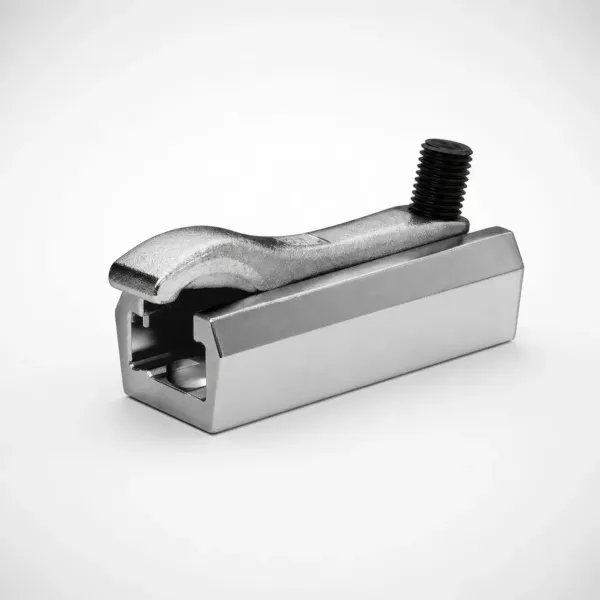
Locating Pins & Bushings
Over 580 precision locating pins, height adjusting pins, jig & drill bushings, and welding fixture pins. DIN, JIS, and NAAMS standards.
Browse 584 Products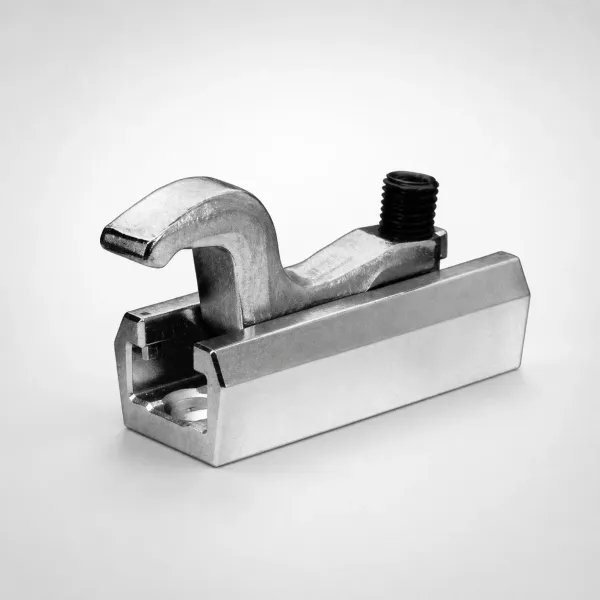
Clamping Blocks
European standard power clamps and spacer blocks in C45 steel and aluminum bronze. Flat, gooseneck, and high-profile designs (Z1–Z7).
View 7 Products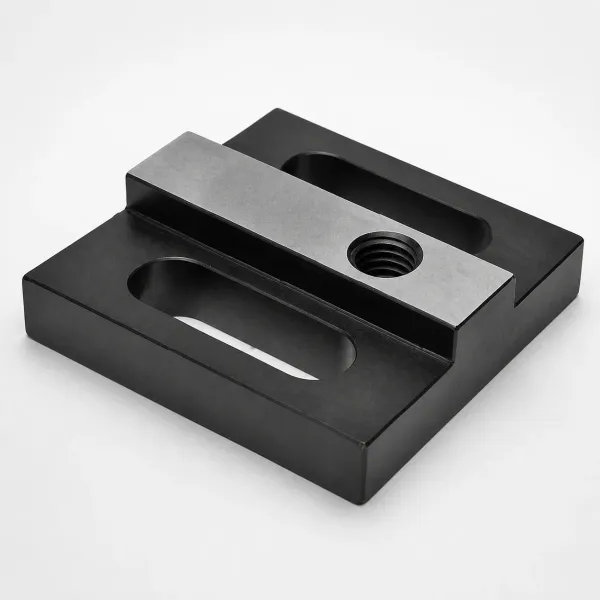
Support Blocks
Hardened tool steel support elements (58 HRC, 1.2162) for precision fixture alignment and workpiece elevation.
View Product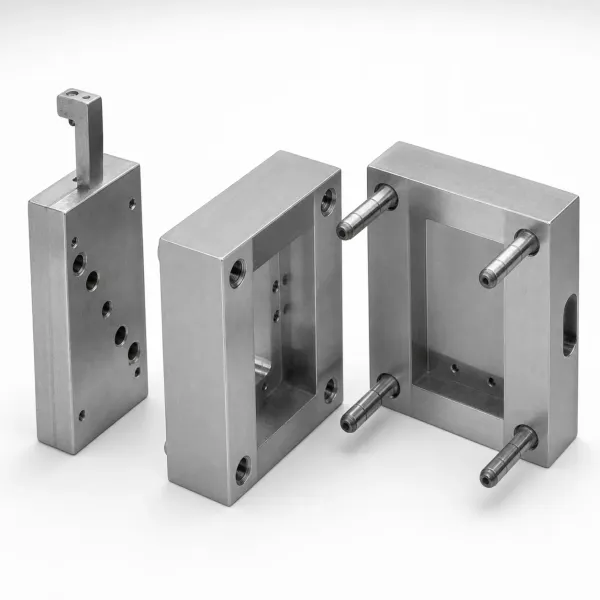
Toggle Clamps
European standard quick-change mould systems and toggle clamps for rapid die changeover in injection molding and stamping (K1–K5).
View 5 ProductsTooling Accessories vs. Mold Standard Parts — Which Do You Need?
Tooling & fixture accessories and mold standard parts serve different roles in manufacturing. Understanding the boundary helps you find the right components faster:
| Category | Tooling & Fixture Accessories | Mold Standard Parts |
|---|---|---|
| Primary Use | Workholding, positioning, and clamping of workpieces on machine tables | Internal components of injection molds and die-casting molds |
| Typical Components | Locating pins, drill bushings, clamps, support blocks, toggle clamps | Core pins, ejector pins, guide bushings, sprue bushings, date marks |
| Installation Context | CNC fixtures, welding jigs, inspection gauges, assembly stations | Inside the mold cavity, between mold plates |
| Standards | DIN, JIS, NAAMS, European standard | JIS, DIN/ISO, MISUMI proprietary |
| Replacement Frequency | Moderate — replaced when worn or when fixtures are redesigned | Higher — ejector pins, core pins wear with each mold cycle |
Deep dive: For a full comparison, read What Is the Difference Between Tooling Accessories and Mold Standard Parts?
About Tooling & Fixture Accessories
Tooling and fixture accessories are the backbone of repeatable, high-precision manufacturing. Whether you're building a CNC machining fixture, a robotic welding jig, or an inspection gauge, every setup relies on locating pins for positioning, clamps for holding force, and support elements for stability.
Our range spans 584 locating pins and bushings in DIN/JIS/NAAMS standards, 7 European standard clamping blocks in C45 and aluminum bronze, hardened support blocks, and 5 quick-change toggle clamp systems. All components are available with no minimum order quantity and ship with full dimensional documentation.
Learn more: See our How to Choose the Right Fixture Components for Your Workholding Application for a step-by-step selection framework.
Engineering Resources
Industry Applications
CNC Machining Fixtures
CNC machining fixtures require precise workpiece positioning and rigid clamping to maintain part accuracy across thousands of cutting cycles.
Robotic Welding Jigs
Automated welding cells demand fixture components that resist spatter adhesion and thermal cycling while maintaining ±0.1 mm positioning accuracy.
Inspection & Gauging
Quality inspection fixtures need the highest positional accuracy and long-term dimensional stability to serve as reliable measurement references.
Frequently Asked Questions
What are tooling and fixture accessories, and why are they critical in manufacturing?+
How do I choose between locating, clamping, and support components for my workholding setup?+
What is the difference between tooling accessories and mold standard parts?+
Can I get custom-machined fixture components with short lead times?+
What is the difference between a jig and a fixture?+
When should I use modular fixturing instead of custom fixtures?+
Need Fixture Components?
Send us your fixture drawing or parts list. We'll recommend the right locating, clamping, and support components for your application.