Custom Plastic Injection Mold Manufacturing China
From rapid prototype bridge tooling to 1M+ shot SPI Class 101 production molds. We engineer precision single & multi-cavity injection molds with scientific molding process validation, conformal cooling, and 100% drawing fidelity.
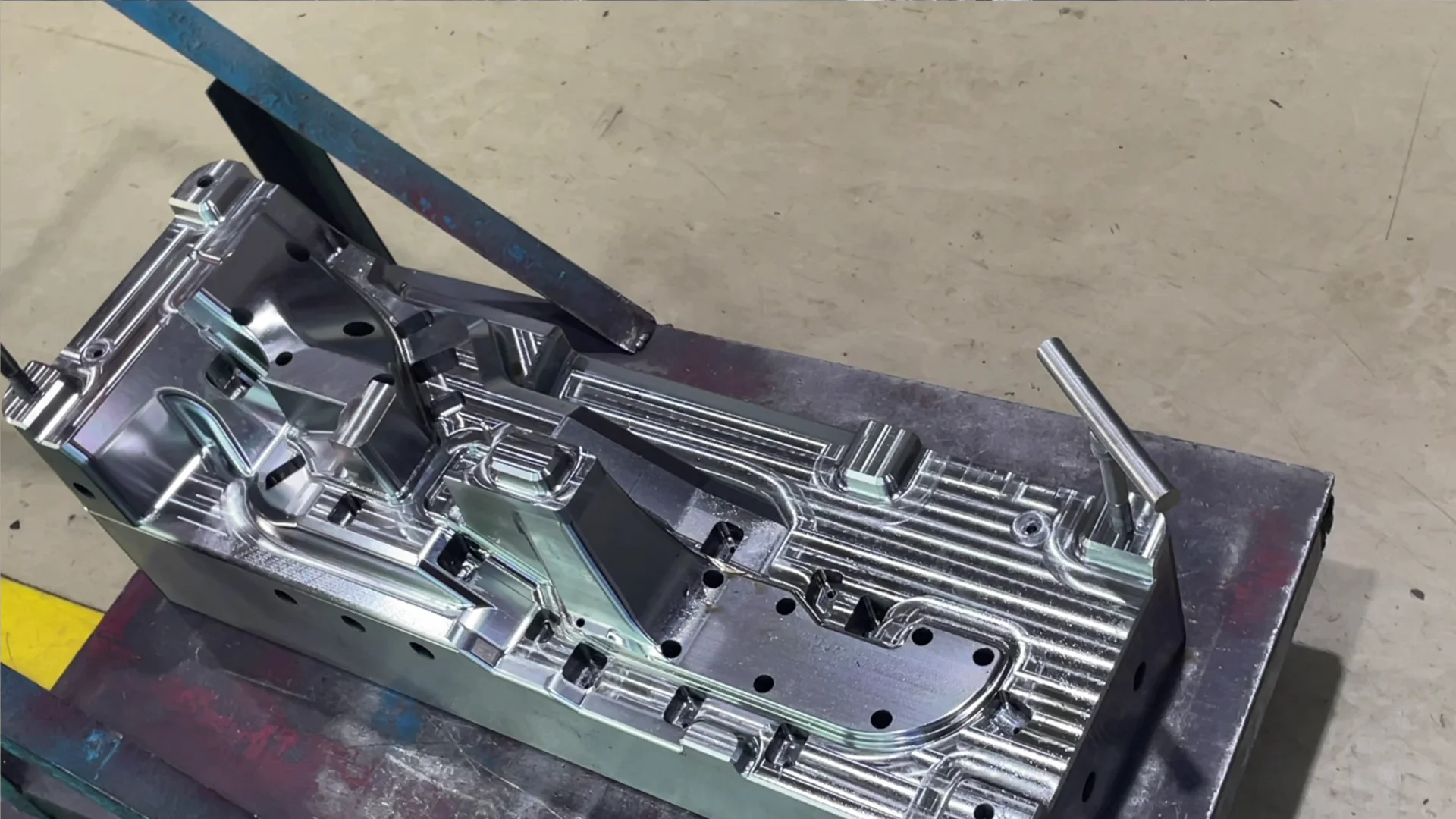
Prototype vs. Production Tooling (SPI Classification Matrix)
Selecting the correct mold class under the SPI mold classification system balances upfront tooling investment against required part volumes and cosmetic standards.
| SPI Mold Class | Target Production Volume | Core & Cavity Steel Grade | Tooling Architecture & Cycle Life |
|---|---|---|---|
| SPI Class 101 | 1,000,000+ Cycles (Mass Production) | Hardened S136, H13, M390 (52-54 HRC) | Fully guided ejector plates, hardened wear plates, temperature-controlled cooling, Class-A export standard |
| SPI Class 102 | Up to 1,000,000 Cycles (Medium-High Volume) | Pre-hardened or hardened 420 SS, 1.2344 (48-52 HRC) | Guided ejection, hardened slide mechanisms, optimized baffles/bubblers |
| SPI Class 103 | Up to 500,000 Cycles (Medium Volume) | P20, 718H, NAK80 (28-32 HRC) | Standard mold base, standard cooling lines, suitable for non-abrasive resins |
| SPI Class 104 | Up to 100,000 Cycles (Low Volume Bridge) | P20 or Aluminum 7075-T6 | Simplified ejection, manual inserts permitted, rapid 15-day build |
| SPI Class 105 | < 10,000 Cycles (Prototype Test) | Aluminum 7075 or Cast Alloy | Prototype evaluation, design fit check, lowest initial tooling investment |
💡 Tool Steel Selection Insight: When selecting tool steels for abrasive filled plastics (e.g. PA66+GF30 or PBT+GF40), standard P20 steel will experience severe gate erosion within 50,000 shots. We recommend hardened ESR grades. Read our comprehensive injection mold steel selection guide comparing S136, NAK80, H13, and P20 properties.
Material Properties & SPI Surface Finish Standards
We process the full range of engineering thermoplastics and high-performance polymers, matching draft angles and shrinkage factors to strict SPI surface finish standards.
1. Engineering Resin Shrinkage & Processing Matrix
| Thermoplastic Resin | Volumetric Shrinkage | Melt Temp Window | Key Mechanical Properties | Recommended Mold Steel |
|---|---|---|---|---|
| ABS (Acrylonitrile Butadiene Styrene) | 0.4% – 0.7% | 210°C – 240°C | High impact strength, dimensional stability, excellent electroplating capability | P20 / 718H / NAK80 |
| PC (Polycarbonate) | 0.5% – 0.7% | 280°C – 310°C | Optical clarity (89% transmittance), superior impact, high heat deflection (135°C) | S136 ESR (52 HRC) Mirror |
| PA66 + 30%GF (Nylon Glass-Filled) | 0.3% – 0.8% (Anisotropic) | 275°C – 295°C | High tensile strength (175 MPa), extreme rigidity, high continuous use temp | Hardened H13 / 1.2343 ESR |
| LCP (Liquid Crystal Polymer) | 0.1% – 0.3% (Flow direction) | 330°C – 360°C | Ultra-thin wall (0.15mm) flowability, 260°C SMT reflow resistance, zero flash | Bohler M390 / Tungsten Carbide |
| POM (Polyoxymethylene / Delrin) | 1.8% – 2.2% | 190°C – 215°C | High fatigue resistance, low coefficient of friction, high wear resistance | S136 Corrosion-Resistant |
2. SPI Surface Finish Classification
| SPI Grade | Finishing Method | Surface Roughness (Ra) | Minimum Required Draft Angle | Visual Appearance |
|---|---|---|---|---|
| SPI A-1 / A-2 (Diamond Buff) | #3 / #6 Diamond Buff Paste | Ra 0.012 – 0.05 µm | 0.5° – 1.0° | Optical mirror gloss, transparent lenses, piano-black |
| SPI B-1 / B-2 (Paper Polish) | 600 / 400 Grit Silicon Carbide Paper | Ra 0.05 – 0.10 µm | 1.0° | Semi-gloss, hides minor toolmarks, smooth matte |
| SPI C-1 / C-2 (Stone Grit) | 600 / 400 Grit Finishing Stone | Ra 0.20 – 0.45 µm | 1.0° – 1.5° | Standard non-cosmetic industrial finish |
| SPI D-1 / D-2 (Dry Blast Texture) | Glass Bead / Aluminum Oxide Blast | Ra 0.80 – 3.20 µm | 1.5° + 1.0° per 0.025mm texture depth | Matte textured, anti-glare, scratch-resistant grip |
Scientific Injection Molding & Decoupled Process QA
We apply decoupled molding principles during trial runs (T0/T1) to establish a wide, repeatable processing window before shipping the mold.
Stage 1: Viscosity Rheology Study
Rheology curve logging across 10 injection velocity steps to identify the stable shear-thinning plateau, preventing shear burning.
Stage 2: Dynamic Cavity Balance
Short-shot progression audits and Moldflow filling simulation ensure all cavity fill percentages remain balanced within ±1.5% at 95% volumetric transfer.
Stage 3: Gate Freeze & Pack Curve
Selecting appropriate gate styles (see our guide on injection mold gate types) and logging hold time curves locks gate seal time to eliminate sink marks.
Stage 4: Statistical CMM FAI Verification
Zeiss bridge CMM measurement mapping 100% of ballooned drawing dimensions with capability index CPK >1.67.
🔥 Runner System Evaluation: Comparing manifold economics? Read our comprehensive comparison on hot runner vs cold runner molds to calculate resin scrap reduction and cycle time payback.
Target Industries & Specialized Tooling Solutions
Explore specialized tooling categories engineered for unique mechanical, optical, and environmental specifications:
🔌 Precision Connector Tooling →
0.35mm micro pitch, high-temperature LCP resin, sub-micron tungsten carbide core pins.
🏠 Home Appliance Tooling →
Up to 25-ton molds, RHCM steam dynamic high-gloss mirror finishes, sequential valve gates.
🔄 Insert & Overmolding Tooling →
Pre-embedded metal terminal encapsulation, soft-touch TPE overmolding, IP68 waterproofing.
🎨 Two-Shot (2K) Multi-Material →
Rotary table dual-injection molds for seamless multi-color cosmetics and integrated elastomeric seals.
Secondary Operations & Turnkey Box-Build Assembly
We offer complete turnkey post-molding finishing, decoration, and modular sub-assembly services under ISO cleanroom environments:
| Secondary Process | Technical Capability & Equipment | Application & Value Deliverable |
|---|---|---|
| Ultrasonic Plastic Welding | Herrmann 20kHz / 35kHz Ultrasonic Welders | Hermetic sealing of waterproof sensor housings and acoustic speaker enclosures |
| Thermal Heat Staking | Multi-point temperature-controlled servo heat staking | Permanent retention of threaded brass inserts, PCB boards, and stamped lead frames |
| Pad Printing & Silk Screening | 1 to 5-Color Automatic Tampo Pad Printers | High-durability solvent-resistant logos, instructional icons, and graduation markings |
| Laser Etching & Serial Marking | Fiber & UV Cold Laser Marking Systems | High-contrast 2D QR traceability barcodes, UDI medical identifiers, and serialized tracking |
| Cleanroom Box-Build Assembly | Class 100,000 Cleanroom Assembly Lines | Complete product sub-assembly, seal testing, blister packaging, and retail-ready boxing |
Related Engineering Guides & Technical Resources
Hot Runner vs Cold Runner Molds: The Complete Selection Guide
Compare upfront tooling cost, cycle time reductions, material scrap calculations, and ROI payback models.
How to Choose Injection Mold Steel: S136, NAK80, H13, P20 Compared
Core hardness, corrosion resistance, mirror polishability (SPI A-1), and machining cost comparison for production tooling.
How to Choose the Right Gate Type for Your Injection Mold
Submarine, pin-point, edge, fan, and valve gates compared for cosmetic vestige, shear stress, and automated degating.
Frequently Asked Questions
How many shots can a hardened steel injection mold last?+
What is the difference between a cold runner and a hot runner mold?+
Do you guarantee mold life and provide free tooling maintenance for in-house production?+
Request a Custom Injection Mold Quotation
Upload your 3D CAD files (STEP, IGES, X_T) for a complimentary DFM analysis report and precision tooling quotation within 24 hours.