High-Cavitation & Multi-Cavity Injection Mold Manufacturing
Engineered high-output tooling from 4 up to 128 cavities for high-volume consumer, packaging, medical, and connector applications. Featuring naturally balanced hot runner manifolds, sub-micron cavity interchangeability, and sub-second cycle optimization.
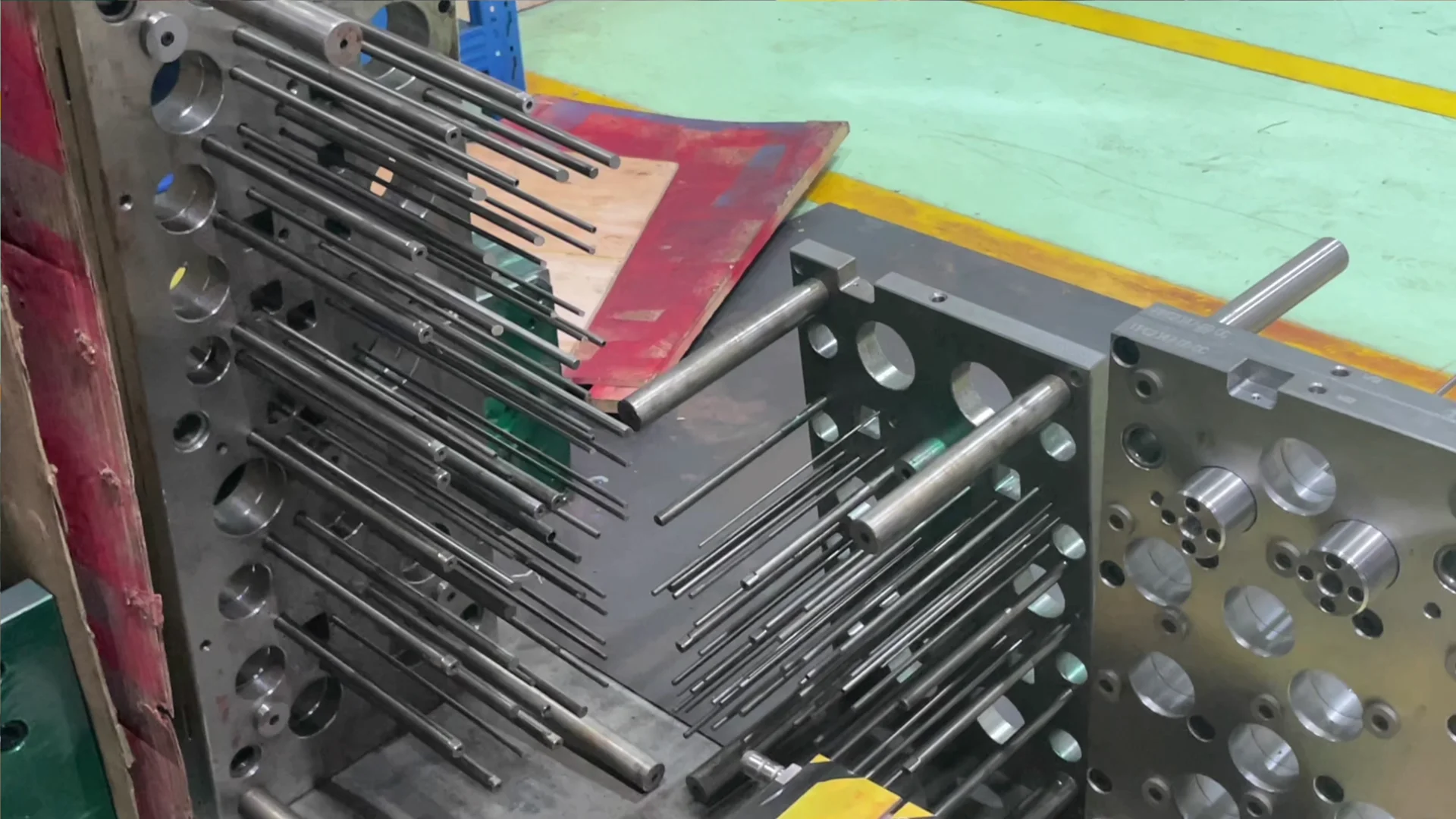
Family Mold vs. Symmetrical Multi-Cavity Tooling Matrix
Choosing the right cavitation strategy directly impacts dimensional consistency, scrap rates, and production scalability:
| Tooling Strategy | Cavity Geometry Layout | Flow Balance & Quality Risk | Best Fit Application & Volume |
|---|---|---|---|
| Symmetrical Multi-Cavity (Identical Parts) | 4, 8, 16, 32, 64, or 128 identical cavity geometries | 100% Naturally Balanced (Zero flash, uniform part weights within ±1.0%) | High-volume mass production (>250K units/yr), medical consumables, micro-terminals, bottle caps |
| Family Mold (Different Mating Parts) | Top cover + bottom cover + buttons in a single mold base | Melt fill imbalance risk; requires artificial flow restrictors and individual valve gate timing | Low-to-medium volume kits (<50K assemblies/yr), color-matched housing sets |
| Stack Mold (Multi-Level Platens) | 2-level or 4-level parting lines on a single machine footprint | Doubles output without increasing required clamping tonnage | Shallow, thin-wall food packaging lids, petri dishes, high-speed automated packaging |
💡 Runner System Gating: High-cavitation molds require optimized thermal gate or valve gate selection. Review our engineering comparison of hot runner vs cold runner molds to evaluate sprue scrap elimination and gating vestige.
Runner Balancing CAE & Scientific Fill Imbalance Control
Shear-induced flow imbalance causes outer cavities to pack out while inner cavities flash. Learn how to balance runners in multi-cavity injection molds using our 4 proven engineering safeguards:
Naturally Balanced Layouts
Equal flow distance, branch diameters, and turn transitions from the sprue/manifold to each cavity ensure identical filling times.
Moldflow Rheology Audits
Simulating non-Newtonian shear thinning and thermal dissipation via Moldflow fill simulation across 16+ drops to eliminate localized hot spots.
Independent Cavity Cooling
Individual water circuits and conformal cooling technology per cavity block maintain surface temperature uniformity within ±1.0°C and slash cycle times.
Drop-In Core Interchangeability
Sub-micron CNC ground datums (±0.0015mm) allow single-cavity insert swaps in under 10 minutes without re-spotting the mold.
Cavitation Economics & Tooling ROI Calculation Model
Calculate the exact cavitation count that minimizes total manufacturing cost per part (tooling amortized cost + press hourly rate). Read our step-by-step framework on how to determine cavity count for your annual volume requirements:
📊 Optimum Cavitation Formula
Total Cost Per Part = (Tooling Cost / Annual Part Volume) + [(Cycle Time in sec / 3600) × Machine Press Rate / Cavity Count] + Material Cost
High-Volume Multi-Cavity Applications We Serve
High-cavitation tooling engineered for fast cycling, high dimensional repeatability, and continuous 24/7 automated production:
Micro-Pitch Connector Housings
32-cavity precision LCP/PPS connector tooling with sub-micron core pin interchangeability and 100% flash-free shut-off.
Pipette Tips & Luer Lock Fittings
64-cavity medical polypropylene tooling operating in ISO Class 8 cleanrooms with high-speed pneumatic valve gates.
Flip-Top Caps & Tamper Evident Bands
48-cavity in-mold closing flip-top cap molds with unscrewing core mechanisms and high-efficiency conformal cooling.
Wire Harness Retainers & Cable Clips
16-cavity PA66 automotive cable tie tooling with automated robotic degating and optical part separation.
Related Engineering Guides & Technical Resources
How to Determine Cavity Count: Balancing Cost, Cycle Time & Quality
Mathematical formulas balancing press tonnage, annual piece volume, tooling investment, and part cost amortization.
How to Balance Runners in Multi-Cavity Injection Molds
Symmetric geometric layouts, MeltFlipper shear-induced flow balancing, and Moldflow 3D fill time synchronization.
How Conformal Cooling Cuts Injection Mold Cycle Times by 30-50%
3D printed LPBF 1.2709 steel inserts, uniform heat dissipation, cycle time reduction, and warpage control.
Frequently Asked Questions
How do you ensure balanced filling in a multi-cavity mold?+
At what production volume does a multi-cavity mold become cost-effective?+
What is the maximum number of cavities you can design and build?+
Scale Your Production with High-Cavitation Tooling
Upload your 3D CAD parts for a free cavitation ROI analysis, Moldflow runner balance simulation, and comprehensive quote within 24 hours.