Ball-Lock Punches, Dies & Retainers
Complete ball-lock quick-change tooling system for progressive, compound, and transfer dies. Punches lock into retainers with a straight push-in — no setscrews, no wrenches, no alignment errors. Change punches in under 30 seconds per station, cutting die changeover time by 60% or more.
Product Categories
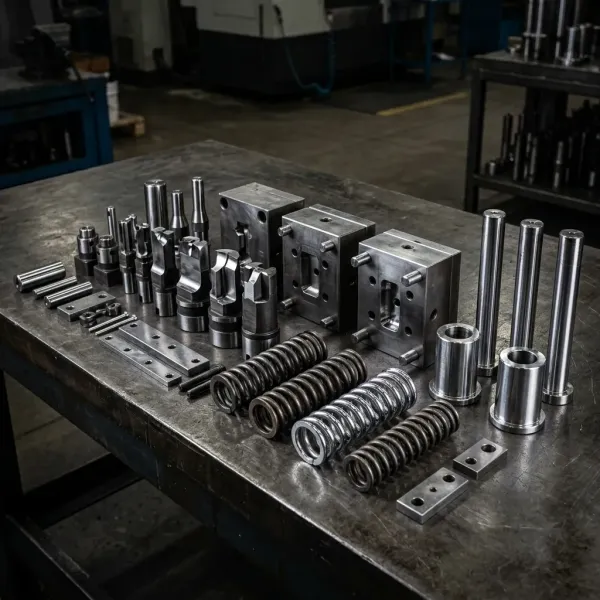
Ball-Lock Punches
Ejector punches, regular punches, point-larger-than-shank, punch blanks, and specialty punches. Heavy Duty and Light Duty in inch and metric with 10+ coating options.
Browse 250+ ProductsBall-Lock Button Dies
Precision-ground die buttons with ball-lock retention. A2 steel and coated variants in metric and inch sizes.
View Die ButtonsBall-Lock Pilot Punches
Strip alignment pilot punches with round tip or tapered tip. Heavy Duty and Light Duty configurations for progressive die applications.
Browse 110+ ProductsBall-Lock Retainers
Quick-change retainers with precision ball-lock mechanism. Available in Heavy Duty, Light Duty, Heavy Load, and Light Load ratings.
View 10+ ProductsScrap Retention Die Buttons
Die buttons with built-in slug retention feature to prevent slug pulling in high-speed stamping operations.
View ProductsBall-Lock Accessories & Tools
Retainer accessories, ball release tools, EZ Fit inserts, and punch pullers for ball-lock system maintenance and operation.
View AccessoriesIs Ball-Lock Worth the Investment?
| Factor | Traditional Setscrew | Ball-Lock System |
|---|---|---|
| Punch change time | 2-5 minutes per punch | 15-30 seconds per punch |
| Tools required | Allen wrench, alignment gauge | Release pin/tool into access hole |
| Alignment after change | Manual re-alignment needed | Self-centering (no adjustment) |
| Risk of misalignment | High (operator-dependent) | Eliminated (mechanical precision) |
| Initial tooling cost | Lower (standard punches) | 15-25% premium |
| Annual downtime savings | Baseline | $5,000-$20,000+ per press (depends on changeover frequency) |
| Payback period | — | 3-6 months for presses with weekly changeovers |
What You Need for a Complete Ball-Lock Setup
A complete ball-lock quick-change system requires these components working together:
- Retainers: Ball-lock retainers installed in the punch plate — one per punch station. Sized to match the punch shank diameter.
- Punches: Ball-lock punches (ejector or regular) with the teardrop groove machined into the shank. Must match retainer bore diameter.
- Die buttons: Ball-lock button dies installed in the die plate — matching the punch geometry.
- Pilot punches: Ball-lock pilot punches for strip alignment in progressive dies — same ball-lock retention as working punches.
- Backing plates: Hardened backing plates behind each retainer to distribute punch impact loads.
- Accessories: Ball release tools, EZ Fit inserts, and punch pullers for maintenance and stuck-punch recovery.
Industry Applications
Ball-lock quick-change systems serve stamping operations across multiple industries:
Automotive Progressive Dies
High-volume progressive dies running 500+ SPM producing brackets, connectors, and structural components from AHSS and stainless steel.
Frequent punch changeovers for multi-part families. Ball-lock cuts changeover from 45 min to under 10 min per die. Ejector punches prevent slug pulling at high speed.
Electrical Connector Stamping
High-precision progressive dies producing terminal pins, socket contacts, and connector housings from copper alloy and phosphor bronze.
Small punch diameters with tight-pitch layouts. Ball-lock provides exact punch positioning on every change — critical when tolerances are ±0.02mm. DLC-coated punches prevent galling on copper.
Job Shop & Contract Stamping
Multi-job environments running different parts on the same presses. 5-10 die changeovers per week across multiple press lines.
Maximizes press uptime in SMED programs. Standardized ball-lock retainers across all dies enable interchangeable punch inventory. Punch blanks allow same-day custom punch fabrication.
Engineering Resources
How Ball-Lock Quick-Change Systems Work
Mechanism, advantages, and design principles of the ball-lock retention system.
Why Ball-Lock Saves 60% Die Change Time — ROI
Cost-benefit analysis, payback period calculation, and downtime savings data.
How to Match Retainers with Punches
Complete compatibility matrix for retainer-punch-die combinations.
How to Match Retainers with Punches
Complete compatibility matrix for retainer-punch-die combinations.
Frequently Asked Questions
What is a ball-lock system and how does it work?+
How much time does ball-lock save compared to setscrew retention?+
What components are needed for a complete ball-lock setup?+
Can I retrofit ball-lock into an existing die set?+
Need Ball-Lock Tooling for Your Press?
Send us your die layout and punch specifications. We will recommend the complete ball-lock system — punches, dies, retainers, and accessories — matched to your requirements.