Locating Pins for Welding
76 welding fixture locating pins for robotic and manual welding cells. Optional anti-spatter coatings — TiN, DLC, ceramic, and AlCrN (PVD). NAAMS compliant configurations for automotive body-in-white applications.
Locating Pins for Welding — 76 Products
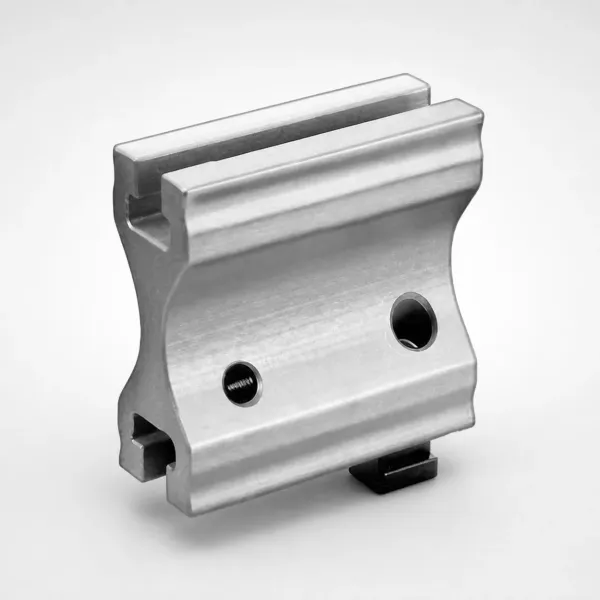
Round Tip Welding Pins
Standard round-tip locating pins for hole-based positioning. Available with TiN, DLC, or ceramic coatings.
View Details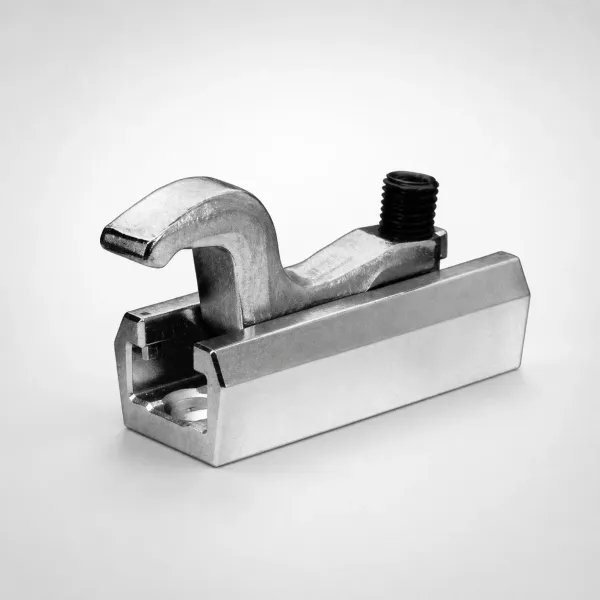
Flat Tip Welding Pins
Flat-tip pins for surface-contact positioning. Larger contact area distributes load and prevents panel dimpling.
View Details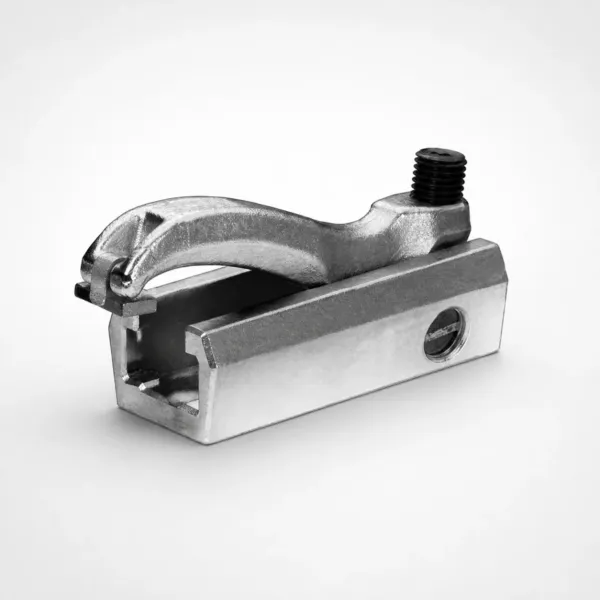
Shouldered Welding Pins
Shouldered design provides positive depth stop. Prevents over-insertion and ensures consistent panel stack-up height.
View DetailsWelding Pin Geometry & Coating Options
Choose geometry based on the part's locating feature, then select coating based on spatter severity:
| Geometry | Contact | Best For |
|---|---|---|
| Round tip | Cylindrical, hole-based | Sheet metal holes, stamped locating features |
| Flat tip | Surface contact (area) | Edge or surface positioning, thin panels |
| Shouldered | Cylindrical + shoulder stop | Multi-layer panel stacks, depth-critical positioning |
Anti-Spatter Coating Comparison
| Coating | Hardness | Spatter Resistance | Electrical Insulation | Best For |
|---|---|---|---|---|
| DLC | ~3,000 HV | Very Good — extremely low friction prevents adhesion | Varies | High-volume robotic MIG/MAG welding |
| Ceramic | ~1,500 HV | Excellent — non-wetting surface repels molten metal | Superior | Resistance/nut welding requiring electrical isolation |
| TiN | ~2,300 HV | Moderate — better than uncoated, less than DLC | Limited | General spatter protection, cost-effective |
| AlCrN (PVD) | ~3,200 HV | Very Good — marketed as WSR (Weld Spatter Resistant) | Limited | New-generation alternative to ceramic sleeves |
Deep dive: Read Why Anti-Spatter Coatings Extend Welding Pin Service Life — TiN, Ceramic, and DLC Compared for coating mechanism details.
Why Anti-Spatter Coatings Extend Welding Pin Life
Weld spatter adheres to uncoated steel pins through a metallic wetting mechanism — molten metal droplets (1,500–1,700°C) contact the pin surface, partially melt the base material, and fuse upon cooling. Anti-spatter coatings break this mechanism in different ways:
- DLC: Creates an extremely low-friction surface (coefficient of friction ~0.1 vs. ~0.5 for steel). Spatter droplets cannot "wet" the surface and bead off before solidifying.
- Ceramic: Acts as a thermal and electrical barrier. The ceramic layer's low thermal conductivity prevents the spatter from reaching the base metal temperature needed for fusion.
- AlCrN (PVD): Combines high hardness (3,200 HV) with oxidation resistance up to 1,100°C. The aluminum oxide layer that forms at high temperature is self-renewing and inherently non-wetting.
Service life improvement: Coated pins typically last 5–10× longer than uncoated pins in automated welding cells, reducing fixture downtime for pin replacement from weekly to monthly or longer.
Troubleshooting Welding Pin Failures
4 common failure modes and their root causes:
| Failure Mode | Symptoms | Root Cause | Solution |
|---|---|---|---|
| Spatter Seizure | Pin stuck in workpiece hole; requires force to extract | Spatter buildup increases effective diameter beyond hole tolerance | Switch to DLC or AlCrN coated pins; optimize welding parameters to reduce spatter volume |
| Accelerated Wear | Pin diameter undersized; loose fit in locating holes | Abrasive spatter particles trapped between pin and hole cause accelerated wear | Use harder pin material (SKD11) + anti-spatter coating; add bushing to locating hole |
| Dimensional Drift | Welded assemblies fail dimensional check; gap/flush issues | Worn pins no longer constrain part position within tolerance | Implement pin diameter monitoring schedule; replace when diameter drops below tolerance |
| Ceramic Sleeve Fracture | Ceramic sleeve cracks or detaches; fragments in weld cell | Thermal shock, impact from part loading, or transverse forces | Replace ceramic-sleeved pins with solid-body AlCrN (PVD) pins — eliminates sleeve failure mode entirely |
Learn more: See What NAAMS Standards Apply to Welding Fixture Locating Components for the full standards guide.
Application Scenarios
Robotic MIG/MAG Welding
Pain point: High spatter volume in robotic welding cells causes weekly pin replacement, each requiring 30+ minutes of fixture downtime.
Why it fits: DLC-coated solid-body pins resist spatter adhesion and last 5–10× longer than uncoated pins, extending replacement intervals from weekly to monthly.
Recommended: Round Tip + DLC coating
Resistance / Nut Welding
Pain point: Electrical current arcs through metallic locating pins, causing burn marks on panels and inconsistent weld quality.
Why it fits: Ceramic-coated pins provide complete electrical insulation, preventing current leakage through the fixture while maintaining ±0.05 mm positioning accuracy.
Recommended: Shouldered + Ceramic coating
Manual Welding Cells
Pain point: Budget doesn't justify premium coatings, but uncoated pins require daily cleaning.
Why it fits: TiN-coated pins offer a cost-effective middle ground — 2–3× life improvement over uncoated pins at a fraction of DLC/ceramic cost.
Recommended: Round Tip + TiN coating
Engineering Resources
Application Scenarios
Robotic MIG/MAG Welding
Pain point: High spatter volume in robotic welding cells causes weekly pin replacement, each requiring 30+ minutes of fixture downtime.
Why it fits: DLC-coated solid-body pins resist spatter adhesion and last 5-10× longer than uncoated pins, extending replacement intervals from weekly to monthly.
Resistance / Nut Welding
Pain point: Welding current flowing through metal pins causes the pin to weld to the workpiece, requiring destructive removal.
Why it fits: Ceramic-coated or ceramic-sleeved pins provide electrical isolation, preventing current flow through the pin body.
Automotive BIW (Body-in-White) Assembly
Pain point: NAAMS-standard fixtures require specific pin geometries and hole patterns that proprietary pins cannot match.
Why it fits: NAAMS-compliant locating pins match standard NAAMS hole patterns, ensuring drop-in compatibility with existing fixture plates.
Frequently Asked Questions
Why do welding locating pins require anti-spatter coatings?+
How do I prevent weld spatter from seizing a locating pin?+
What NAAMS specifications apply to welding fixture locating pins?+
What is the typical service life of a welding locating pin in robotic welding cells?+
Do you supply locating pins with ceramic or titanium nitride coating for welding?+
Related Product Categories
Need Welding Fixture Pins?
Specify the tip geometry, coating type, diameter, and NAAMS spec if applicable. We'll provide a quote within 24 hours.