Die Casting for Large Molds
H13 nitrided steel components engineered for aluminum, zinc, and magnesium die casting. Ejection, forming, trimming, marking, and cooling systems rated for 660°C+ metal temperatures and 70–140 MPa injection pressures.
Products
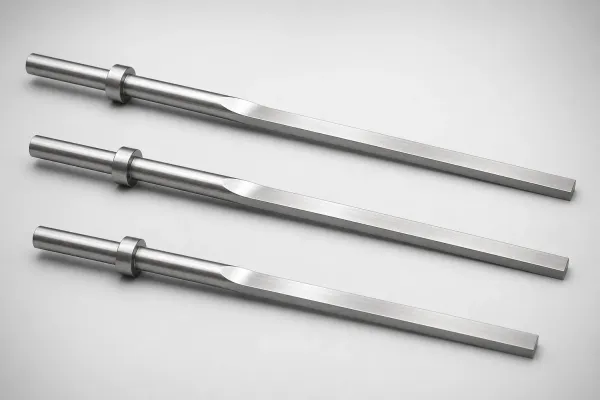
Ejector Pins for Die Casting
Straight and stepped ejector pins in H13 nitrided steel. Selectable, configurable, and D-type shaft options for aluminum and zinc die casting.
5 Series →Ejector Sleeves for Die Casting
H13 nitrided ejector sleeves for tubular and boss features. Annular ejection around core pins without marking the part interior.
1 Series →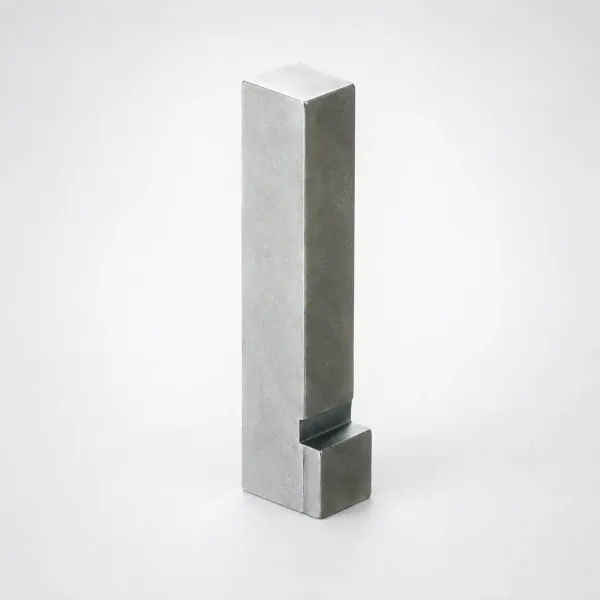
Core Pins for Die Casting
H13 steel core pins with optional nitriding for internal hole formation. Configurable and selectable shaft diameter variants.
2 Series →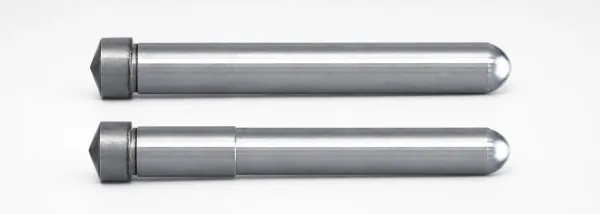
Trimming Pins (Burr Cutting)
In-mold flash trimming pins that cut excess material during the ejection stroke. Eliminates separate deburring operations.
1 Series →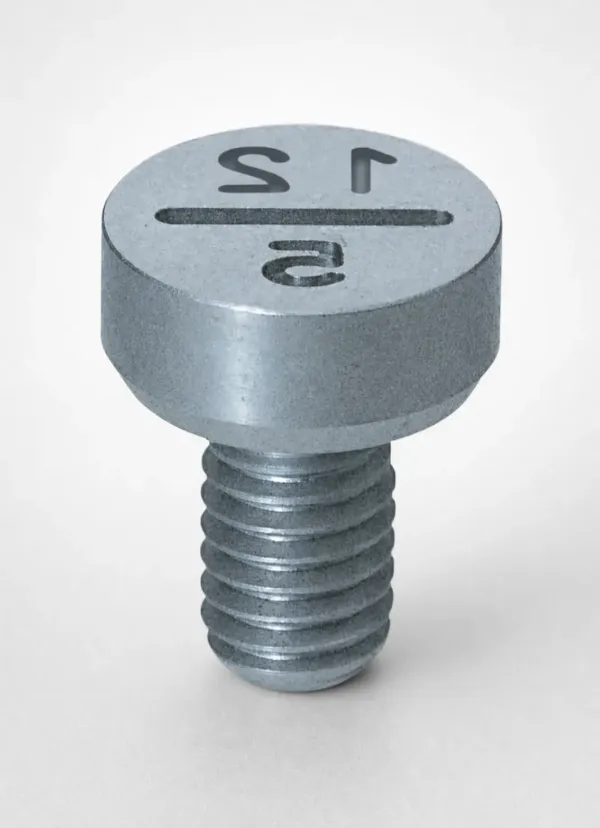
Date Mark Inserts for Die Casting
Date code pins for traceability compliance (IATF 16949, FDA). Standard, press-fit, and small diameter variants with holders.
4 Series →
Cooling Units for Die Casting
Dedicated cooling assemblies for high-heat zones. Outer/inner pipe and core/cover designs for targeted heat extraction.
2 Series →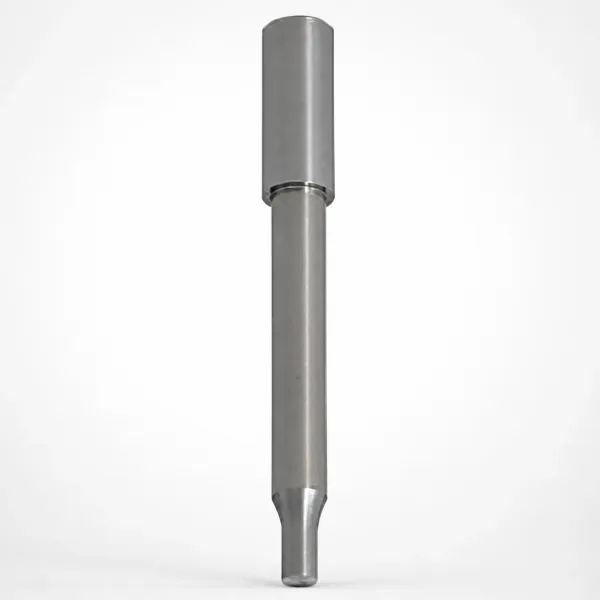
Stopper Plates for Die Cast
1045 steel retention plates for die casting mold assemblies. Prevents component axial movement under thermal cycling.
1 Series →Die Casting vs Injection Mold Components
| Parameter | Injection Mold | Die Casting Mold |
|---|---|---|
| Metal Temperature | 200–350°C (resin melt) | 420–710°C (molten metal) |
| Injection Pressure | 50–200 MPa | 70–140 MPa |
| Pin Material | M2 (SKH51), various | H13 (SKD61) nitrided |
| Surface Hardness | 58–62 HRC (through-hardened) | 900–1,100 HV (nitrided layer) |
| Primary Failure Mode | Wear, galling | Erosion, thermal fatigue, soldering |
| Typical Pin Life | 500K–2M shots | 50K–150K shots |
| Cooling Requirement | Moderate (drilled channels) | High (dedicated cooling units) |
Decision rule: If your mold contacts molten metal at >400°C, you must use H13 nitrided components. Injection mold pins (M2/SKD61) will erode within 5,000 shots in die casting. For detailed guidance, see our Die Casting vs Injection Molding — Component Specification Differences.
What Function Do You Need?
Part Ejection
Eject solidified castings from the die cavity after metal solidification. Must resist aluminum soldering and thermal fatigue.
Components: Ejector Pins (straight/stepped), Ejector Sleeves (for tubular features), Core Pins (for internal holes)
Most common: Straight Ejector Pins, H13 Nitrided
In-Mold Trimming
Cut flash (excess metal at parting line) during the ejection stroke, eliminating separate deburring operations.
Components: Burr Cutting Pins trim flash up to 0.5 mm thickness as the ejector plate advances.
Use when: Post-mold deburring cost exceeds $0.10/part
Traceability Marking
Stamp date codes, shift codes, or cavity numbers directly onto castings for traceability compliance.
Components: Date Mark Inserts (standard, press-fit, small diameter) with optional holders. Required for IATF 16949 and FDA-regulated parts.
Most common: Standard Date Marked Pins
Thermal Management
Extract heat from critical zones (gates, thick sections, core pins) to control solidification and reduce cycle time.
Components: Cooling Units with internal core pipes or external cover assemblies. Die casting requires 3–5× the cooling capacity of injection molds.
Start with: Cooling Units — Inside Core/Outside Cover
Decision rule: Route by function: ejection (pins + sleeves), core forming (core pins), trimming (burr cutting pins), marking (date inserts), or thermal management (cooling units). For detailed guidance, see our How to Select Die Casting Mold Components — Complete Guide.
Why H13 Nitrided Steel Is the Only Choice for Die Casting
Die casting subjects mold components to three simultaneous attack mechanisms that no other common tool steel can withstand:
- Thermal Fatigue Cracking (Heat Checking): Every shot cycle, the pin surface heats from ~200°C to ~600°C in 0.1–0.5 seconds, then cools back. This thermal shock creates tensile stresses exceeding the steel's yield strength at the surface. H13 steel's fine carbide distribution and high-temperature toughness (15–20 J Charpy at 500°C) resist crack initiation far longer than M2 or P20 steel.
- Aluminum Soldering: Molten aluminum chemically attacks iron at >450°C, forming Fe₂Al₅ intermetallic compounds that weld the casting to the pin. Nitriding creates a nitrogen-rich compound layer (ε-Fe₂₋₃N) that is chemically inert to aluminum and acts as a diffusion barrier.
- Erosive Wear: Molten metal at 30–60 m/s gate velocity erodes the pin surface. The 900–1,100 HV nitrided layer provides 3–5× the erosion resistance of through-hardened H13 at 44–48 HRC.
Decision rule: H13 nitrided at 900–1,100 HV is the minimum surface hardness threshold for surviving the Fe₂Al₅ intermetallic reaction at the aluminum-steel interface. For detailed guidance, see our Why H13 Steel Is the Only Choice for Die Casting Molds.
Common Die Casting Mold Failures & Component Solutions
| Symptom | Root Cause | Component Solution |
|---|---|---|
| Casting sticks to pin, drag marks on ejection | Aluminum soldering — nitrided layer worn through | Replace pin; consider re-nitriding service |
| Pin breaks during ejection | Thermal fatigue cracks propagated to failure | Switch to stepped pin for gradual cross-section transition |
| Pin mark on casting surface is oversized | Pin erosion at tip — diameter has decreased | Replace with configurable-diameter pin for exact fit |
| Hot spots / slow cycle time | Insufficient cooling at thick sections | Add cooling units at problem zones |
| Flash at pin bore | Pin-bore clearance enlarged by erosion | Replace pin; if bore worn, re-bore and use next size up |
Decision rule: Thermal fatigue initiates cracks → erosion removes protective layers → soldering bonds casting to steel → ejection tears surface. Break this cycle at the earliest stage with proper material selection and cooling. For detailed guidance, see our How to Diagnose Die Casting Mold Failures — Erosion, Thermal Fatigue, and Sticking.
About Die Casting Components
This category provides 16 product series specifically designed for die casting mold applications. All ejector pins, core pins, and ejector sleeves are manufactured from H13 (SKD61) steel, vacuum heat-treated to 44–48 HRC, and ion-nitrided to 900–1,100 HV surface hardness with 0.05–0.15 mm compound layer depth. Components are dimensionally compatible with JIS and DIN mold base standards for drop-in installation.
Frequently Asked Questions
Why must die casting mold components use H13 nitrided steel?+
What is the typical ejector pin lifespan in aluminum die casting?+
How does die casting mold cooling differ from injection mold cooling?+
Can you supply a complete die casting ejection system?+
Engineering Resources
Why H13 Steel Is the Only Choice for Die Casting Molds
Composition, heat treatment, nitriding specifications, and comparison with alternative steels for die casting applications.
How to Diagnose Die Casting Mold Failures — Erosion, Thermal Fatigue, and Sticking
Root cause analysis of the three primary failure modes in die casting molds with prevention strategies.
Die Casting vs Injection Molding — Component Specification Differences
Side-by-side comparison of material, tolerance, and lifespan specifications for die casting and injection mold components.
Need Die Casting Mold Components?
Specify your casting alloy (aluminum, zinc, or magnesium), mold size, and shot volume. We will recommend the right H13 nitrided components and quote within 24 hours.