Trimming Pins for Die Casting (Burr Cutting)
In-mold flash trimming pins that cut excess metal during the ejection stroke. Eliminates separate deburring operations and reduces per-part cost for high-volume die casting production.
Decision rule: In-mold trimming is cost-effective when flash thickness is ≤0.3 mm and the trim line follows a simple geometry. For thicker flash or complex contours, post-mold deburring may be more reliable. For detailed guidance, see our How In-Mold Trimming Works with Burr Cutting Pins.
Products
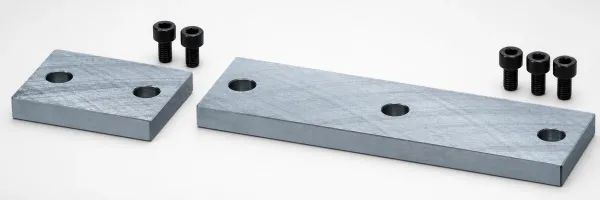
1045 Steel STPX Stopper Plates for Die Cast
1045 Steel STPX stopper plates for die cast help stabilize molds by securely holding components and absorbing shock d...
View Details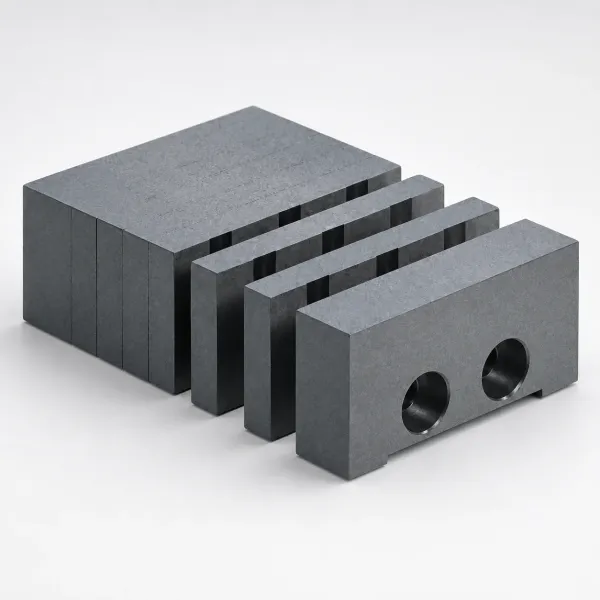
Gas Vent Cavity Inserts BGV
Gas vent cavity inserts BGV for efficient mold exhaust. Engineered for durable cavity performance with controlled ven...
View DetailsHow In-Mold Trimming Works
Burr cutting pins integrate flash removal directly into the casting cycle:
- Metal injection: Molten metal fills the cavity. Thin flash forms at the parting line gap (typically 0.1–0.5 mm).
- Solidification: Metal solidifies. Flash remains attached to the part at the parting line.
- Ejection + trimming: The ejector plate advances. The burr cutting pin — positioned at the flash location — advances through the solidified flash, shearing it against a hardened counter-edge in the fixed mold half.
- Mold opening: Trimmed flash falls free. Part exits with minimal residual burr (<0.1 mm).
Decision rule: In-mold trimming is cost-effective when flash thickness is ≤0.3 mm and the trim line follows a simple geometry. For thicker flash or complex contours, post-mold deburring may be more reliable. For detailed guidance, see our How In-Mold Trimming Works with Burr Cutting Pins.
When to Use In-Mold Trimming
Best Suited For
High-volume production (>50K parts/year) where post-mold deburring labor exceeds $0.05/part. Consistent flash locations along straight parting lines. Flash thickness ≤ 0.5 mm.
The precision cutting edge shears flash during the ejection stroke at controlled blade clearance (0.02-0.05 mm), producing a clean trim that eliminates secondary deburring labor.
Recommended: Standard Burr Cutting Pin for flash ≤0.3 mm
Not Recommended For
Complex 3D parting lines, flash thickness > 0.5 mm (fix root cause instead), or cosmetic surfaces where any pin mark is unacceptable.
The precision cutting edge shears flash during the ejection stroke at controlled blade clearance (0.02-0.05 mm), producing a clean trim that eliminates secondary deburring labor.
Recommended: Standard Burr Cutting Pin for flash ≤0.3 mm
Decision rule: In-mold trimming eliminates a separate deburring station — reducing per-part handling cost by 15–30% on high-volume runs where the trim geometry is compatible with pin-based cutting. For detailed guidance, see our In-Mold Trimming vs Post-Mold Deburring — Cost Comparison.
Frequently Asked Questions
How do burr cutting pins trim flash inside the mold during the casting cycle?+
What flash thickness can burr cutting pins handle?+
In-mold trimming vs post-mold deburring — which saves more cost?+
Engineering Resources
How In-Mold Trimming Works with Burr Cutting Pins
Detailed mechanism, pin positioning, and counter-edge design for effective in-mold flash removal.
In-Mold Trimming vs Post-Mold Deburring — Cost Comparison
Break-even analysis for in-mold trimming adoption at different production volumes.
Need Burr Cutting Pins?
Send your parting line drawing and flash locations. We will recommend pin positioning and quantity.