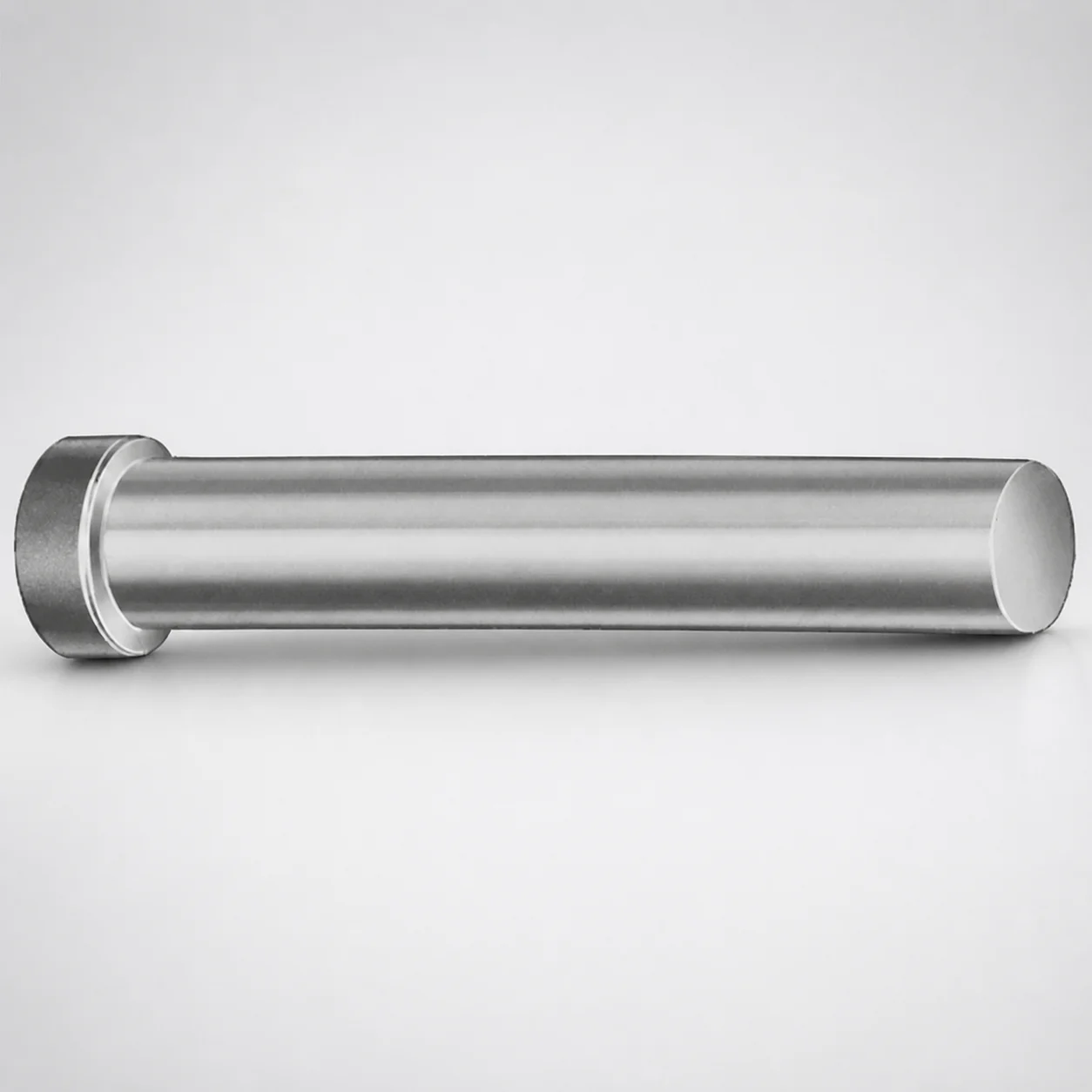
XNAP Coating Straight Regular Punches - Inch
Straight Regular Punches - Inch with XNAP coating are designed for dependable punching performance in production tooling. Their straight punch form supports stable alignment while the coating helps manage surface wear.
- Straight punch geometry supports consistent operation in die sets
- XNAP coating improves wear resistance for repeated cycles
- Inch sizing options support procurement for mixed tooling bills of materials
- Used in progressive dies and general punching operations with DAYTON
Specifications
1 configurations available
| L (Length) (in) | P Dimension (in) |
|---|---|
| 150 ~ 625 | 0.125 ~ 0.375 |
Product Guide
Application Scenarios+
Straight, regular punching pins are used in die sets to pierce or form features such as holes, slots, and trim edges in sheet-metal and stamped components. The straight profile helps maintain stable alignment during repeated press cycles, which is critical for maintaining clean shearing and predictable part geometry.
In progressive die tooling, these punches typically work alongside stripper plates and matching die openings. The XNAP coating is suited to long-run wear management, helping reduce surface degradation as the punch cycles through thousands of hits.
They are also common in general punching stations where alignment consistency and wear resistance directly affect scrap rate and rework frequency. The in-plane inch dimensions (L and P ranges) make this variant practical for shops standardizing on inch-based die/punch builds.
- Progressive dies for consistent hole/trim punching
- Die sets requiring stable straight alignment
- High-cycle punching operations needing coating-assisted wear durability
Material & Process Details+
The provided product specifications describe geometry and coating, including the XNAP coating, but they do not specify a steel grade, hardness (HRC), or a heat-treatment state (e.g., quenched & tempered, nitrided). For accurate material qualification, confirm the punch substrate grade and heat treatment from the supplied datasheet or internal manufacturing records for this exact series_code.
- XNAP coating: positioned to improve wear resistance for repeated punching cycles by managing punch surface degradation.
- Trade-offs to verify: coating thickness and substrate hardness/toughness balance can affect edge wear and chipping risk under misalignment or shock loading.
Compared to uncoated punches, a coated variant like this is typically selected when long production runs demand improved surface durability. For high-precision or tougher materials, ensure the underlying steel condition and hardness are compatible with the press tonnage and material hardness.
Sizing & Selection Guide+
Selection starts with matching the fixed length L to the required punch engagement in your tool stack-up. For this series, L = 150 ~ 625 in, so choose the length that provides proper reach through the die set while maintaining safe clearance at top/bottom dead center.
Next, match the P dimension to the punch interface geometry. For this series, P = 0.125 ~ 0.375 in. This dimension should align with the corresponding tooling features (e.g., die opening geometry requirements and any guide/retainer interface) to preserve concentricity and reduce side loading.
- L (150–625 in): controls effective working length and tool engagement
- P (0.125–0.375 in): controls the punch/pocket interface fit
Because the provided data lists fixed dimension ranges only, confirm the exact tolerance/fit from your purchase documentation—especially if you are integrating into existing die sets with tight alignment requirements. If your application is retrofitting older tooling, verify that the chosen L and P fall within the mechanical clearances of the guides and die blocks.
Frequently Asked Questions
How do I choose the correct punch length L for a given die set stack-up?+
Use the series’ fixed range of L (150 ~ 625 in) to match the required engagement depth in your press tooling. Select the longest length that still provides safe clearance through the full stroke while avoiding bottoming against plates.
For progressive dies, verify that the working end depth supports stable guidance with the stripper/guide components you’re using.
What P dimension should I use to maintain proper interface fit in my die assembly?+
This series provides P = 0.125 ~ 0.375 in. Choose the P value that corresponds to your punch retainer/guide and die-side interface requirements to minimize side loading and alignment drift.
If you are upgrading existing tool components, confirm the mechanical fit/tolerance between P and the mating features in your die blocks.
When should I specify the XNAP coating variant versus an uncoated straight punch?+
Select the XNAP-coated variant when your production run demands improved wear resistance over repeated punching cycles. The coating is intended to help manage surface wear that can otherwise lead to dimensional drift and higher scrap rates.
Before committing, ensure your substrate material grade and heat treatment are compatible with the part material and press tonnage, since the provided data does not list steel or HRC values.
Is this straight regular geometry suitable for progressive die operations?+
Yes—straight regular punch geometry is typically used in progressive die stations where alignment consistency affects punch life and part accuracy. The straight form supports stable alignment during cyclic press loading, helping maintain predictable shearing performance.
The XNAP coating is also relevant for long-run wear management in these high-cycle applications.
What material and hardness details are available for series 250301145710?+
The provided product specifications include XNAP coating and inch dimension ranges, but do not specify the steel grade, heat-treatment condition, or hardness (HRC). To select correctly for die and punch performance, you should request the substrate material data for series_code 250301145710.
Coating selection should be paired with verified substrate hardness/toughness to prevent chipping under misalignment or shock loads.
Related Products
Need Custom Specifications?
Our engineering team can help with custom configurations, material selection, and volume pricing.