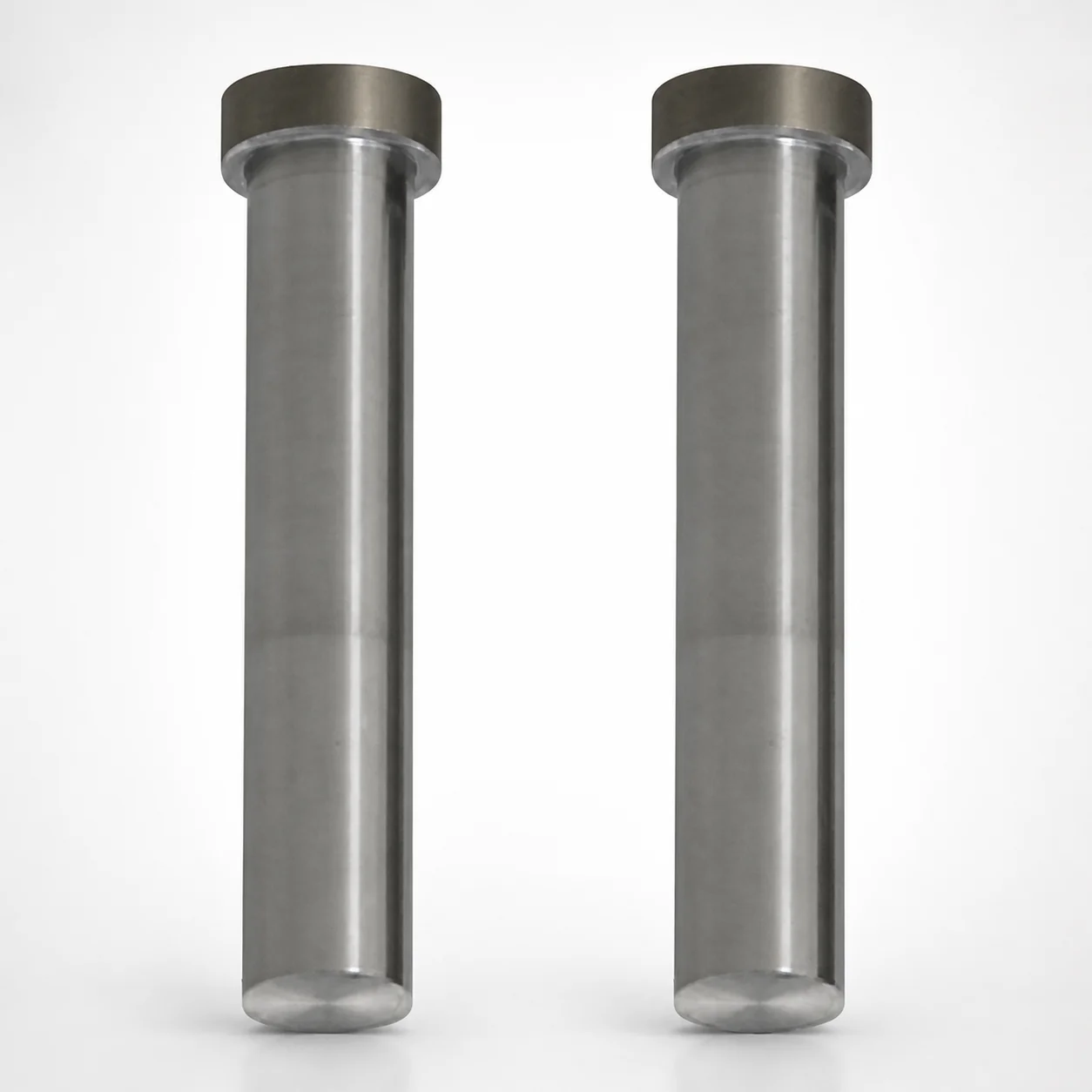
JIS Standard Steel L-Punched Straight Punches
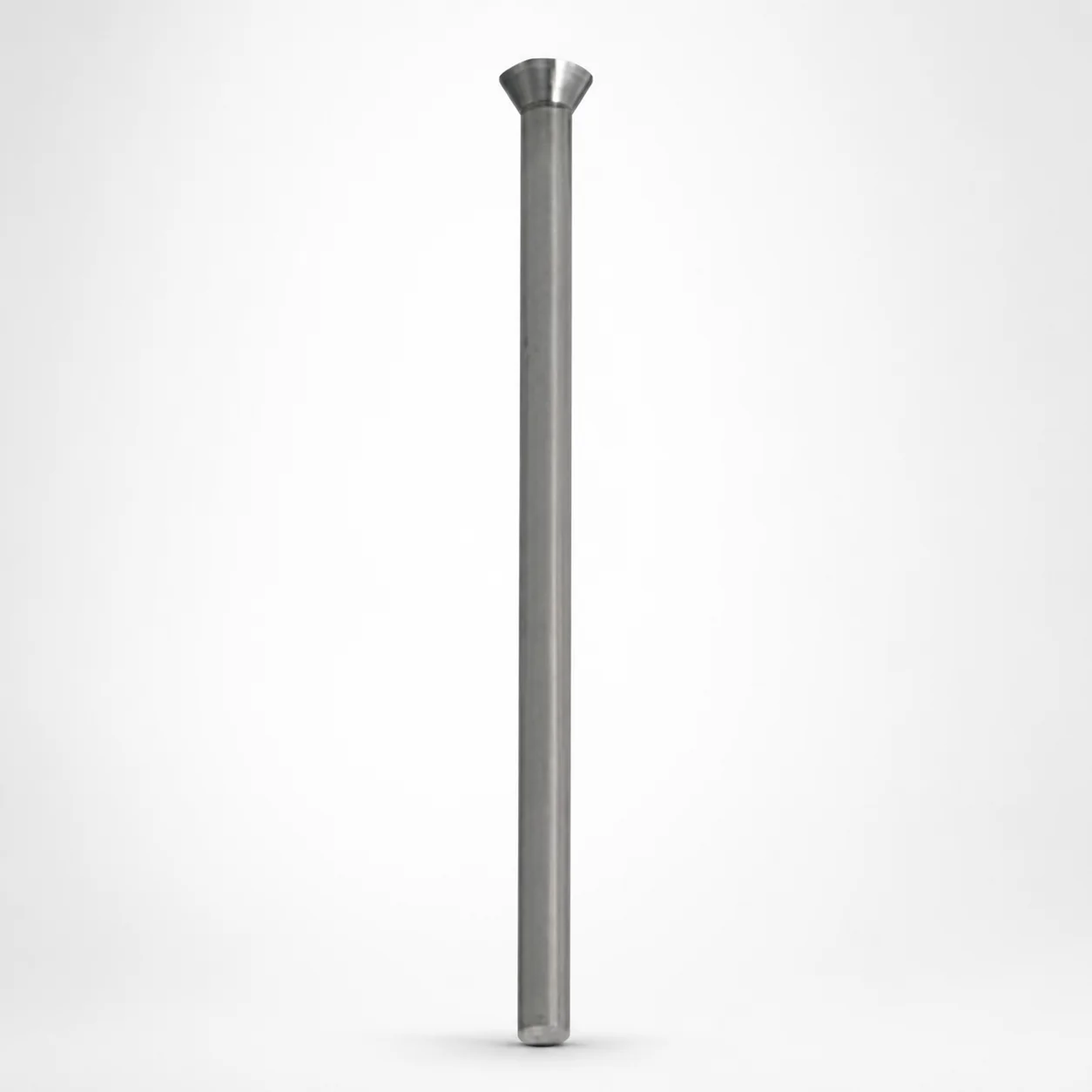
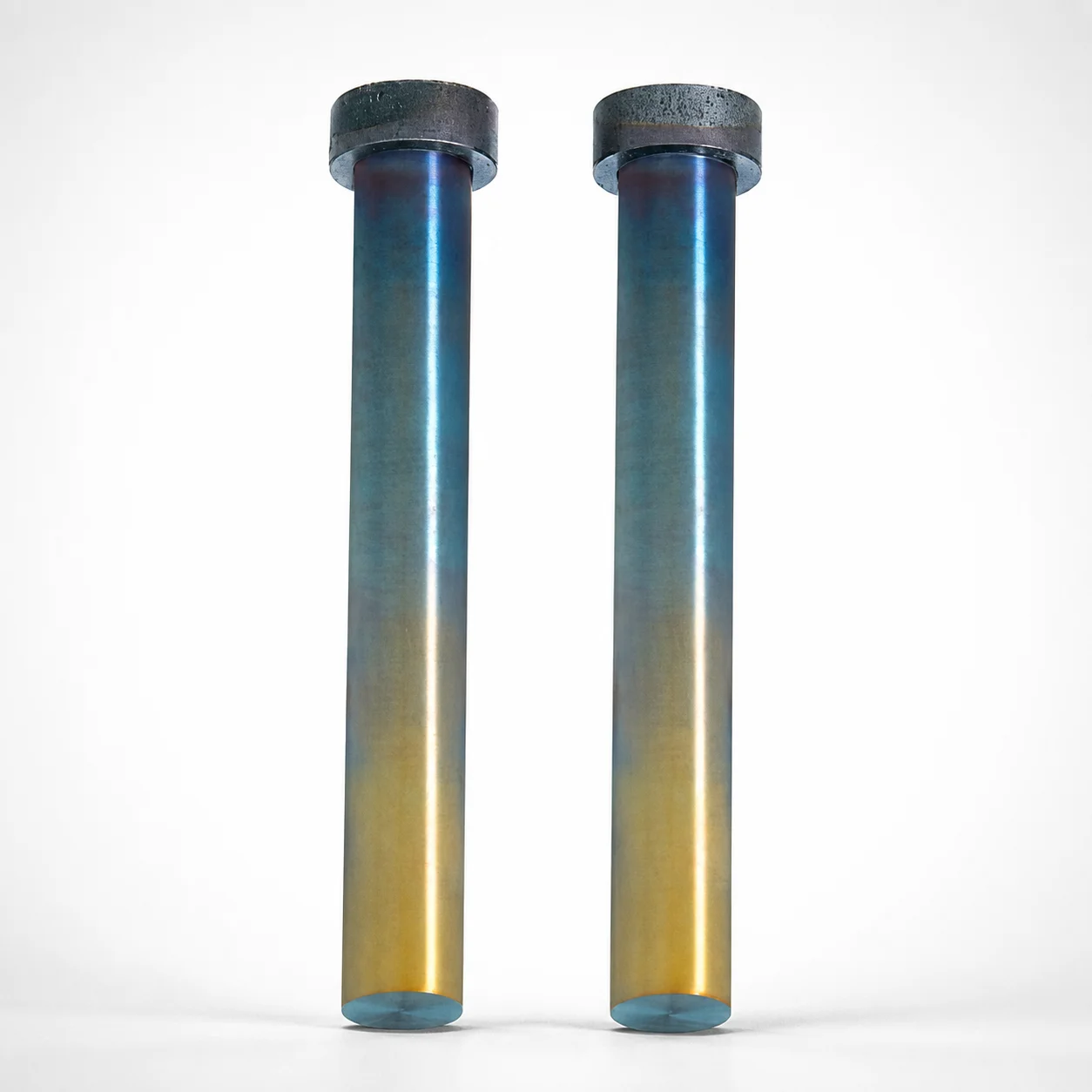
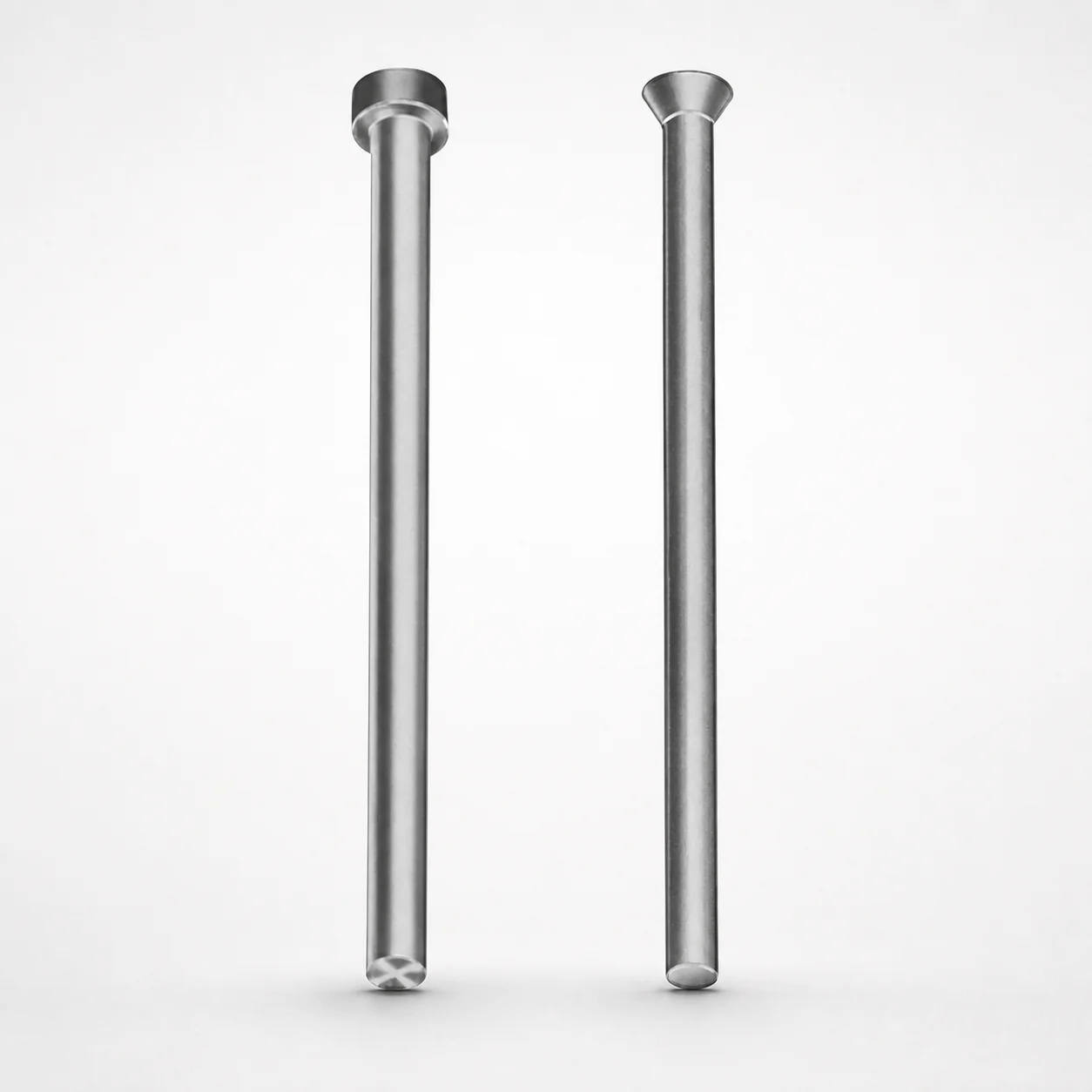
L-punched straight punches (steel) are precision die components with straight shanks and a standard mounting profile, produced for stable alignment during punching and trimming. The lapping option supports controlled surface condition for repeatable tool performance.
- Straight shank with standard mounting shape for consistent positioning
- Tool steel options from SKD11/D2, SKH51/M2, to SKH40 high-speed steel
- Optional lapping surface treatment to improve surface condition for long runs
- Built around JIS-compatible punch design for die sets in stamping lines
Specifications
338 configurations available
| Material | Surface Treatment | No. (Nominal diameter) (mm) | P (Tip dimension) (mm) | L (L dimension) (mm) | T (Head thickness/plate thickness) (mm) | LC (Full length alteration) (mm) | LCT (Head thickness tolerance change + Total length alteration) (mm) | LMT (Head thickness tolerance change + Total length alteration) (mm) | type |
|---|---|---|---|---|---|---|---|---|---|
| SKH40 Equivalent (Powdered high-speed steel) | Lapping | 1.0 | 0.5 ~ 1 | 20 ~ 30 | 3 | - | - | - | - |
| SKH40 Equivalent (Powdered high-speed steel) | Lapping | 1.0 | 0.5 ~ 1 | - | 3 | 20 ~ 29.9 | - | - | - |
| SKH40 Equivalent (Powdered high-speed steel) | Lapping | 1.0 | 0.5 ~ 1 | - | 3 | 20 ~ 30 | - | - | - |
| SKH40 Equivalent (Powdered high-speed steel) | Lapping | 1.0 | 0.5 ~ 1 | - | 3 | - | 20 ~ 29.9 | - | - |
| SKH40 Equivalent (Powdered high-speed steel) | Lapping | 1.0 | 0.5 ~ 1 | - | 3 | - | 20 ~ 30 | - | - |
| SKH40 Equivalent (Powdered high-speed steel) | Lapping | 1.0 | 0.5 ~ 1 | - | 3 | - | - | 20 ~ 30 | - |
| SKH40 Equivalent (Powdered high-speed steel) | Lapping | 1.6 | 1 ~ 1.6 | 20 ~ 60 | 3 | - | - | - | - |
| SKH40 Equivalent (Powdered high-speed steel) | Lapping | 1.6 | 1 ~ 1.6 | - | 3 | 20 ~ 50 | - | - | - |
| SKH40 Equivalent (Powdered high-speed steel) | Lapping | 1.6 | 1 ~ 1.6 | - | 3 | 20 ~ 49.9 | - | - | - |
| SKH40 Equivalent (Powdered high-speed steel) | Lapping | 1.6 | 1 ~ 1.6 | - | 3 | - | 20 ~ 60 | - | - |
| SKH40 Equivalent (Powdered high-speed steel) | Lapping | 1.6 | 1 ~ 1.6 | - | 3 | - | 20 ~ 49.9 | - | - |
| SKH40 Equivalent (Powdered high-speed steel) | Lapping | 1.6 | 1 ~ 1.6 | - | 3 | - | - | 20 ~ 60 | - |
| SKH40 Equivalent (Powdered high-speed steel) | Lapping | 1.6 | 1 ~ 1.6 | - | 3 | - | - | 20 ~ 49.9 | - |
| SKH40 Equivalent (Powdered high-speed steel) | Lapping | 2.0 | 1.6 ~ 2 | 20 ~ 60 | 3 | - | - | - | - |
| SKH40 Equivalent (Powdered high-speed steel) | Lapping | 2.0 | 1.6 ~ 2 | - | 3 | 20 ~ 50 | - | - | - |
| SKH40 Equivalent (Powdered high-speed steel) | Lapping | 2.0 | 1.6 ~ 2 | - | 3 | 20 ~ 59.9 | - | - | - |
| SKH40 Equivalent (Powdered high-speed steel) | Lapping | 2.0 | 1.6 ~ 2 | - | 3 | - | 20 ~ 60 | - | - |
| SKH40 Equivalent (Powdered high-speed steel) | Lapping | 2.0 | 1.6 ~ 2 | - | 3 | - | 20 ~ 49.9 | - | - |
| SKH40 Equivalent (Powdered high-speed steel) | Lapping | 2.0 | 1.6 ~ 2 | - | 3 | - | - | 20 ~ 60 | - |
| SKH40 Equivalent (Powdered high-speed steel) | Lapping | 2.0 | 1.6 ~ 2 | - | 3 | - | - | 20 ~ 49.9 | - |
| SKH40 Equivalent (Powdered high-speed steel) | Lapping | 2.5 | 2 ~ 2.5 | 20 ~ 60 | 3 | - | - | - | - |
| SKH40 Equivalent (Powdered high-speed steel) | Lapping | 2.5 | 2 ~ 2.5 | - | 3 | 20 ~ 50 | - | - | - |
| SKH40 Equivalent (Powdered high-speed steel) | Lapping | 2.5 | 2 ~ 2.5 | - | 3 | 20 ~ 59.9 | - | - | - |
| SKH40 Equivalent (Powdered high-speed steel) | Lapping | 2.5 | 2 ~ 2.5 | - | 3 | - | 20 ~ 60 | - | - |
| SKH40 Equivalent (Powdered high-speed steel) | Lapping | 2.5 | 2 ~ 2.5 | - | 3 | - | 20 ~ 49.9 | - | - |
| SKH40 Equivalent (Powdered high-speed steel) | Lapping | 2.5 | 2 ~ 2.5 | - | 3 | - | - | 20 ~ 60 | - |
| SKH40 Equivalent (Powdered high-speed steel) | Lapping | 2.5 | 2 ~ 2.5 | - | 3 | - | - | 20 ~ 49.9 | - |
| SKH40 Equivalent (Powdered high-speed steel) | Lapping | 3 | 3 | 40 ~ 80 | 5 | - | - | - | - |
| SKH40 Equivalent (Powdered high-speed steel) | Lapping | 3 | 2 ~ 3 | 40 ~ 80 | 5 | - | - | - | - |
| SKH40 Equivalent (Powdered high-speed steel) | Lapping | 3 | 3 | - | 5 | 20 ~ 79.9 | - | - | - |
| SKH40 Equivalent (Powdered high-speed steel) | Lapping | 3 | 2 ~ 3 | - | 5 | 20 ~ 79.9 | - | - | - |
| SKH40 Equivalent (Powdered high-speed steel) | Lapping | 3 | 3 | - | 5 | - | 20 ~ 79.9 | - | - |
| SKH40 Equivalent (Powdered high-speed steel) | Lapping | 3 | 2 ~ 3 | - | 5 | - | 20 ~ 79.9 | - | - |
| SKH40 Equivalent (Powdered high-speed steel) | Lapping | 3 | 3 | - | 5 | - | - | 20 ~ 79.9 | - |
| SKH40 Equivalent (Powdered high-speed steel) | Lapping | 3 | 2 ~ 3 | - | 5 | - | - | 20 ~ 79.9 | - |
| SKH40 Equivalent (Powdered high-speed steel) | Lapping | 4 | 3 ~ 4 | 40 ~ 80 | 5 | - | - | - | - |
| SKH40 Equivalent (Powdered high-speed steel) | Lapping | 4 | 3 ~ 4 | - | 5 | 20 ~ 79.9 | - | - | - |
| SKH40 Equivalent (Powdered high-speed steel) | Lapping | 4 | 3 ~ 4 | - | 5 | - | 20 ~ 79.9 | - | - |
| SKH40 Equivalent (Powdered high-speed steel) | Lapping | 4 | 3 ~ 4 | - | 5 | - | - | 20 ~ 79.9 | - |
| SKH40 Equivalent (Powdered high-speed steel) | Lapping | 5 | 4 ~ 5 | 40 ~ 80 | 5 | - | - | - | - |
| SKH40 Equivalent (Powdered high-speed steel) | Lapping | 5 | 4 ~ 5 | - | 5 | 20 ~ 79.9 | - | - | - |
| SKH40 Equivalent (Powdered high-speed steel) | Lapping | 5 | 4 ~ 5 | - | 5 | - | 20 ~ 79.9 | - | - |
| SKH40 Equivalent (Powdered high-speed steel) | Lapping | 5 | 4 ~ 5 | - | 5 | - | - | 20 ~ 79.9 | - |
| SKH40 Equivalent (Powdered high-speed steel) | Lapping | 6 | 5 ~ 6 | 40 ~ 80 | 5 | - | - | - | - |
| SKH40 Equivalent (Powdered high-speed steel) | Lapping | 6 | 5 ~ 6 | - | 5 | 20 ~ 79.9 | - | - | - |
| SKH40 Equivalent (Powdered high-speed steel) | Lapping | 6 | 5 ~ 6 | - | 5 | - | 20 ~ 79.9 | - | - |
| SKH40 Equivalent (Powdered high-speed steel) | Lapping | 6 | 5 ~ 6 | - | 5 | - | - | 20 ~ 79.9 | - |
| SKH40 Equivalent (Powdered high-speed steel) | Lapping | 8 | 6 ~ 8 | 40 ~ 100 | 5 | - | - | - | - |
| SKH40 Equivalent (Powdered high-speed steel) | Lapping | 8 | 6 ~ 8 | - | 5 | 20 ~ 99.9 | - | - | - |
| SKH40 Equivalent (Powdered high-speed steel) | Lapping | 8 | 6 ~ 8 | - | 5 | - | 20 ~ 99.9 | - | - |
Product Guide
Application Scenarios+
L-punched straight punches are used in progressive and transfer die sets where repeated punching, trimming, or fine blanking operations require stable punch-to-guide alignment. The straight shank and JIS-compatible mounting profile help maintain consistent positioning through cycles, reducing the risk of tip drift and uneven wear.
- Automotive stamping connectors & clips: Select high-speed or air-hardening tooling grades (e.g., SKH51/M2 or SKH40 equivalent) when you need strong hot-work abrasion resistance for long production runs; the optional lapping surface condition supports repeatable cutting behavior.
- Appliance and sheet-metal panels (trimming stages): Using a straight punch with the correct tip and head thickness supports controlled trimming clearance; choosing SKD11/D2 when moderate toughness is acceptable can balance edge durability with grindability.
- Thin-gauge precision parts: The lapping option is suited to applications that are sensitive to surface condition and require consistent performance across batches, especially under higher cycle counts.
Material & Process Details+
These JIS standard punches are available in tooling steels tailored to punching and trimming wear modes. SKH51 is an equivalent to AISI M2 high-speed steel and is selected for abrasion resistance under demanding cycle counts; typical performance targets are high hardness and good hot hardness, with a trade-off of lower toughness versus air-hardening die steels.
- SKH51 (M2): Quenched and tempered heat treatment for HSS structure; expect very high wear resistance and edge stability for long runs.
- SKD11 (D2): An equivalent to AISI D2, commonly used after quench and temper to reach high hardness; strong wear resistance with careful toughness management.
- SKH40 (powder HSS equivalent): Powder metallurgy HSS variants offer refined carbides for improved wear performance; often chosen where consistent cutting edge durability matters.
- Surface treatment: Lapping refines surface condition to improve tool-to-material interaction; none keeps the as-finished condition.
Hardness is determined by the supplier’s heat treatment recipe for each grade; ensure your die build targets balance hardness (HRC) with toughness to avoid chipping at high loads.
Sizing & Selection Guide+
Correct dimension matching is critical for punch alignment, edge clearance, and press rigidity. Start by selecting the nominal diameter (No.) from 1 to 25 mm, then match the tip dimension P from 0.5 to 20 mm to your die detail (shear land geometry and punching diameter).
- Choose length L based on strip stack-up and the required projection through the die set: available ranges include 20–30, 20–60, 40–80, 40–100, and 40–120 mm.
- Select head thickness/plate thickness T as 3 or 5 mm to fit the standard mounting interface of the die block.
- Lapping condition: selecting lapping helps achieve more consistent surface condition for repeated punching; it does not replace proper dimensional fit.
When you design clearances, account for manufacturing tolerances at the mounting and working surfaces. The provided LC/LCT/LMT values are shown as fixed 20–20 in this data set, so verify whether those correspond to your build’s expected total-length alterations before final assembly.
Frequently Asked Questions
Which steel grade should I choose between SKH51 (M2), SKD11 (D2), and SKH40 equivalent for punching/trim tools?+
Does the lapping option change the punch dimensions or only the surface condition?+
How do I select the correct punch length L for my die set stack-up?+
What are the available head thickness values T and how do they affect mounting compatibility?+
How do I match the tip dimension P and nominal diameter No to achieve the required cutting geometry?+
Related Products
Need Custom Specifications?
Our engineering team can help with custom configurations, material selection, and volume pricing.