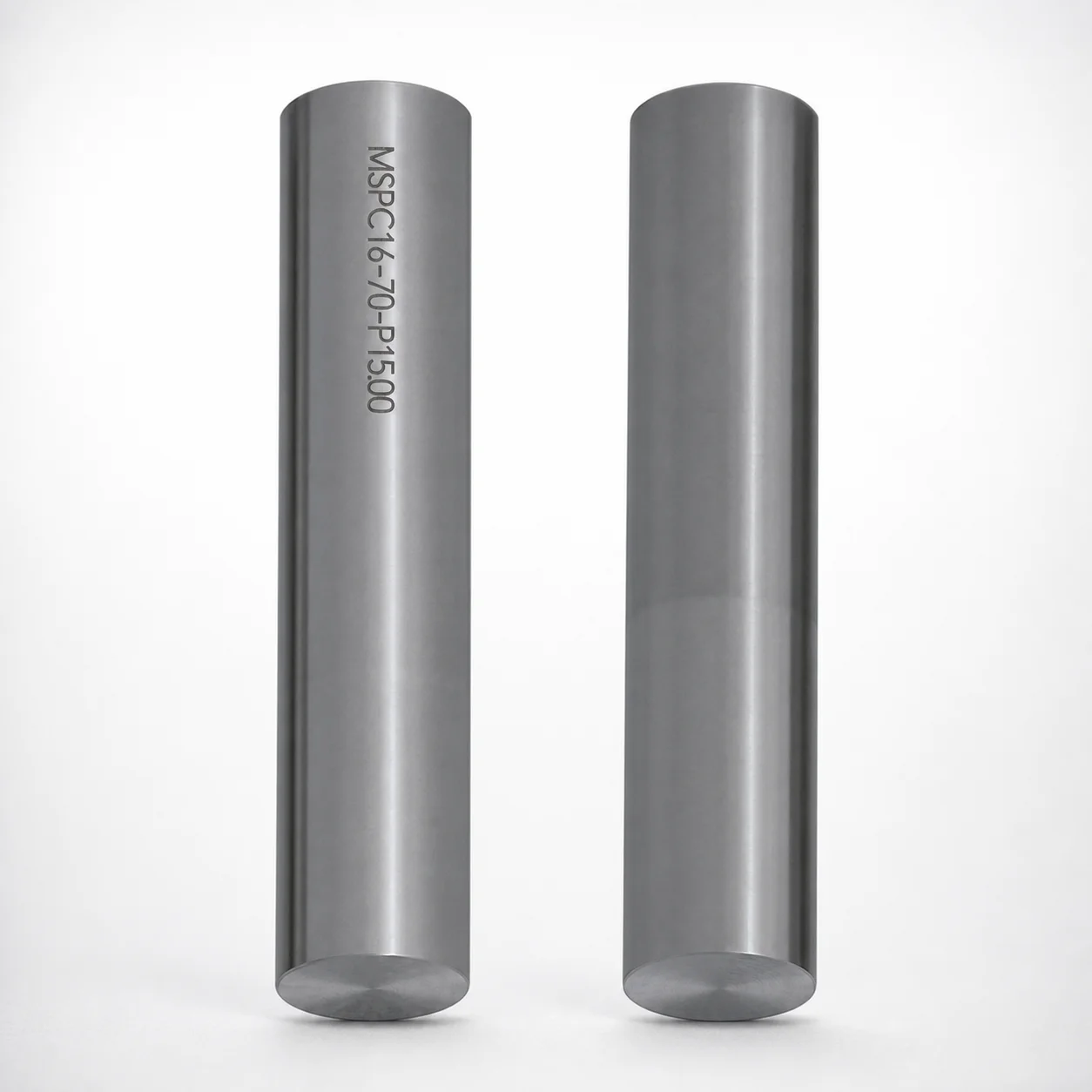
SKD11 Steel Tapped Straight Punches - Lapping Option
Tapped straight punches (SKD11 steel) with the lapping option are designed for stable installation in die sets and improved surface mating for precise punch positioning. The straight shank and tapped mounting simplify assembly and repeatable alignment.
- Tapped mounting for secure retention in die components with straight shank geometry
- Made from SKD11 steel (D2 equivalent) with wear-resistant performance for punch duty cycles
- Built to support tap standard type selection and consistent seating repeatability
- Suitable for die machining, forming, and precision punch applications where fit quality matters
Specifications
24 configurations available
| Surface Treatment | No. (Nominal diameter) (mm) | P (Tip dimension) (mm) | L (L dimension) (mm) | LC (Full length alteration) (mm) | type |
|---|---|---|---|---|---|
| Lapping | 8 | 6 ~ 8 | 40 ~ 100 | - | - |
| Lapping | 8 | 6 ~ 8 | - | 30 ~ 99.9 | - |
| Lapping | 10 | 8.001 ~ 10 | 40 ~ 100 | - | - |
| Lapping | 10 | 8.001 ~ 10 | - | 30 ~ 99.9 | - |
| Lapping | 13 | 10.001 ~ 13 | 40 ~ 100 | - | - |
| Lapping | 13 | 10.001 ~ 13 | - | 30 ~ 99.9 | - |
| Lapping | 16 | 13.001 ~ 16 | 40 ~ 100 | - | - |
| Lapping | 16 | 13.001 ~ 16 | - | 30 ~ 99.9 | - |
| Lapping | 20 | 16.001 ~ 20 | 40 ~ 100 | - | - |
| Lapping | 20 | 16.001 ~ 20 | - | 30 ~ 99.9 | - |
| Lapping | 25 | 20.001 ~ 25 | 40 ~ 100 | - | - |
| Lapping | 25 | 20.001 ~ 25 | - | 30 ~ 99.9 | - |
| None | 8 | 6 ~ 8 | 40 ~ 100 | - | - |
| None | 8 | 6 ~ 8 | - | 30 ~ 99.9 | - |
| None | 10 | 8.01 ~ 10 | 40 ~ 100 | - | - |
| None | 10 | 8.01 ~ 10 | - | 30 ~ 99.9 | - |
| None | 13 | 10.01 ~ 13 | 40 ~ 100 | - | - |
| None | 13 | 10.01 ~ 13 | - | 30 ~ 99.9 | - |
| None | 16 | 13.01 ~ 16 | 40 ~ 100 | - | - |
| None | 16 | 13.01 ~ 16 | - | 30 ~ 99.9 | - |
| None | 20 | 16.01 ~ 20 | 40 ~ 100 | - | - |
| None | 20 | 16.01 ~ 20 | - | 30 ~ 99.9 | - |
| None | 25 | 20.01 ~ 25 | 40 ~ 100 | - | - |
| None | 25 | 20.01 ~ 25 | - | 30 ~ 99.9 | - |
Product Guide
Application Scenarios+
Where it’s used: These tapped straight punches are installed into precision die assemblies where consistent punch seating directly affects part dimensions and repeatability. The straight shank and threaded mounting make them well-suited for die sets that require controlled alignment between punch and cavity.
Scenario 1 – Automotive small formed components: Use the lapping option to improve surface mating at the punch seating interface, helping maintain stable positioning through repeated forming cycles. This supports tight tolerance stacking when producing small clips, brackets, or connector-related features.
Scenario 2 – Precision progressive/compound dies: The tapped mounting and standardized tip geometry support reliable installation and easier rework during die maintenance. Selecting the lapping surface treatment helps reduce seating variation and improves consistency of punch engagement.
Scenario 3 – Die machining and tooling repair: When reassembling punch sets, the controlled fit option is particularly beneficial for reducing “first assembly” variability, improving long-run dimensional stability.
- Why this variant fits: SKD11 (D2 equivalent) offers wear-resistant punch performance, while the lapping option is intended for controlled mating and seating repeatability.
Material & Process Details+
This punch is manufactured from SKD11 steel, which is commonly referenced as an AISI D2 equivalent. SKD11 is a high-carbon, high-chromium tool steel selected for its wear resistance in applications where punch faces and bearing surfaces experience frequent contact and sliding.
- Heat treatment state: Typically supplied as a tool steel in a hardened and tempered condition for a balance of hardness and toughness (exact hardness is not provided in the supplied specs).
- Hardness / trade-offs: In D2-class steels, increased hardness improves wear resistance but can reduce toughness if over-tempered; the intended use emphasizes stable seating and surface durability.
- Surface condition option: The lapping surface treatment is available to enhance mating/fit at the seating area, which helps control positioning rather than changing the bulk steel grade.
Compared with SKD11 supplied without lapping, the lapping option targets improved interface conformity for more consistent punch seating and alignment.
Sizing & Selection Guide+
To select the correct tapped straight punch, match the nominal diameter (No.) and the tip dimension (P) to the die’s required punch profile, then confirm the overall length features for correct stack-up.
- Nominal diameter (mm): 8, 10, 13, 16, 20, 25
- Tip dimension P (mm): 6 ~ 20.01
- Fixed length L (mm): 40 ~ 100
- Fixed full length alteration LC (mm): 30 ~ 99.9
How to match to mold tooling: Choose the No. closest to the punch bore/contact requirement in the die set, then verify that P provides the intended forming or cutting geometry at the working end. Ensure the installed punch stack height clears die shoe and supports the intended interface engagement using the available L range and any full-length alteration represented by LC.
Tolerance/fit note: The product offers a surface treatment option (lapping or none) aimed at controlled mating for improved punch seating consistency—use lapping when tighter fit stability at the interface is required.
Frequently Asked Questions
Which nominal diameter options are available for SKD11 tapped straight punches?+
What is the tip dimension (P) range, and how does it affect the working profile?+
How should I choose between the lapping option and none?+
What length parameters should I verify during die assembly to avoid stack-up issues?+
What steel grade is used, and what does it imply for wear resistance in punch duty?+
Related Products
Need Custom Specifications?
Our engineering team can help with custom configurations, material selection, and volume pricing.