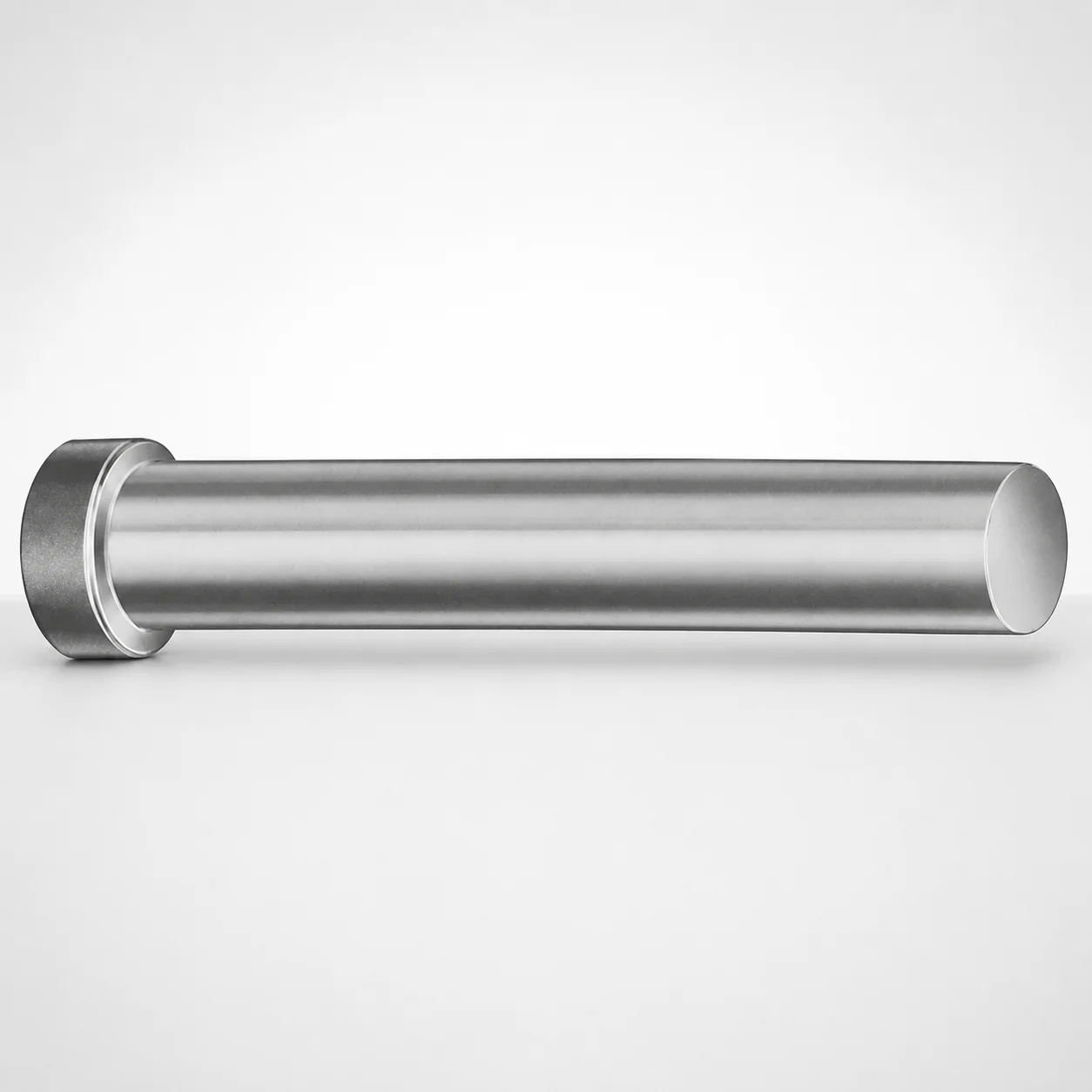
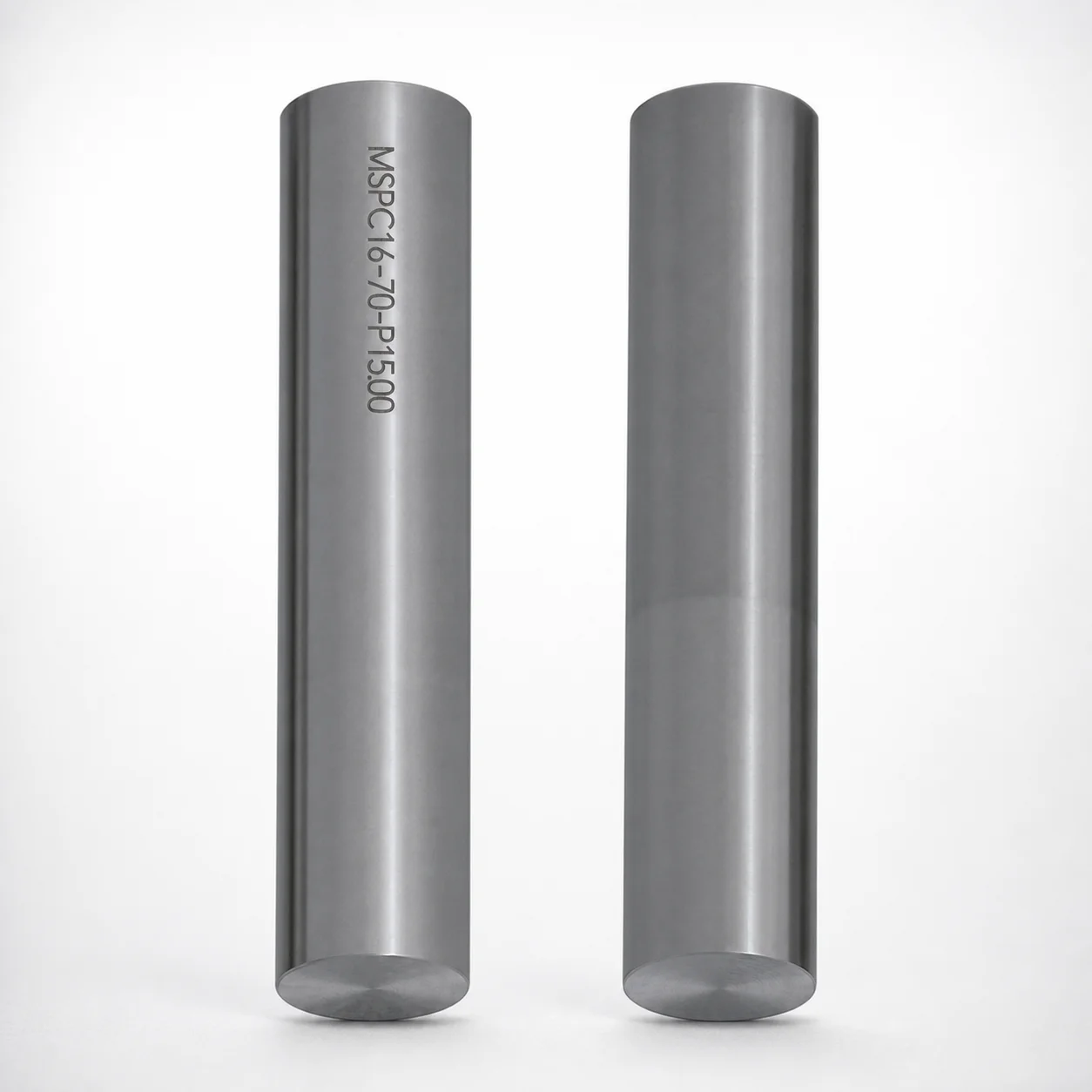
Straight Regular Punches Metric, XAN DayTAN™ Coating
Straight Regular Punches Metric with XAN DayTAN™ coating deliver reliable straight punching performance for tool-and-die operations. The coating helps control friction and supports longer tool life under production load.
- Straight punch geometry for stable alignment in die sets
- XAN DayTAN™ coating improves wear resistance in repeated cycles
- Dimensional flexibility with optional L (50–100 mm) selection
- Used for metric punching, blanking, and general forming workflows
Specifications
1 configurations available
| L (Length) (mm) | P Dimension (mm) |
|---|---|
| 50 ~ 100 | 3 ~ 16 |
Product Guide
Application Scenarios+
These straight regular punches are used in tool-and-die injection mold accessory tooling to perform clean punching, blanking, and forming operations where the punch must track reliably in the die set. In automotive connector and bracket assemblies, the reduced-friction surface coating helps stabilize contact during high-cycle production, supporting consistent hole/pattern formation and minimizing galling risk on die faces.
For consumer electronics housings and thin-wall parts, straight punch geometry promotes stable alignment through repeated strokes, improving dimensional repeatability even as loads fluctuate. The XAN DayTAN™ coating is suited to these environments because it is designed to improve wear resistance under repetitive contact.
In general manufacturing workflows—such as producing features for housings, clips, and brackets—engineers select a metric punch length (L) that matches their press stroke space and die stack height, ensuring the punch reaches working depth without overtravel.
Material & Process Details+
Material and heat-treatment details are not specified in the provided product data. Accordingly, selection should be based on your internal die/punch material standard and required hardness/wear targets for your cycle count and material contact conditions.
What is defined for this variant is the XAN DayTAN™ coating, which is intended to reduce friction at the punch–die interface and improve wear resistance over repeated cycles. In practical terms, improved tribological performance can allow longer service intervals by limiting adhesive wear and reducing surface degradation during continuous punching.
- Hardness (HRC): Not provided—confirm with incoming inspection or the material cert for the selected steel grade.
- Wear vs. toughness trade-off: Depends on the underlying steel and heat treatment; harder tool steels typically improve wear resistance but require adequate toughness for fracture resistance at punching loads.
Sizing & Selection Guide+
Use the fixed dimensions L (Length) = 50–100 mm and P (Punch tip/p dimension) = 3–16 mm to match your die cavity/core stack requirements. Start by determining the available space from your die set reference plane to the desired working depth, then select the closest L value that provides sufficient penetration without excessive overtravel.
Next, choose P based on the feature size you need to form (hole, slit, or blank geometry). Verify that the selected P works with the mating clearance and die opening in your strip layout or part drawings.
- Fit/tolerance considerations: Because only P and L ranges are given, final clearance and tolerance should be validated against your die tolerancing strategy and the tolerances of the mating die components.
- Configurable vs fixed: In this product series, L (50–100 mm) and P (3–16 mm) are the fixed specification variables you select within the provided ranges; other dimensions are not listed.
Frequently Asked Questions
Which dimension (P vs L) controls the formed feature size and which controls working depth in a straight regular punch application?+
P (3–16 mm) is the punch-related dimension used to match the feature geometry (e.g., hole/blank size) created in the die. L (50–100 mm) controls the overall punch length, which must match your die set space so the punch reaches the required working depth without causing overtravel.
How does the XAN DayTAN™ coating affect punch–die wear when running high-cycle metric punching and blanking?+
The XAN DayTAN™ coating is specified to reduce friction at the punch/die interface and to improve wear resistance during repeated cycles. In tool-and-die production, this typically helps slow surface degradation that can otherwise lead to dimensional drift or increased clearance. Confirm performance expectations against your specific strip/part material and cycle count.
For a given die set height, how should I choose L within 50–100 mm to avoid mismatch with the cavity/core stack?+
Select L from the available 50–100 mm range by first measuring the stack height and reference plane to the target working depth. Choose the nearest L that provides adequate penetration while leaving margin to prevent bottoming or excessive side loading. Because tolerances are not provided here, validate the final fit using your die build drawings and mating component tolerances.
Is this punch intended for metric tool-and-die workflows, and does the straight geometry provide alignment benefits?+
Yes—this series is described as Straight Regular Punches Metric for punch and die applications in metric tool-and-die workflows. The product description also highlights straight punch geometry for stable alignment in die sets, which supports consistent operation during punching/blanking.
Can I assume a specific steel hardness (HRC) from the provided data for wear and toughness calculations?+
No. The provided specifications list L (50–100 mm) and P (3–16 mm) but do not include the steel grade, heat treatment state, or hardness (HRC). For hardness/wear/toughness trade-off analysis, request the material certificate or confirm the intended steel/heat-treatment with your Axiom Molds quote documentation.
Related Products
Need Custom Specifications?
Our engineering team can help with custom configurations, material selection, and volume pricing.