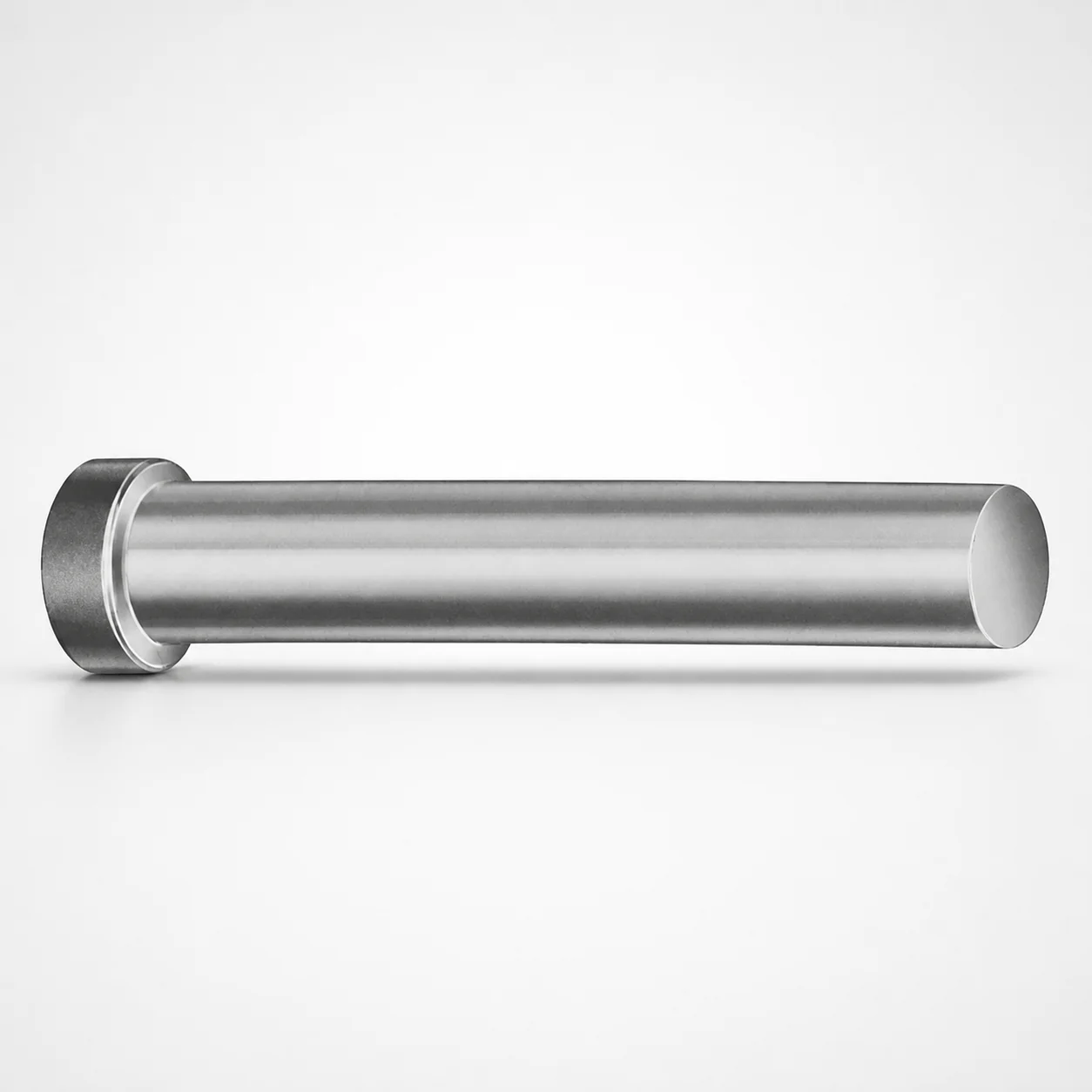
Inch Standard Steel Straight Regular Punches
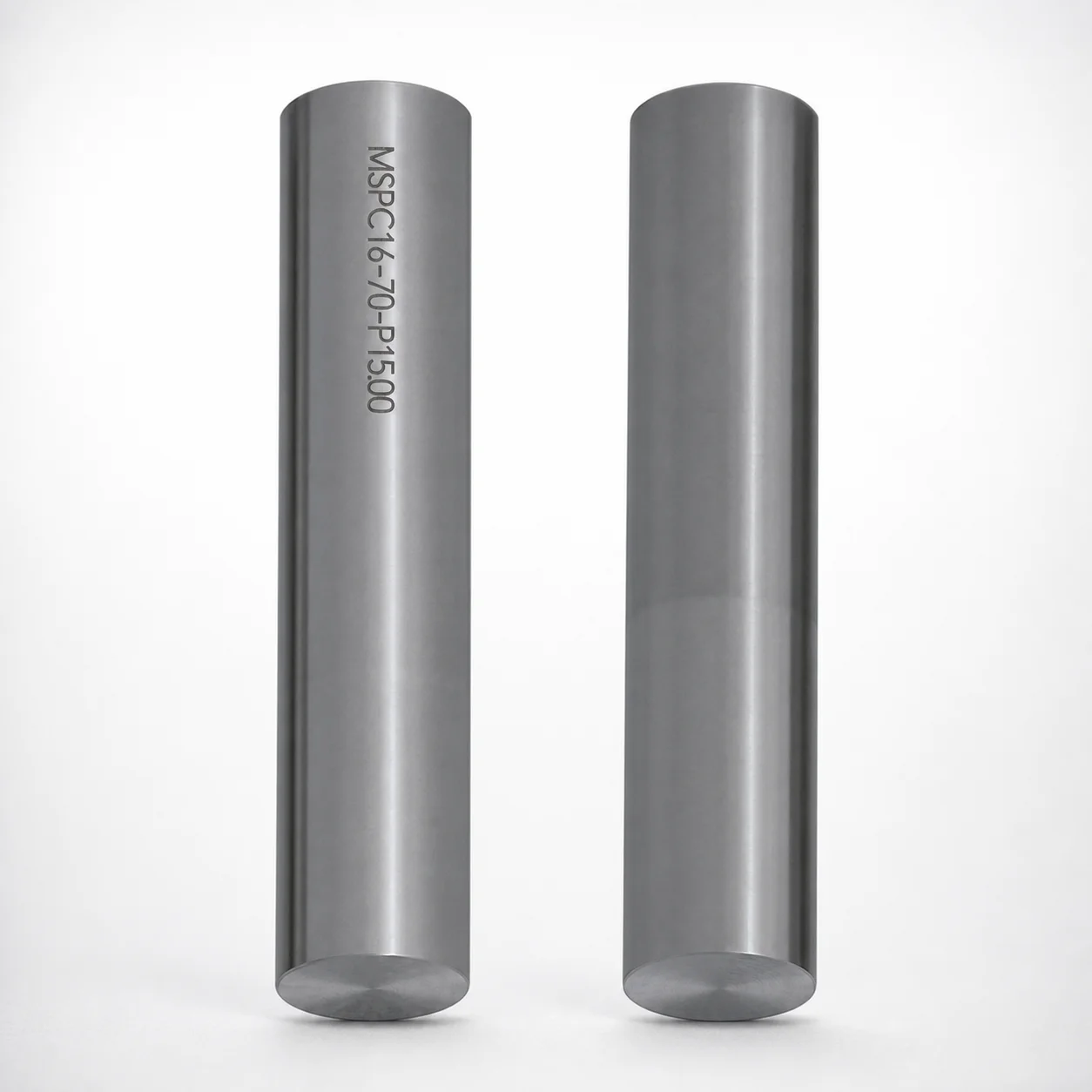
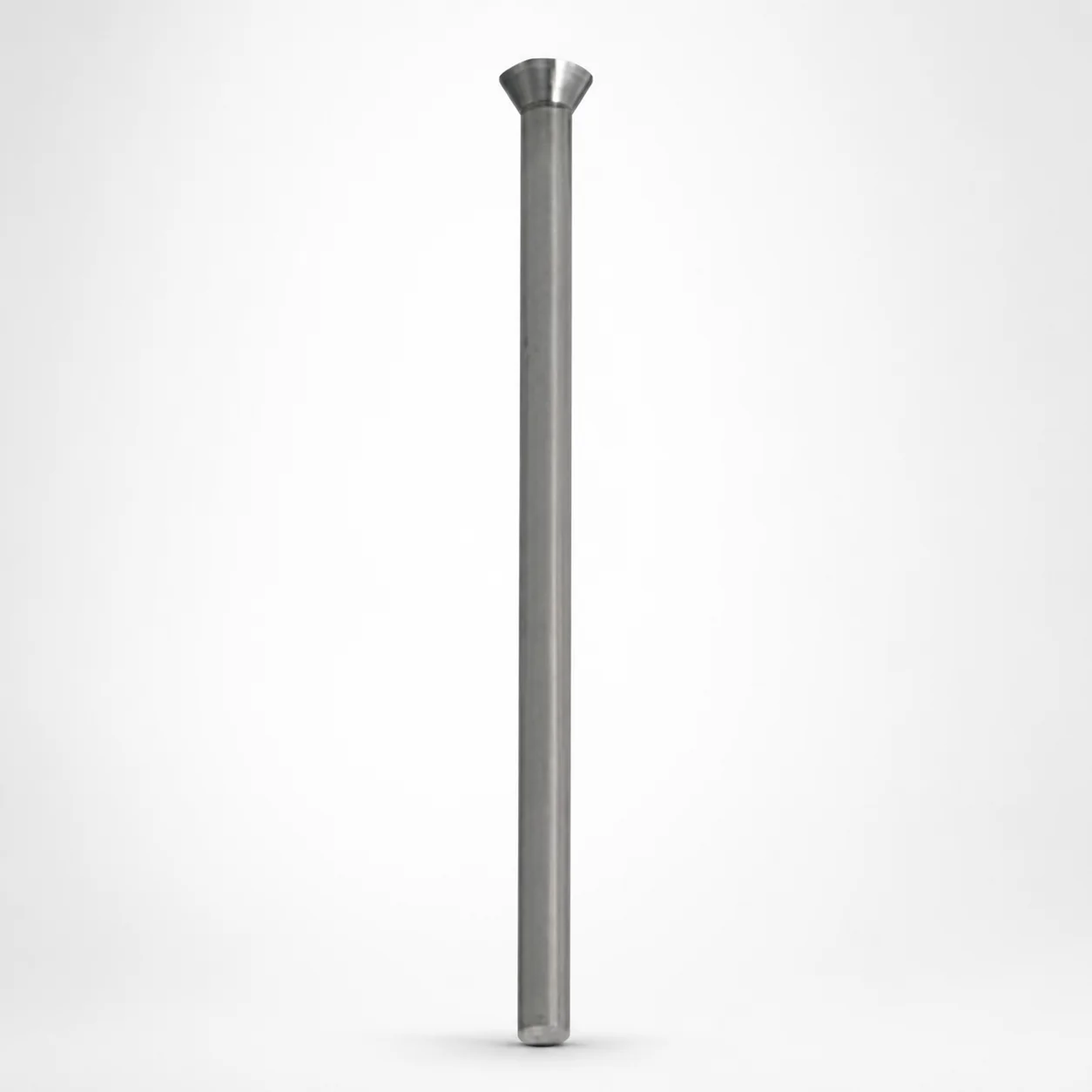
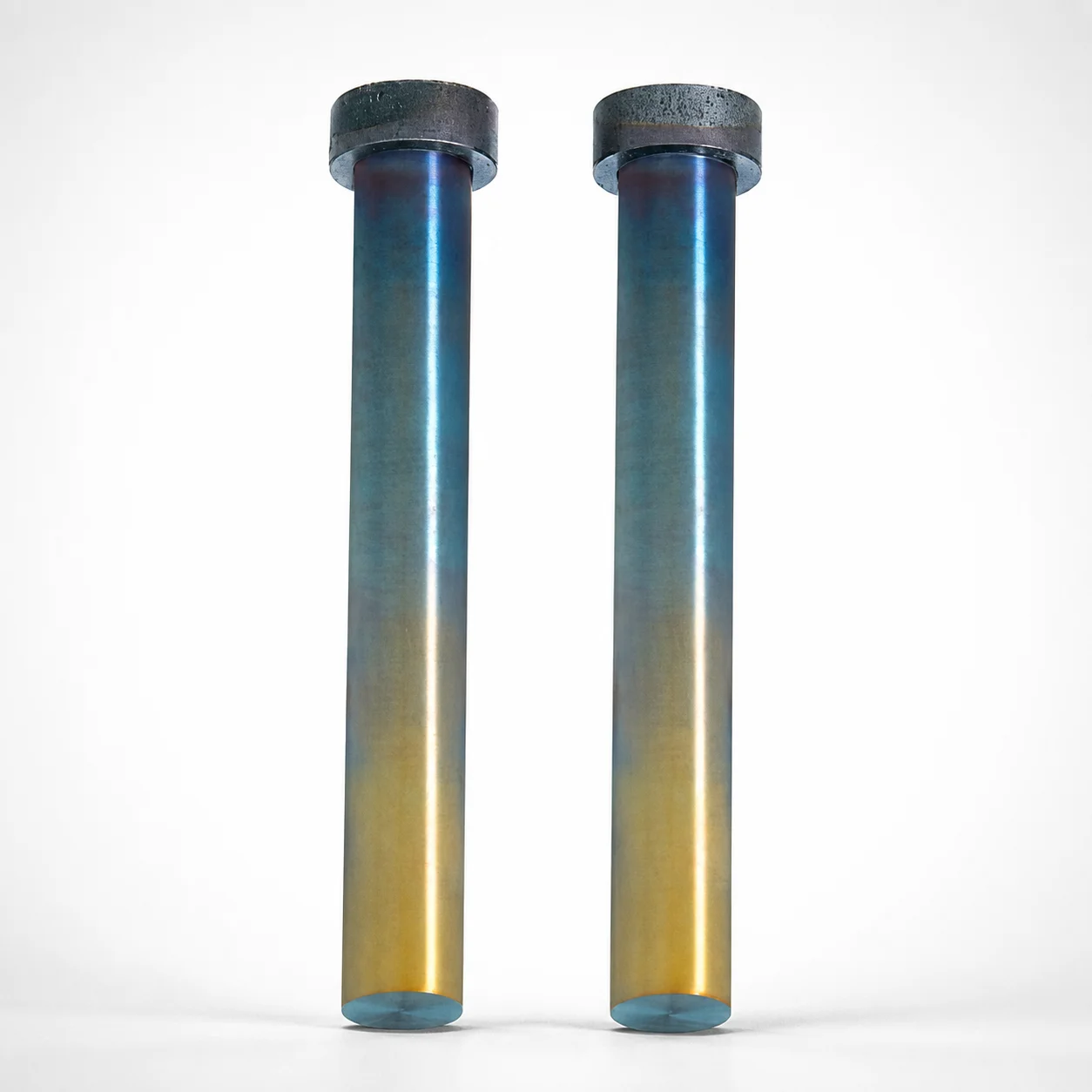
Straight regular punches (XNP coated steel) are designed for reliable press and die tooling performance, supporting consistent forming with reduced wear. The straight punch geometry helps maintain alignment during repeated operations.
- Straight punch format for stable guidance in inch die sets
- XNP coating on hardened steel to improve surface durability
- Manufactured for repeatable fit in punch-and-die assemblies
- Suitable for inch-based progressive and forming tooling applications
Specifications
1 configurations available
| L (Length) (in) | P Dimension (in) |
|---|---|
| 150 ~ 625 | 0.125 ~ 0.375 |
Product Guide
Application Scenarios+
These straight regular punches are used in inch-standard press, progressive, and forming tooling where stable guidance and consistent stroke-to-stroke alignment are critical. The straight punch geometry supports uniform engagement in die sets, helping reduce edge wander during repeated operations.
- Automotive and appliance bracket forming: The length range supports forming stages where the punch must reach deep into the work while maintaining alignment against the stripper or guide components.
- Electrical connector and terminal blanking: The straight configuration helps maintain positional control across high-cycle blanking runs, supporting stable hole geometry.
- General industrial inch die sets: The XNP-coated hardened steel surface is suited for applications that require improved wear resistance under repeated contact and sliding.
Because this variant is built for inch tooling and includes XNP coating on hardened steel, it’s a strong fit for operations that balance dimensional consistency with longer service intervals.
Material & Process Details+
This punch is made from hardened steel and finished with an XNP coating. The coating is intended to improve surface durability by increasing wear resistance in punch-and-die contact zones where friction and sliding occur during repeated forming or blanking.
- Heat treatment state: Supplied as hardened steel (exact hardness value is not specified in the provided data).
- Wear vs. toughness trade-off: Hardened steel generally provides higher hardness and abrasion resistance, while the coating helps protect the surface during cyclic loading. Excessive edge impact can still affect brittle fracture behavior, so tool clearance and press alignment remain important.
- Material comparison: Compared with uncoated tool steel, the XNP-coated hardened variant prioritizes wear resistance and longer run life; compared with softer grades, the hardened base improves durability but benefits from correct lubrication and die alignment.
Sizing & Selection Guide+
Select the punch length and tip dimension to match the depth of penetration and guidance length required by your die assembly. Two fixed parameters define compatibility for this series: L = 150–625 in and P = 0.125–0.375 in.
- Choose L (Length): Match L to the required working length so the punch reaches the intended forming/blanking depth without bottoming against the die shoe or stripper system.
- Choose P (Dimension): Set P within 0.125–0.375 in to align with the tooling’s critical contact geometry and the mating die features.
- Fit and tolerance: Use the punch dimensions to preserve punch-and-die clearance and avoid binding in the guide/stripper. Ensure the selected L and P are compatible with your press tooling drawings, as coating thickness and hardened steel finishing can influence final functional fit.
- Configurable vs fixed: L and P are the series-defined fixed ranges; other geometry features are part of the straight regular punch design.
For best results, verify your cavity/core depth and stripper engagement, then cross-check that the selected L and P fall within these specified ranges.
Frequently Asked Questions
What are the available length (L) and P ranges for these inch regular straight punches?+
The series provides a fixed L (Length) range of 150–625 in and a fixed P (Dimension) range of 0.125–0.375 in.
When selecting for a cavity/core depth, ensure the chosen L reaches the required penetration without interference, and match P to the die’s critical geometry.
How does the XNP coating affect wear performance in punch-and-die applications?+
This punch uses XNP coating on hardened steel to improve surface durability under repeated contact.
In forming and blanking cycles, the coated surface is intended to reduce wear at the sliding/contact zones, supporting more consistent forming over longer runs.
Are these punches suitable for progressive die tooling in inch-based systems?+
Yes. The design is supplied for inch tooling applications and is suited for inch-based progressive and forming tooling.
The straight punch format supports stable guidance in inch die sets, which helps maintain alignment through multiple stations.
What sizing approach should I use to prevent interference when selecting L for a forming stage?+
Use your press tooling drawings to identify the required working penetration depth, then select L within 150–625 in so the punch does not bottom out against the die shoe or stripper assembly.
Also confirm that the selected P (0.125–0.375 in) matches the die’s functional geometry to avoid binding during the stroke.
Does the hardened steel base imply a hardness requirement for my die design calculations?+
The punch is described as hardened steel, but a specific HRC value is not provided in the available data.
Use the hardened-state assumption for wear resistance planning, and ensure correct alignment/clearances in your die set to avoid edge chipping or accelerated wear under impact.
Related Products
Need Custom Specifications?
Our engineering team can help with custom configurations, material selection, and volume pricing.