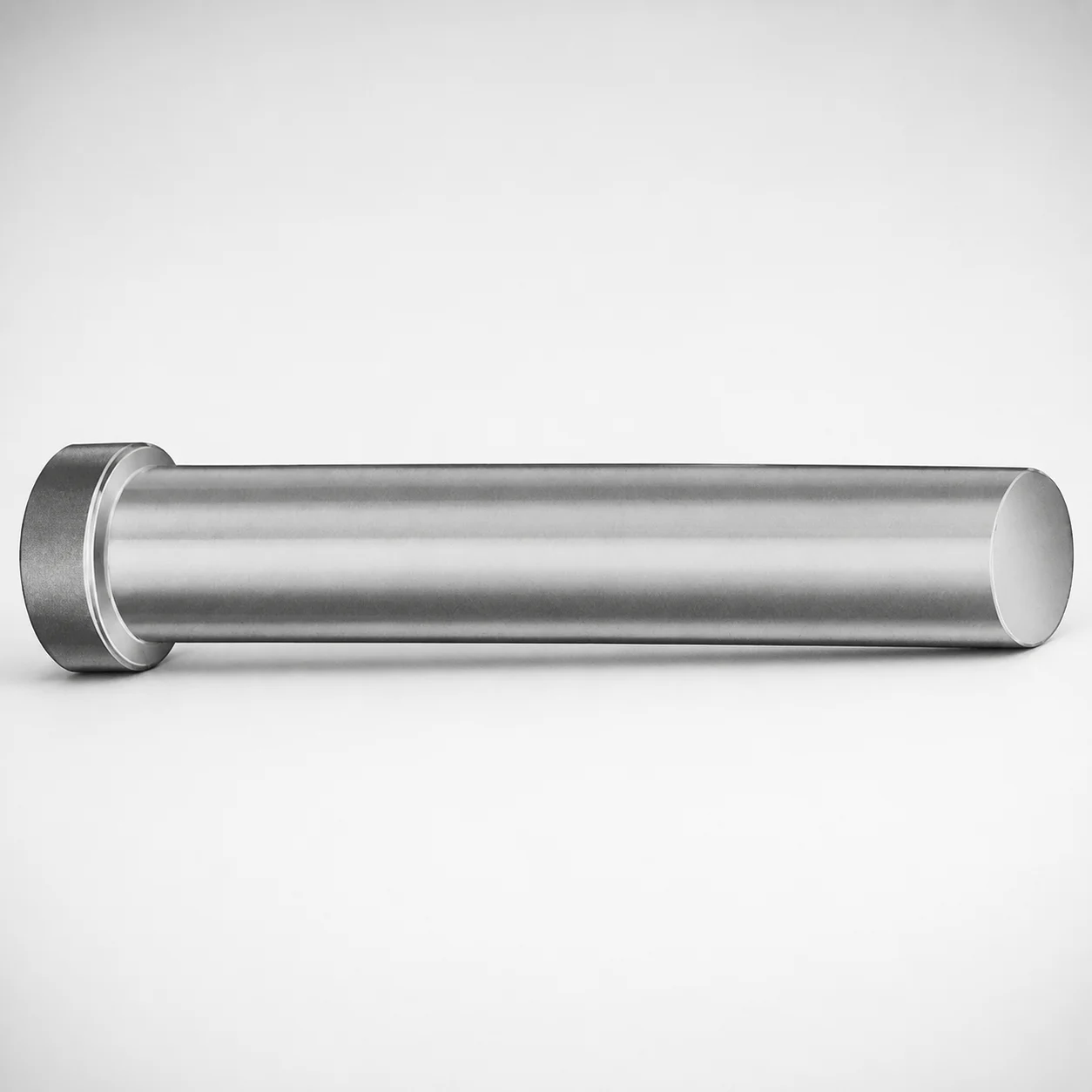
Straight Regular Punches Inch, CRN Coating
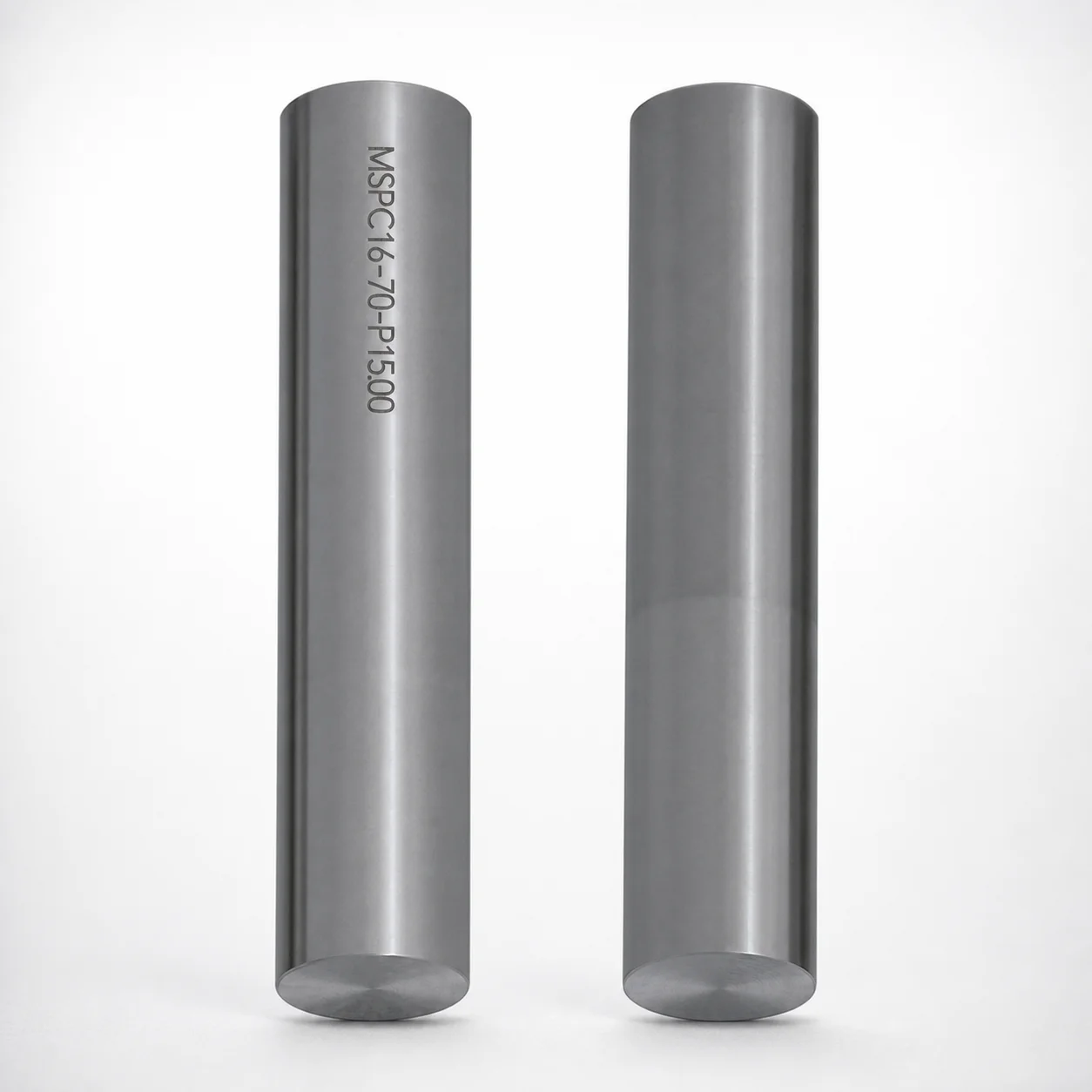
Straight regular punches inch (CRN coating) are designed for stable, straight-line punch performance in stamping and forming operations. The coating helps control wear while supporting repeatable production output.
- Straight punch geometry supports consistent alignment through the die set
- CRN coating enhances surface durability under cyclic cutting loads
- Optimized for processing ranges up to 150–625 in length configurations
- Commonly used as hardened punch components for industrial die and press tooling
Specifications
1 configurations available
| L (Length) (in) | P Dimension (in) |
|---|---|
| 150 ~ 625 | 0.125 ~ 0.375 |
Product Guide
Application Scenarios+
This straight regular punch variant is used in precision stamping and forming tooling where stable, straight punch action is required to maintain alignment through the die set. In automotive connector and terminal stamping, the consistent punch geometry helps control deflection and supports repeatable production output under cyclic cutting loads.
For industrial appliance and hardware part fabrication, these punches are commonly installed as hardened punch components in press tooling. The CRN coating is selected to enhance surface durability, improving wear control when parts are produced in long runs with frequent tool indexing.
In electronics enclosure blanking and similar thin-gauge applications, the punch length configuration range enables designers to match reach and working projection requirements while maintaining straight-line performance.
- CRN-coated surface supports dependable punch wear characteristics in repeated cutting cycles.
- Straight punch geometry aids die set alignment and dimensional consistency.
- Best matched to builds using 150–625 in length configurations and 0.125–0.375 in P-dimension constraints.
Material & Process Details+
The provided specifications describe a CRN-coated straight regular punch for stamping tooling. While the input data does not state the base steel grade, the manufacturing intent is clear: a hardened punch body followed by a CRN surface coating to improve wear resistance under cyclic cutting loads.
CRN (chromium nitride) coatings are typically applied after the punch substrate has been machined to size and finished to the required tolerances, then hardened in accordance with the tooling maker’s heat-treatment practice. The goal is a balance between high hardness for wear resistance and adequate toughness to resist chipping during impact and load variations.
- Wear resistance: improved by the CRN coating for consistent cutting-edge life.
- Toughness trade-off: as surface hardness increases, edge chipping risk can rise if substrate toughness is insufficient—hence the need for a properly heat-treated hardened punch body.
- Heat state: data indicates a hardened punch component; coating is applied to the finished punch before assembly.
Sizing & Selection Guide+
Selection begins with matching the L (Length) and P dimension to your die set design. This series supports fixed L = 150–625 in, so choose the length that provides the required working projection while preventing excessive unsupported length in the guide system.
Next, confirm your design constraints for the P dimension, which is fixed at P = 0.125–0.375 in. Ensure the selected punch geometry fits the mating die opening and clearance requirements specified by your press tooling drawings.
- Match L to cavity/core reach: use the smallest practical length that satisfies engagement and part ejection/stamping needs.
- Match P to fit envelope: verify compatibility with die set tolerances and guidance features (e.g., stripper/guide interface).
- Configurable vs fixed: L and P are fixed design parameters within the listed ranges; the series is not described with adjustable dimensions beyond those limits.
If your tooling uses tight stack-ups, verify fit at assembly by checking the full punch-to-die clearance and guidance alignment requirements in the die design specification.
Frequently Asked Questions
What length (L) range is available for this straight regular punch series?+
How does the CRN coating affect punch wear in stamping tooling?+
Is this punch suitable for die sets that require strict straight-line alignment?+
What P dimension options are compatible with my tooling fit requirements?+
Does the supplied data specify the base steel grade and hardness (HRC) of the punch body?+
Related Products
Need Custom Specifications?
Our engineering team can help with custom configurations, material selection, and volume pricing.