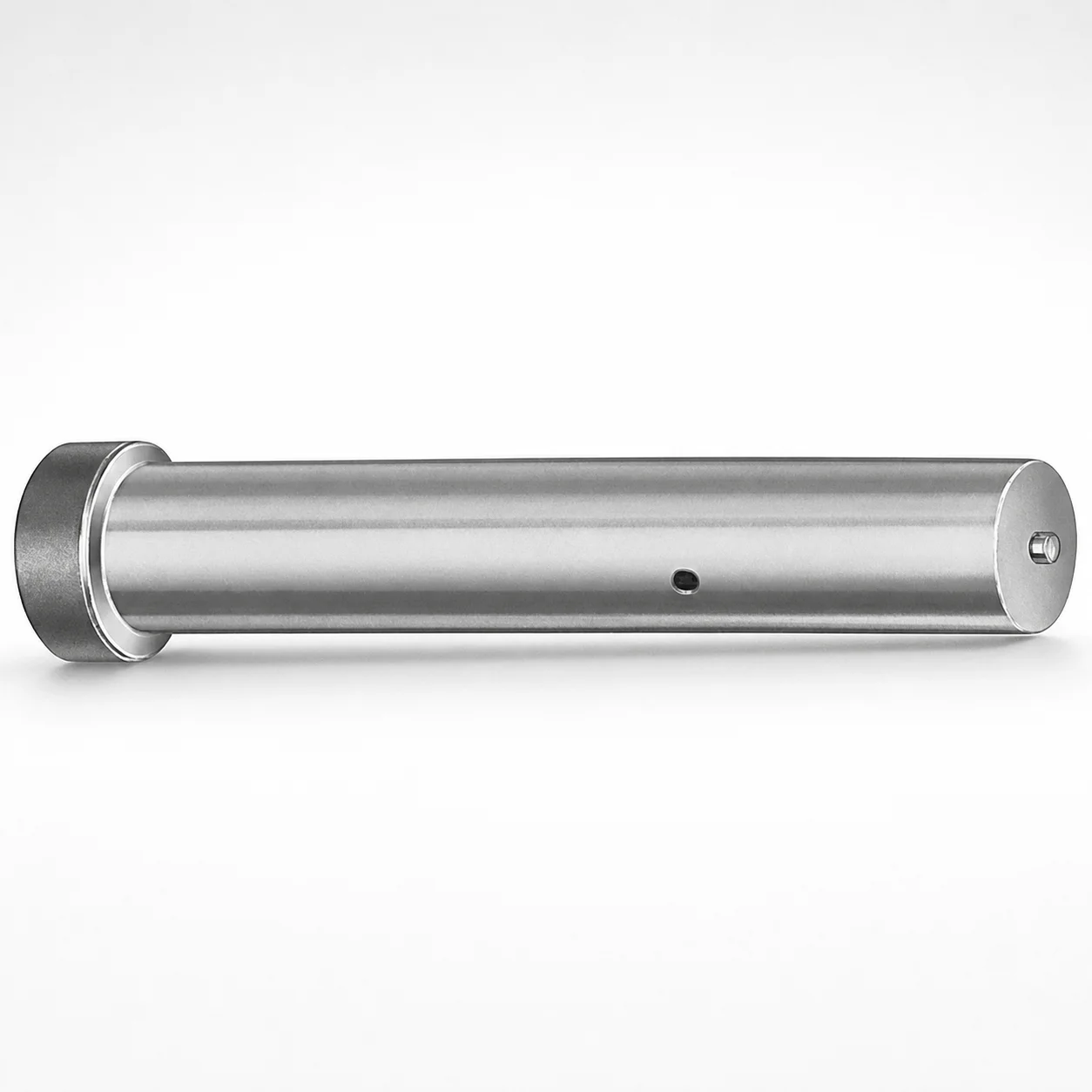
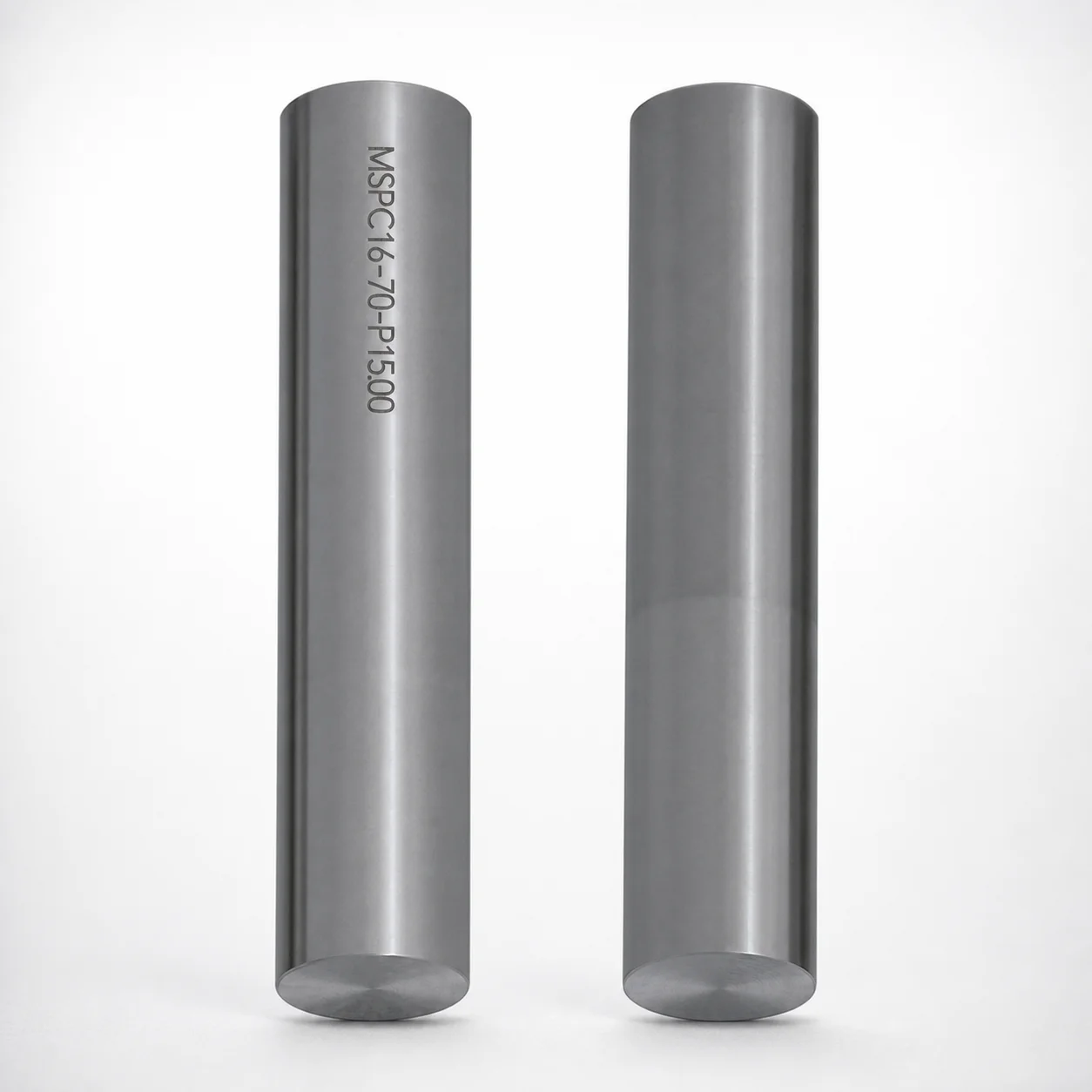
Metric Straight Ejector Punches XVP Coating
Metric straight ejector punches (XVP coating) from Dayton are engineered for consistent guidance in die and mold assemblies. The surface coating supports wear resistance to help maintain reliable ejection performance through production runs.
- Straight punch geometry supports accurate alignment in die sets
- XVP coating helps improve wear resistance and tool durability
- Metric format with controlled dimensions supports repeatable fit-up
- Suitable for progressive dies and punch-and-die tooling applications
Specifications
1 configurations available
| L (Length) (mm) | P Dimension (mm) |
|---|---|
| 50 ~ 90 | 5 ~ 16 |
Product Guide
Application Scenarios+
Where it’s used: Metric straight ejector punches with XVP coating are used in die and mold assemblies where stable ejection guidance is critical—especially in progressive dies and punch-and-die tooling. Their straight geometry helps maintain alignment between upper and lower tooling during repeated punch cycles.
Scenario 1: Progressive dies for electrical/connector components—these punches support consistent feed and ejection because they are designed for repeatable fit-up in metric tool sets. The XVP coating is suited to maintain smooth surface contact as wear accumulates over production.
Scenario 2: Automotive bracket and sheet-metal stamping dies—stable punch guidance helps reduce misalignment-related wear, improving functional reliability across long runs. Coated surfaces help extend punch service life under frequent, high-cycle impacts.
Scenario 3: General industrial forming tools—when ejector performance must remain consistent, controlled metric dimensions support predictable assembly and ejection behavior.
- XVP coating supports wear resistance for tooling durability
- Straight punch form factor promotes accurate alignment in die sets
Material & Process Details+
Material and coating: This product is specified as a DAYTON Metric Straight Ejector Punch with an XVP coating, engineered to improve wear resistance at the punch working surface. The coating’s role is to reduce surface degradation during repeated ejection cycles, supporting stable guidance.
Heat treatment: No steel grade, heat-treatment state (e.g., quenched & tempered, nitrided), or hardness (HRC) values are provided in the available specifications. Because these parameters directly affect wear/impact trade-offs, they should be confirmed before specifying for unusually abrasive materials, high-impact applications, or tight lifter guidance requirements.
- Trade-off (general): Increased surface hardness typically improves wear resistance, but may reduce toughness if not properly heat-treated—confirm grade/HRC for your load profile.
- Coating benefit: XVP coating is selected to enhance durability under guidance and friction exposure.
Sizing & Selection Guide+
Step 1: Match the length (L) to your ejector stroke and tooling stack-up. This series is available in L = 50 to 90 mm. Select a length that provides full functional engagement without bottoming out in the die base or interfering with adjacent components.
Step 2: Verify the P dimension based on your guidance and support layout. The fixed P = 5 to 16 mm range must correspond to the required punch-related feature in your die set (e.g., the defined guidance/support dimension used by your design standard).
- Use the combination of L and P to meet cavity/core spacing and ejection clearance.
- If your assembly includes precision guide components, confirm the required fit class and any local tolerance standard—this dataset lists dimension ranges but does not specify tolerances.
- Configurable dimensions: Length and P are specified as fixed-range options for ordering.
Fit guidance: For stable ejection, ensure your chosen P dimension is consistent with your die set’s guidance clearances and tolerancing approach; otherwise, wear and sticking risks increase during repeated cycles.
Frequently Asked Questions
What does the XVP coating contribute for straight ejector punch guidance?+
How do I choose the correct punch length (L) for a die set?+
Which P dimension range should be used to match my guidance/support design?+
Is this punch suitable for progressive dies and punch-and-die applications?+
Do you provide the steel grade, heat treatment, and HRC hardness for specifying wear/toughness?+
Related Products
Need Custom Specifications?
Our engineering team can help with custom configurations, material selection, and volume pricing.