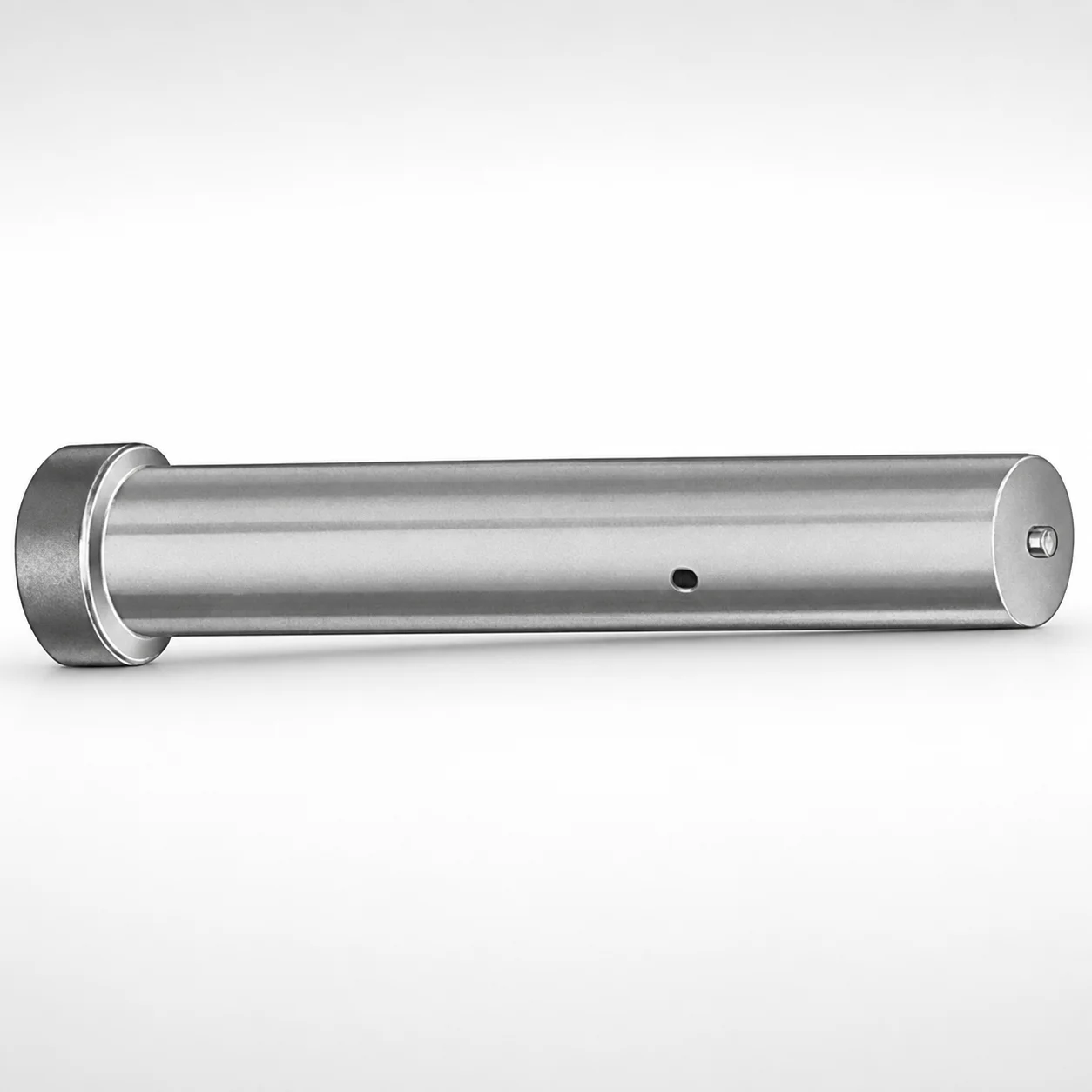
M2 Steel Straight Ejector Punches - Metric
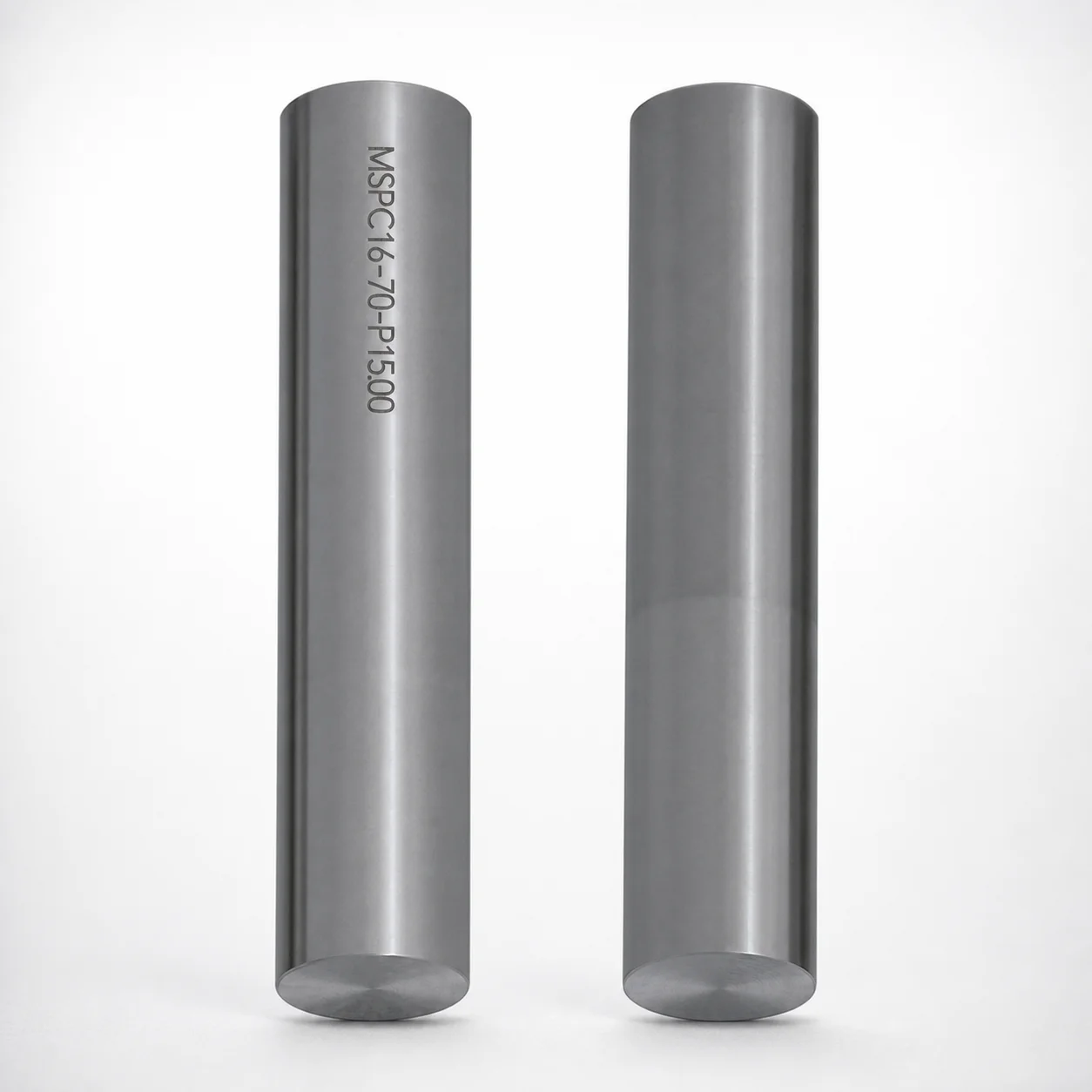
Straight ejector punches - metric (M2 steel) are engineered to support reliable punch ejection in metric tooling applications. Built for dimensional stability, they help reduce wear and support consistent cycle performance.
- Straight punch geometry for stable alignment during ejection
- M2 steel construction with durable, wear-resistant performance
- Designed for controlled L length variations to match tooling assemblies
- Suitable for metric progressive dies and punch press operations
Specifications
2 configurations available
| Material | L (Length) (mm) | P Dimension (mm) |
|---|---|---|
| M2 | 50 ~ 90 | 5 ~ 16 |
| A2 | 50 ~ 90 | 5 ~ 16 |
Product Guide
Application Scenarios+
Straight ejector punches with metric geometry are used in injection mold tooling where controlled ejection force and stable alignment are critical. In automotive connector and appliance housings, these punches support consistent part release during high-cycle production, helping maintain ejection accuracy as the press speed increases.
For medical device housings and precision end-use parts, the straight punch form reduces the risk of off-axis loading that can mar surfaces or cause uneven ejector stroke. The M2 steel option is especially suited to these environments because it offers strong wear resistance for repeated punch contact against ejector plates and mold inserts.
- Use in metric progressive dies and punch press operations requiring reliable ejector guidance
- Ideal where ejection performance depends on stable straight-line contact
- Length-selected variants support tooling stack-up and assembly-controlled stroke
Material & Process Details+
This series is offered in M2 or A2 tool steel. Both grades are commonly selected for ejector and punching applications due to their balance of wear resistance and toughness.
M2 steel (high-speed steel, typically associated with the AISI M2 family) is known for excellent wear resistance under sliding/contact loads and repeated cycling. It generally provides better hot-wear performance than lower alloy steels, which helps preserve ejection accuracy over time.
A2 steel (commonly referenced as an oil-hardening cold-work steel family) is a strong alternative when toughness and shock resistance are prioritized alongside wear resistance.
- Heat treatment: typically supplied in a ready-to-use tool-steel condition, then quenched & tempered or otherwise brought to the final hardness per shop practice for ejector duty
- Hardness: final HRC depends on heat treatment route and duty cycle; verify against your mold maker’s hardness requirement
- Trade-off: higher wear focus (M2) may reduce toughness margin versus more toughness-balanced selections (A2)
Sizing & Selection Guide+
Select ejector punch dimensions to match the mold ejector system’s stroke and guidance requirements. In this series, the L length is fixed at 50–90 mm, and the related P dimension is fixed at 5–16 mm.
Start by confirming your ejector plate stack-up and the required working length from the ejector actuator to the contacting surface. Choose the closest L within 50–90 mm to ensure proper engagement without bottoming or excessive free travel.
- Match P (5–16 mm) to the mold’s punch support features (bushing/guiding geometry) to avoid side loading
- Maintain alignment: straight punches are sensitive to off-axis loading; ensure the cavity/core mounting and guide components are concentric
- Tolerance/fit: keep clearance consistent with your guide system design; any mismatch can accelerate wear and affect ejection consistency
Frequently Asked Questions
Which material option (M2 vs A2) is better for wear resistance in straight ejector punch applications?+
Both M2 and A2 can be used for ejector punch duty, but this series specifies materials as M2 or A2. M2 is typically selected when maximizing wear resistance and sustaining ejection accuracy over repeated cycles is the priority. A2 can be chosen as an alternative when the tooling design emphasizes a different wear-to-toughness balance.
How do I select the correct L length for the ejector system?+
This series offers L (Length) = 50–90 mm (fixed range). Choose the value that matches your mold’s ejector stack-up so the punch reaches the required contact position without causing interference or bottoming. Verify working length against the ejector stroke and any safety clearance in your assembly.
What does the P dimension (5–16 mm) correspond to in my mold design?+
The series specifies P = 5–16 mm as a fixed dimension range. In practice, this dimension must be compatible with the mold’s punch support/guidance geometry so the straight punch can remain aligned during ejection. Confirm that the surrounding ejector plate or guide component provides the intended support for the selected P value.
Are these straight ejector punches suitable for metric progressive dies and punch press operations?+
Yes. The product description explicitly states suitability for metric progressive dies and punch press operations where reliable punch/ejector guidance is required. The straight geometry helps maintain alignment during ejection, which is important for consistent cycle performance.
What are the key risks if the L length or P dimension doesn’t match the mold’s guidance system?+
If L is too long, the punch can interfere with adjacent components or reduce controllable clearance. If P doesn’t match the supporting geometry, side loading can increase, accelerating wear and potentially degrading ejection accuracy. Use the specified ranges (L 50–90 mm, P 5–16 mm) to keep the ejector system aligned.
Related Products
Need Custom Specifications?
Our engineering team can help with custom configurations, material selection, and volume pricing.