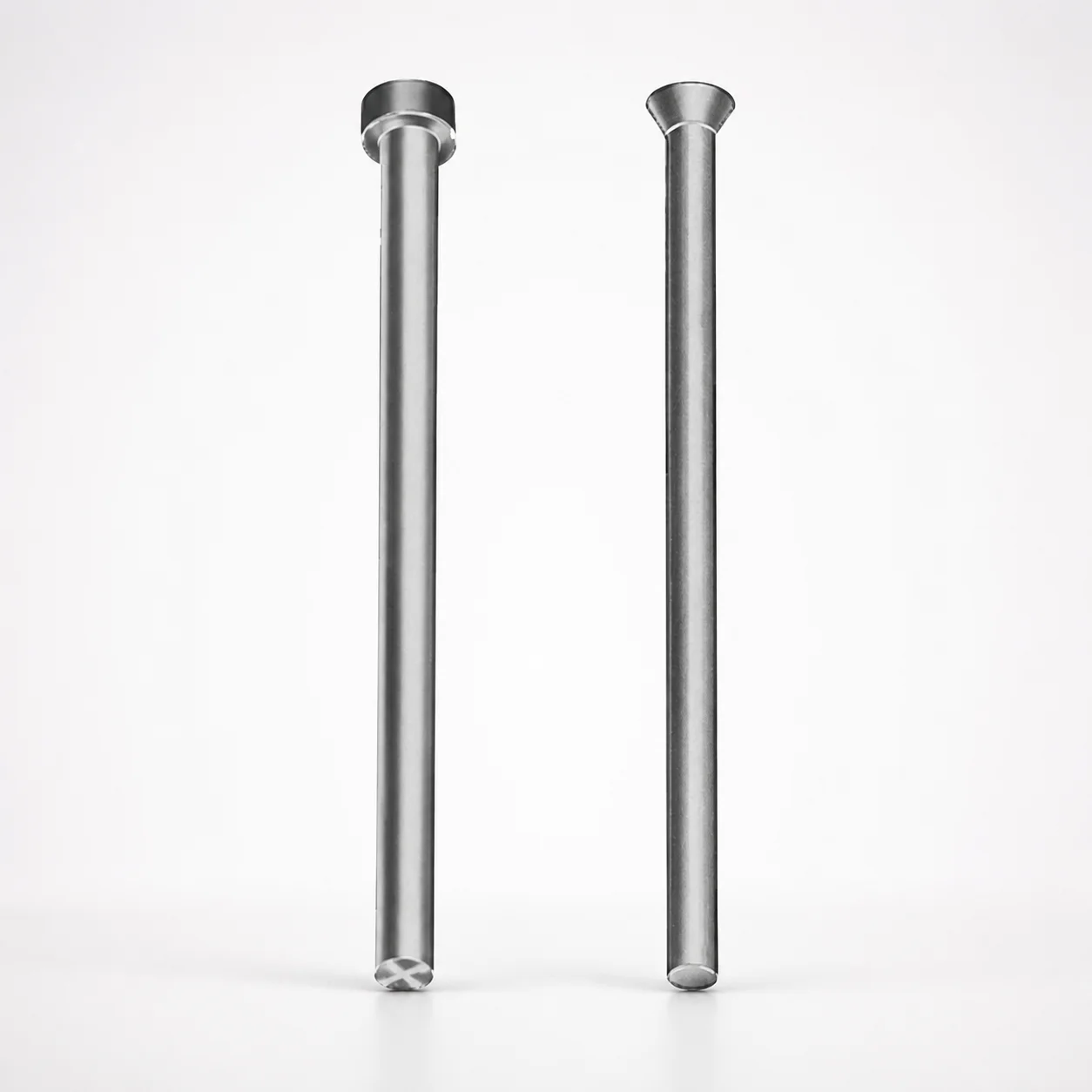
DAYTON Close Space Straight Punches (Metric) - XNAD Coating
Close space straight punches (Metric) from DAYTON (with XNAD coating) are designed for reliable locating and punching in confined die spaces, helping stabilize production operations. The coating supports consistent performance and tool wear resistance across repeated cycles.
- Close-space straight geometry for efficient punch work in tight die cavities
- XNAD coating improves wear resistance for long run productivity
- Metric format supports straightforward integration in standard die setups
- Suitable for tool and die shops requiring repeatable punch positioning
Specifications
2 configurations available
| Type | L (Length) (mm) | P Dimension (mm) |
|---|---|---|
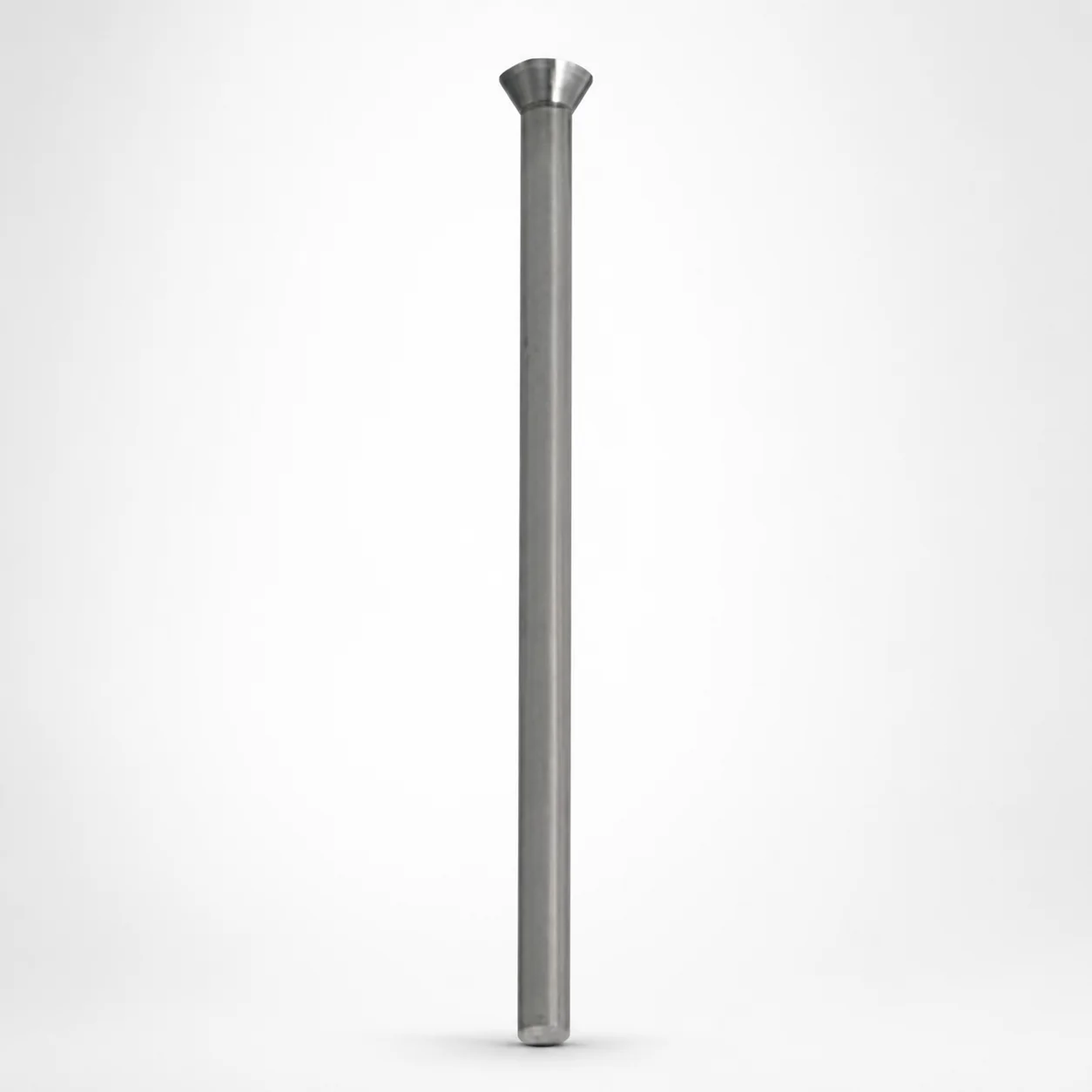
| Angled head - AWX | 40 ~ 100 | 0.8 ~ 7 |
| Regular head - AXX | 40 ~ 100 | 0.8 ~ 7 |
Product Guide
Application Scenarios+
These close-space straight punches are used in injection mold tooling where locating stability and repeatable punching must be maintained inside confined die spaces. The straight punch geometry is well suited to applications that require controlled setup close to walls, shutoffs, or adjacent features, helping reduce punch drift during repeated cycles.
- Tight-cavity connector and terminal molds: Use the close-space form to maintain consistent piercing and parting accuracy when space between cavity surfaces is limited; the XNAD coating supports durable wear life for long production runs.
- Electronics housings and frames: Straight punching supports stable mechanical locating for features such as trimming marks, ejector-related openings, or secondary operations in die inserts.
- Tool-room repair and die maintenance: The metric format (40–100 mm length) allows straightforward integration into existing metric punch holders and tooling layouts.
Choose the regular head (AXX) or angled head (AWX) variant based on access constraints to improve installation and alignment in restricted die tooling.
Material & Process Details+
The provided specifications specify an XNAD coating variant, which is selected to improve sliding wear resistance at the punching interface and support stable performance over repeated cycles. The core tool steel grade and target hardness are not included in the available data, so material hardness and exact heat-treatment parameters cannot be stated from the current specification sheet.
- Coating effect: XNAD is intended to reduce wear and help maintain punch dimensional consistency during high-cycle punching in tight die locations.
- Trade-offs: Coatings typically optimize surface wear performance, while bulk toughness is determined by the underlying punch steel and its heat treatment (not specified here).
- Variant selection: If alternative coatings or base steel options are offered for the same series, select based on required cycle count, abrasive nature of the workpiece, and acceptable risk of micro-chipping in confined geometries.
For definitive hardness (HRC) and quench/temper or nitriding details, confirm the punch steel material certificate for series 250301353968.
Sizing & Selection Guide+
Select the correct punch size by matching the length L (40–100 mm) and the P dimension (0.8–7 mm) to the die insert depth and required penetration geometry. In close-space applications, correct length is critical to ensure the punch maintains alignment without bottoming out or losing guiding engagement in the guide bushing/holder.
- Match L to die setup: Choose a length within 40–100 mm so the punch reaches the intended punching depth while leaving safe clearance for wear and die movement.
- Set P to feature/process requirement: Select P (0.8–7 mm) to achieve the needed punch working profile and clearance relative to surrounding die surfaces in the confined cavity area.
- Head type for access: Use AXX (Regular head) when tooling space allows; choose AWX (Angled head) when access or tool holder clearance requires an offset approach.
If tight fits are required, verify that the punch diameter interface and holder bore tolerance (not provided in the current data) meet your press and die standard before assembly.
Frequently Asked Questions
What are the available head types (AWX vs AXX) for the DAYTON close-space straight punches, and when should I use each?+
This series is offered in Angled head - AWX and Regular head - AXX. Use AXX when straight access is available and guiding alignment is straightforward. Choose AWX when die construction limits straight-line access and you need improved clearance for installation in tight cavities.
How do I choose the correct length L for a close-space punch in an injection mold die set?+
The fixed L (Length) range is 40–100 mm. Match L to the die insert depth so the punch can perform the required punching action without bottoming out. In tight cavities, correct length also helps maintain stable guiding contact during repeated cycles.
What does the P dimension (0.8–7 mm) control, and how should it be matched to my punch location geometry?+
The P dimension range is 0.8–7 mm for this series. Select P to achieve the required working profile/clearance relationship between the punch and adjacent die surfaces in confined space. Validate the value against your cavity/core layout so the punch can operate without interfering with neighboring shutoffs or insert features.
Does the XNAD coating affect tool wear life in tight-cavity punching operations?+
Yes. The series specifies XNAD coating, which is intended to improve wear resistance and support consistent performance across repeated cycles. This is especially beneficial in close-space tooling where abrasive contact and limited lubrication can accelerate wear.
Can I assume a specific steel hardness (HRC) or heat-treatment state for series 250301353968?+
The provided data does not list the base steel grade, hardness in HRC, or heat-treatment state (e.g., quenched & tempered, nitrided). The only explicitly provided material-related information is the XNAD coating. To confirm hardness and heat treatment, request the material/coating technical documentation for this exact series code.
Related Products
Need Custom Specifications?
Our engineering team can help with custom configurations, material selection, and volume pricing.