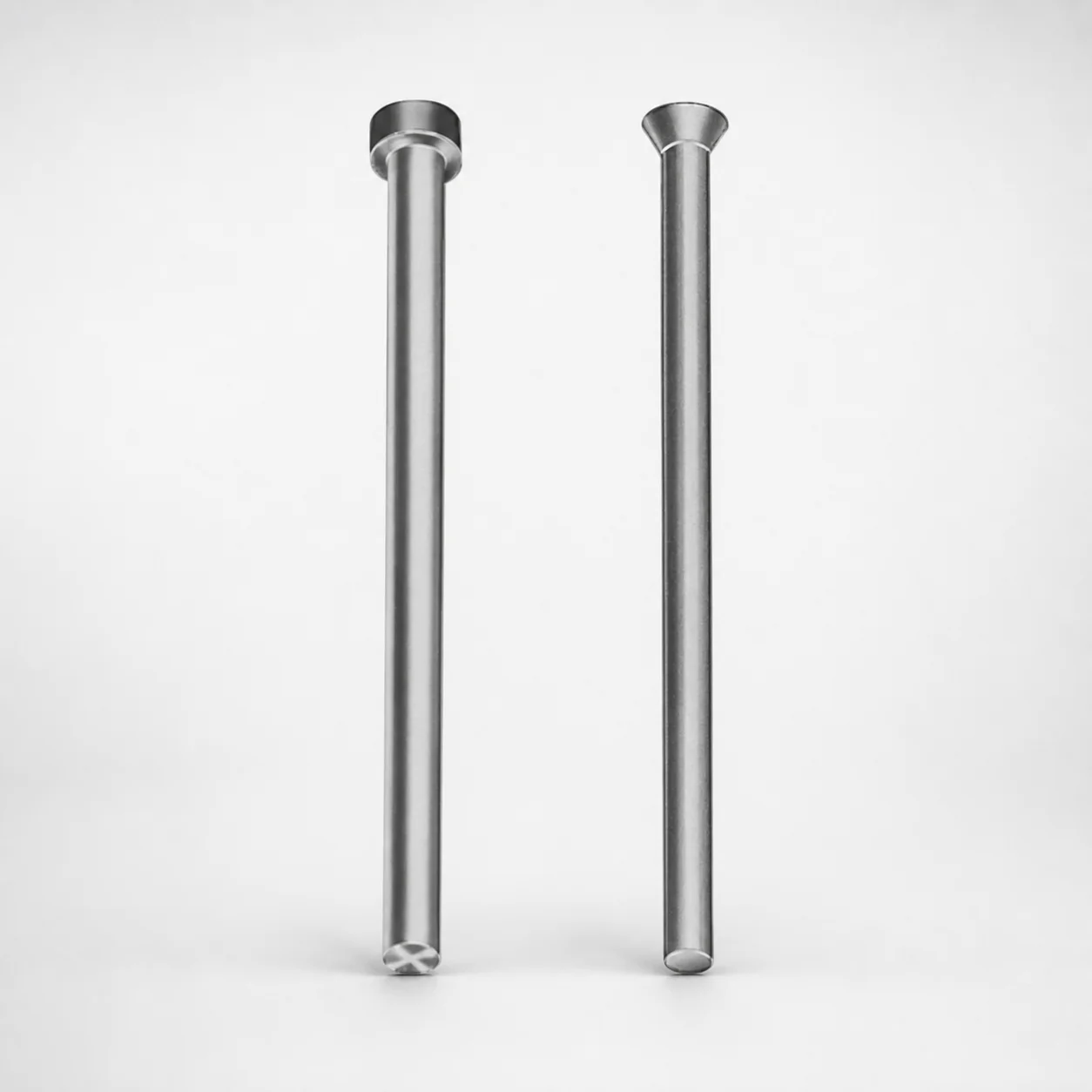
DAYTON XNAD Coating Close Space Straight Punches - Inch
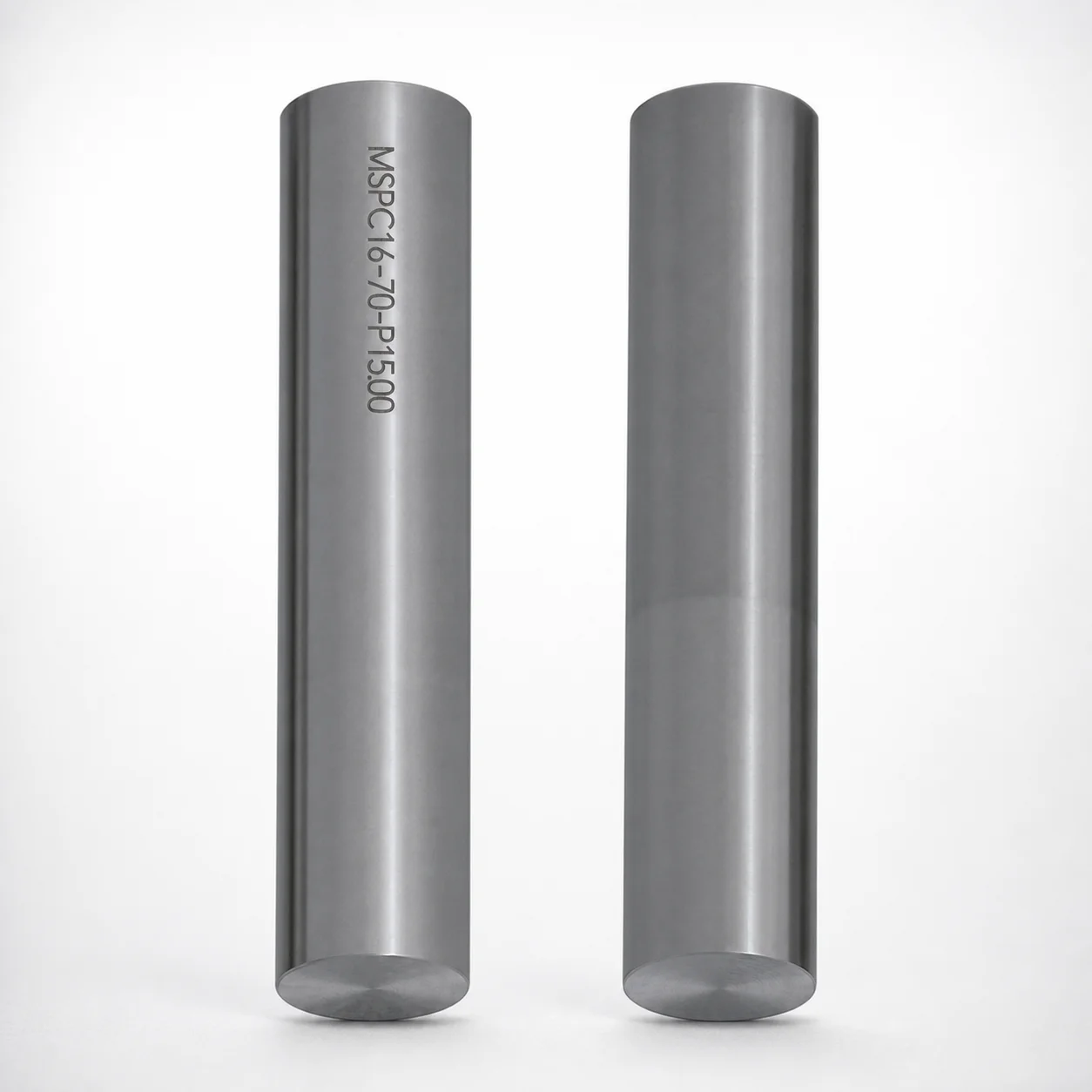
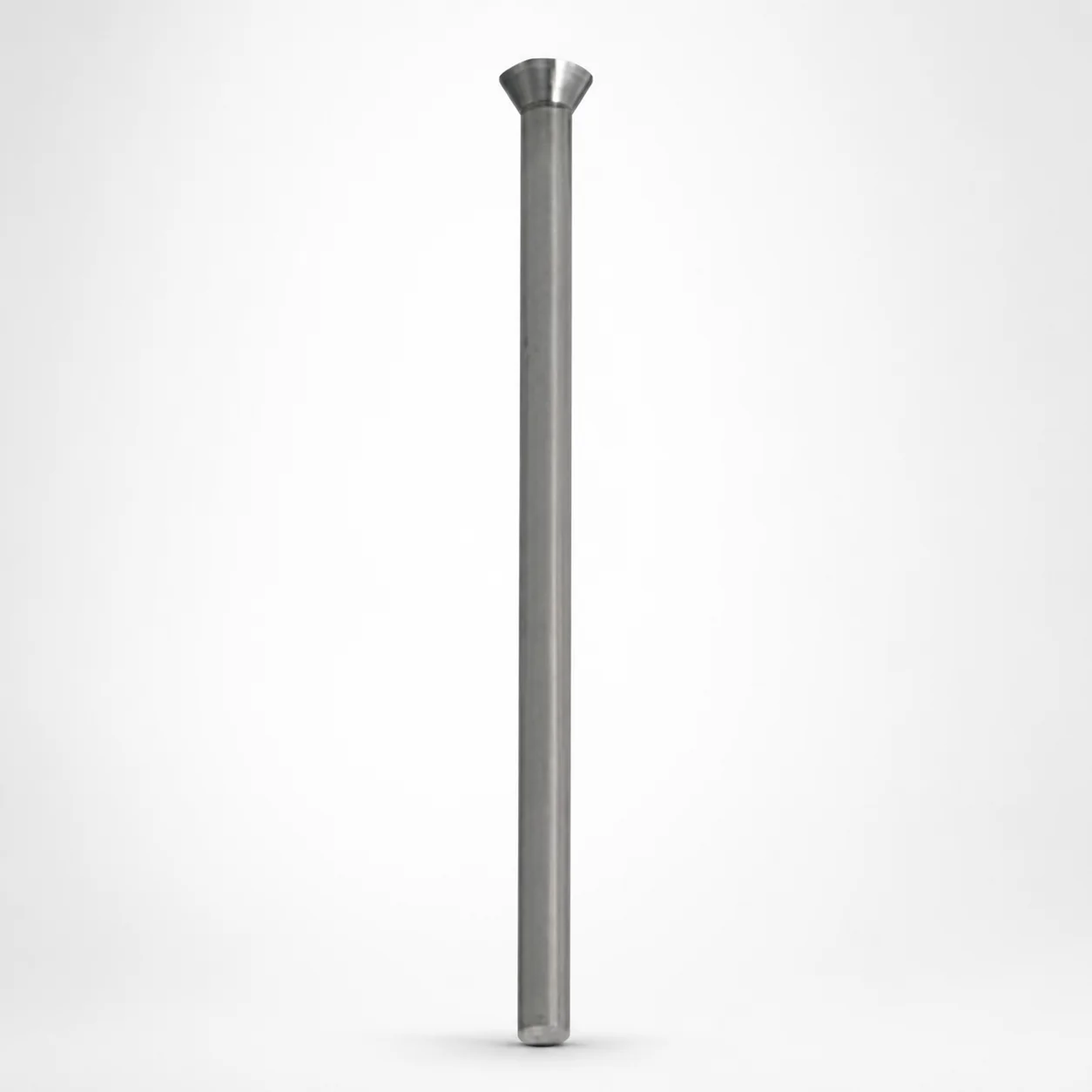
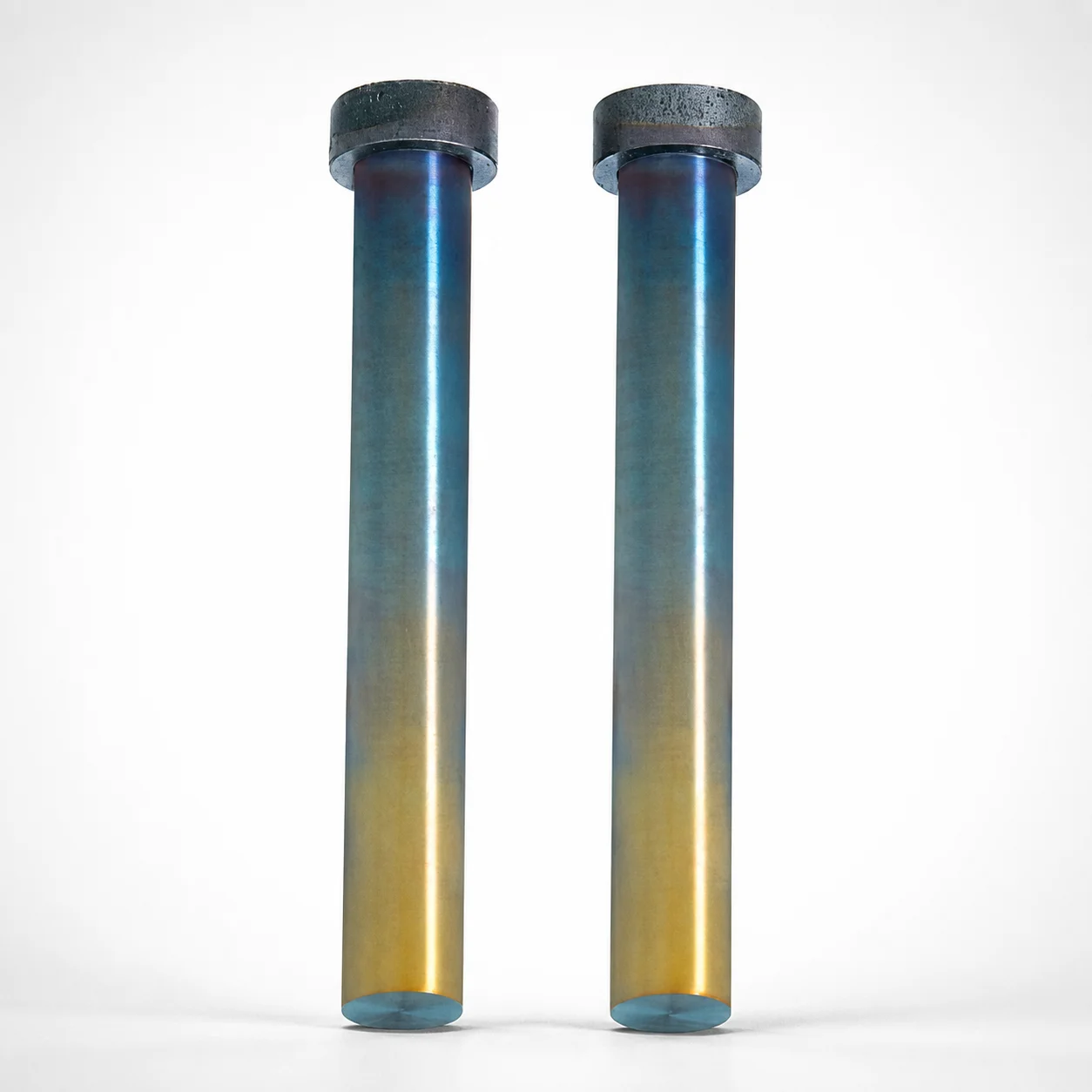
Close space straight punches - inch (DAYTON XNAD coating) are designed for precise blanking and reliable part location in tight die-set spaces. The coating supports consistent tool performance across production runs and repeatable indexing.
- Close-space straight punch geometry for controlled forming in limited die clearance
- XNAD coating helps improve wear resistance and reduces friction-related loss
- Configurable regular head (KCX) or angled head (KWX) for tooling fit
- Built for in-die use with typical inch-length applications up to 400 in
Specifications
2 configurations available
| Type | L (Length) (in) | P Dimension (in) |
|---|---|---|
| Regular head - KCX | 150 ~ 400 | 0.04 ~ 0.25 |
| Angled head - KWX | 150 ~ 400 | 0.04 ~ 0.25 |
Product Guide
Application Scenarios+
Close-space straight punches are used in injection mold tooling workflows when operations require controlled forming and consistent part positioning within limited clearance. The XNAD-coated punch surface is suited for high-repeat cycles where friction and sliding resistance can affect stroke consistency.
- Automotive connector/terminal insert molding: used to blank or index features that must stay aligned through tight die sets; the close-space geometry supports forming in reduced die clearance.
- Appliance and housings: helps maintain repeatable location during production runs where the punch repeatedly engages the same tooling surfaces; the coating supports steadier performance across cycles.
- Electronics enclosures: regular or angled head variants (KCX or KWX) allow better fit to the die structure, improving alignment in constrained tool layouts.
Choose the regular head (KCX) for straightforward die engagement, or the angled head (KWX) when space or tooling access requires a different approach angle.
Material & Process Details+
The provided specifications describe the DAYTON XNAD coating on the close-space straight punch, with focus on wear and friction-related performance. No base steel grade, hardness (HRC), or specific heat-treatment state (e.g., quenched & tempered, nitrided) is listed in the input data, so these values should be verified with the supplier documentation for your exact series.
- XNAD coating effect: improves wear resistance and reduces friction-related loss during repeated punch contact.
- Trade-offs: coating durability supports longer run life in close-space applications, but actual wear performance depends on die material pairing, blank geometry, and lubrication strategy.
- Material options: the input data only confirms head type configurability (KCX regular head vs KWX angled head), not multiple steel grades.
If you need confirmed steel grade equivalence and HRC, request the material/heat-treatment data for series code 250301145552.
Sizing & Selection Guide+
Select dimensions by matching the punch length L (150–400 in) and the P dimension (0.04–0.25 in) to your die-set envelope and engagement requirement. In close-space designs, insufficient length can cause under-travel, while excessive length can interfere with die components or backing plates.
- Length (L): choose within 150–400 in to achieve the required in-die engagement depth for the blanking/positioning stroke without bottoming or collision.
- P dimension: match 0.04–0.25 in to the intended controlled clearance/feature relationship for forming and location.
- Head type fit: use KCX (regular head) where straight engagement fits the die structure, or KWX (angled head) when die access or mounting geometry requires an offset approach.
Tolerance/fit guidance is not specified in the input data; treat P and L as design-critical dimensions and confirm tolerance requirements with your die drawings and press capability.
Frequently Asked Questions
How do I choose between KCX (regular head) and KWX (angled head) for tight die-set packaging?+
What length and P dimension ranges are available for this close-space straight punch series?+
What benefits does the XNAD coating provide in production runs?+
Is there any specified base steel grade, hardness (HRC), or heat-treatment state for this product?+
For close-space die clearance, which dimension should I prioritize—L or P?+
Related Products
Need Custom Specifications?
Our engineering team can help with custom configurations, material selection, and volume pricing.