Mold Interior Cooling Components
Complete internal cooling system components — baffles, cooling pipes, heat pipes, cooling circuit distributors, waterline plugs, sealing O-rings, and maintenance accessories — for achieving uniform mold temperature and minimal cycle time.
Product Categories
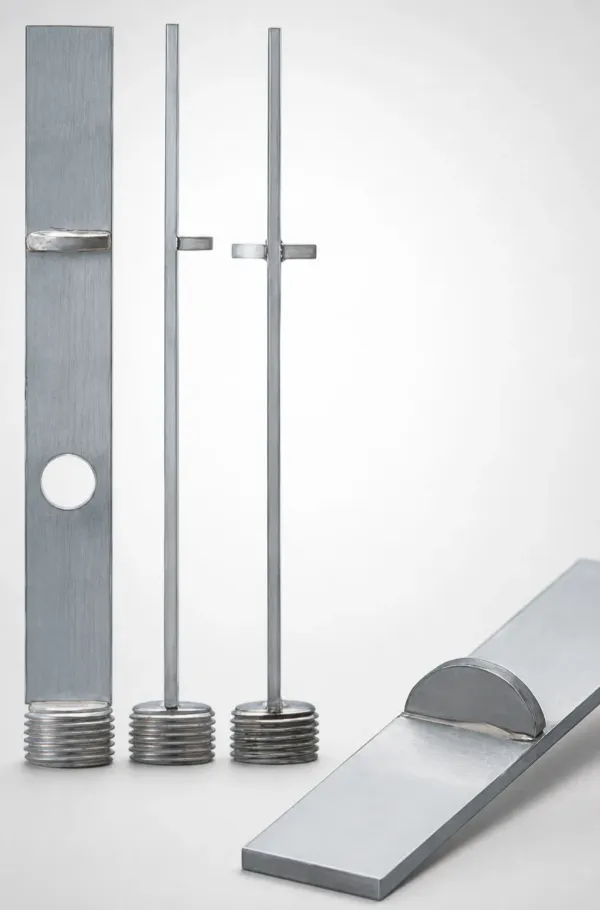
Mold Cooling Baffles
Flat and spiral baffles in brass, stainless steel, and nylon-GF for redirecting coolant flow in drilled channels.
View 10 Products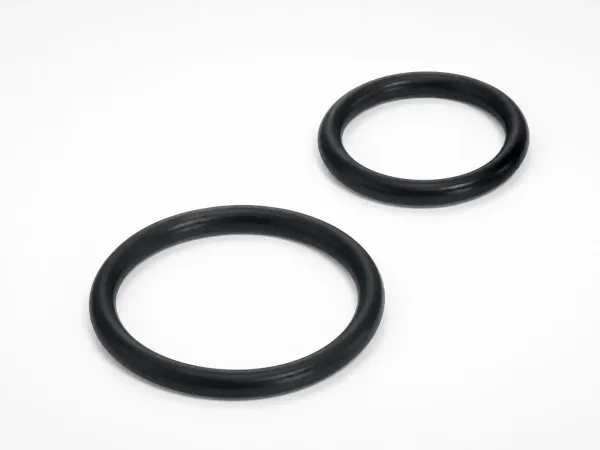
O-Rings for Mold Cooling
Static, dynamic, and space-saving O-rings for sealing cooling channel connections and plug interfaces.
View 1 Product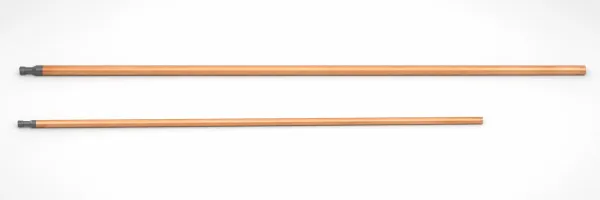
Thermal Pins (Heat Pipes)
Phase-change thermal conductive pipes for high-efficiency cooling in deep cores and narrow pins.
View 1 Product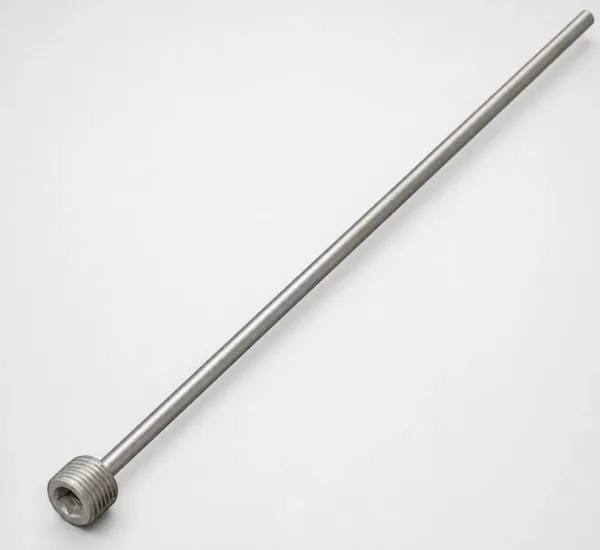
Cooling Pipes
Standard cooling pipes, cascade tubes, high-flow assemblies, and spot cooling pipes in SS and brass.
View 16 Products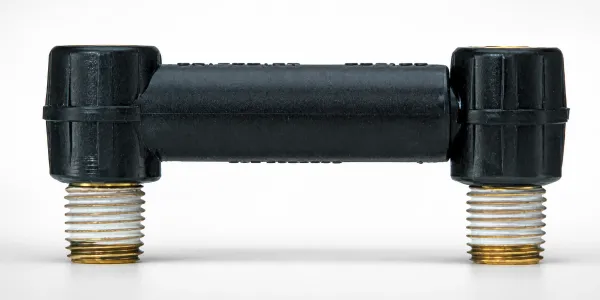
Cooling Circuit
Uni-joint plugs, cooling water manifolds, and hydro-circuit blocks for cooling water distribution.
View 6 Products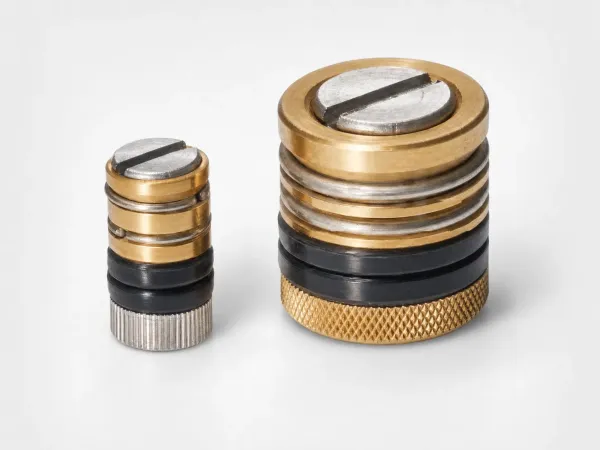
Mold Cooling Plugs
Aluminum, brass, and steel plugs with O-ring, pressure, and threadless seal options for waterline sealing.
View 13 Products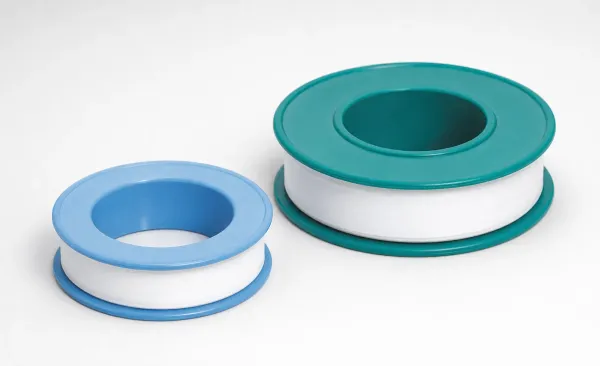
Mold Cooling Accessories
Water flow checkers, PTFE seal tapes, air jet coolers, marker rings, safety clips, and installation tools.
View 6 ProductsInternal Cooling Technologies Compared
Three core technologies for cooling inside drilled mold channels. Choose based on your channel geometry, thermal demand, and budget.
| Dimension | Mold Cooling Baffles | Cooling Pipes / Cascades | Heat Pipes (Thermal Pins) |
|---|---|---|---|
| Heat Transfer Mechanism | Forced convection (U-turn flow redirection) | Forced convection (Tube-in-tube bubbler flow) | Evaporation-condensation phase-change cycle |
| Thermal Conductivity | ~50-120 W/m·K (Brass: 109, SS: 16, Nylon: 0.3) | ~80-160 W/m·K (enhanced turbulent mix) | $10,000 - 200,000 \text{ W/m·K}$ (equivalent) |
| Limit Depth-to-Diameter Ratio ($L/D$) | Max 15:1 (blade tends to twist or bypass) | Max 30:1 (limited by inner tube rigidity) | Max 50:1+ (transfers heat via vacuum core) |
| Min. Channel Diameter | ø6 mm (limited by blade thickness and flow area) | ø6 mm (outer tube); ø4 mm (inner piston tube) | ø3 mm (ideal for micro core pins) |
| Water Connection Required | ✓ Yes (requires supply & return connections) | ✓ Yes (requires supply & return connections) | ✗ No (sealed, self-contained; heat transferred to base) |
| Installation Complexity | Low — slide blade in, torque tapered plug | Medium — thread/crimp inner & outer couplers | Low/Medium — press-fit or high-thermal grease sleeve |
| Relative Cost | $ (lowest, basic consumable) | $$ (moderate, configurable fittings) | $$$$$ (5-10× baffle cost, specialty component) |
| Best For | Standard cores & plates ($L/D \le 15$, $D \ge 8\text{mm}$) | Deep core pins ($15 < L/D \le 30$) | Narrow core pins ($L/D > 30$ or $D < 6\text{mm}$) |
Selection rule: Start with baffles for standard cooling channels (depth ≤ 150 mm, diameter ≥ 8 mm). Move to cooling pipes/cascades when you need higher flow rates or deeper reach. Reserve heat pipes for geometrically constrained areas where water cooling is impossible. For a detailed comparison, see our Baffles vs Bubblers vs Cooling Pipes guide.
Match Your Cooling Challenge to the Right Component
Different mold geometries create different cooling challenges. Select the scenario that matches your situation:
Standard Depth Cooling Channels ($L/D \le 15$)
Straight drilled waterlines in cavity plates or cores where standard flow redirection is sufficient. Directs flow up and down using brass/SS flat blades or nylon spiral inserts.
Recommended → Flat or Spiral Mold Cooling Baffles (BPTF/SPNF Series)
Deep or Rigid Core Channels ($15 < L/D \le 30$)
Deep cores or situations where water must be jetted directly to the tip of a tube. Bubbler tubes ensure active fresh water circulation at the blind end.
Recommended → Cascade Tubes & High-Flow Bubbler Pipes (KPCF/KPMF Series)
Narrow Core Pins or Dry Zones ($L/D > 30$)
Micro core pins ($\phi3-\phi6\text{mm}$) or areas where drilling waterlines is blocked by ejector pins or slide mechanisms. Transfers heat to a water jacket at the base.
Recommended → Thermal Pins (Heat Pipes) (HPNS Series)
Multi-Zone Flow & Temperature Control
Distributing and regulating coolant from MTC units to multiple mold zones. Replaces complicated external hoses with integrated aluminum blocks or multi-port manifolds.
Recommended → Water Manifolds & Integrated Hydro-Blocks (MNDF/HFCB Series)
Design tip: Most molds combine multiple cooling technologies — baffles in standard channels, cascades in deep bores, and heat pipes in narrow cores. It's rare to use only one type across an entire mold.
Heat Pipe vs Baffle: Is the Investment Worth It?
Heat pipes cost significantly more upfront but can deliver substantial cycle time savings. Here's a framework for evaluating the ROI:
| Factor | Conventional Baffle | Heat Pipe |
|---|---|---|
| Unit Cost (per channel) | $5-15 | $50-150 |
| Cycle Time Impact | Baseline | 15-35% reduction at hot spots |
| Part Quality Impact | Adequate for standard geometries | Eliminates sink marks at deep cores |
| Maintenance | Periodic descaling required | Maintenance-free (sealed unit) |
| Lifespan | 1-3 years (corrosion dependent) | 10+ years (hermetically sealed) |
ROI framework: Calculate payback as: (Heat pipe cost premium) / (Per-shot savings from cycle time reduction × annual shot volume). For a detailed analysis template, see our Heat Pipe vs Baffle ROI Analysis.
Component Pairing Guide
Internal mold cooling components must be paired with precise tolerances to prevent media bypass or pressure leakage. Here is the matching logic:
Baffles & O-Rings
Flat/spiral baffles with integrated screw plugs require elastomer O-rings. Ensure FKM (fluoroelastomer) is used for water temperatures >100°C to prevent heat hardening.
E.g., BPTF ø10 Baffle matches ORSO 8.8 (FKM) O-ring.Tapered Plugs & Threads
Plugs must match the port thread standard. Use PT/Rc (JIS standard) tapered threads or NPT (ANSI standard) threads. Never mix metric and inch standards.
E.g., R1/8 tapered waterline port requires MSPE 1/8 brass plug.Cascades & Replacement Heads
Cascade inner pipe headers degrade over time due to mineral erosion. Choose replacement heads that match the outer pipe series diameter and flow type.
E.g., KPCF ø10 Cascade assembly pairs with KPCH ø10 heads.Flow Checkers & Fittings
Ensure the flow checker's flow rate range (e.g., 0.5-5 L/min) matches your pump output. Use marker rings at port connections for inlet/outlet color-coding.
E.g., FMDF Flow Checker + MNDF color-coded marker rings.Pairing tip: When ordering baffles or cooling pipes, always add the matching O-rings and plugs to your order. A missing O-ring discovered during mold assembly can delay the entire build. See our Cooling Accessories Pairing Guide for complete compatibility tables.
Are You in the Right Place?
Internal cooling components have clear technology and physical boundaries with the wider mold shop setup. Verify your scope below:
✅ You're in the right place if:
You need components that sit **inside** the mold base plates (cavity/core blocks) and deal with primary heat extraction from mold steel. These include:
- Baffles and Bubbler Tubes inside waterlines
- Thermal Pins (Heat Pipes) inside deep cores
- Inner O-rings and expansion plugs for block sealing
- In-line manifold circuit blocks
🔄 Consider switching to:
You need shop-floor components connecting the mold's exterior to the chiller/heater machine. These include:
- Need **external hoses** (EPDM, silicone, or braided metal) or quick-connect couplers on the mold surface? → See **Mold Cooling Joints & Hoses**
- Need the main thermal machine (Water Chiller, Mold Temperature Controller / Oil Heater)? → See **Mold Temperature Regulation Machinery**
About Mold Interior Cooling Components
Mold interior cooling components are the critical elements installed inside drilled cooling channels to maximize heat extraction from the molded part. The fundamental challenge is simple: molten plastic at 200-300°C must be cooled to below its heat deflection temperature (typically 60-100°C for commodity resins) as quickly and uniformly as possible.
The component choice depends on channel geometry and thermal demand. Baffles are the simplest solution — a metal blade divides the channel into supply and return, creating turbulence. Cooling pipes and cascades use a tube-within-tube design for deeper channels. Heat pipes use phase-change physics (evaporation-condensation of a sealed working fluid) to achieve thermal conductivity 100-1000× higher than copper, solving cooling challenges in areas where water cannot physically flow.
Supporting components — O-rings, circuit plugs, manifolds, and flow checkers — complete the system by ensuring leak-free connections, proper water distribution, and ongoing performance monitoring.
Application Scenarios
High-Cavity Precision Molding
32-128 cavity molds for medical and packaging applications where every cavity must cool identically — even 2°C variation causes dimensional rejection.
Cascade cooling pipes deliver consistent high-flow cooling to each cavity position. Manifolds with independent circuit control let you fine-tune each zone. Water flow checkers verify per-circuit performance during setup.
Key components → High-Flow Cascades, Manifolds, Flow Checkers
Complex Geometry with Deep Features
Molds with deep ribs, tall bosses, or narrow core pins where conventional drilled channels cannot provide adequate cooling — resulting in hot spots and long cycle times.
Heat pipes installed in blind holes reach areas that water cooling cannot. For moderately deep features, spiral baffles create turbulence that flat baffles miss. The combination eliminates thermal dead zones.
Key components → Heat Pipes, Spiral Baffles, Spot Cooling Pipes
Fast-Cycle Commodity Production
High-volume thin-wall packaging, caps, and closures where cycle time must be minimized — every second of cooling time directly impacts profitability.
High-flow cascade assemblies maximize coolant turnover. Parallel cooling circuits with hydro-circuit blocks ensure fresh coolant reaches every zone simultaneously. Proper sealing with O-rings and plugs prevents the pressure drops that slow flow.
Key components → High-Flow Cascades, Hydro-Circuit Blocks, O-Rings
Frequently Asked Questions
What is the difference between a baffle, a bubbler, and a cooling pipe in mold cooling?+
When should I use a heat pipe instead of a conventional baffle or cooling pipe?+
How deep can a cooling channel be drilled for baffle or pipe installation?+
What sealing components are needed for mold interior cooling channels?+
Are mold interior cooling components compatible with both metric and inch mold bases?+
Engineering Resources
Baffles vs Bubblers vs Cooling Pipes: Which Should You Choose?
Head-to-head comparison of three internal cooling technologies with selection criteria for different mold geometries.
Heat Pipes vs Conventional Baffles: ROI Analysis
Total cost of ownership comparison showing when heat pipes pay for themselves vs traditional baffle cooling.
Essential Accessories for Mold Cooling Systems
Which O-rings, plugs, seal tapes, and flow checkers pair with which cooling components.
Need a Custom Quote?
Specify your cooling channel diameter, depth, material (brass/stainless steel/nylon), and thread standard (metric/inch). Custom lengths and non-standard diameters available for all internal cooling components.