Mold Cooling Accessories
Water flow checkers, PTFE seal tapes, compact air jet coolers, color marker rings, safety clips, and pipe joint compounds — the essential support tools for installing, monitoring, and maintaining mold cooling systems.
All Products (6)
Water Flow Checker
Visual flow indicator · Inline installation
View Details
Color Marker Rings
Snap-on identification bands · Multiple colors
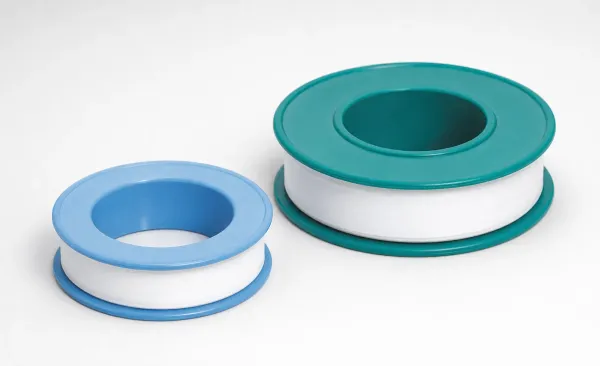
View DetailsPTFE Seal Tape
Thread sealing · High temperature resistant
View DetailsCompact Air Jet Cooler
Compressed air cooling · Spot cooling
View DetailsSafety Clips for Hose Connections
Hose retention · Safety locking
View DetailsPipe Joint Compound
Liquid thread sealant · High-pressure rated
View DetailsFind the Right Accessory by Function
Each accessory solves a specific performance problem. Select your target application:
Flow Monitoring & Diagnostics
For verification of channel turbulence and scale diagnostics. Flow rate drops indicate channel clogging.
Use → Water Flow Checker (WFLC Series) + Color Marker Rings (WFLM)
Thread Sealing & Leak Prevention
Preventing weeping under thermal expansion. Tapered Rc/NPT threads require tape; parallel G-threads require anaerobic sealant.
Use → PTFE Seal Tape (TFE Series) or High-Temp Anaerobic Compound
Supplementary Spot Air Cooling
Cooling ejector pins and deep core cavities inaccessible to water channels via Joule-Thomson expansion.
Use → Compact Air Jet Cooler (AJCH Series)
High-Pressure Hose Safety
Securing fast-disconnect couplers on moving plates to prevent catastrophic hose blowouts during high-speed mold clamping.
Use → Safety Clips for Hose Connections (KSHC Series)
Pairing with Main Cooling Components
Standardize the pairing of threads, quick-disconnect couplers, and rubber hoses to ensure leak-free connections:
Rc1/8 Connections
Pairs with ø6 mm quick-disconnect plugs. Requires rubber hose with $6.0\text{ mm}$ inner diameter and $12.0\text{ mm}$ outer diameter.
Max pressure: 1.0 MPa at 80°C.Rc1/4 Connections
Pairs with ø8 mm quick-disconnect plugs. Requires rubber hose with $8.0\text{ mm}$ inner diameter and $14.0\text{ mm}$ outer diameter.
Standard choice for primary core/cavity cooling plates.Rc3/8 Connections
Pairs with ø10 mm quick-disconnect plugs. Requires rubber hose with $9.5\text{ mm}$ inner diameter and $16.0\text{ mm}$ outer diameter.
Recommended for high-volume manifold headers.Pneumatic vs. Waterline Quick-Disconnects
Ensure you are using specialized mold waterline couplings instead of generic pneumatic quick-connects:
✅ Waterline Quick-Disconnect Features:
- **Corrosion Resistance**: Brass (C3604) or SUS304 body eliminates rust blockages in water channels.
- **High-Temp Seals**: FKM O-rings are standard, handling up to $180^\circ\text{C}$ coolant water/oil.
- **Full-Flow Design**: Internal valve design is minimized to maximize flow area and prevent particulate buildup.
⚠️ Pneumatic Joint Risks in Waterlines:
- **Rusting**: Carbon steel bodies rust rapidly in contact with cooling water, seizing the sleeve.
- **NBR Failure**: Standard NBR seals harden and fail when water temperature exceeds $60^\circ\text{C}$.
- **Flow Restriction**: High-restriction internal check valves cause severe pressure drop, reducing heat transfer.
About Cooling Tools & Accessories
Cooling accessories are the often-overlooked components that keep mold cooling systems running reliably over the long term. Water flow checkers enable proactive maintenance by detecting flow degradation before it causes part quality issues. PTFE seal tape and pipe joint compound prevent the micro-leaks that cause corrosion and safety hazards. Color marker rings eliminate setup errors during mold changes. Air jet coolers provide supplementary cooling for areas beyond the reach of water channels. These tools represent a small fraction of the total cooling system cost but have an outsized impact on system reliability and uptime.
Application Scenarios
Preventive Maintenance Program
Establish a systematic cooling system monitoring protocol to detect scale buildup and flow degradation before they cause part quality issues or unplanned downtime.
Water flow checkers installed on every circuit return line provide real-time flow visualization. A 30% flow drop from the baseline recorded during mold qualification triggers descaling maintenance. Color marker rings ensure circuits are correctly identified during the process.
Recommended → Water Flow Checker + Color Marker Rings (one set per mold)
Mold Assembly & Initial Setup
First-time cooling system assembly or mold rebuild where every threaded connection must be properly sealed and every circuit must be leak-tested.
PTFE seal tape on all tapered threads and pipe joint compound on parallel threads ensure zero-leak assembly. Safety clips on all hose connections prevent accidental disconnection during pressure testing and initial production runs.
Recommended → PTFE Seal Tape + Pipe Joint Compound + Safety Clips
Ejector Area Cooling
Ejector pin area where residual heat causes sticking, short shots, or surface defects on the next cycle — but no space exists for water cooling channels near the ejector pins.
Compact air jet coolers mounted between the ejector plates blow compressed air across the hot zone during mold opening, providing supplementary cooling without water plumbing. Effective for reducing ejector-side surface temperature by 10-20°C between cycles.
Recommended → Compact Air Jet Cooler
Frequently Asked Questions
How do I check if my mold cooling water flow is sufficient?+
What is the purpose of PTFE seal tape in mold cooling connections?+
Can compact air jet coolers replace water cooling in specific mold areas?+
What do the different color marker rings indicate on water flow checkers?+
Engineering Resources
Need a Custom Quote?
Tell us about your cooling system — number of circuits, hose sizes, and monitoring requirements. We'll recommend the right accessories package for your setup.