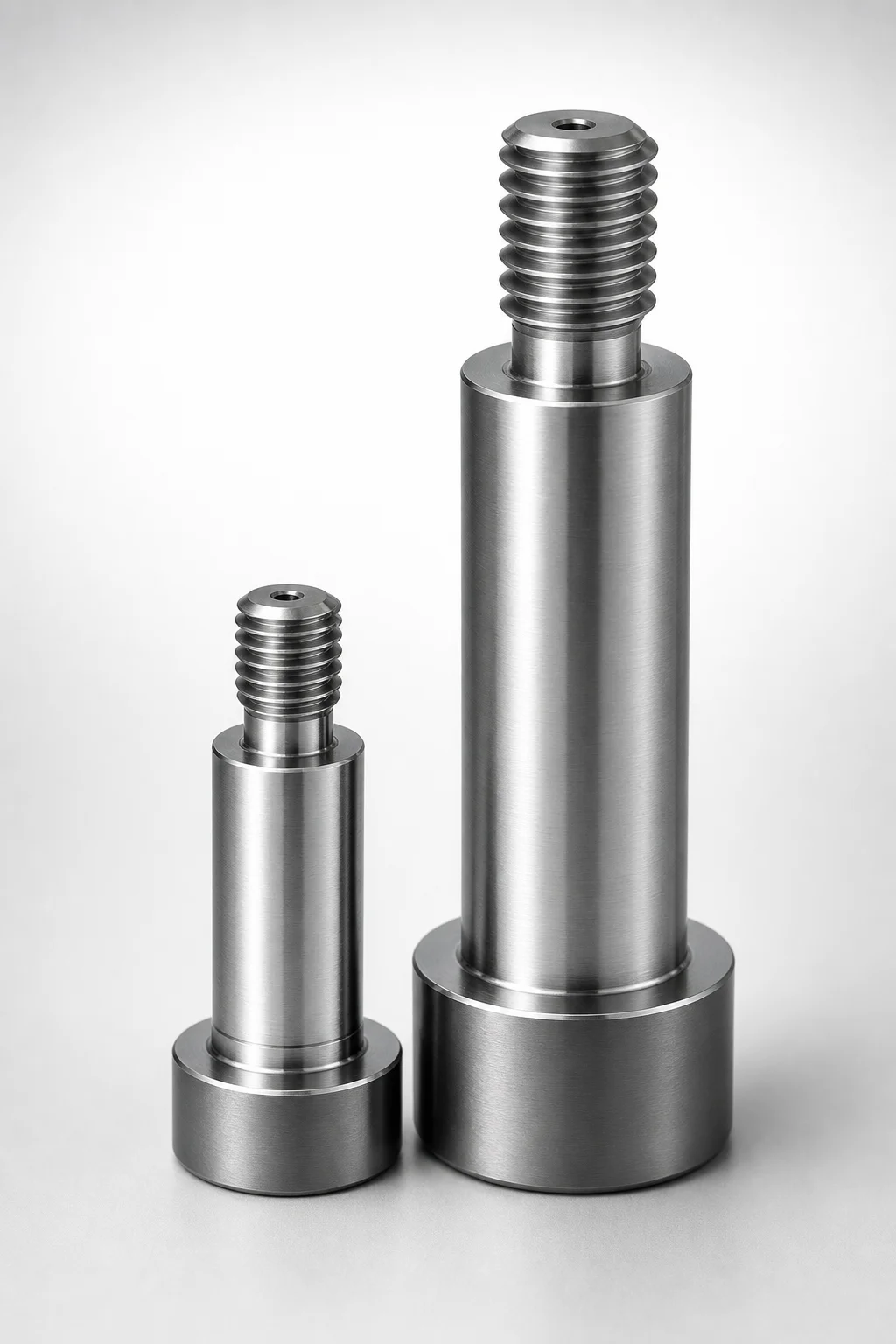
MSBL Precision Shoulder Bolts
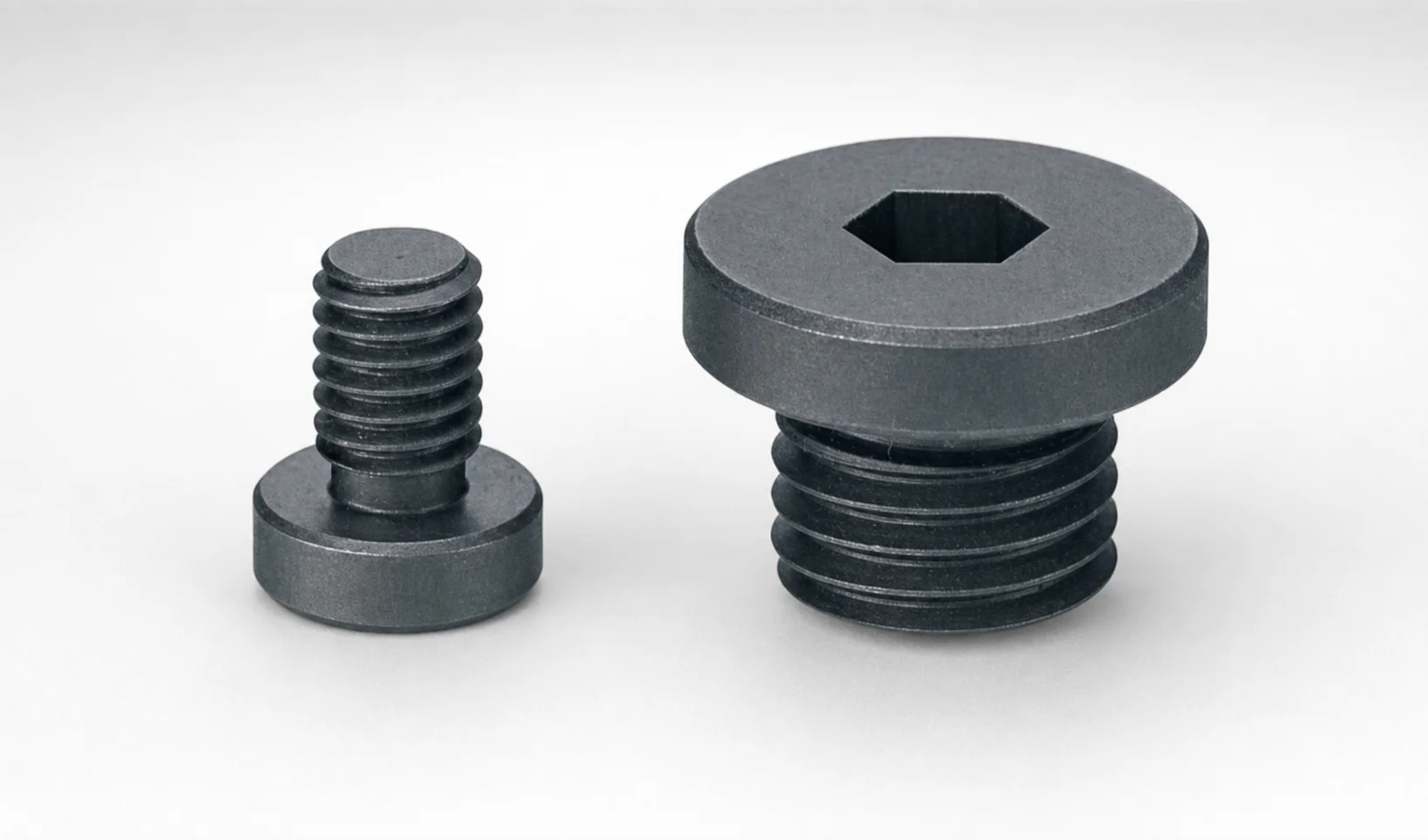
MSBL precision shoulder bolts provide reliable fastening for plastic mold assemblies, using a coarse precision shoulder design to support secure connections in demanding production. They help maintain stable alignment while reducing wear on sensitive components.
- Shoulder bolt design supports consistent positioning and secure fastening
- Built for coarse precision performance to meet plastic molding assembly needs
- Configurable shoulder length options for tailored mold design requirements
- MSBL type fasteners for general industrial and mold construction use
Specifications
7 configurations available
| M Nominal Diameter | L (Shoulder section length) (mm) | type |
|---|---|---|
| 5 | 10 ~ 70 | - |
| 6 | 10 ~ 90 | - |
| 8 | 10 ~ 120 | - |
| 10 | 10 ~ 130 | - |
| 12 | 15 ~ 150 | - |
| 16 | 15 ~ 150 | - |
| 20 | 30 ~ 160 | - |
Product Guide
Application Scenarios+
Precision shoulder bolts are used in injection mold tooling where repeatable alignment and stable clamping are critical during high-cycle operation. This variant, designed with a coarse precision shoulder, supports consistent positioning of mating components in plastic mold fastening assemblies, helping reduce fretting and wear at the interface.
Typical scenarios include automotive connector and housing molds, where multiple parts must stay coaxial under thermal expansion and repeated tightening. The shoulder section guides the load path and promotes uniform contact, which is beneficial when post-machining tolerances must be maintained.
They are also suitable for consumer electronics mold assemblies requiring reliable fastener seating across cavities/inserts and support brackets. The configurable shoulder length options (depending on the design variant) allow engineers to match the effective guide height to the mold stack-up, improving assembly integrity and reducing misalignment during maintenance.
- Used as precision alignment fasteners in mold base/component fastening
- Coarse precision shoulder helps maintain stable positioning under production loads
- Choose shoulder length to match mold stack-up and contact points
Material & Process Details+
The provided datasheet for these MSBL precision shoulder bolts specifies dimensional ranges (nominal diameter and shoulder length) but does not include a specific steel grade, heat-treatment state, or hardness value. As a result, material-property details such as HRC level, wear resistance, and toughness trade-offs cannot be stated from the given input data.
For mold engineering selection, confirm the supplied material specification (e.g., steel grade and surface treatment) from the product’s technical documentation before prescribing it for abrasive wear environments or where impact toughness is critical.
- Steel grade / equivalent: Not specified in the provided data
- Heat treatment: Not specified (e.g., nitrided, quenched & tempered, etc.)
- Hardness (HRC): Not specified
If multiple material options exist for the MSBL series, compare them based on the application’s contact pressure, expected wear, and corrosion resistance requirements—typically favoring harder, wear-resistant treatments for high-friction guide interfaces and tougher conditions for vibration-prone assemblies.
Sizing & Selection Guide+
Select the shoulder bolt by matching both the nominal diameter (M) and the shoulder section length (L) to your mold’s mechanical stack-up and guide requirements. The available nominal diameter range is M = 5 ~ 20, and shoulder length options are provided as L = 10 ~ 70, 10 ~ 90, 10 ~ 120, 10 ~ 130, 15 ~ 150, or 30 ~ 160 mm depending on the chosen configuration.
In practice, determine the required shoulder engagement depth between the two assembled mold components. Choose the L value so the shoulder contacts the intended reference surface without bottoming out, while the shank diameter supports the fastening function. For molds with inserts, ensure the guided shoulder height aligns with the insert/support geometry to maintain repeatable positioning.
- Step 1: Pick M (5–20) to suit the fastener bore size and clamping hardware
- Step 2: Choose L (10–70 up to 30–160 depending on variant) for the exact engagement depth
- Fit/tolerance: Verify compatibility with your mating hole/seat tolerances and assembly tightening spec
Dimensions are typically configurable through the selection of shoulder length variant; confirm the exact L range available for the specific series configuration you select.
Frequently Asked Questions
Which nominal diameter (M) range is available for MSBL precision shoulder bolts?+
How do I choose the correct shoulder section length (L) for the mold stack-up?+
What does the 'coarse precision shoulder' feature imply for alignment and wear in mold assemblies?+
Can these MSBL shoulder bolts be used for general industrial mold fastening beyond plastics?+
Is the material grade and hardness specified for this MSBL series in the provided data?+
Related Products
Need Custom Specifications?
Our engineering team can help with custom configurations, material selection, and volume pricing.