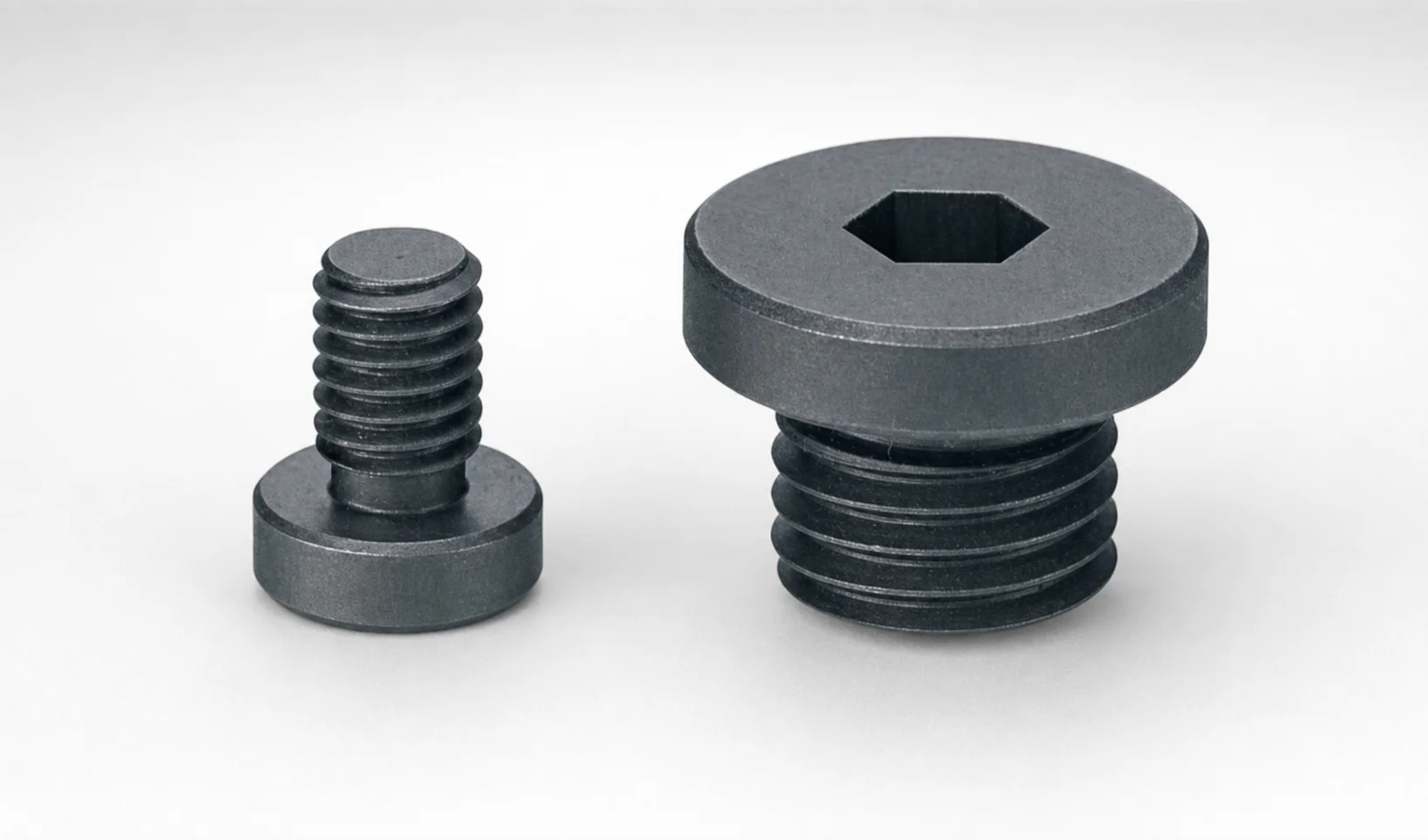
Positioning Screw Plugs Coarse or Fine Threads
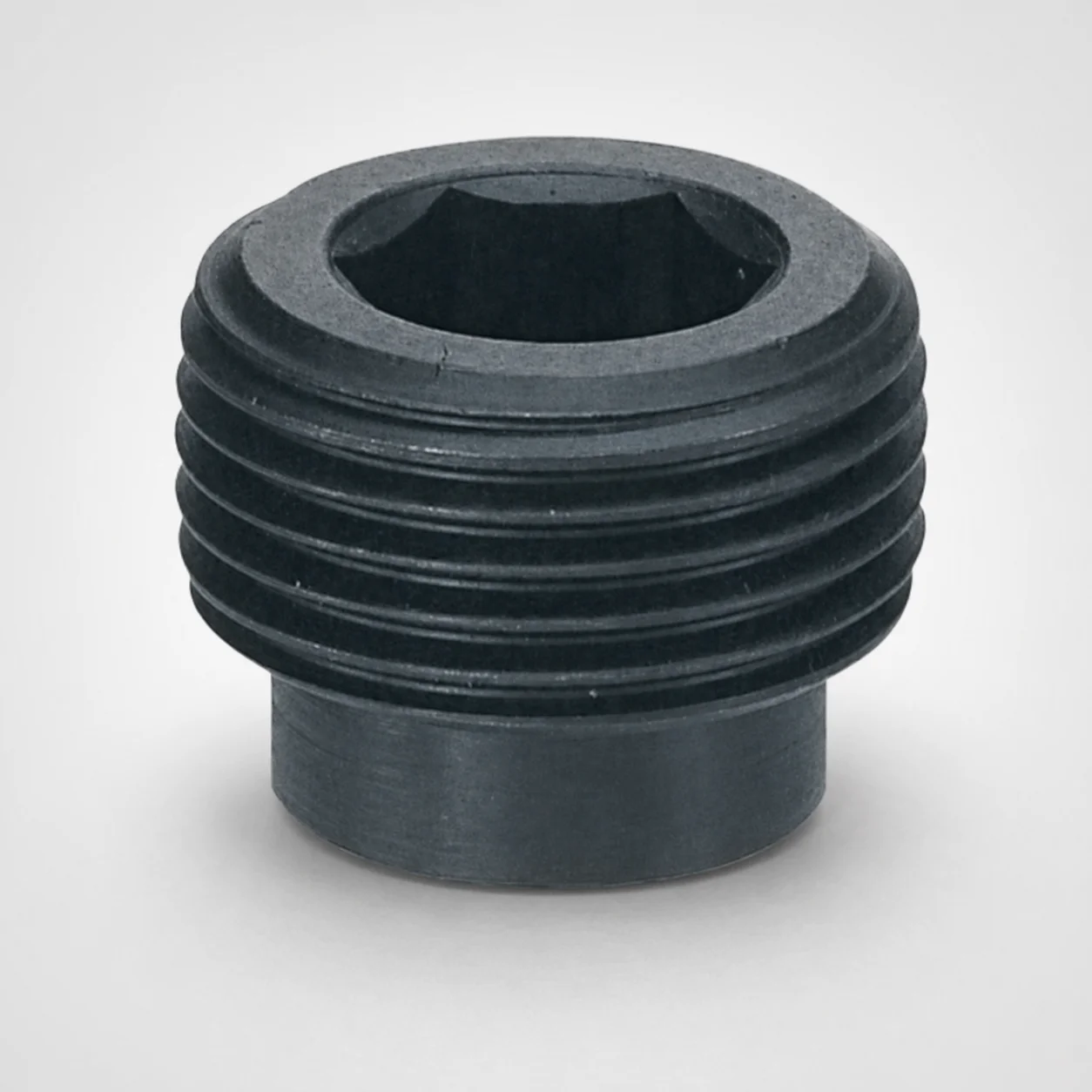
Positioning Screw Plugs Coarse or Fine Threads are engineered for plastic mold assemblies, providing secure fastening to support accurate part alignment and repeatable setup. The thread choice enables reliable retention across different mold construction needs.
- Coarse or fine thread design for consistent fastening strength
- Improves positioning stability during mold assembly and maintenance
- Supports dependable performance under mold stress and pressure
- Used as precision screw plug fasteners in plastic molding applications
Specifications
28 configurations available
| M Nominal Diameter | Thread Pitch | Length L (mm) | type |
|---|---|---|---|
| 3 | Coarse | 4 | - |
| 3 | Coarse | 6 | - |
| 4 | Coarse | 5.5 | - |
| 4 | Coarse | 7.5 | - |
| 5 | Coarse | 6 | - |
| 5 | Coarse | 8 | - |
| 6 | Coarse | 6.5 | - |
| 6 | Coarse | 8.5 | - |
| 8 | Coarse | 9 | - |
| 8 | Coarse | 11 | - |
| 10 | Coarse | 9 | - |
| 10 | Coarse | 11 | - |
| 12 | Coarse | 9 | - |
| 12 | Coarse | 11 | - |
| 16 | Coarse | 11 | - |
| 16 | Coarse | 13 | - |
| 18 | Coarse | 13 | - |
| 18 | Coarse | 15 | - |
| 20 | Coarse | 15 | - |
| 20 | Coarse | 17 | - |
| 12 | Fine | 8 | - |
| 12 | Fine | 9 | - |
| 16 | Fine | 9 | - |
| 16 | Fine | 11 | - |
| 18 | Fine | 10 | - |
| 18 | Fine | 13 | - |
| 20 | Fine | 10 | - |
| 20 | Fine | 15 | - |
Product Guide
Application Scenarios+
Positioning screw plugs are used in injection mold tooling to maintain repeatable alignment during mold build-up and scheduled maintenance. In automotive connector and housing molds, they help stabilize fixture positions so the mold can re-close consistently after cavity inspection or wear-part replacement. The availability of coarse or fine threads supports quick installation where robustness is needed and finer thread engagement where tighter positioning control is beneficial.
- Core/cavity alignment during mold assembly: installs into threaded access points to lock the assembly position for repeatable shot-to-shot closure.
- Medical device and electronics housings: supports dimensional stability during assembly steps where accurate stack height and tooling alignment are critical.
- Maintenance and module swap work: thread pitch selection improves retention reliability across different maintenance intervals and tolerancing needs.
This product’s short L = 4–17 mm range makes it suitable for compact mold fastening locations where access space is limited.
Material & Process Details+
The provided specifications define the thread system (coarse or fine) and the sizing ranges (M3–M20, L = 4–17 mm), but no steel grade or heat-treatment state is included. Because heat treatment, hardness (HRC), and wear/toughness balance depend directly on the selected steel grade, they cannot be stated from the current dataset.
For positioning fasteners used under mold clamping loads and repeated assembly cycles, common choices in mold-accessory manufacturing often balance wear resistance at thread flanks with core toughness to resist chipping and galling. If your application includes high cycle rates or repeated disassembly, confirm the supplier’s available material options and corresponding hardness/heat-treatment (e.g., quenched & tempered or nitrided variants) before final design freeze.
- Coarse vs fine thread: fine threads typically improve engagement sensitivity; coarse threads typically improve installation speed and initial retention.
Sizing & Selection Guide+
To select the correct positioning screw plug dimensions, match the nominal diameter M, thread pitch (coarse or fine), and length L to the corresponding threaded feature in your mold assembly.
- Thread compatibility: choose M = 3–20 to match the mating threaded boss or insert diameter.
- Pitch selection: select either the coarse or fine pitch variant to match the mold’s thread specification; using the wrong pitch can prevent proper seating and reduce retention.
- Engagement depth: set L = 4–17 mm so the plug provides sufficient threaded engagement without bottoming out in the cavity-side recess.
For best fit, ensure your mating thread class and tolerance strategy are compatible with the chosen pitch. Where alignment repeatability is critical, fine-thread versions can improve positioning sensitivity, while coarse-thread versions can be more forgiving during rapid assembly.
Frequently Asked Questions
How do I choose between coarse and fine thread versions for a positioning screw plug?+
Select the thread pitch based on the mating thread specification in your mold assembly. If the mold access boss is specified with a coarse pitch, use the coarse variant; if specified with a fine pitch, use the fine variant to ensure correct thread engagement.
Fine threads generally provide more engagement sensitivity for positioning control, while coarse threads typically allow quicker installation and more robust initial retention under assembly variability.
What size ranges are available for the positioning screw plugs (M and length)?+
The nominal diameter range is M = 3 ~ 20, with a selectable thread pitch of either coarse or fine. Available lengths are L = 4 ~ 17 mm.
Use these ranges to match the mold’s threaded feature diameter and the required engagement depth within the assembly space.
How much length L should I design for to avoid bottoming while ensuring retention?+
Choose L = 4–17 mm to provide adequate threaded engagement without contacting the bottom of the recess or interfering with adjacent tooling surfaces. Since the dataset does not provide engagement-depth formulas, base your selection on your mold’s threaded boss depth and clearances.
If your design includes inspection or maintenance cycles, confirm that the selected length supports consistent seating across manufacturing tolerances.
Are there different steel grades or hardness levels available for these positioning plugs?+
The current product data specifies thread pitch (coarse/fine) and sizing ranges (M3–M20, L4–17), but it does not provide a steel grade, hardness (HRC), or heat-treatment state.
To select for wear resistance and toughness (especially at thread flanks under clamping load cycles), request the available material options from the manufacturer/supplier for this series code 110200134330.
Will using the wrong pitch (coarse vs fine) affect mold alignment retention?+
Yes. The pitch must match the mating threaded feature: coarse and fine are not interchangeable for proper thread engagement. Using the wrong pitch can prevent full seating, reduce effective retention length, and lead to inconsistent positioning during assembly.
Verify the mating thread pitch in the mold drawings before finalizing the plug selection.
Related Products
Need Custom Specifications?
Our engineering team can help with custom configurations, material selection, and volume pricing.