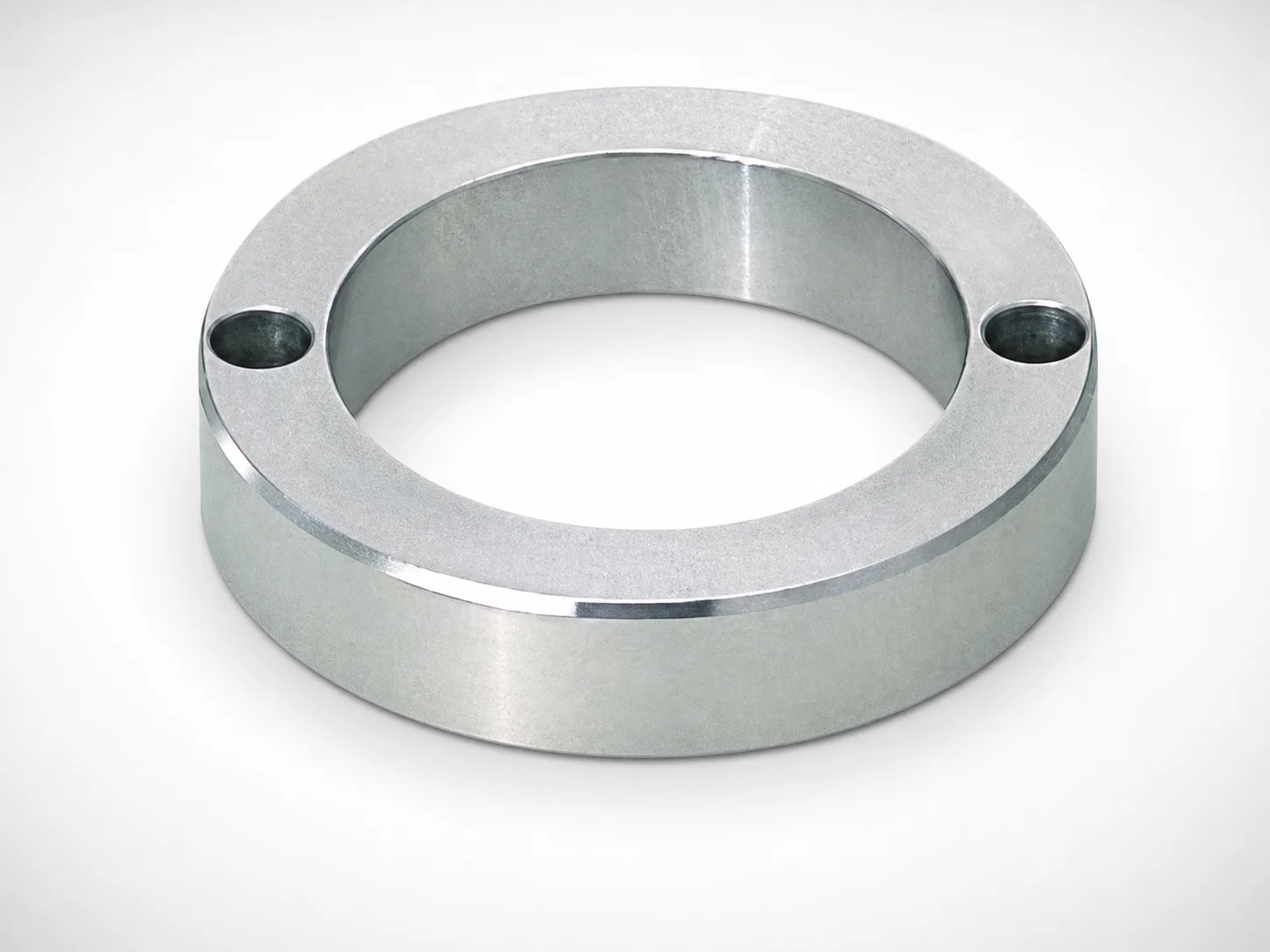
Locating Rings Through Hole 2-Bolt Holes
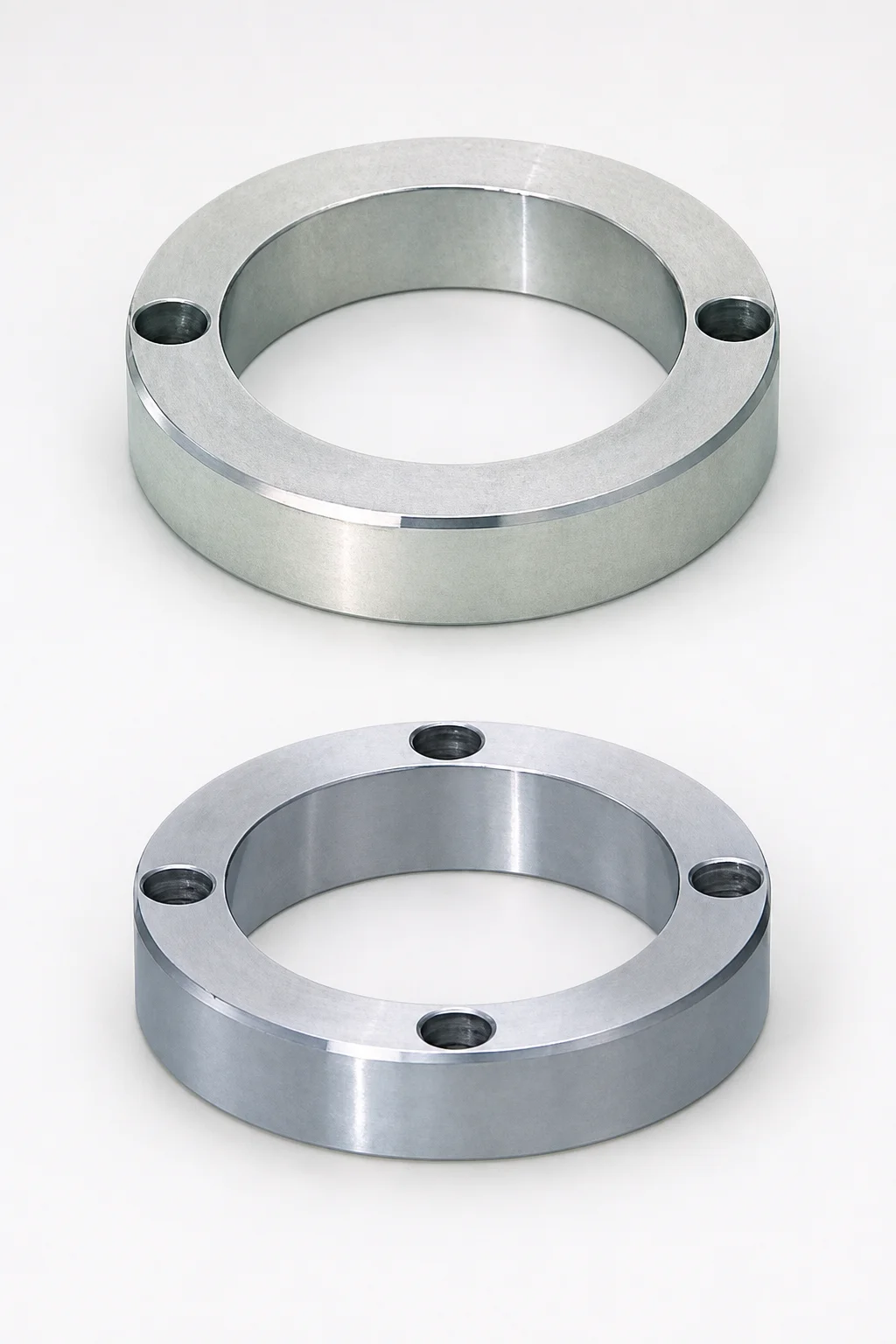
Locating Rings Through Hole 2-Bolt Holes provide reliable positioning for die sets using a bolt stopper design. Their through-hole 2-bolt mounting helps maintain repeatable alignment during operation.
- Through-hole 2-bolt holes simplify mounting and improve assembly stability
- Bolt stopper type supports consistent seating to reduce shift risk
- Designed as a standard locating ring type for dependable fit in tooling systems
- Commonly used in die and mold locating for accurate parting line positioning
Specifications
6 configurations available
| D (Locating Ring Outer Diameter) (mm) | T (Height) (mm) | Sale Unit (pieces) | type |
|---|---|---|---|
| 60 | 15 | 10 | - |
| 100 | 15 | 10 | - |
| 100 | 20 | 10 | - |
| 60 | 15 | 20 | - |
| 100 | 15 | 20 | - |
| 100 | 20 | 20 | - |
Product Guide
Application Scenarios+
Locating rings with a bolt-stopper design are used inside injection and transfer molding assemblies to control die set alignment throughout clamping and cycling. With through-hole 2-bolt holes, these locating elements mount quickly and provide stable repeat positioning after maintenance.
- Automotive connector and housing molds: Use the ring pair on the die side to maintain consistent parting line height during high-cycle production; the bolt stopper helps the tooling seat consistently and reduces shift risk.
- Consumer electronics enclosures: Apply for precise alignment of cavities and sprue/gate tooling where small positional errors can affect runner balance and cosmetic features. The through-hole two-bolt mounting supports secure assembly stability.
- Industrial enclosure die sets: Suitable when repeatable die location after disassembly is required. Choose the outer diameter and height variant (D and T) that matches your locating bore geometry.
Material & Process Details+
The provided metadata specifies this locating ring type by geometry (D and T) and mounting style (through-hole with 2 bolt holes), but it does not include the steel grade, surface treatment, or hardness specification. For mold engineers, the material choice should be aligned with expected load, wear, and corrosion resistance requirements of the die set.
- Material selection: Common locating ring steels include pre-hardened and through-hardened grades; hardness is chosen to balance wear resistance at the locating interface against toughness under clamping shock.
- Heat treatment (selection criteria): Nitriding may be considered when abrasion/peening resistance at the contact surfaces is critical, while quench-and-temper approaches are typically selected for higher toughness.
- Verification: Confirm the exact steel grade and target hardness (HRC) from the product’s technical documentation before finalizing the mold design.
Sizing & Selection Guide+
Select dimensions by matching the locating ring outer diameter D and height T to the corresponding locating features in your tooling assembly. This product is offered with D = 60 or 100 mm and T = 15 or 20 mm.
- Match D to the locating bore/seat: Choose the outer diameter that provides the intended clearance/fit with the die block or support structure, ensuring the ring sits without interference.
- Match T to die stack-up: Height should reflect the required location transfer between cavity/core or around the parting line so the bolt-stopper seating position is repeatable.
- 2-bolt through mounting: Ensure the toolplate and base plate have the compatible spacing for the two bolt holes; alignment depends on correct bolt pattern and seating.
Because tolerance data is not included in the provided specifications, apply your standard mold fit strategy (typical engineering clearances) and verify fit during tooling assembly trials.
Frequently Asked Questions
How do through-hole 2-bolt holes improve repeatable die set alignment?+
The through-hole 2-bolt mounting provides a rigid, repeatable fastening reference during die assembly and reassembly. Combined with the bolt stopper seating feature, it reduces the likelihood of tooling shift from one cycle or maintenance interval to the next.
Which locating ring dimensions should I choose for my cavity/core location stack-up?+
Use the available ranges: D = 60 or 100 mm for outer diameter and T = 15 or 20 mm for height. Match D to your locating bore/seat geometry and match T to the required die stack-up so the parting line height is maintained.
What is the difference between the bolt-stopper locating style and a standard locating ring fit?+
This variant uses a bolt stopper type design to support consistent seating. That repeatable seating helps maintain the intended location reference when clamping loads are applied, improving alignment stability versus locating approaches that rely only on clearance fit.
Is there a recommended steel grade or hardness (HRC) for these locating rings?+
The provided product data does not include the steel grade, heat treatment condition, or target hardness (HRC). For proper design approval, request the technical sheet for the exact material and treatment, then confirm it meets your wear and toughness requirements at the die location interface.
Can I order different quantities based on the ring size, and what are the sale unit options?+
The sale unit (pieces) options listed are 10 or 20. Dimension variants are defined by D (60/100 mm) and T (15/20 mm); quantity breaks depend on the selected variant and ordering configuration.
Related Products
Need Custom Specifications?
Our engineering team can help with custom configurations, material selection, and volume pricing.