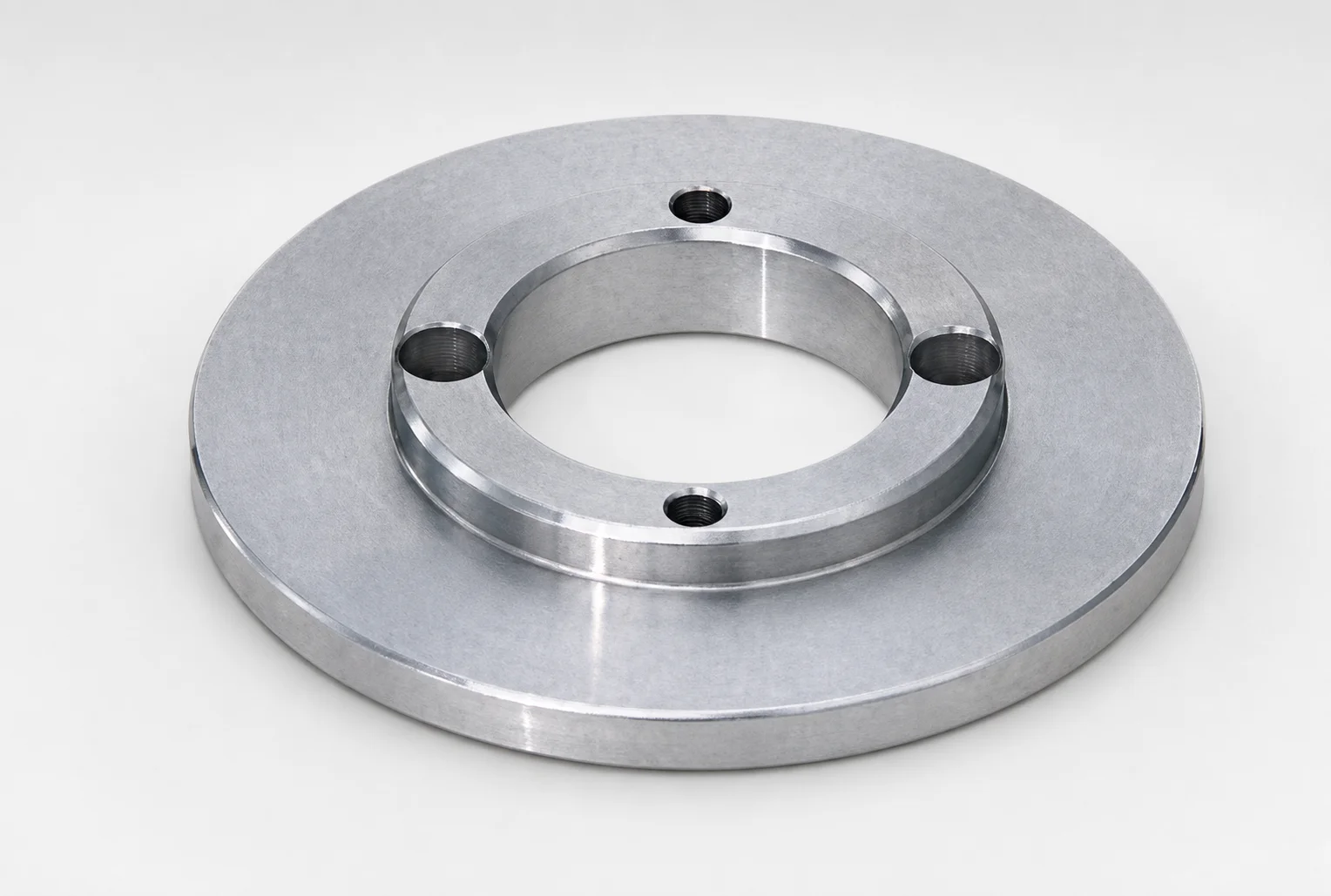
JIS Standard LRBW Reversible Locating Rings for 4-Bolt Holes
Reversible locating rings for 4-bolt holes (LRBW) use a bolt stopper type compatible design to maintain repeatable sprue positioning in tooling. The reversible construction improves practical orientation during setup and maintenance.
- Reversible locating ring type simplifies installation orientation
- 4-bolt holes distribute clamping load for stable alignment
- LRBW construction supports consistent locating performance across cycles
- Designed for bolt stopper sprue interface on molding systems
Specifications
6 configurations available
| D (Locating Ring Outer Diameter) (mm) | t (Height) (mm) | type |
|---|---|---|
| 100 | 14 | - |
| 100 | 16 | - |
| 120 | 14 | - |
| 120 | 16 | - |
| 130 | 14 | - |
| 130 | 16 | - |
Product Guide
Application Scenarios+
LRBW reversible locating rings are used inside injection mold bases to lock sprue bushing and gate alignment relative to the platen. They are especially suitable for production tooling where sprue positioning must remain repeatable during fast mold swaps and routine maintenance.
- Automotive connector molds: In multi-cavity molds with tight runner/gate tolerance, the 4-bolt hole layout helps distribute clamping load and maintain stable sprue location under repeated clamping cycles.
- Packaging and consumer goods molds: Reversible orientation simplifies setup during installation and servicing, reducing the risk of incorrect locating direction when the sprue interface is accessed frequently.
- Bolt-stopper sprue interface systems: This variant is suited for tooling that uses a bolt stopper type compatibility at the sprue connection, ensuring consistent alignment between the sprue bushing and locating hardware.
Choose the outer diameter (D) and height (t) that match your sprue alignment components to maintain correct stack-up and locating repeatability.
Material & Process Details+
The provided data identifies this as a JIS Standard LRBW reversible locating ring for 4-bolt holes, but it does not specify the steel grade, heat treatment state, or hardness. Therefore, material property claims such as HRC level, wear resistance, or toughness cannot be stated from the supplied specifications.
In general mold locating rings are manufactured from tool steels selected for dimensional stability and resistance to wear from repeated clamping and alignment forces. Common approaches include heat treatment such as quenching and tempering and, for higher wear resistance, sometimes nitriding depending on the part design and load profile.
- When comparing variants: Select the grade/heat treatment based on expected load cycles and allowable wear at the locating interface.
- Need confirmation: Request the material/heat-treatment report for your selected D (100/120/130) and t (14/16) option before final qualification.
Sizing & Selection Guide+
Correct selection of D (locating ring outer diameter) and t (height) is the primary sizing requirement for ensuring proper sprue alignment in a 4-bolt-hole interface.
- Outer diameter (D): Choose one of the available values 100 mm, 120 mm, or 130 mm to match the locating feature envelope in the mold base.
- Height (t): Select 14 mm or 16 mm to match the stack-up between the mating sprue/gate alignment components and the bolted interface.
To match the mold cavity/core requirements, verify that the chosen D provides sufficient clearance to surrounding components while maintaining concentric locating. Confirm the height t aligns the functional locating face within your required gap/engagement. Because only D and t are specified here, any additional fit details (e.g., hole position tolerance, bolt size standard, or locating clearance) should be confirmed against the corresponding JIS 4-bolt-hole layout used in your tooling design.
If your design is sensitive to alignment repeatability, validate the dimensional tolerances of the locating interface at assembly and during clamping tests.
Frequently Asked Questions
Which outer diameter (D) options are available for this LRBW reversible locating ring with 4-bolt holes?+
This LRBW reversible locating ring is available with locating ring outer diameter D of 100 mm, 120 mm, and 130 mm.
Select D to fit the mold base locating envelope while preserving concentricity of the sprue alignment interface.
What height (t) choices should be used to match the sprue/gate alignment stack-up?+
The available heights t are 14 mm and 16 mm.
Choose t based on the required stack-up between the locating ring and the mating bolt-stopper sprue interface components so the functional locating face engages as intended.
Is this locating ring compatible with sprue interfaces using bolt-stopper compatibility?+
Yes. The current description states it is designed for a bolt stopper type sprue interface compatibility.
For use in your system, confirm that your sprue bushing/runner interface uses the same 4-bolt-hole arrangement as the JIS Standard LRBW locating ring.
How does the 4-bolt hole design affect sprue alignment under clamping load?+
The ring is specified as an LRBW reversible locating ring for 4-bolt holes, and the description notes that 4-bolt holes distribute clamping load for stable alignment.
This helps maintain repeatable sprue positioning across cycles when the mold is repeatedly clamped and opened/closed.
Do I need to worry about material hardness or heat treatment when qualifying this locating ring?+
The supplied data does not list the steel grade, hardness (HRC), or heat treatment state for this specific part number/series.
For qualification, request the material and heat-treatment documentation for the selected D (100/120/130 mm) and t (14/16 mm) option, especially if wear at the locating interface is a concern.
Related Products
Need Custom Specifications?
Our engineering team can help with custom configurations, material selection, and volume pricing.