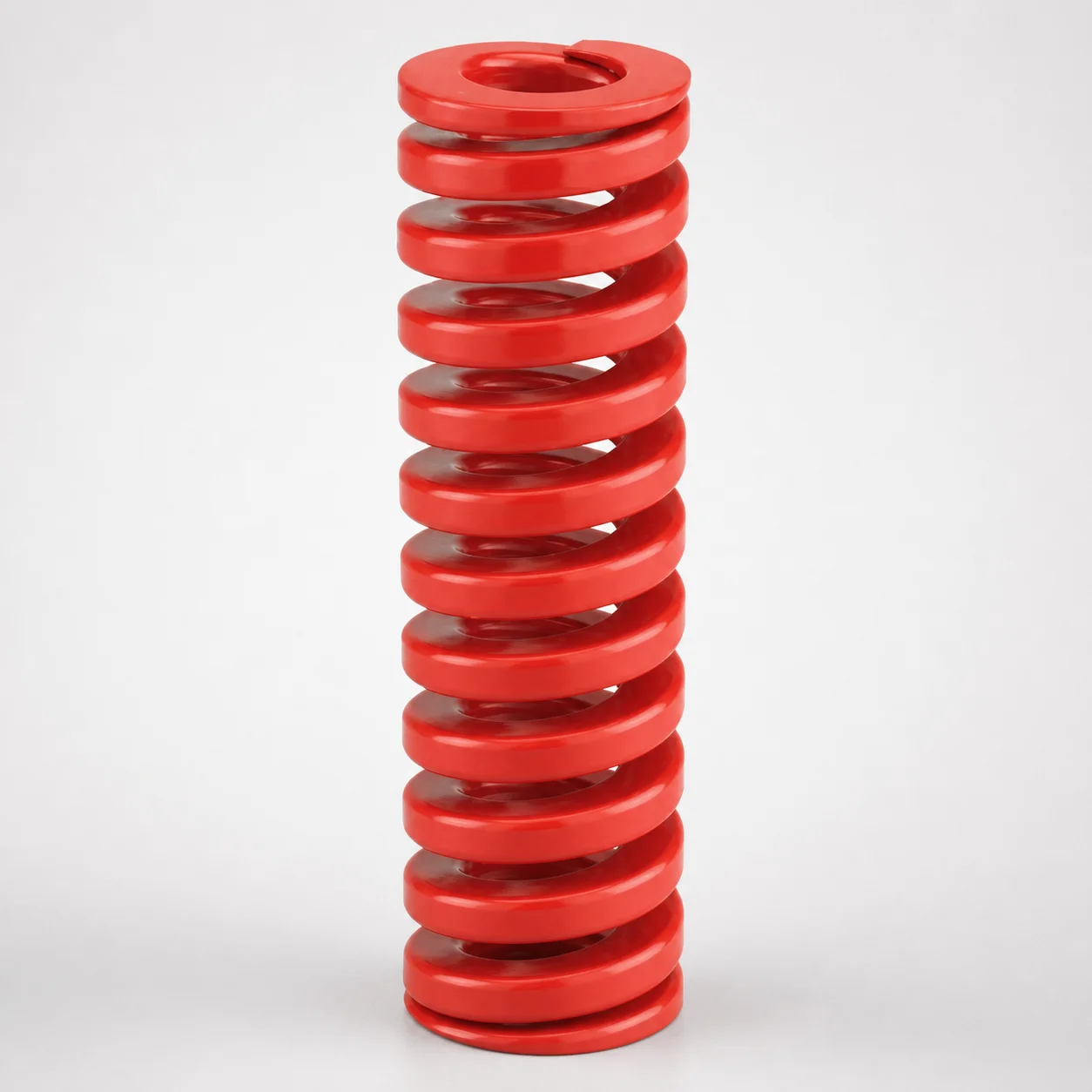
Inch Round Wire Die Spring 30% Deflection
Round wire die spring (DieMax XL™) is designed for controlled compliance with an allowable deflection ratio of 30%, supporting stable forming and die return in production. The Inch configuration fits common die spring housings for reliable setup.
- Engineered 30% deflection ratio to maintain force over die cycles
- Round wire construction for predictable spring behavior under load
- Inch dimensions for straightforward selection across standard die spring setups
- Ideal for wire forming and die applications requiring consistent spring action
Specifications
30 configurations available
| Outer Diameter D (in) | Length L (in) | d (Inner diameter) (in) |
|---|---|---|
| 3/8" | 3/4" | 3/16" |
| 3/8" | 1" | 3/16" |
| 3/8" | 1-1/4" | 3/16" |
| 3/8" | 1-1/2" | 3/16" |
| 3/8" | 1-3/4" | 3/16" |
| 3/8" | 2" | 3/16" |
| 3/8" | 2-1/2" | 3/16" |
| 3/8" | 3" | 3/16" |
| 3/8" | 12" | 3/16" |
| 1/2" | 3/4" | 9/32" |
| 1/2" | 1" | 9/32" |
| 1/2" | 1-1/4" | 9/32" |
| 1/2" | 1-1/2" | 9/32" |
| 1/2" | 1-3/4" | 9/32" |
| 1/2" | 2" | 9/32" |
| 1/2" | 2-1/2" | 9/32" |
| 1/2" | 3" | 9/32" |
| 1/2" | 3-1/2" | 9/32" |
| 1/2" | 12" | 9/32" |
| 5/8" | 3/4" | 11/32" |
| 5/8" | 1" | 11/32" |
| 5/8" | 1-1/4" | 11/32" |
| 5/8" | 1-1/2" | 11/32" |
| 5/8" | 1-3/4" | 11/32" |
| 5/8" | 2" | 11/32" |
| 5/8" | 2-1/2" | 11/32" |
| 5/8" | 3" | 11/32" |
| 5/8" | 3-1/2" | 11/32" |
| 5/8" | 4" | 11/32" |
| 5/8" | 12" | 11/32" |
Product Guide
Application Scenarios+
This die spring variant is used inside injection molding and forming tooling assemblies where a controlled return force is required. In automotive connector or terminal production, it can support stable die actuation by providing predictable compliance, helping the tool return repeatably over long production runs.
- Wire forming and die applications: The 30% allowable deflection ratio is suited for cycles where consistent force across travel is more critical than maximum stiffness.
- Die return systems: Inch configuration matches common die spring housings, simplifying installation and tuning for die rebound behavior.
- Heavy-load tooling: Round wire construction helps maintain predictable spring response under load, supporting uniform forming geometry.
Its inch sizing and specified 30% deflection behavior make it a practical choice when die components must maintain alignment and return-to-position accuracy across repeated shots.
Material & Process Details+
The provided data specifies dimension and deflection performance (30% allowable deflection) but does not list the steel grade, hardness (HRC), heat-treatment state, or surface treatment. Therefore, material-specific claims such as “quenched and tempered to X HRC” or “nitrided for wear resistance” cannot be stated from the current metadata.
For die spring applications, engineers typically select alloy spring steels and apply heat treatment to balance wear resistance and toughness. In general, higher strength grades offer better resistance to load-related deformation but may reduce toughness if improperly tempered.
- Available variant comparison: Only the geometric configurations (D, d, L) and the 30% deflection criterion are confirmed here; material grade options are not included in the input specifications.
- Heat treatment: Not specified in the provided product information.
Sizing & Selection Guide+
Use the listed geometry ranges to match the spring to the die housing and working space. Start with the outer diameter (D): choose from 3/8", 1/2", or 5/8" to fit the spring cavity or pocket without interference.
- Check inner diameter (d): select 3/16", 9/32", or 11/32" to clear the guide rod or central tooling features.
- Select installed working length (L): choose L = 1 to 12 in based on the available stack height and the required free-to-loaded travel.
Because the spring is rated for an allowable deflection ratio of 30%, confirm that the expected deflection during cycling remains within that limit for stable force behavior. Tolerance and fit guidance (e.g., recommended running clearance) is not provided in the input data; if your die includes a specific clearance requirement, verify fit against your housing dimensions and any assembly drawings from your supplier.
Frequently Asked Questions
How do I verify that the spring will stay within the 30% allowable deflection in my die cycle?+
This spring is specified for an allowable deflection ratio of 30%. Calculate your expected deflection during die actuation relative to the spring’s effective working travel and ensure the operating point does not exceed that 30% threshold. If your tooling requires larger travel, you’ll need a different spring rate/deflection capability or a different installed length (L within 1–12 in).
Which outer diameter (D) should I choose for my die spring pocket?+
Select D from the available options: 3/8", 1/2", or 5/8". Match D to the die spring housing pocket to avoid interference and to maintain stable seating. Confirm that the spring can move through its stroke without rubbing, especially when deflection approaches the 30% allowable limit.
What inner diameter (d) clearance do I need around the guide rod or central tooling?+
Choose d from 3/16", 9/32", or 11/32" based on the shaft/guide rod diameter and any required clearance. Verify that your rod (including any surface finish) fits without contact at maximum deflection. Because tolerance values are not provided, use your die’s drawings to set the minimum clearance requirement.
Can I use different lengths (L) without changing the deflection behavior?+
The available length L range is 1 to 12 in. While the product is built to the 30% allowable deflection criterion, changing L will affect the installed height, available travel, and your effective operating deflection. Re-check the deflection ratio for your specific installed length and cycle stroke.
Does the current product data specify the steel grade, hardness, or heat treatment for wear resistance?+
The provided metadata includes dimensional specs (D, d, L) and the 30% allowable deflection rating, but it does not list the steel grade, hardness (HRC), or heat-treatment condition. For material selection (e.g., toughness vs. wear resistance trade-offs), request the detailed material/heat-treatment specification from the supplier to confirm performance for your load and cycle environment.
Related Products
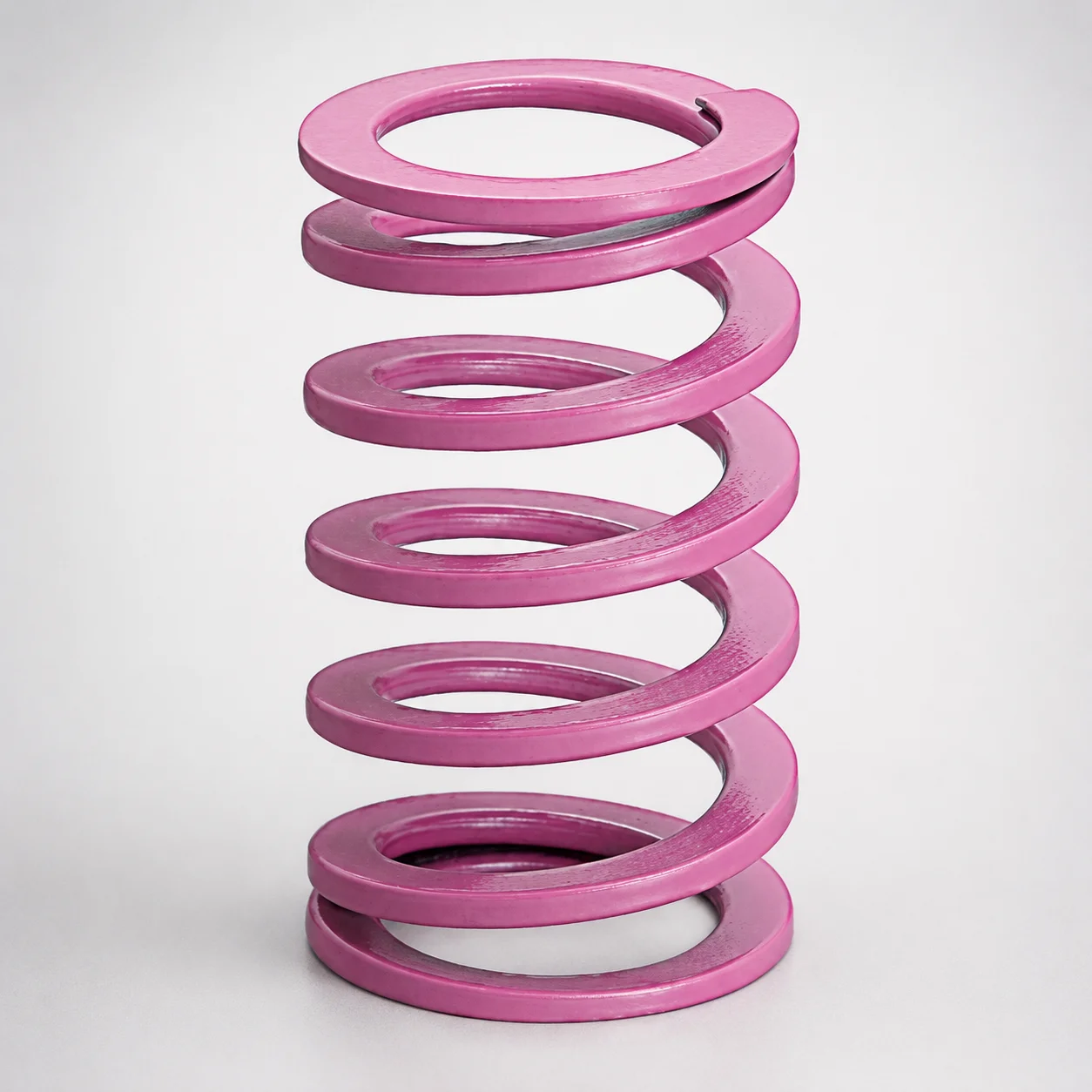
JIS Standard Chrome Silicon Medium Duty Die Spring 60% Deflection
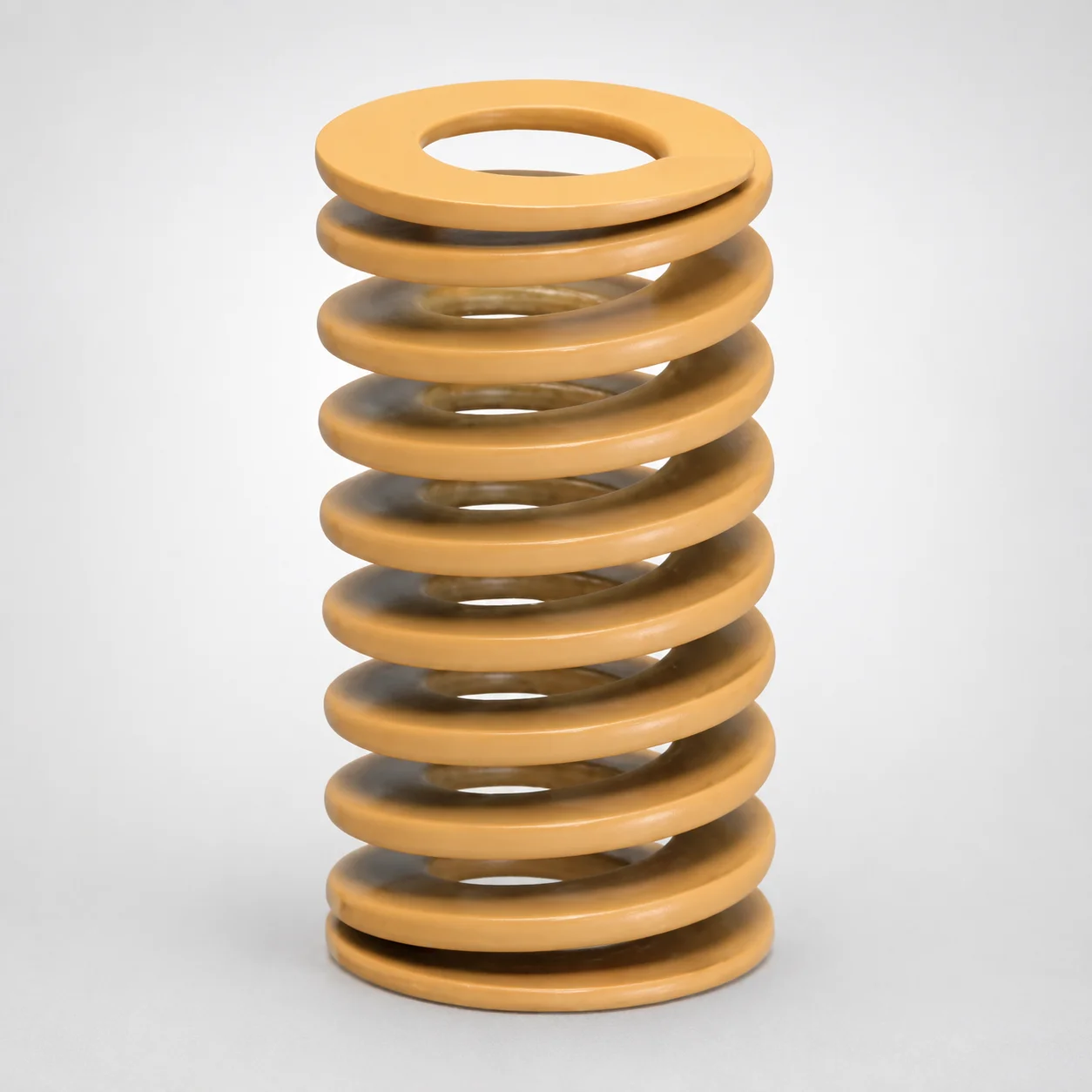
JIS Standard Chrome Silicon Medium Duty Die Spring - 50% Deflection
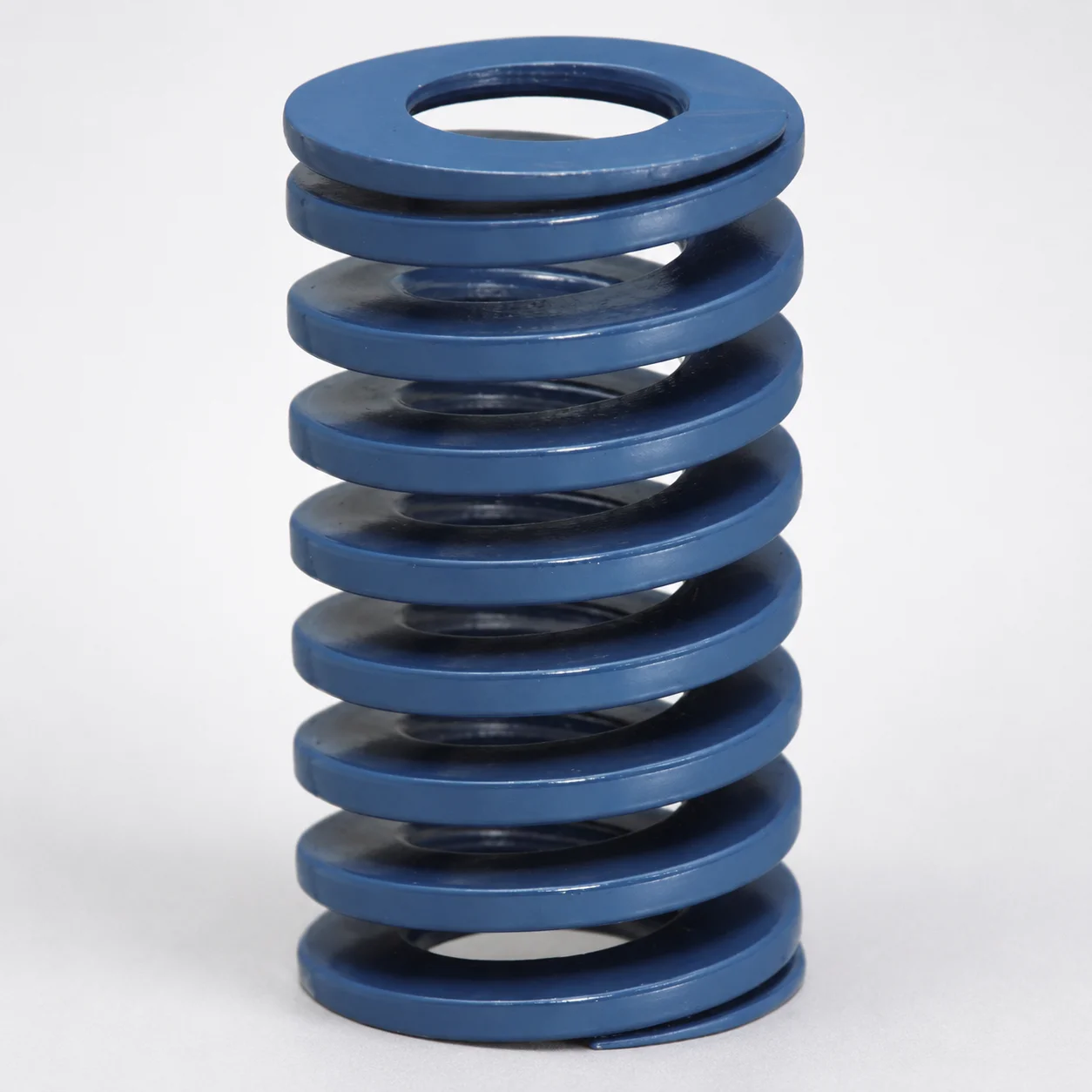
JIS Standard Chrome Silicon Steel Medium Duty Die Spring - 40% Deflection
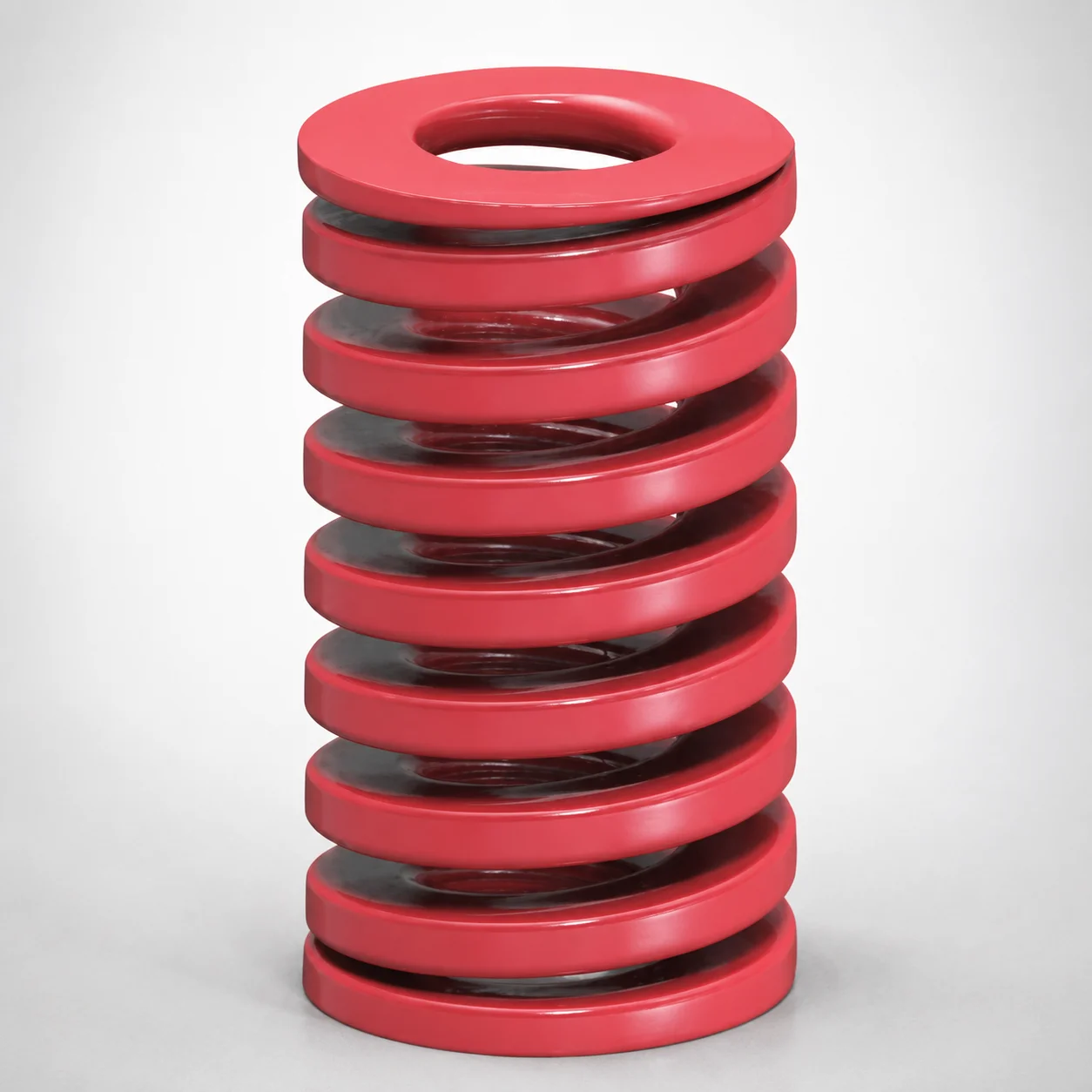
JIS Standard Medium Duty Die Spring 32% Deflection Chrome Silicon Coil Springs
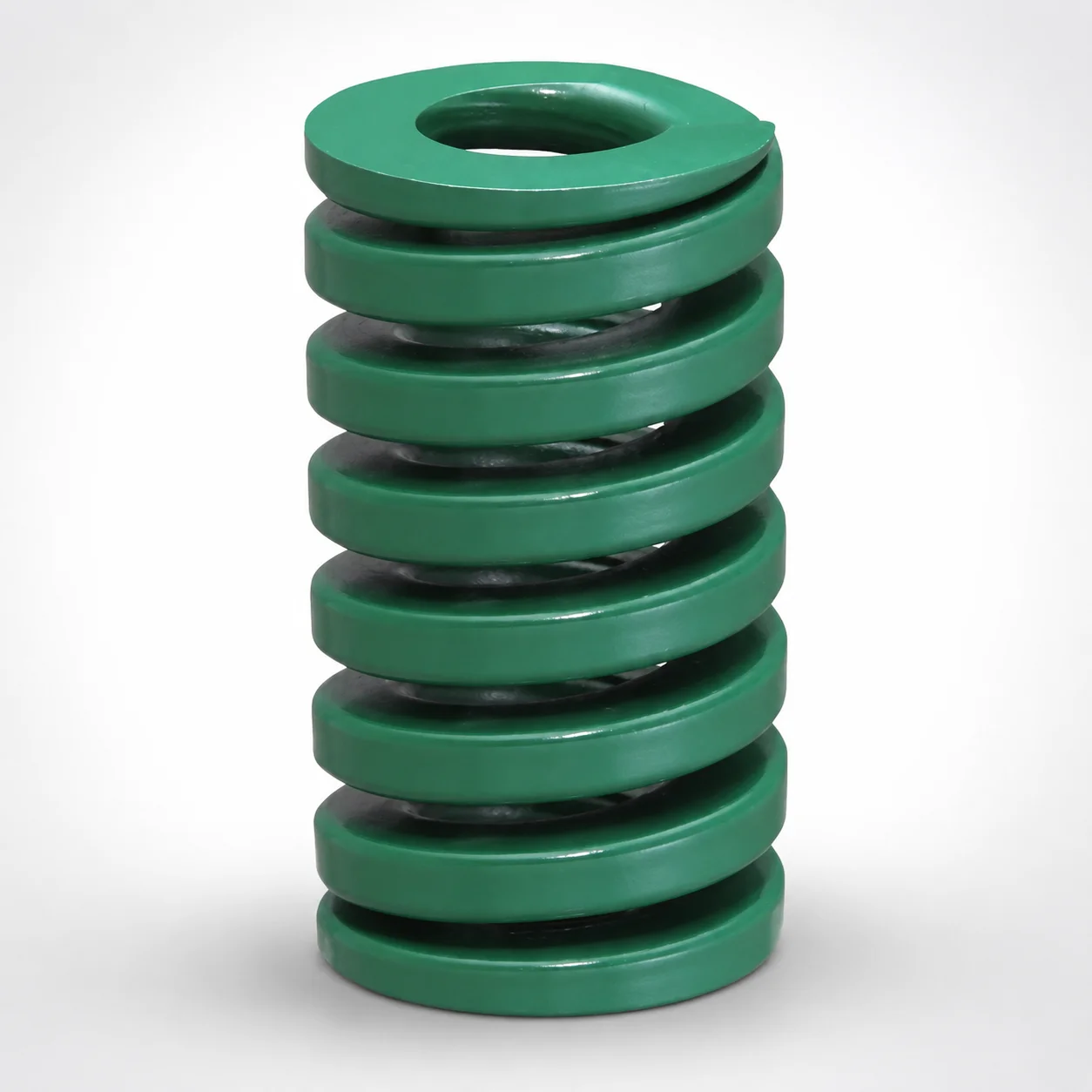
JIS Standard Heavy Duty Die Spring 24% Deflection
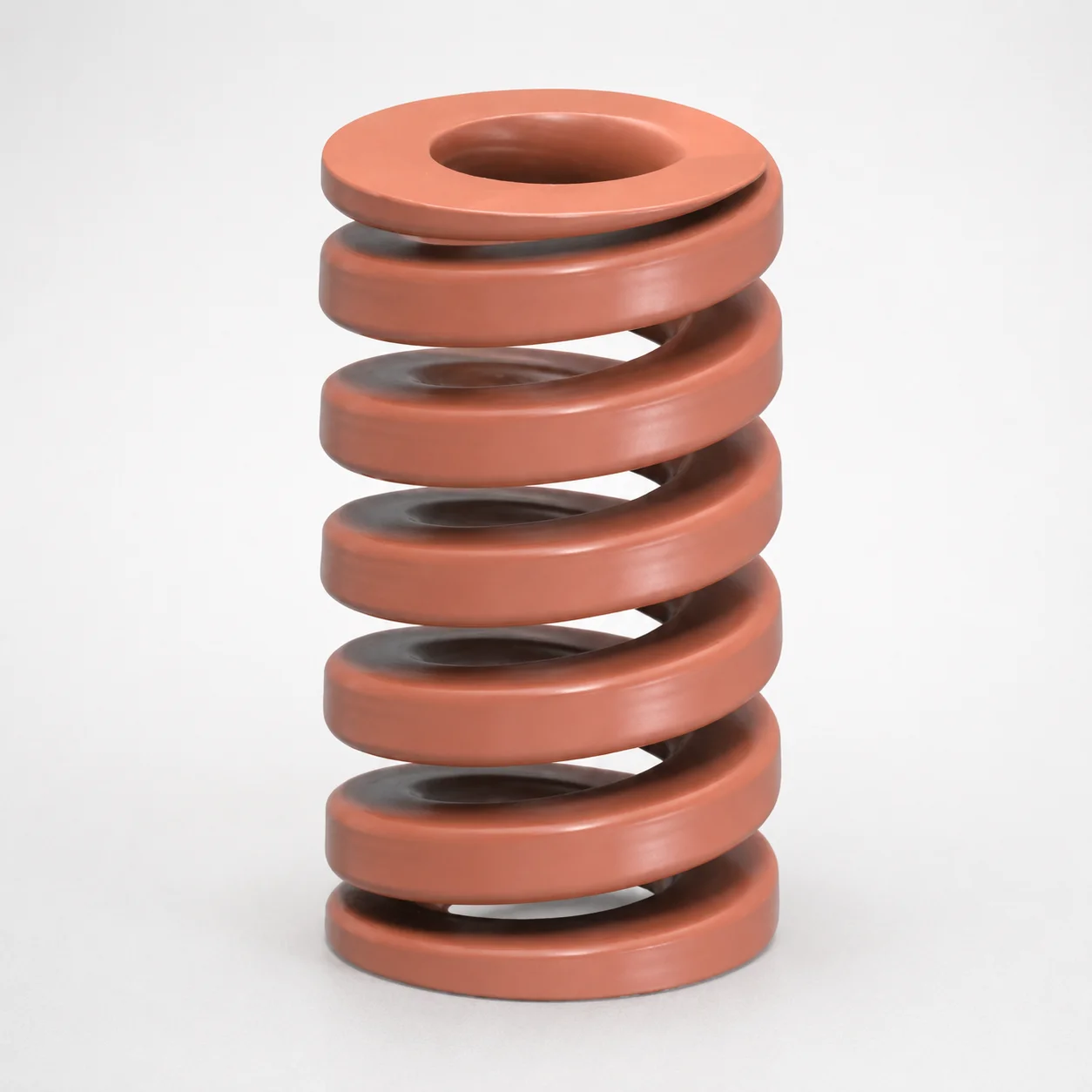
JIS Standard Chrome Silicon Oil-Tempered Wire Heavy Duty Die Spring 20% Deflection
Need Custom Specifications?
Our engineering team can help with custom configurations, material selection, and volume pricing.