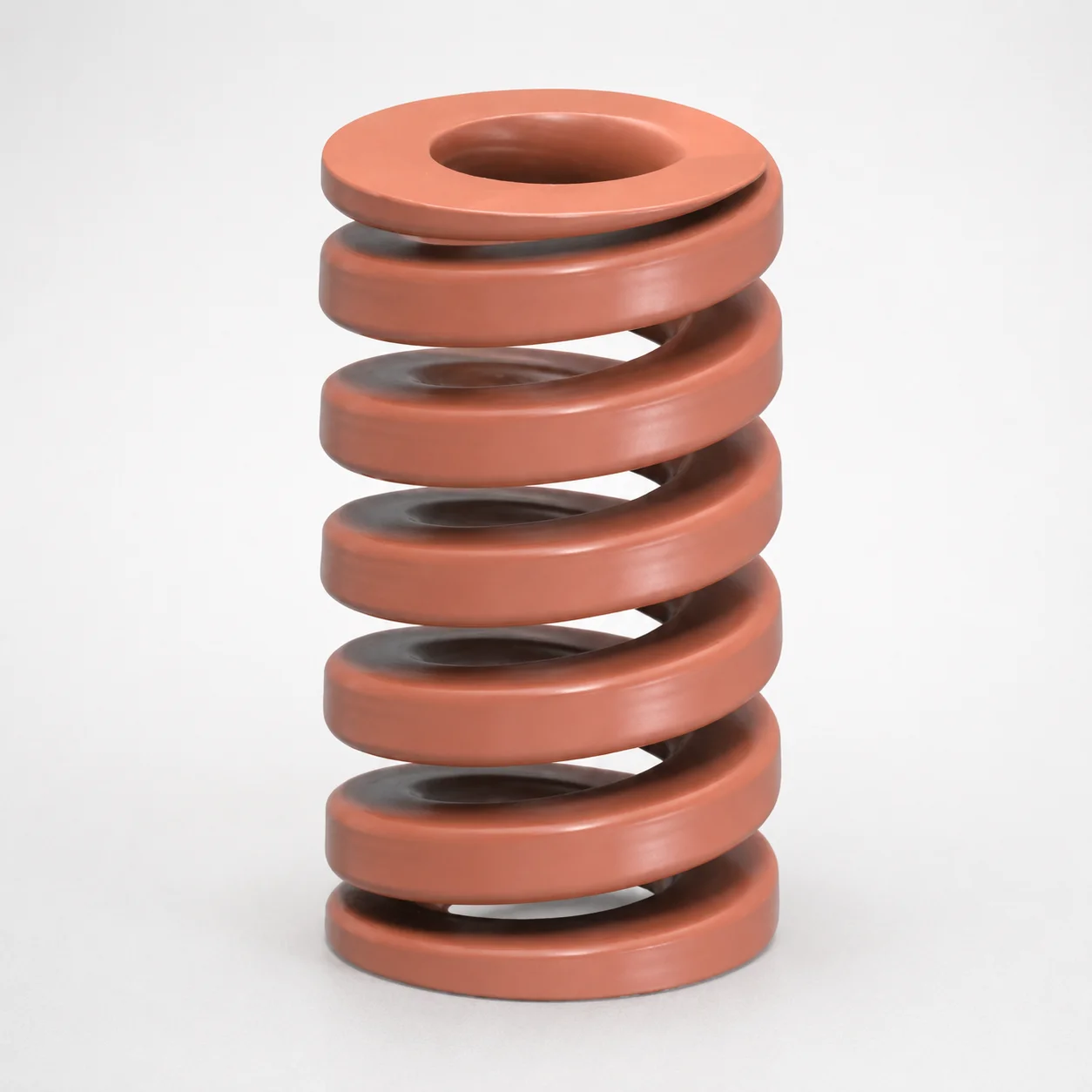
JIS Standard Chrome Silicon Oil-Tempered Wire Heavy Duty Die Spring 20% Deflection
Heavy Duty Die Spring 20% Deflection is engineered for high-load die applications using Chrome Silicon oil-tempered wire. The spring is designed to deliver consistent load response with controlled deflection for reliable press and molding operation.
- Designed for 20% deflection to balance force and spring travel
- Uses Chrome Silicon oil-tempered wire for stable mechanical performance
- Available with optional coated/no-coating selection for process fit
- Built to JIS specifications for predictable use in die assemblies
Specifications
526 configurations available
| Maximum Load (N) | Outer Diameter D (mm) | Length L (mm) | Coating Removal | type |
|---|---|---|---|---|
| 177 | 6 | 15 | No coating | - |
| 177 | 6 | 20 | No coating | - |
| 177 | 6 | 25 | No coating | - |
| 177 | 6 | 30 | No coating | - |
| 177 | 6 | 35 | No coating | - |
| 177 | 6 | 40 | No coating | - |
| 177 | 6 | 45 | No coating | - |
| 177 | 6 | 50 | No coating | - |
| 177 | 6 | 55 | No coating | - |
| 177 | 6 | 60 | No coating | - |
| 323 | 8 | 10 | No coating | - |
| 323 | 8 | 15 | No coating | - |
| 323 | 8 | 20 | No coating | - |
| 323 | 8 | 25 | No coating | - |
| 323 | 8 | 30 | No coating | - |
| 323 | 8 | 35 | No coating | - |
| 323 | 8 | 40 | No coating | - |
| 323 | 8 | 45 | No coating | - |
| 323 | 8 | 50 | No coating | - |
| 323 | 8 | 55 | No coating | - |
| 323 | 8 | 60 | No coating | - |
| 323 | 8 | 65 | No coating | - |
| 323 | 8 | 70 | No coating | - |
| 323 | 8 | 75 | No coating | - |
| 323 | 8 | 80 | No coating | - |
| 441 | 10 | 10 | No coating | - |
| 441 | 10 | 15 | No coating | - |
| 441 | 10 | 20 | No coating | - |
| 441 | 10 | 25 | No coating | - |
| 441 | 10 | 30 | No coating | - |
| 441 | 10 | 35 | No coating | - |
| 441 | 10 | 40 | No coating | - |
| 441 | 10 | 45 | No coating | - |
| 441 | 10 | 50 | No coating | - |
| 441 | 10 | 55 | No coating | - |
| 441 | 10 | 60 | No coating | - |
| 441 | 10 | 65 | No coating | - |
| 441 | 10 | 70 | No coating | - |
| 441 | 10 | 75 | No coating | - |
| 441 | 10 | 80 | No coating | - |
| 441 | 10 | 90 | No coating | - |
| 569 | 12 | 15 | No coating | - |
| 569 | 12 | 20 | No coating | - |
| 569 | 12 | 25 | No coating | - |
| 569 | 12 | 30 | No coating | - |
| 569 | 12 | 35 | No coating | - |
| 569 | 12 | 40 | No coating | - |
| 569 | 12 | 45 | No coating | - |
| 569 | 12 | 50 | No coating | - |
| 569 | 12 | 55 | No coating | - |
Product Guide
Application Scenarios+
This die spring variant is used inside injection and pressing tooling where controlled force over a defined travel is critical. In automotive connector and sensor housings, it helps maintain consistent die cushioning and ejection support as press loads fluctuate, improving cycle-to-cycle stability during molding.
It is also commonly specified for high-cycle trimming and forming stations integrated with mold tooling. The 20% deflection target supports a predictable load curve for die-set components, helping protect working surfaces when repeated compression is required.
- Injection mold die assemblies: set the spring to the required deflection band to stabilize die response.
- Precision press tooling: consistent load at travel helps reduce variance in forming outcomes.
- Process-fit needs: select no coating or coated versions depending on surface handling and contamination control requirements.
Material & Process Details+
Built from Chrome Silicon oil-tempered wire, this die spring is intended for stable mechanical performance under repeated loading. Chrome Silicon compositions are selected to improve wear resistance and fatigue life compared with lower-alloy spring steels, supporting long service in mold/die environments.
The “oil-tempered” condition indicates heat processing that tempers the wire after a quench step, balancing strength and toughness so the spring can withstand cyclic deflection without brittle failure.
- Performance trade-off: higher hardness improves resistance to set and surface damage, while toughness helps prevent cracking under shock loading.
- Coating option: choose coated when additional surface protection or handling requirements apply; use no coating for applications where coating must be avoided.
Note: specific HRC values and exact steel grade equivalency are not provided in the supplied data.
Sizing & Selection Guide+
Select the spring dimensions so its compressed travel aligns with your die-set deflection requirement (here, the spring targets 20% deflection). Use the required outer diameter D to fit within your guide/post envelope, and match the length L to your die stack-up clearance.
- Outer Diameter (D): choose within 6 ~ 70 mm to maintain proper lateral fit and avoid interference with surrounding components.
- Length (L): choose within 10 ~ 350 mm to ensure the spring seats correctly and has enough working space across cycles.
Compare the selected D and L against your core/cavity or die housing constraints, then validate that the spring’s working range produces the intended load at the 20% deflection point. If your design includes precise stack-up tolerances, leave clearance for manufacturing variation in die components and assembly height so the spring can compress without binding.
Configurable aspect: the spring is available as coating removal variants (No coating or Coated), which does not change the dimensional ranges but can affect fit in tight clearances.
Frequently Asked Questions
How do I size this die spring for the required 20% deflection in my die set?+
This variant is specified for 20% deflection, so your die stack-up and working travel should be designed to reach that deflection band during operation. Size the spring’s outer diameter D (6 ~ 70 mm) to fit the available space, and select length L (10 ~ 350 mm) so it seats correctly and provides the intended compression travel.
Because the provided data does not include load-vs-deflection curves, confirm your target deflection behavior using the catalog/load requirements for the selected size.
What are the dimension limits for outer diameter and length when selecting a MISUMI die spring for a mold cavity/core assembly?+
The selectable ranges provided are D = 6 ~ 70 mm and L = 10 ~ 350 mm. Use D to ensure the spring fits within the die guide/post envelope, and use L to match the available height in the die-set stack without coil binding.
If the design is sensitive to surface buildup, verify whether you selected coated vs no coating.
Does choosing “coated” vs “no coating” affect my assembly fit or performance?+
The product is offered with coating removal options: No coating or Coated. Coating can add slight thickness and can influence how the spring seats within tight clearances, so re-check fit against your die stack-up.
Performance-wise, both variants are designed to deliver stable die performance at the 20% deflection level; the key difference is surface condition for handling and process suitability.
What load capability should I consider when selecting a spring size for high-load die applications?+
The maximum load range provided is 177 ~ 17069 N, which should be matched to your die’s expected peak forces and safety margin requirements. For each candidate size (by D and L), verify that the spring’s load capacity supports the press/molding load while still operating at the 20% deflection target.
The dataset does not list a single load value per dimension, so use the supplier’s size-specific data when finalizing the selection.
Which material condition is used, and why is Chrome Silicon oil-tempered wire suitable for die springs?+
This spring uses Chrome Silicon oil-tempered wire, processed to improve durability under cyclic compression. The oil-tempered heat treatment helps balance strength and toughness, supporting high fatigue life for repeated die loading.
Exact hardness (HRC) and steel grade equivalence are not specified in the provided information, so confirm those values from the detailed spec sheet for your selected part number/size.
Related Products
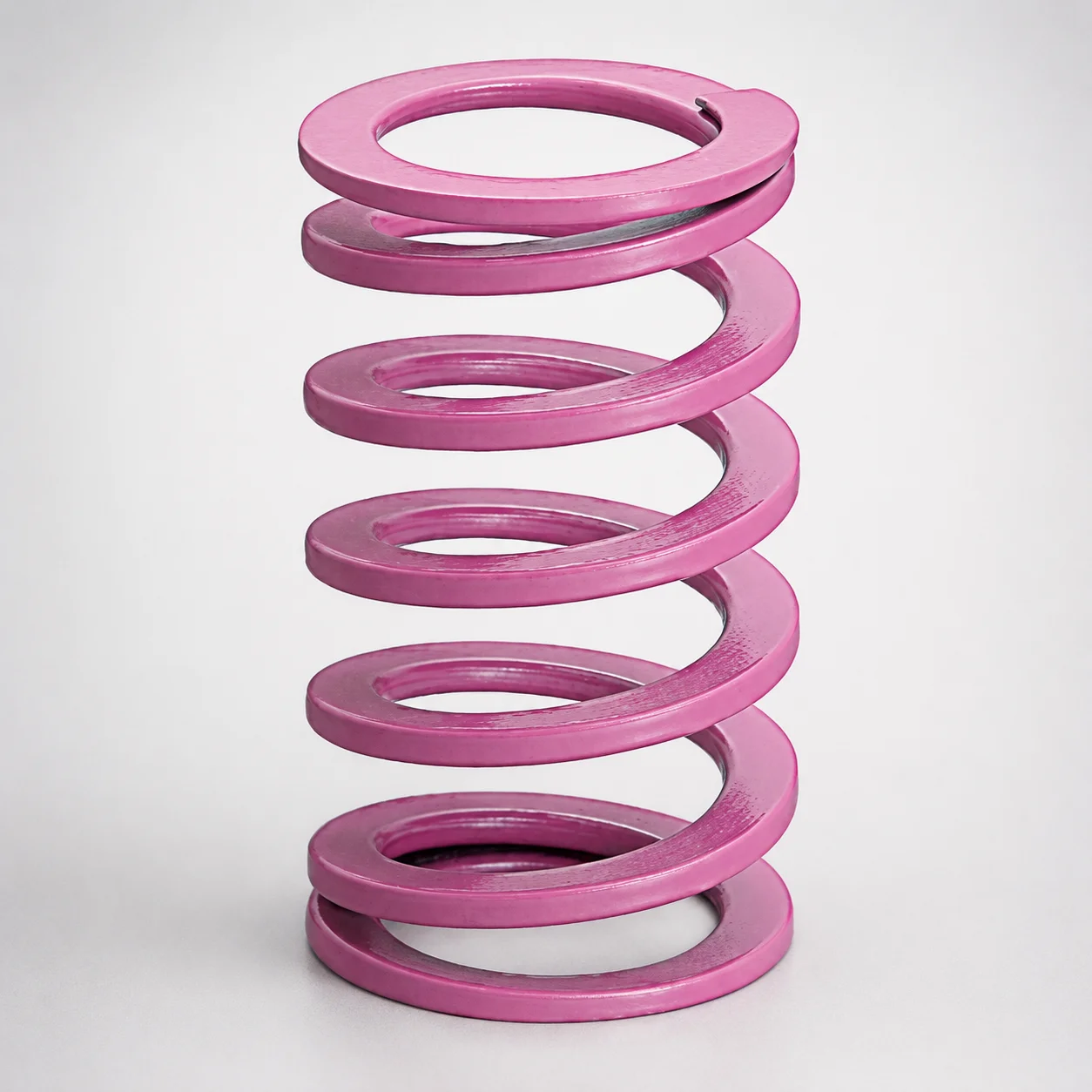
JIS Standard Chrome Silicon Medium Duty Die Spring 60% Deflection
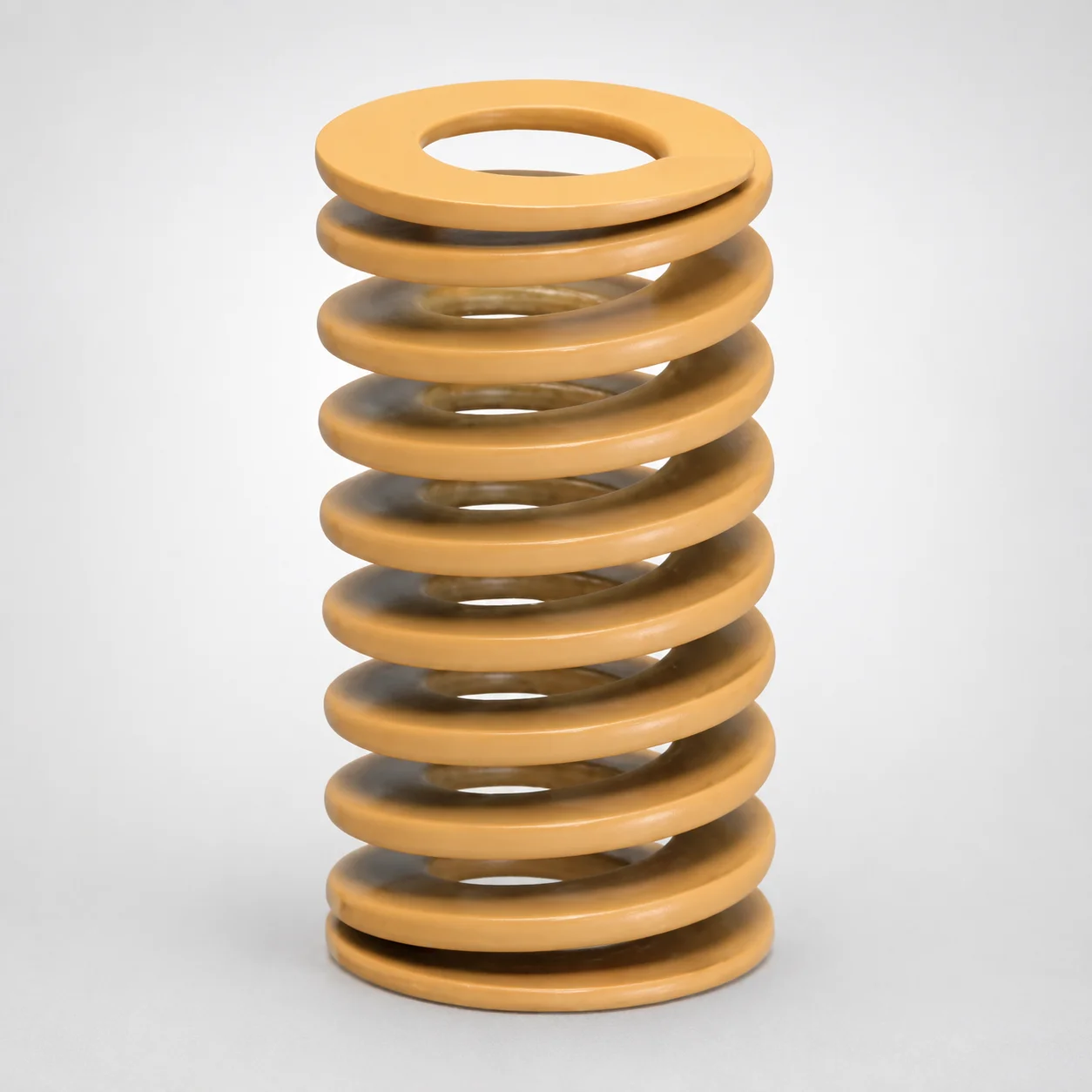
JIS Standard Chrome Silicon Medium Duty Die Spring - 50% Deflection
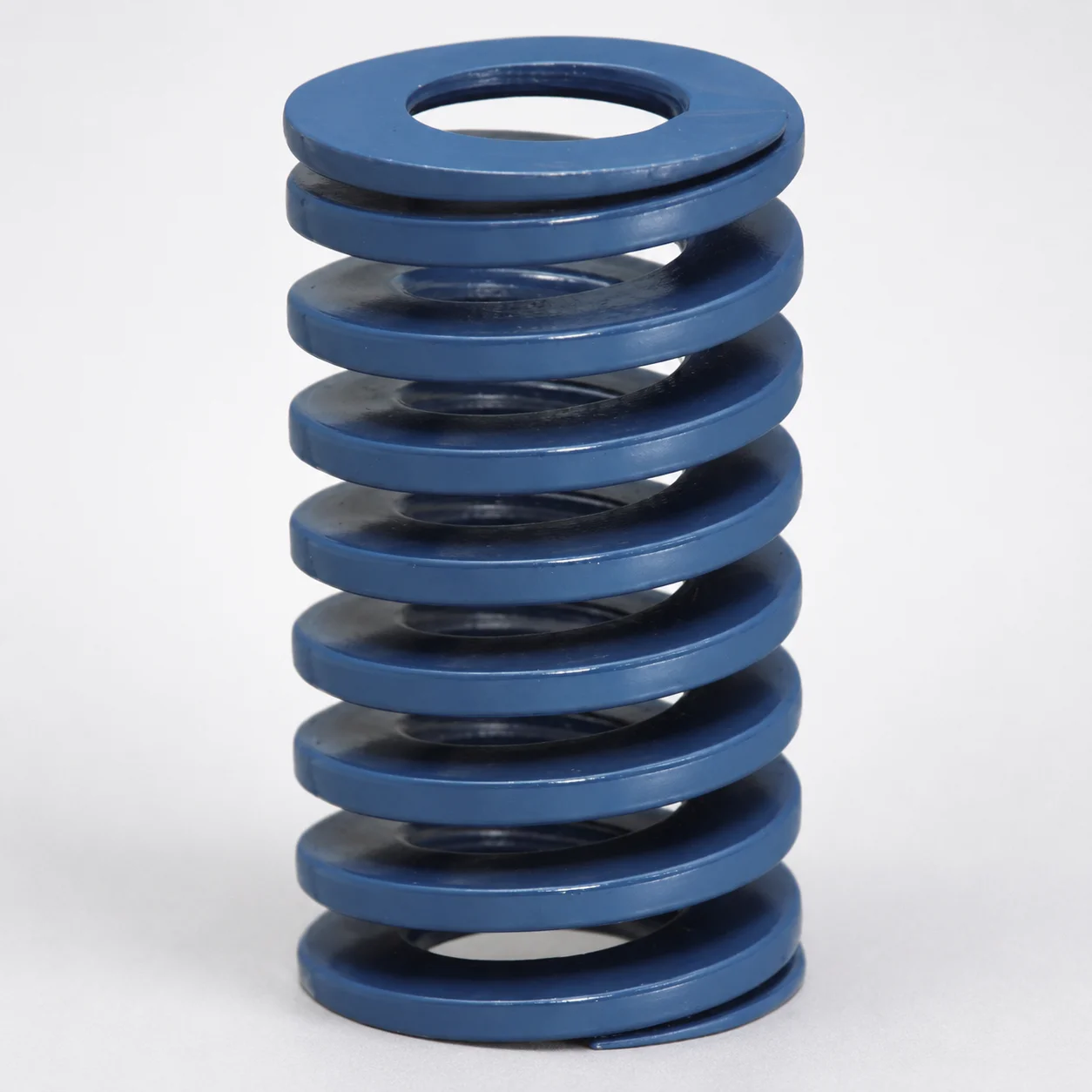
JIS Standard Chrome Silicon Steel Medium Duty Die Spring - 40% Deflection
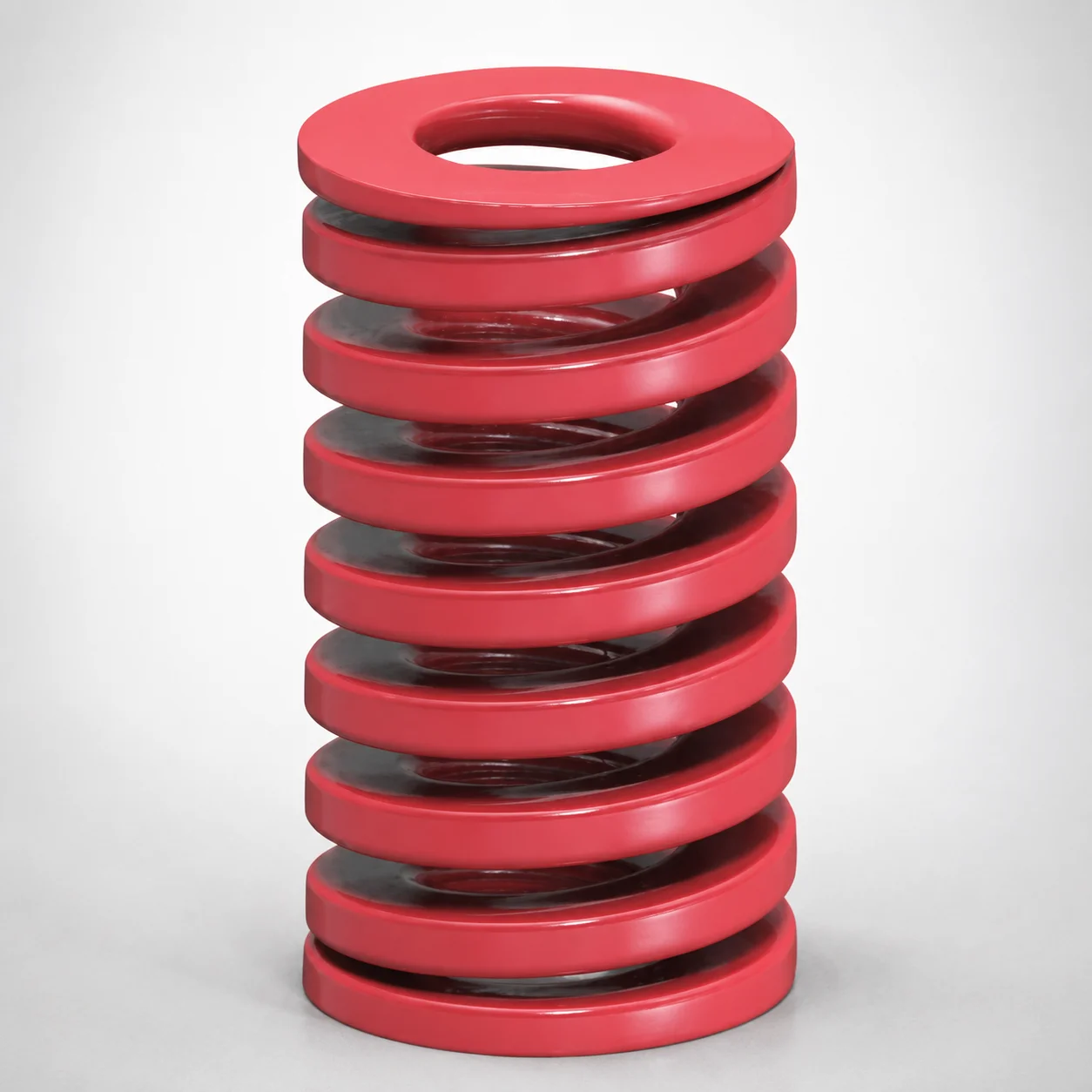
JIS Standard Medium Duty Die Spring 32% Deflection Chrome Silicon Coil Springs
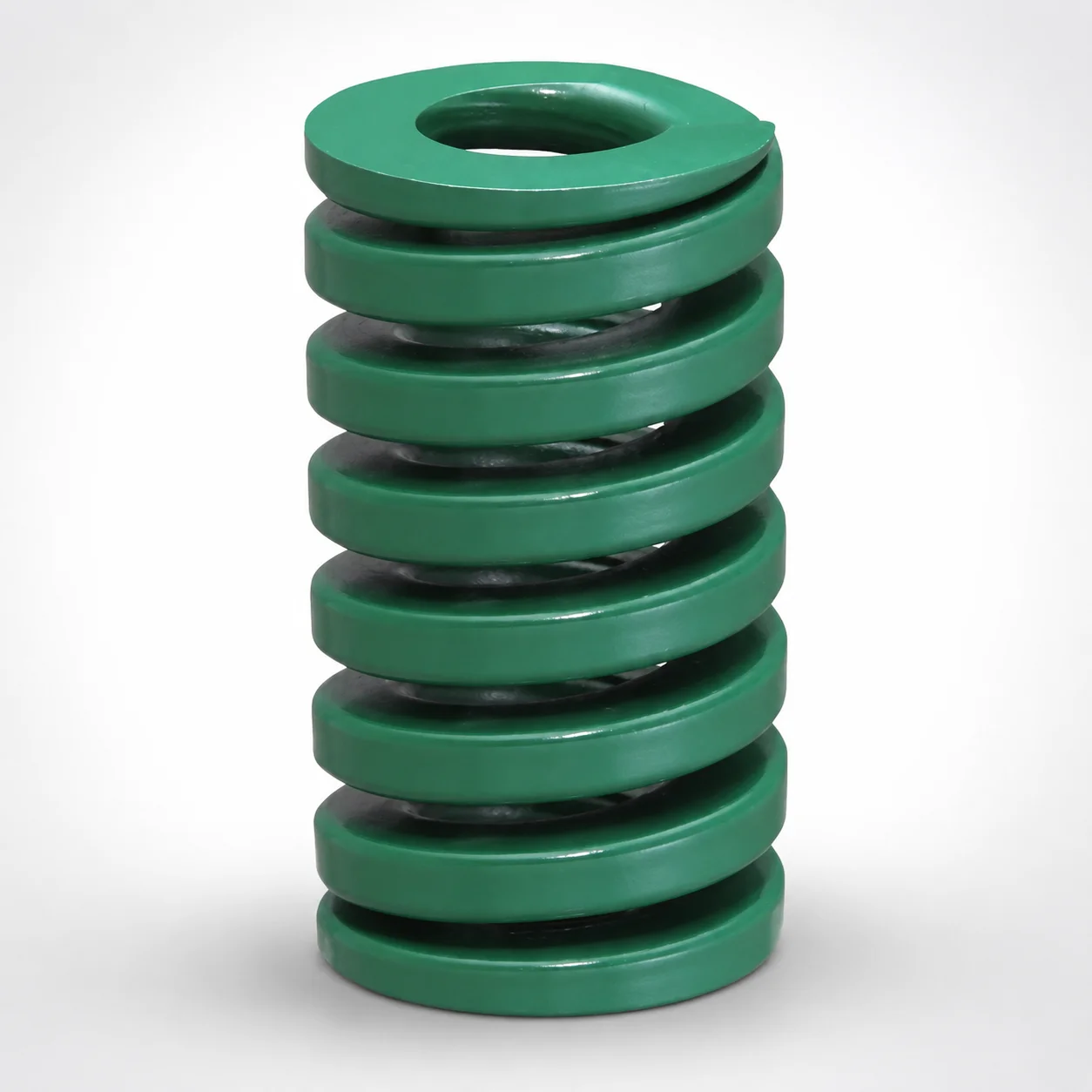
JIS Standard Heavy Duty Die Spring 24% Deflection
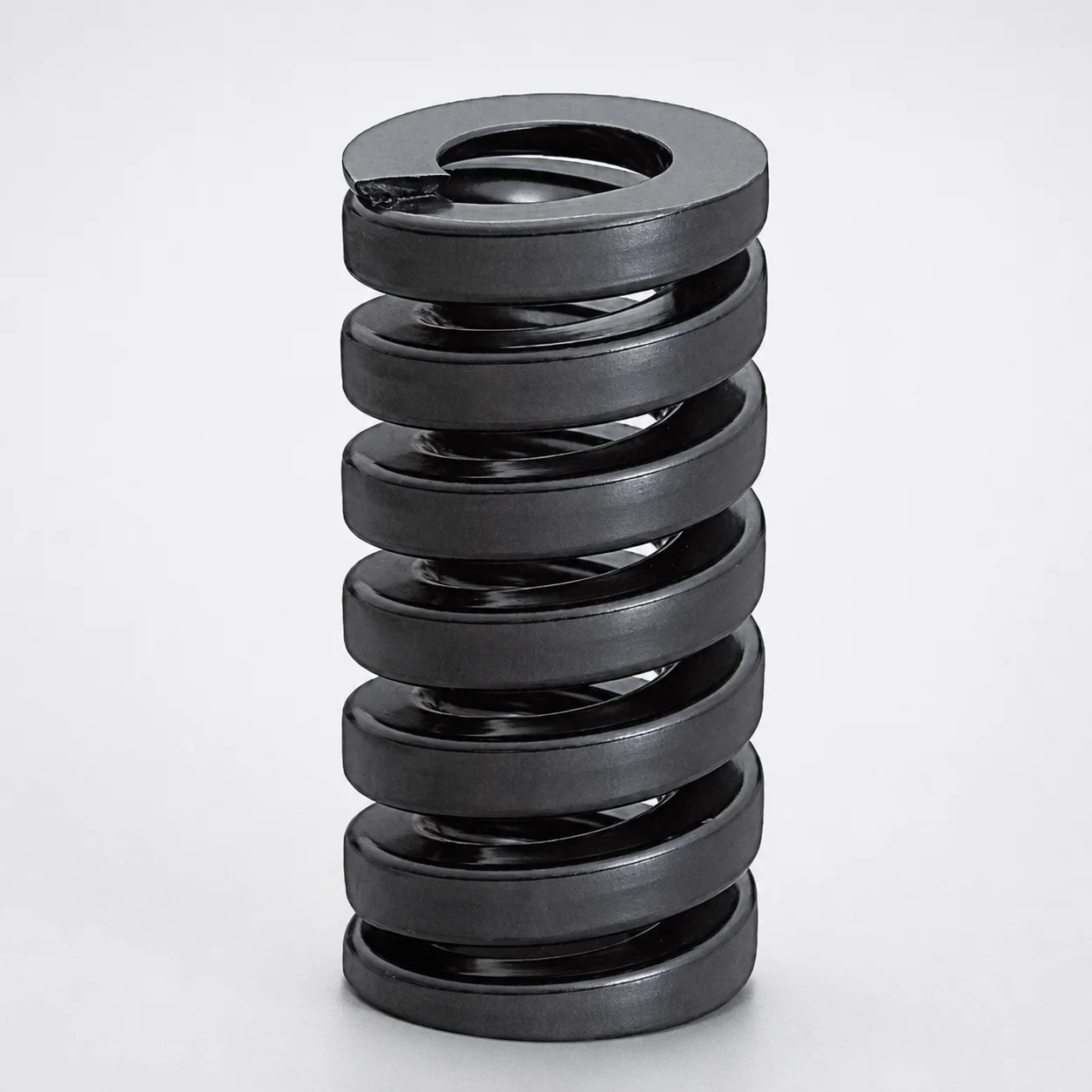
JIS Standard Extra Heavy Duty Die Spring SWG Type - 20% Deflection
Need Custom Specifications?
Our engineering team can help with custom configurations, material selection, and volume pricing.