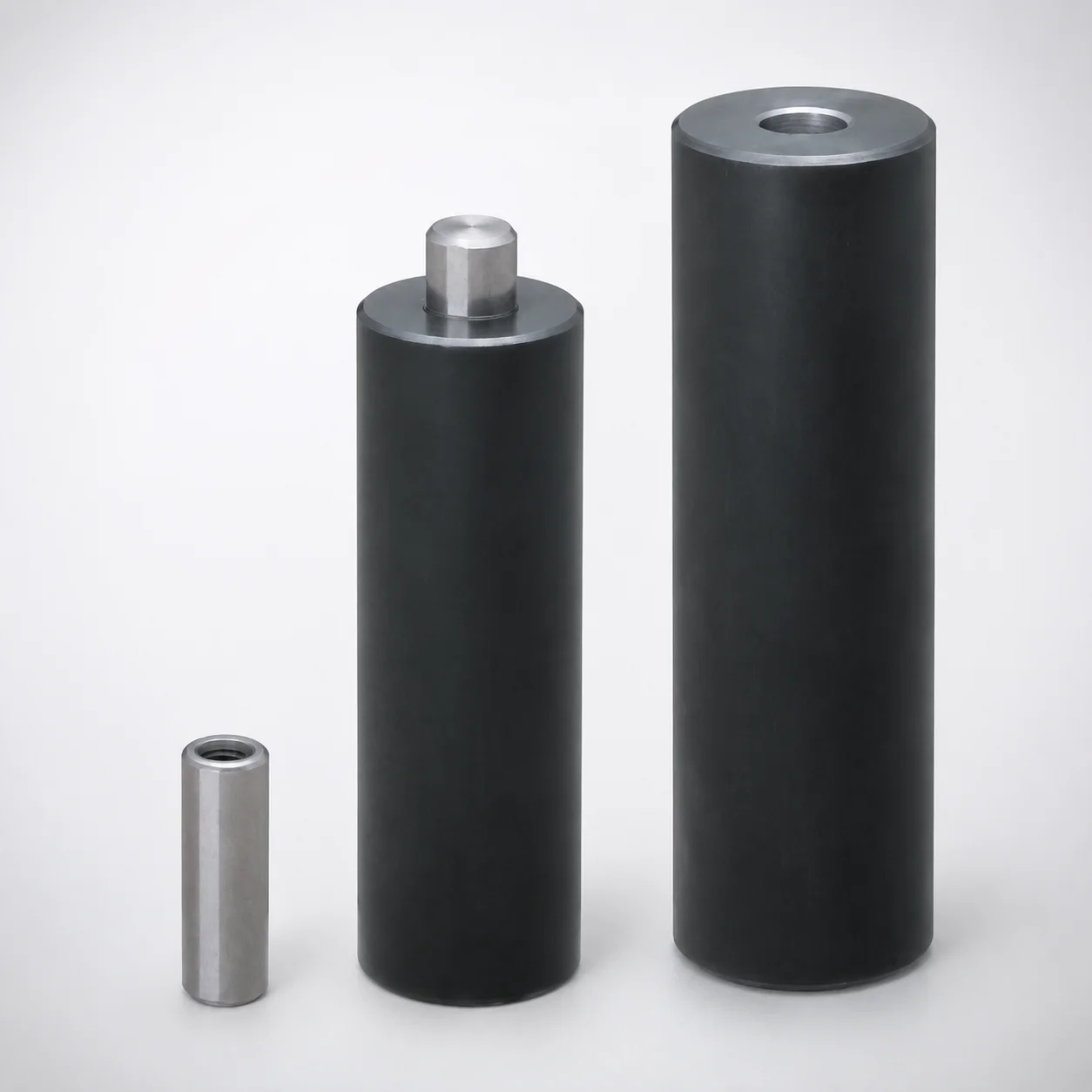
SPLG Support Pillars With a Dowel Hole
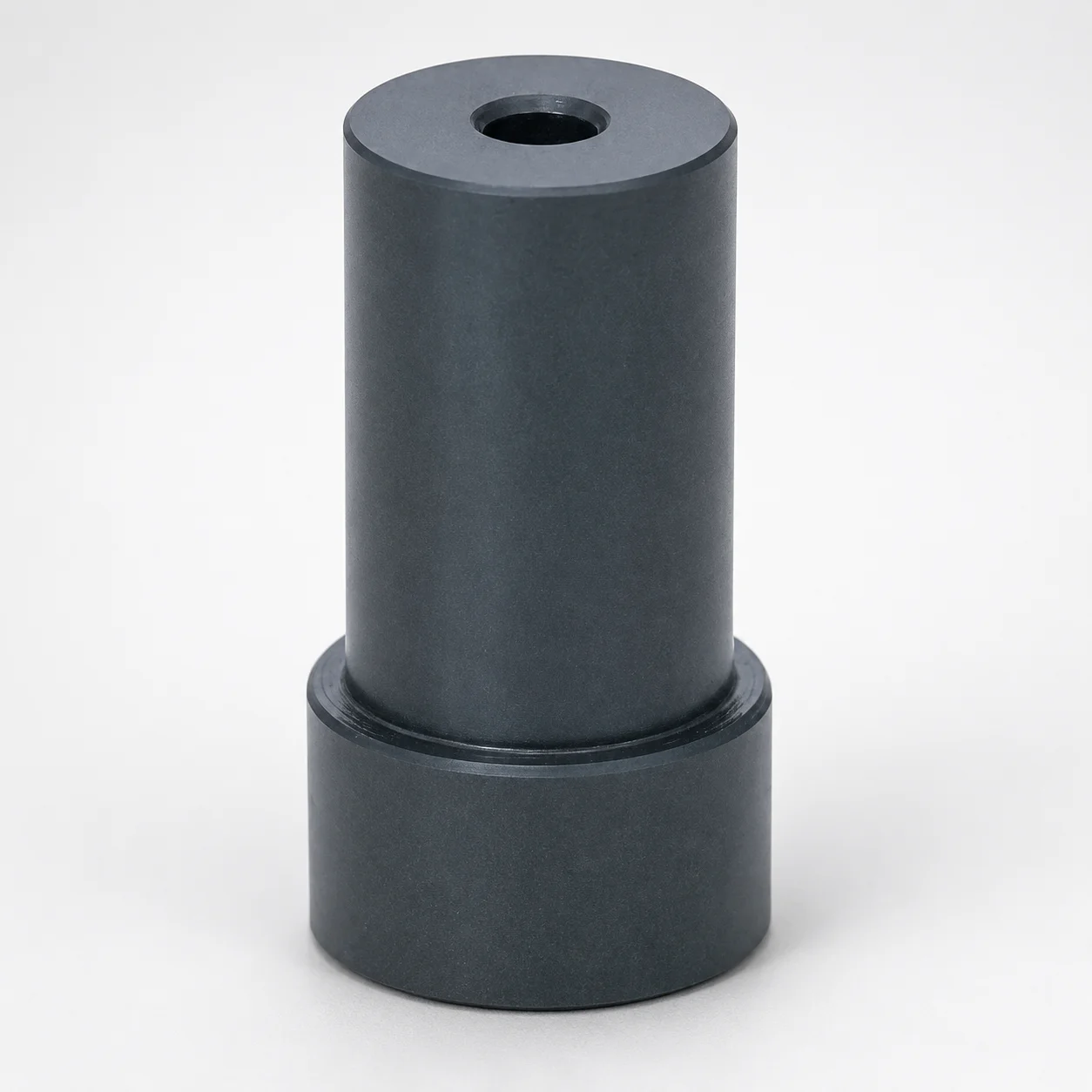
SPLG support pillars with a dowel hole provide stable dowel-based positioning for repeatable alignment in tooling and assembly fixtures. They are designed for reliable support across selectable lengths to match your build requirements.
- Integrated dowel hole shape improves location accuracy in jig assemblies
- SPLG type support pillar for consistent repeatable positioning
- Selectable length range supports different press fixture and assembly layouts
- Common use in mold bases, die stations, and automated assembly tooling
Specifications
12 configurations available
| D (Shaft diameter) (mm) | L (L dimension) (mm) | LC (L dimension alteration) (mm) | type |
|---|---|---|---|
| 20 | 40 ~ 100 | - | - |
| 20 | - | 41 ~ 99 | - |
| 25 | 50 ~ 100 | - | - |
| 25 | - | 40 ~ 99 | - |
| 30 | 50 ~ 120 | - | - |
| 30 | - | 51 ~ 119 | - |
| 35 | 50 ~ 150 | - | - |
| 35 | - | 51 ~ 149 | - |
| 40 | 50 ~ 150 | - | - |
| 40 | - | 51 ~ 149 | - |
| 50 | 70 ~ 200 | - | - |
| 50 | - | 71 ~ 199 | - |
Product Guide
Application Scenarios+
Where they’re used: These support pillars are built for precision dowel-location in leader-ejector spacing areas of injection mold tooling and adjacent assembly fixtures. The integrated dowel hole enables stable, repeatable alignment when sections of a mold or a jig must return to the same position every cycle.
- Automotive connector and housing molds: Use the dowel hole to maintain alignment between mold halves or insert stations, helping reduce mismatch during clamping and part ejection. The SPLG configuration supports consistent positioning across selectable lengths, which is helpful when the leader/ejector space must vary by layout.
- Medical device housings and secondary assembly jigs: For fixtures that require accurate repeat location of plates, sub-assemblies, or gauging interfaces, the dowel-hole geometry improves location accuracy in jig assemblies while keeping support stiffness.
- Press fixtures and automated assembly tooling: Select the appropriate shaft diameter (D) and length (L/LC) to match machine interfaces and tooling stack-up, ensuring stable support without shifting.
Material & Process Details+
The provided dataset does not specify a steel grade, hardness (HRC), or heat-treatment state for this SPLG support pillar variant. For accurate material selection in injection tooling, confirm the supplier’s steel grade and processing route before final engineering sign-off.
In general, support pillars intended for repeatable dowel positioning are manufactured from tool steels and are typically delivered in a heat-treated condition to balance wear resistance (resisting abrasion at sliding or contact interfaces) with toughness (resisting chipping or deformation under repeated loading). Depending on the application, materials may be provided as pre-hardened or quenched & tempered; some solutions use surface treatments such as nitriding to improve surface wear without sacrificing core toughness.
- Key trade-off: Higher surface hardness improves wear resistance but can reduce toughness if the core is not properly tempered.
- Comparison note: If multiple material options are available, choose based on loading severity and any requirements for dimensional stability after heat treatment.
Sizing & Selection Guide+
Correct dimensioning ensures the dowel-location scheme returns to the same alignment point and that the pillar supports the tooling stack without interference. Use D (shaft diameter) to match the leader/ejector-space interface bore and clearance requirements: available diameters are 20, 25, 30, 35, 40, 50 mm.
- Select length L: Choose from the provided L ranges that fit your mold base or fixture stack-up, depending on the variant—40–100, 50–100, 50–120, 50–150, or 70–200 mm.
- Account for LC alteration: Where the product specifies LC (L dimension alteration), pick the LC range aligned with your design’s offset needs—41–99, 40–99, 51–119, 51–149, or 71–199 mm.
- Tolerance/fit: Because a dowel hole is included, maintain proper dowel fit (location accuracy) with the mating dowel’s target clearance/interference and respect standard machining tolerances for the selected shaft diameter.
If your stack-up is fixed, select a matching L (and corresponding LC if applicable). For adjustable designs, pick a length variant that covers your maximum build height while keeping safe clearance to adjacent components.
Frequently Asked Questions
How do I choose the correct shaft diameter D for SPLG support pillars with a dowel hole?+
Select D (shaft diameter) from the available options: 20, 25, 30, 35, 40, 50 mm. Match D to the receiving support bore and the dowel-location system requirements so the pillar provides stable guidance without excessive clearance.
If you are using a specific dowel diameter, confirm the dowel-to-hole fit plan and ensure the pillar’s geometry supports your intended tolerance class.
What length range should I use for L when designing a leader/ejector spacing stack-up?+
Use the provided L (L dimension) ranges to fit your tooling height: 40–100, 50–100, 50–120, 50–150, or 70–200 mm. The correct L prevents under-support (deflection) and avoids interference with adjacent components.
Verify the final stack-up dimensions around the pillar seats and ensure the dowel-location interface remains clear across operating conditions.
What is LC (L dimension alteration) and when should I consider it?+
LC (L dimension alteration) is provided as an additional dimension range tied to the L variant, with options: 41–99, 40–99, 51–119, 51–149, 71–199 mm. Consider LC when your design requires an offset or altered geometry relationship relative to the base L dimension.
Use the LC range that aligns with your CAD stack-up and the mating interface’s effective height.
Why is the dowel hole important for assembly jigs and press fixtures using support pillars?+
The integrated dowel hole improves repeat location accuracy in jig assemblies by providing a consistent reference for alignment. This helps maintain positional repeatability between fixtures, plates, or mold sections across cycles.
Choose the appropriate D and L to ensure the dowel-location accuracy is maintained while the pillar provides adequate support stiffness.
Is this support pillar intended for mold bases, die stations, or automated assembly tooling?+
Yes—this SPLG support pillar with a dowel hole is described for mold bases, die stations, and automated assembly tooling. In these applications, the dowel hole supports precise re-alignment, and the selectable length options help match different fixture layouts.
Confirm your interface clearances and stack-up dimensions for the selected L (and LC if specified) to ensure reliable operation.
Related Products
Need Custom Specifications?
Our engineering team can help with custom configurations, material selection, and volume pricing.