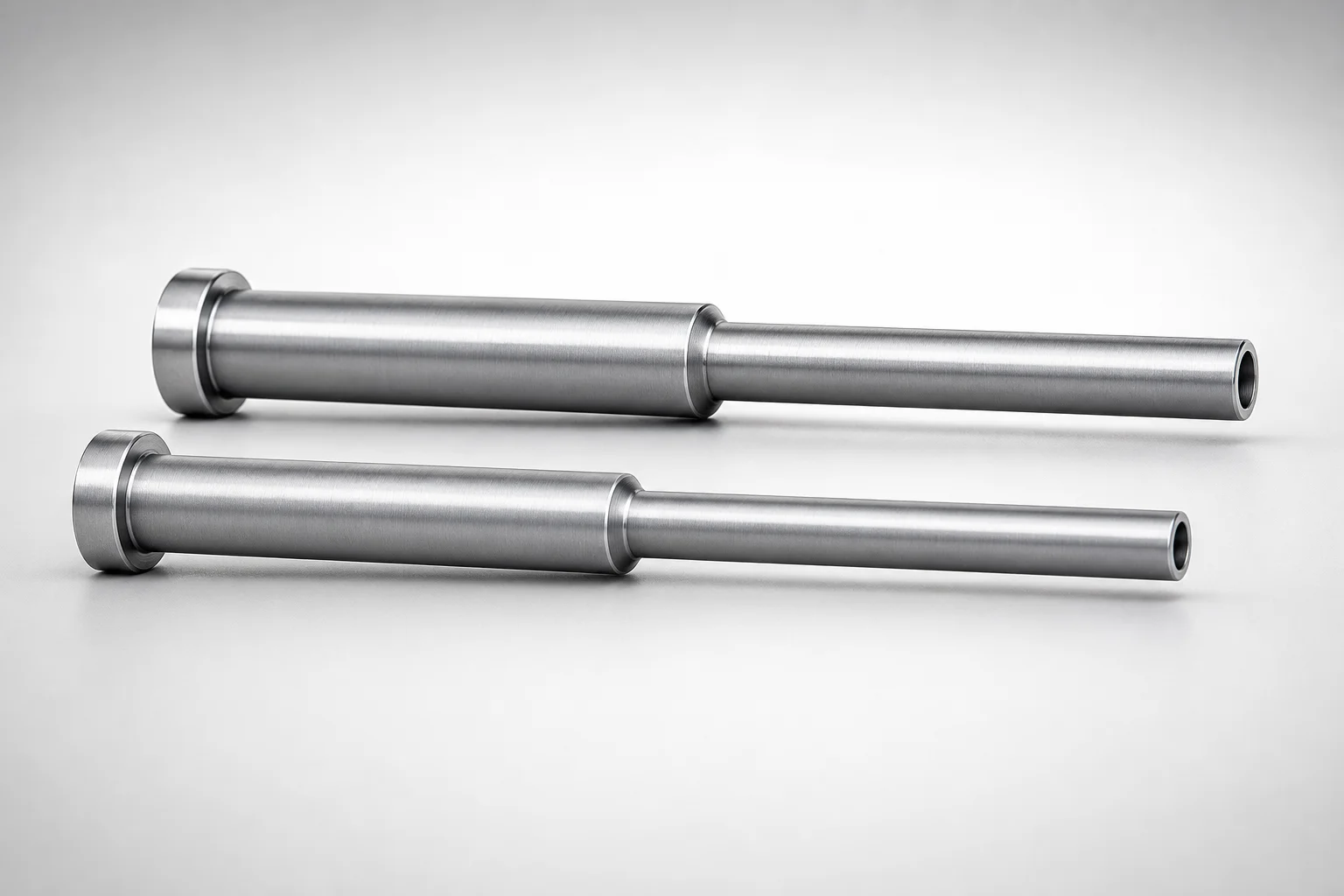
JIS Standard SKD61 Steel Stepped Ejector Sleeves
Stepped ejector sleeves (SKD61 steel) are designed to guide ejector movements with stable stepped support. The nitrided surface treatment improves wear resistance for reliable press and mold assembly.
- Stepped sleeve geometry supports consistent ejector alignment
- SKD61 steel construction with nitrided surface for durability
- Supports H7 inner diameter tolerance and tight shaft fit
- Manufactured to JIS standard for compatibility with die components
Specifications
8 configurations available
| Head Thickness | D (Shaft Diameter) (mm) | P (Tip Diameter) (mm) | V (Hole Diameter) (mm) | L (L dimension) (mm) | Dimension N (mm) | type |
|---|---|---|---|---|---|---|
| 8mm(JIS) | 8 | - | 3 ~ 4.5 | 100 ~ 250 | 50 ~ 120 | - |
| 8mm(JIS) | 12 | - | 5 ~ 5.5 | 125 ~ 300 | 60 ~ 120 | - |
| 8mm(JIS) | 15 | - | 6 ~ 9 | 175 ~ 300 | 80 ~ 150 | - |
| 8mm(JIS) | 20 | - | 11 ~ 15 | 175 ~ 300 | 80 ~ 150 | - |
| 4mm(T4) | 4 | 3 ~ 3.5 | 1.5 ~ 2 | 100 ~ 150 | 50 ~ 80 | - |
| 4mm(T4) | 5 | 3.5 ~ 4 | 2 ~ 2.5 | 100 ~ 150 | 50 ~ 80 | - |
| 4mm(T4) | 6 | 4 ~ 5 | 2 ~ 3.5 | 100 ~ 250 | 60 ~ 100 | - |
| 4mm(T4) | 8 | 4 ~ 6.5 | 2.5 ~ 4.5 | 100 ~ 250 | 60 ~ 100 | - |
Product Guide
Application Scenarios+
Stepped ejector sleeves are used inside injection mold tooling to guide knockout motion and maintain stable alignment between the ejector system and the moving parts. In automotive connector and sensor housings, the stepped geometry supports repeatable positioning during high-cycle ejecting, helping reduce side-loading on pins and improving part edge consistency.
For medical device housings and precision casings, this variant’s nitrided SKD61 surface targets wear resistance in environments where ejector movement must remain smooth over extended production runs. The built-in steps provide guided support at multiple contact zones, which helps maintain coaxial alignment under load.
In general electronics packaging molds, the JIS-standard compatibility and tight bore-to-shaft fit make it easier to integrate with die components and maintain proper tolerances for reliable core/cavity knockouts.
- Use when consistent ejector alignment is critical (e.g., connectors, casings).
- Prefer for long service life where abrasion and sliding wear dominate.
- Select based on shaft diameter range and step geometry to match the ejector assembly.
Material & Process Details+
This stepped ejector sleeve is made from JIS SKD61 steel, a hot-work die steel commonly selected for molds requiring a balance of wear resistance and toughness. The provided description specifies a nitrided surface, which enhances surface hardness and improves resistance to scuffing and adhesive wear during repeated ejector sliding.
- Heat treatment state: nitrided surface for wear resistance (bulk behavior depends on the underlying SKD61 heat treatment used by the manufacturer).
- Wear resistance: improved by the nitrided layer, supporting long service life under frequent cycling.
- Toughness trade-off: hard surface layers can reduce resistance to severe impact compared with softer surfaces; proper sleeve fit and alignment help mitigate localized stress.
If compared to alternatives without nitriding, the nitrided SKD61 variant typically offers better sliding-wear performance, which is especially valuable in guided knockout applications where the sleeve-to-shaft interface experiences continuous motion.
Sizing & Selection Guide+
Select the stepped ejector sleeve by matching the shaft (D), hole diameter (V), and overall geometry to your ejector and guide pin/coupler layout. The shaft diameter range is 4–20 mm, so choose a model where D fits the ejector shaft’s nominal size and intended clearance.
Use the tip diameter (P) to confirm step engagement with the ejector or mating features. Available P ranges include 3–3.5 mm, 3.5–4 mm, 4–5 mm, and 4–6.5 mm, allowing you to align step contact areas with your knockout system.
- Length (L): choose from 100–250, 125–300, 175–300, or 100–150 mm based on stroke and mold space.
- Dimension N: available bands include 50–120, 60–120, 80–150, 50–80, and 60–100 mm for the stepped layout.
- Tolerance/fit: the description notes H7 inner diameter tolerance; ensure your mating shaft fit targets the intended clearance for guided, low-friction movement.
Head thickness options are 8 mm (JIS) or 4 mm (T4); select the version that matches your die assembly depth and stacking requirements.
Frequently Asked Questions
What inner diameter tolerance does this SKD61 stepped ejector sleeve use, and how should I select the mating shaft fit?+
The sleeve is specified with an H7 inner diameter tolerance to support a tight shaft fit for guided knockout. When selecting the mating shaft, match the shaft nominal size within the intended clearance strategy to maintain smooth sliding and prevent binding under load.
Which shaft diameter range (D) and tip diameter ranges (P) are covered for this stepped ejector sleeve series?+
The shaft diameter parameter D is listed as 4–20 mm. The tip diameter P is available across multiple ranges: 3–3.5, 3.5–4, 4–5, and 4–6.5 mm, so choose the step geometry that matches your ejector interface.
How do I choose the correct sleeve length (L) and stepped layout dimensions (N) for my ejector stroke?+
Length L is available in ranges of 100–250, 125–300, 175–300, and 100–150 mm. Dimension N is offered in bands including 50–120, 60–120, 80–150, 50–80, and 60–100 mm. Select the combination that provides sufficient guide length for your stroke while keeping the stepped engagement fully supported.
What does the nitrided surface add versus using SKD61 without nitriding in ejector guide applications?+
This variant explicitly includes a nitrided surface treatment on SKD61. Nitriding is intended to improve wear resistance for longer service life in sliding contact between the sleeve and the moving ejector components, reducing scuffing and abrasion during repeated cycles.
Which head thickness should I select: 8 mm (JIS) or 4 mm (T4), and what affects compatibility?+
The product specifies Head Thickness as 8 mm (JIS) and 4 mm (T4). Choose the thickness that matches the die component stacking and mounting depth in your mold assembly; the selection directly affects fit and positional consistency within the ejector system.
Related Products
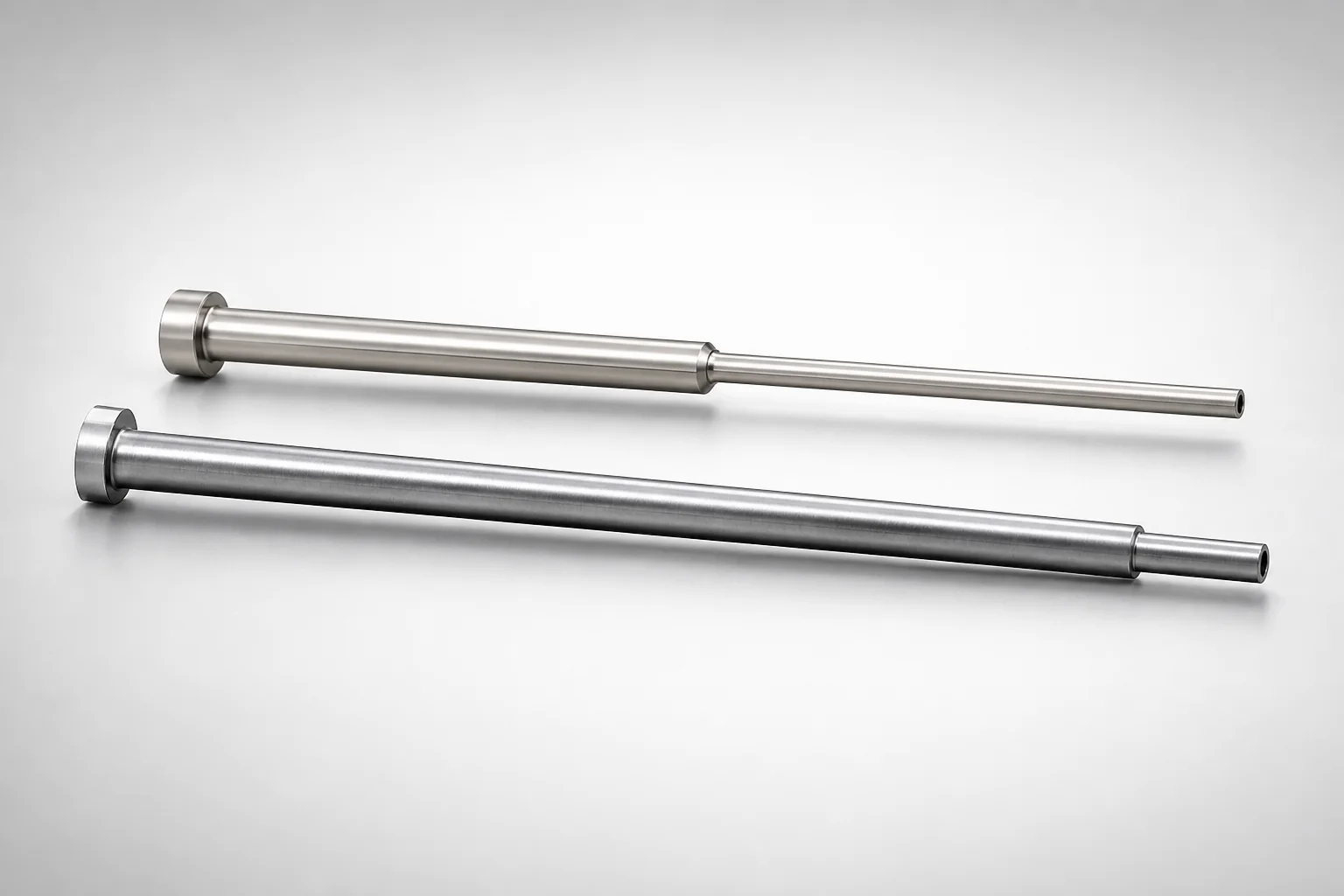
JIS Standard SKH51 Steel Precision Stepped Ejector Sleeves (ESVF)
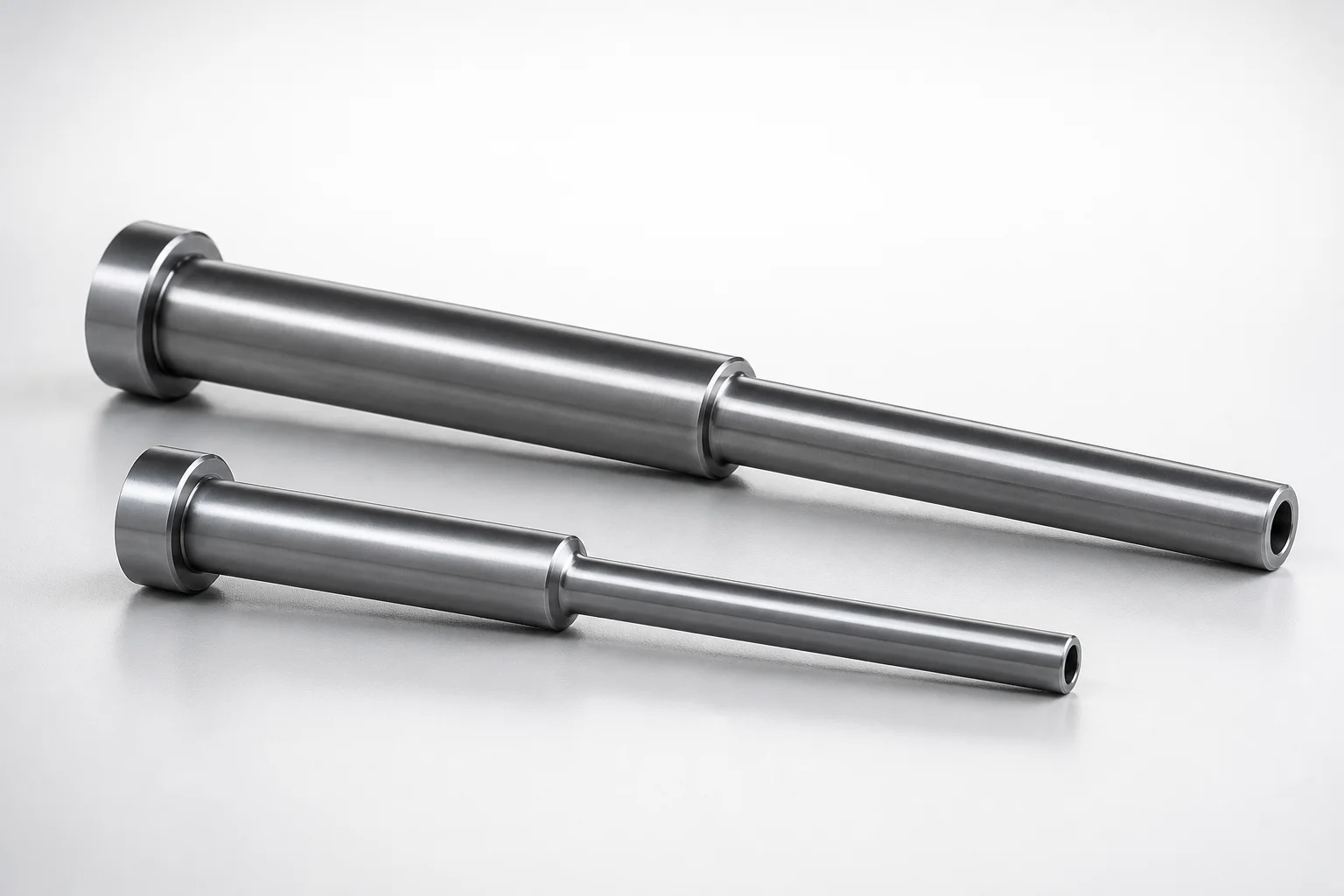
JIS Standard SKD61 Steel Stepped Ejector Sleeves
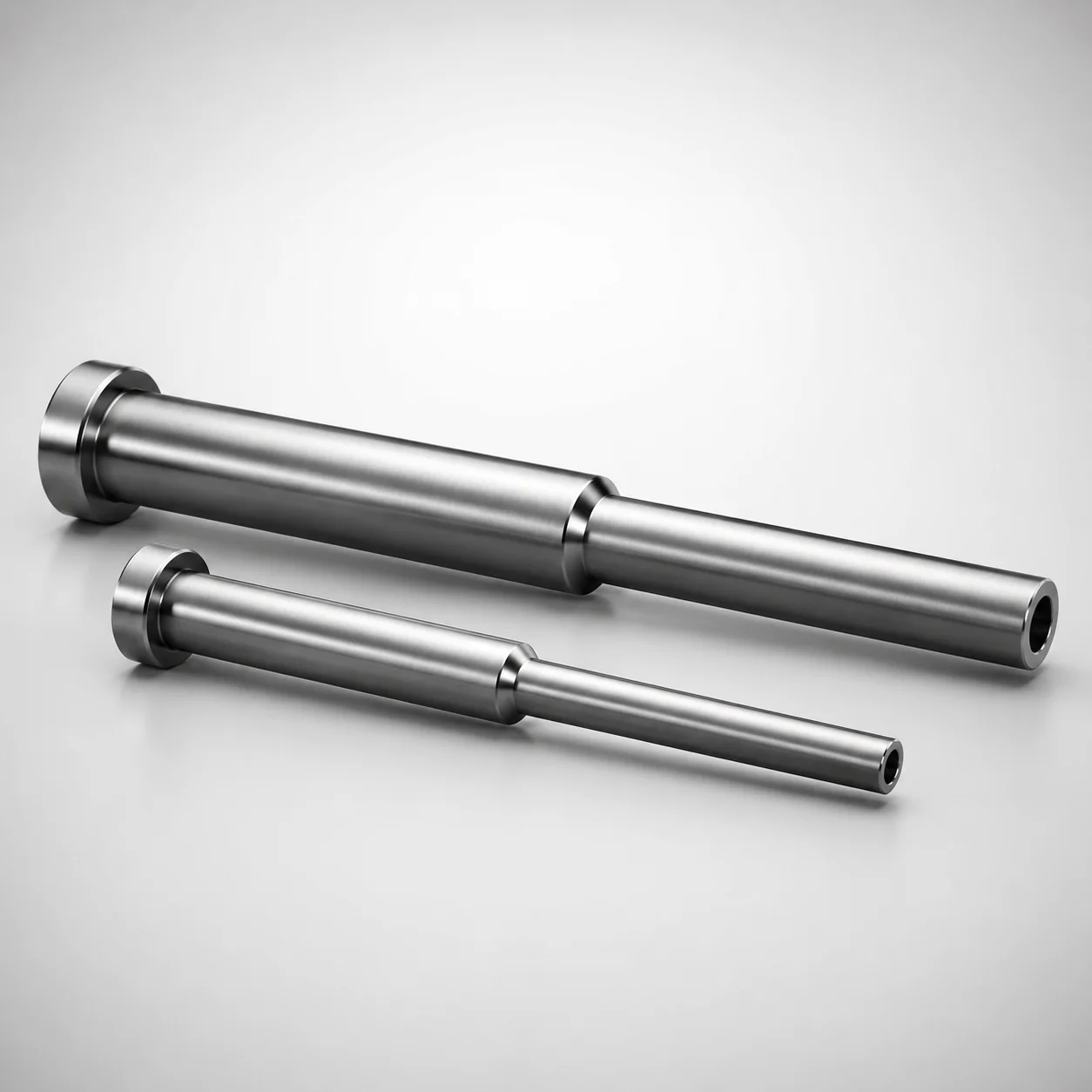
ESNF Type SKD61 Hardened Steel Stepped Ejector Sleeves
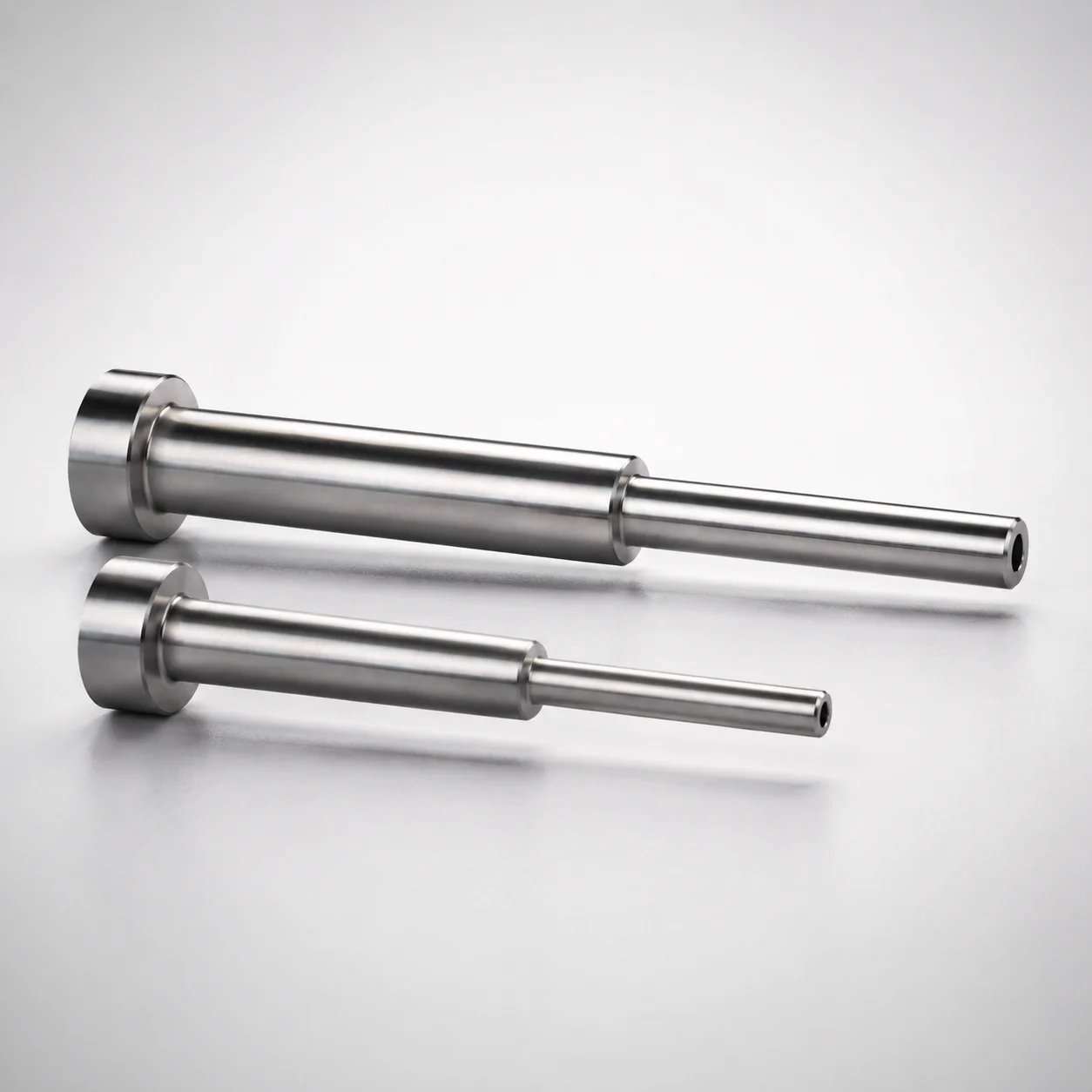
Japanese Standard SKD61 Steel Stepped Ejector Sleeves
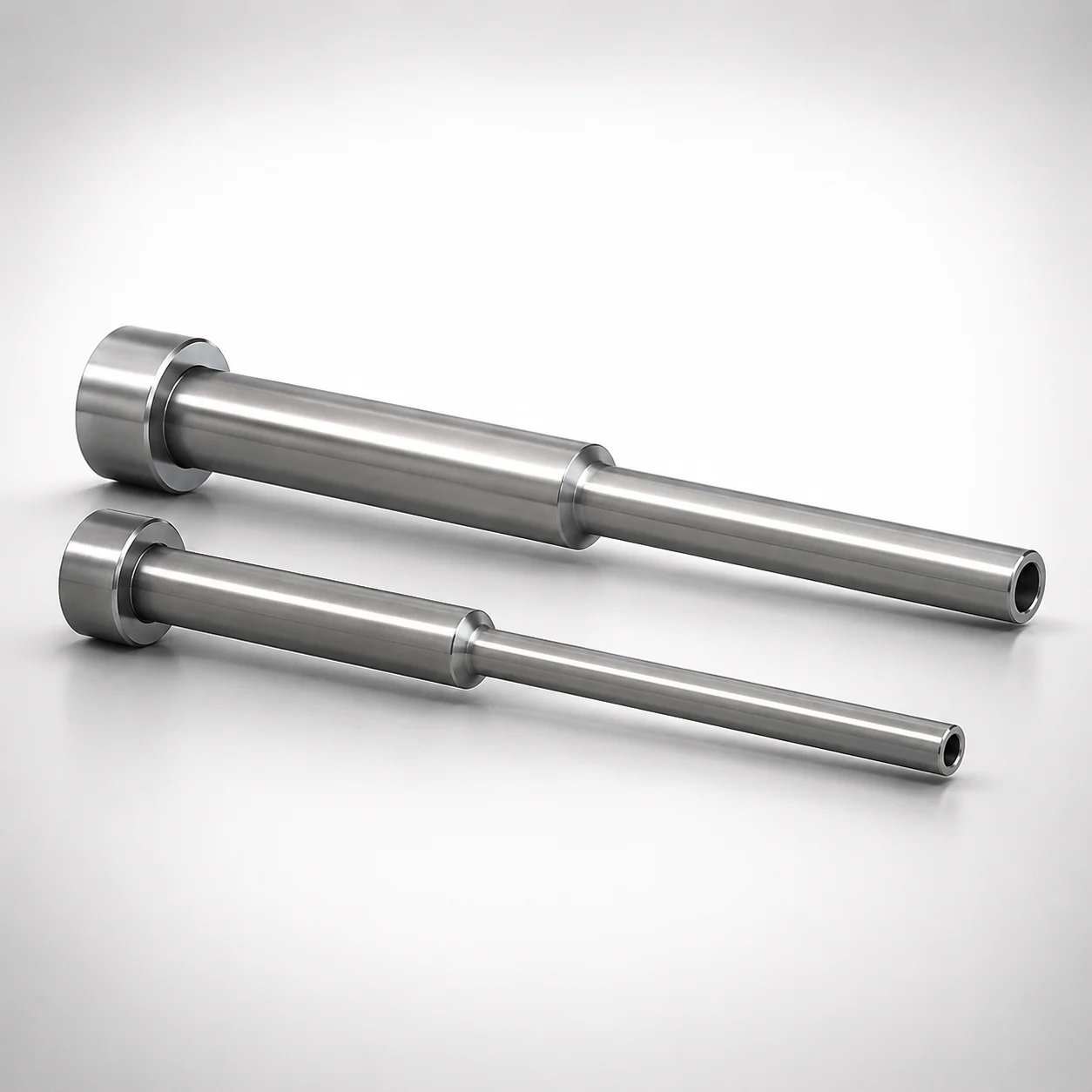
JIS Standard SKD61 Steel Stepped Ejector Sleeves
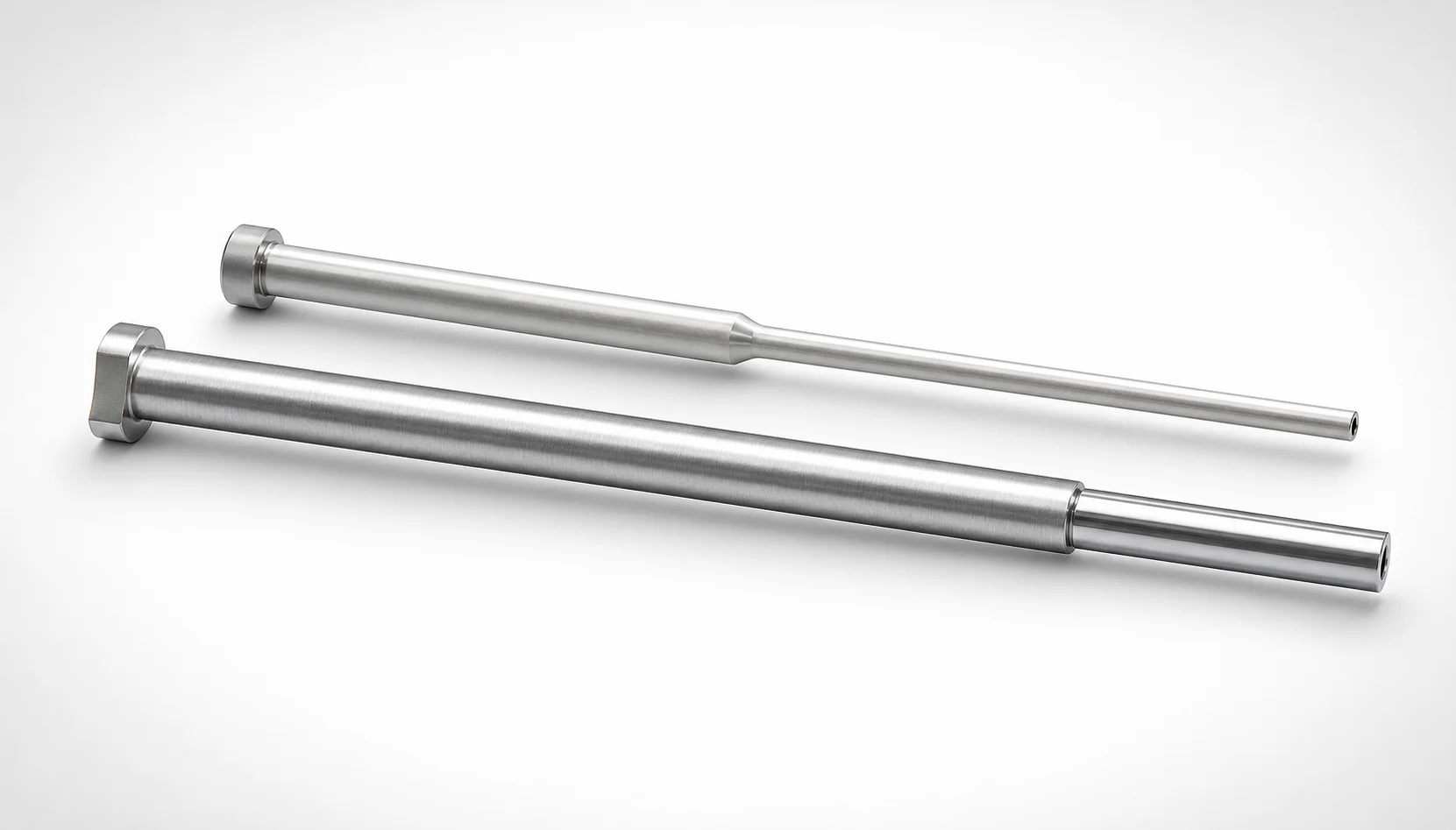
JIS Standard SKH51 Steel Precision Stepped Ejector Sleeves
Need Custom Specifications?
Our engineering team can help with custom configurations, material selection, and volume pricing.