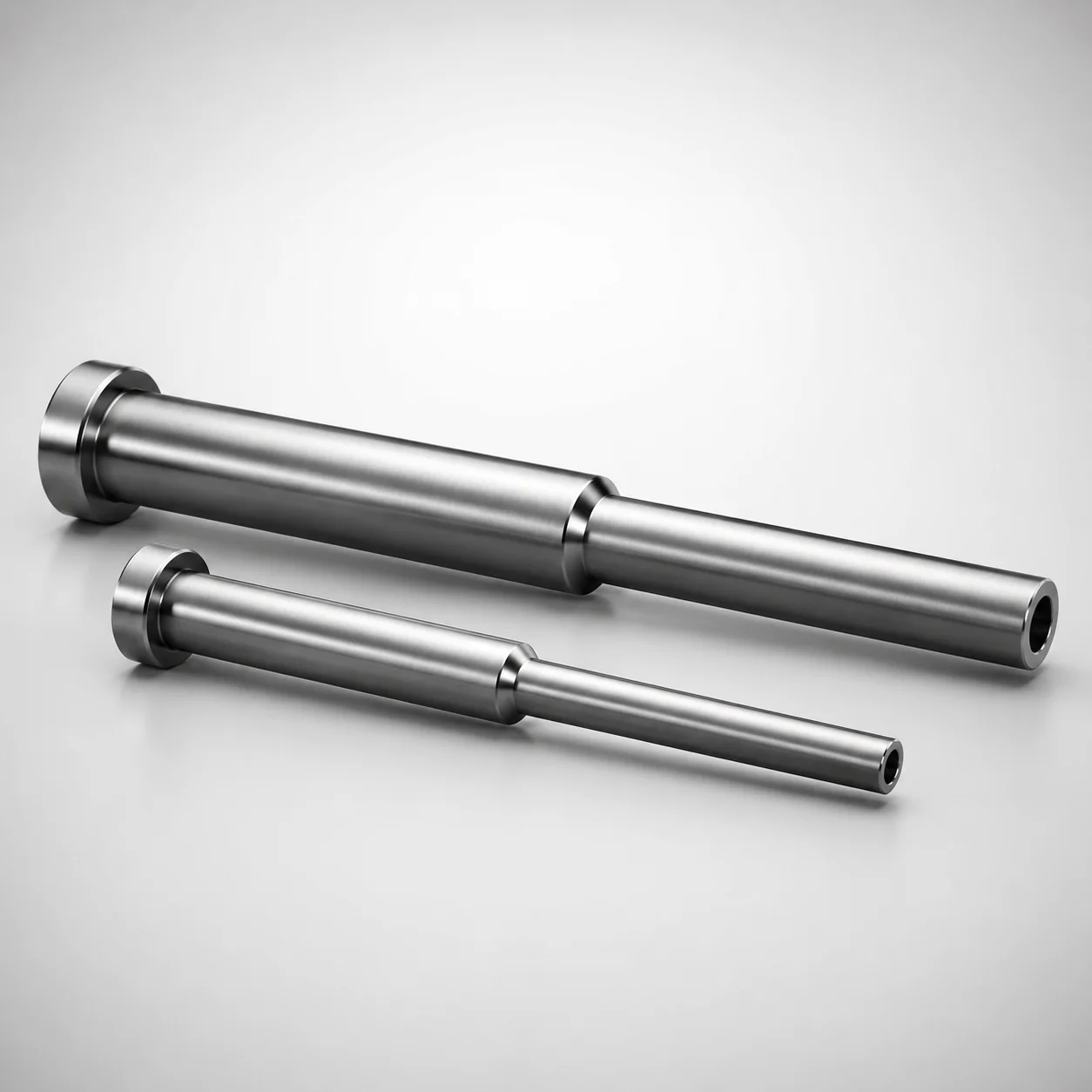
ESNF Type SKD61 Hardened Steel Stepped Ejector Sleeves
ESNF type stepped ejector sleeves (SKD61 hardened steel) are designed as a single-sleeve support to maintain concentric alignment in precision ejection systems. The nitrided surface treatment improves wear resistance for consistent cycle performance under mold load.
- ESNF stepped sleeve geometry supports stable guidance and smooth ejection motion in die assemblies.
- Built from SKD61 hardened steel with nitrided surface treatment for improved abrasion resistance.
- Holds H7 inner diameter tolerance to control fit and reduce play during operation.
- Configurable sizing range helps match different shaft and hole requirements for efficient tooling builds.
Specifications
13 configurations available
| D (Shaft Diameter) (mm) | P (Tip Diameter) (mm) | V (Hole Diameter) (mm) | C (Recess diameter) (mm) | L (L dimension) (mm) | Dimension N (mm) | S (V hole diameter length) (mm) | type |
|---|---|---|---|---|---|---|---|
| 4 | 3 ~ 3.95 | 1.5 ~ 2 | 2 ~ 2.9 | 50 ~ 200 | 16 ~ 220 | 20 ~ 100 | - |
| 4.5 | 3.5 ~ 4.45 | 2 ~ 2.5 | 2.5 ~ 3.9 | 50 ~ 200 | 16 ~ 220 | 20 ~ 100 | - |
| 5 | 3.5 ~ 4.95 | 2 ~ 3 | 2.5 ~ 3.5 | 50 ~ 250 | 16 ~ 220 | 20 ~ 100 | - |
| 5.5 | 3.5 ~ 5.45 | 2 ~ 3.5 | 2.5 ~ 4 | 50 ~ 250 | 17 ~ 240 | 20 ~ 100 | - |
| 6 | 4 ~ 5.95 | 2 ~ 4 | 2.5 ~ 4.5 | 50 ~ 300 | 16 ~ 270 | 20 ~ 100 | - |
| 6.5 | 4 ~ 6.45 | 2 ~ 4.5 | 2.5 ~ 5 | 50 ~ 300 | 17 ~ 290 | 20 ~ 100 | - |
| 7 | 4 ~ 6.95 | 2 ~ 5 | 2.5 ~ 5.5 | 50 ~ 300 | 17 ~ 290 | 20 ~ 100 | - |
| 7.5 | 4 ~ 7.45 | 2 ~ 5.5 | 2.5 ~ 6 | 50 ~ 300 | 17 ~ 290 | 20 ~ 100 | - |
| 8 | 4 ~ 7.95 | 2.5 ~ 6 | 3 ~ 6.5 | 50 ~ 300 | 16 ~ 270 | 20 ~ 100 | - |
| 9 | 4.5 ~ 8.95 | 2.5 ~ 6.9 | 3 ~ 7.5 | 50 ~ 300 | 17 ~ 290 | 20 ~ 100 | - |
| 10 | 4.5 ~ 9.95 | 2.5 ~ 7.9 | 3 ~ 8.5 | 50 ~ 300 | 17 ~ 270 | 20 ~ 100 | - |
| 13 | 5 ~ 12.95 | 2.5 ~ 10.9 | 3 ~ 11.5 | 50 ~ 300 | 17 ~ 270 | 20 ~ 100 | - |
| 16 | 7 ~ 15.95 | 2.5 ~ 13 | 3 ~ 14.5 | 50 ~ 300 | 20 ~ 270 | 20 ~ 100 | - |
Product Guide
Application Scenarios+
This ESNF stepped ejector sleeve variant is used inside precision injection mold die sets to provide guided ejection support and maintain concentric alignment between ejector elements and fixed mold components.
- Automotive connector and sensor housings: Its SKD61 hardened-steel body and nitrided surface help resist abrasion during high-cycle ejection, supporting stable fit under repeated mold load.
- Appliance and electronics overmolding dies: The stepped sleeve geometry improves linear guidance, helping reduce side-load sensitivity and promoting smooth actuator movement during core retraction.
- Die sets requiring controlled clearance: The H7 inner diameter tolerance is suited for stable alignment with low play, improving consistency of ejection motion and dimensional stability over time.
Select this component when shaft-to-sleeve guidance must remain tight while still delivering wear resistance from the nitrided surface during service.
Material & Process Details+
This stepped sleeve is manufactured from SKD61 hardened steel, commonly used for ejection and die-forepart wear areas due to its balance of hardness and toughness. The product is supplied with a nitrided surface treatment to increase wear resistance at the sliding/abrasion interface, supporting consistent cycle performance.
- Nitrided surface: Improves abrasion resistance and helps reduce fretting and wear where the ejector shaft interfaces with the sleeve.
- Hardened core: Maintains overall toughness so the sleeve can tolerate handling loads and operational stresses without excessive brittleness.
- Trade-off: Higher surface hardness from nitriding typically targets wear reduction, while SKD61’s tempered structure supports impact resistance compared with steels that rely solely on high surface hardening.
Note: The exact hardness (HRC) level is not provided in the input data, but the component is described specifically as an SKD61 hardened steel ESNF type with nitrided surface.
Sizing & Selection Guide+
Dimension selection should start with the ejector shaft and the alignment hole requirements in your die set. Match D (shaft diameter) from 4 ~ 16 mm and the corresponding P (tip diameter) from 3 ~ 7 mm to ensure proper stepped engagement and guidance.
- Inner fit control: This sleeve is built to H7 inner diameter tolerance; select the shaft diameter so the fit remains stable with minimal play under cycling.
- Housing/guide compatibility: Verify V (hole diameter) in the 1.5 ~ 2.5 mm range and C (recess diameter) in the 2 ~ 3 mm range to align with your die set features.
- Length matching: Use L options of 50–200, 50–250, or 50–300 based on required support length. Confirm Dimension N from the available series-specific ranges (e.g., 16–220, 17–240, 20–270, etc.).
S (V hole diameter length) is fixed at 20–100 mm, so align this dimension to the die’s V-hole travel/support length. Where multiple L and N ranges are offered, choose the configuration that satisfies cavity/core layout while keeping the H7 fit consistent.
Frequently Asked Questions
Which shaft diameter (D) range does this ESNF stepped ejector sleeve support, and how does it relate to the H7 inner tolerance?+
How should I select the stepped geometry using P (tip diameter) and V/C recess dimensions for my die set?+
What length dimensions are available for supporting long ejection strokes, and which fixed length must always be respected?+
Is the nitrided surface treatment intended to improve wear only at the sliding interface, or does it affect overall performance?+
How do I use Dimension N together with L to confirm compatibility with die block thickness and alignment features?+
Related Products
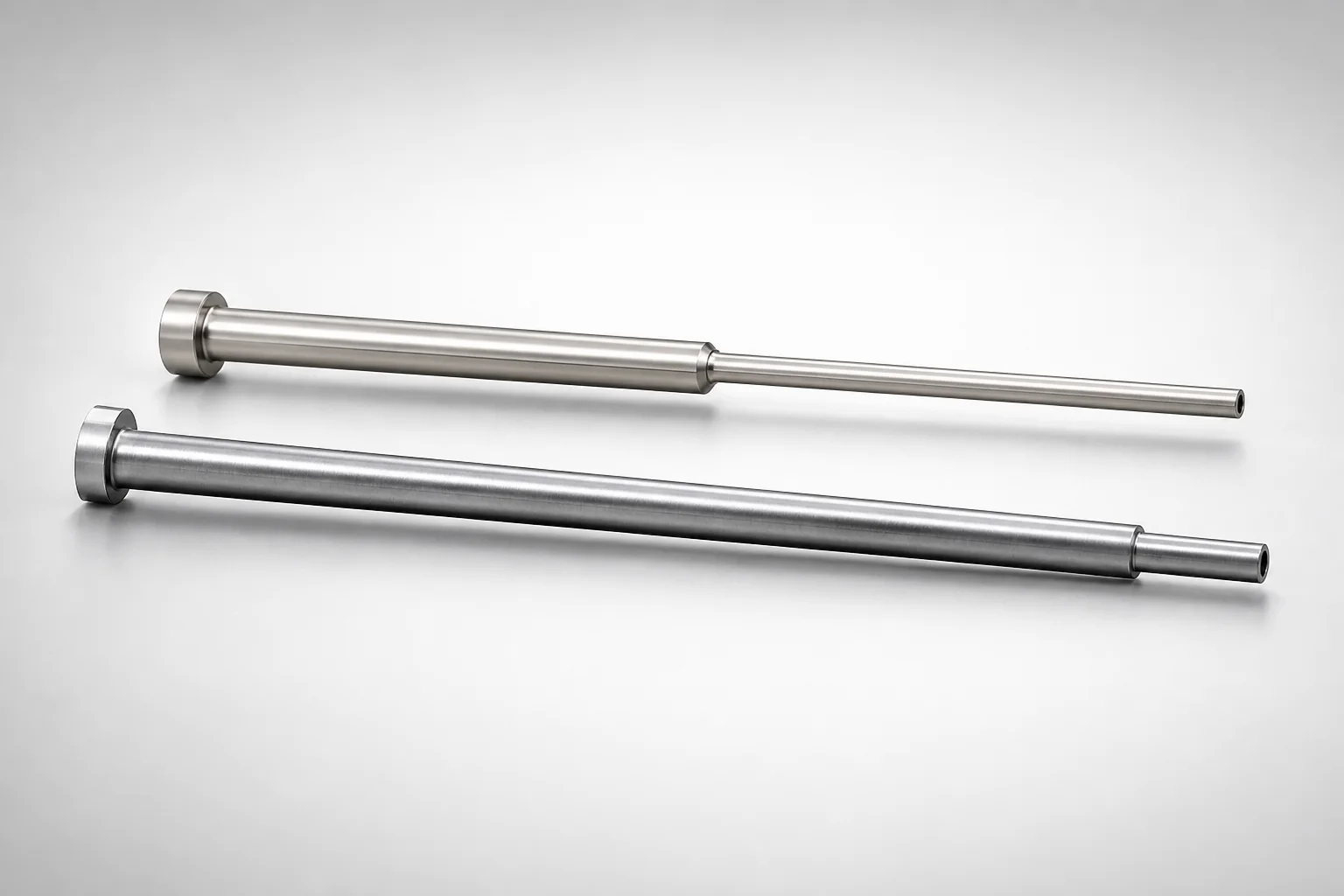
JIS Standard SKH51 Steel Precision Stepped Ejector Sleeves (ESVF)
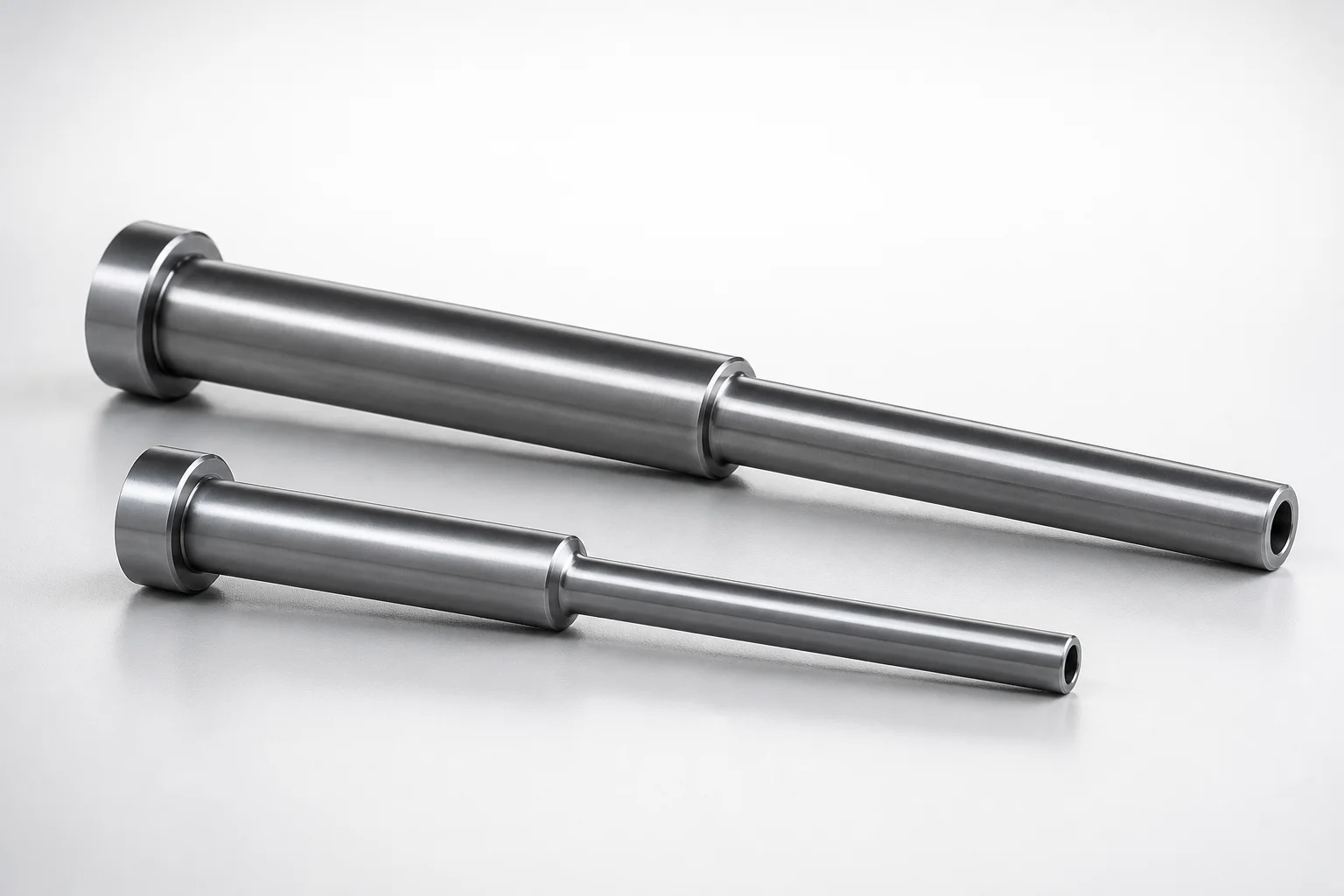
JIS Standard SKD61 Steel Stepped Ejector Sleeves
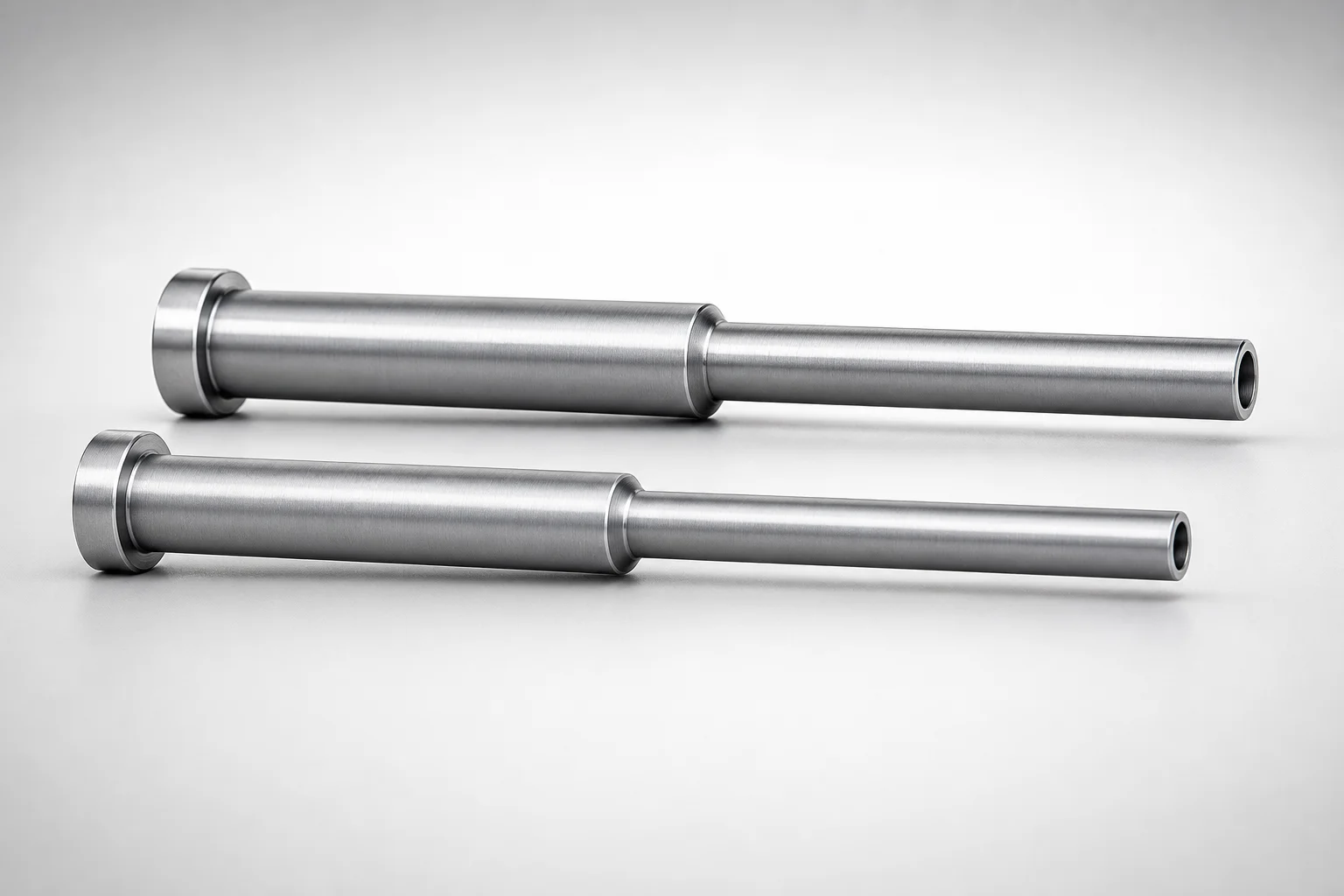
JIS Standard SKD61 Steel Stepped Ejector Sleeves
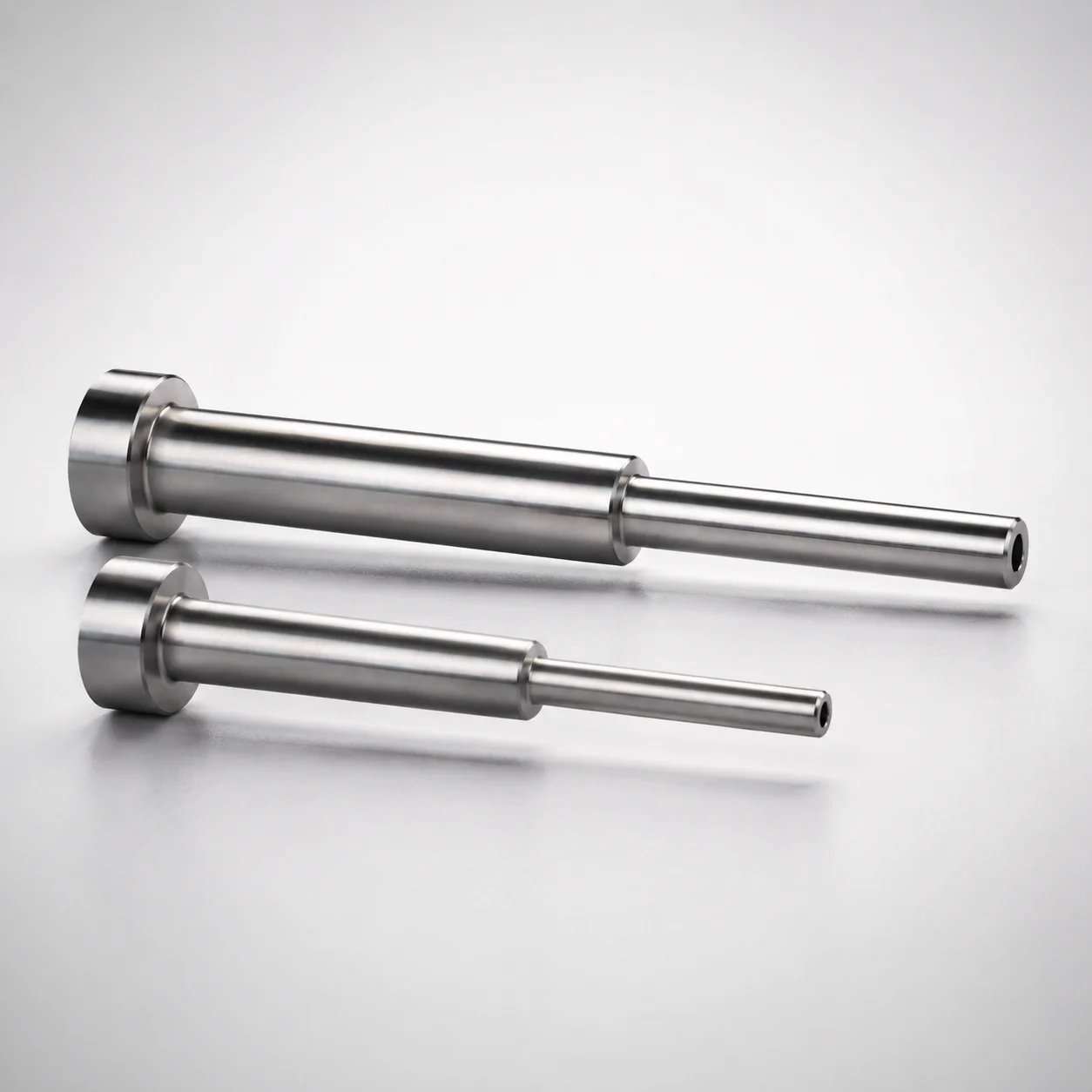
Japanese Standard SKD61 Steel Stepped Ejector Sleeves
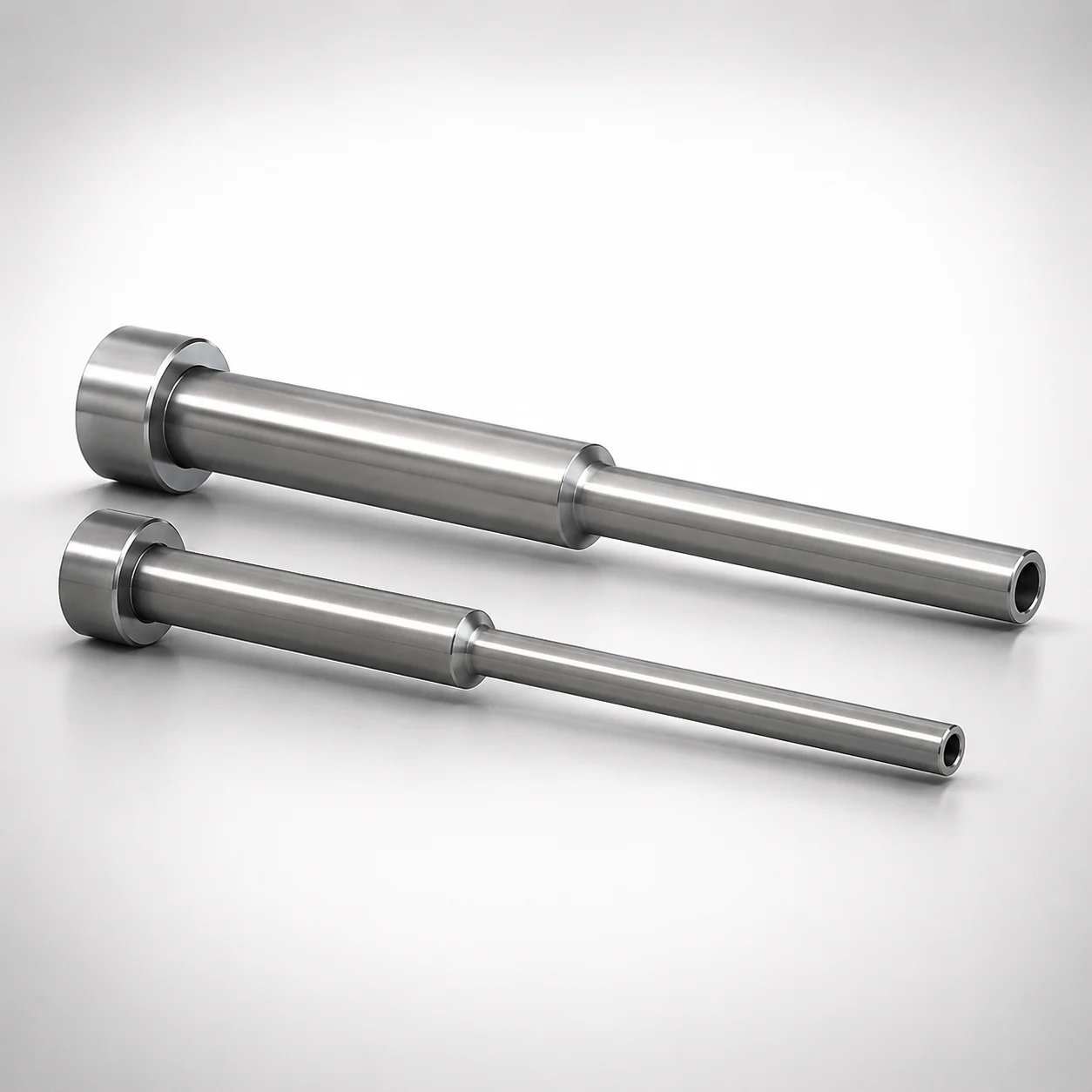
JIS Standard SKD61 Steel Stepped Ejector Sleeves
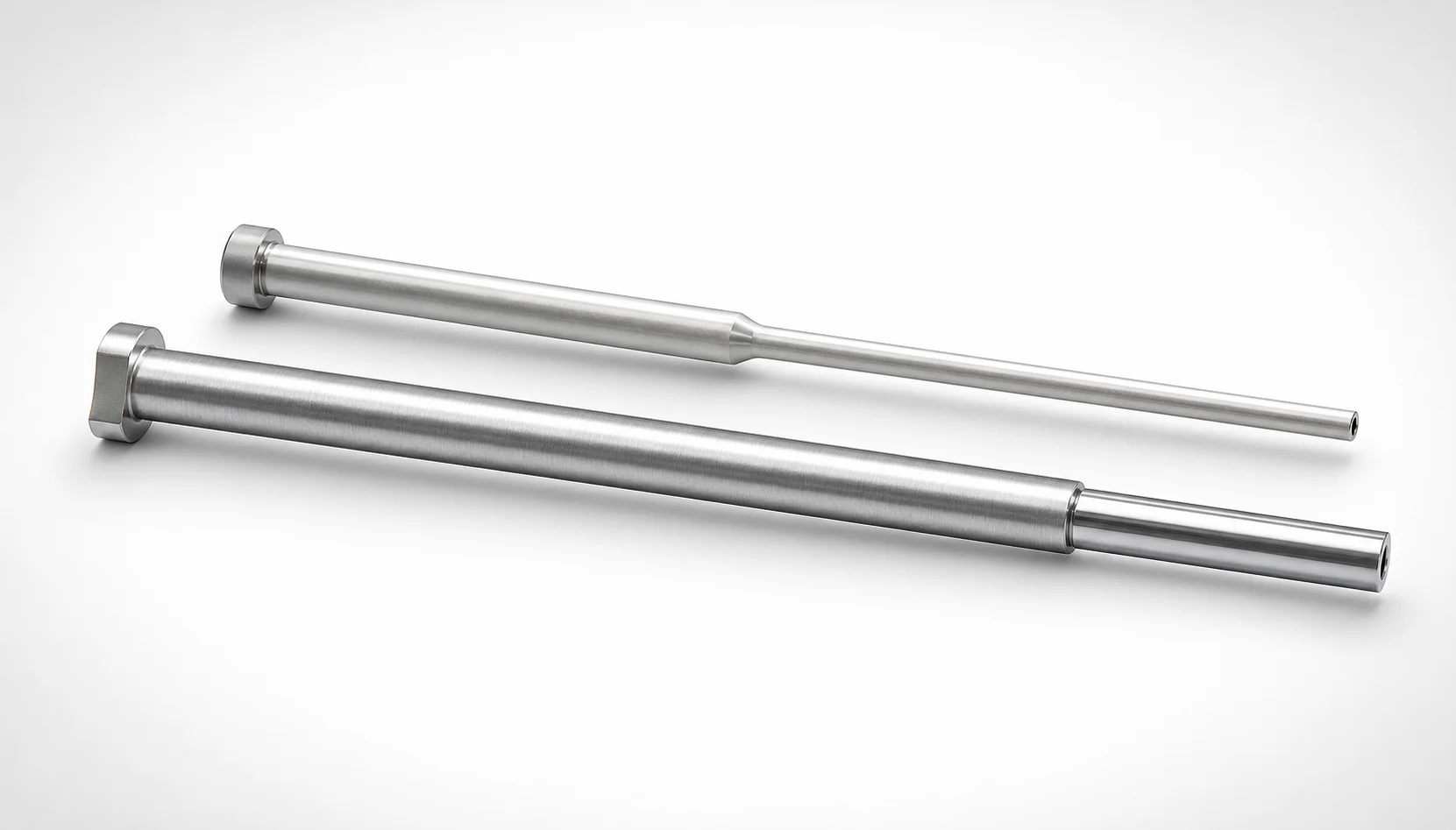
JIS Standard SKH51 Steel Precision Stepped Ejector Sleeves
Need Custom Specifications?
Our engineering team can help with custom configurations, material selection, and volume pricing.