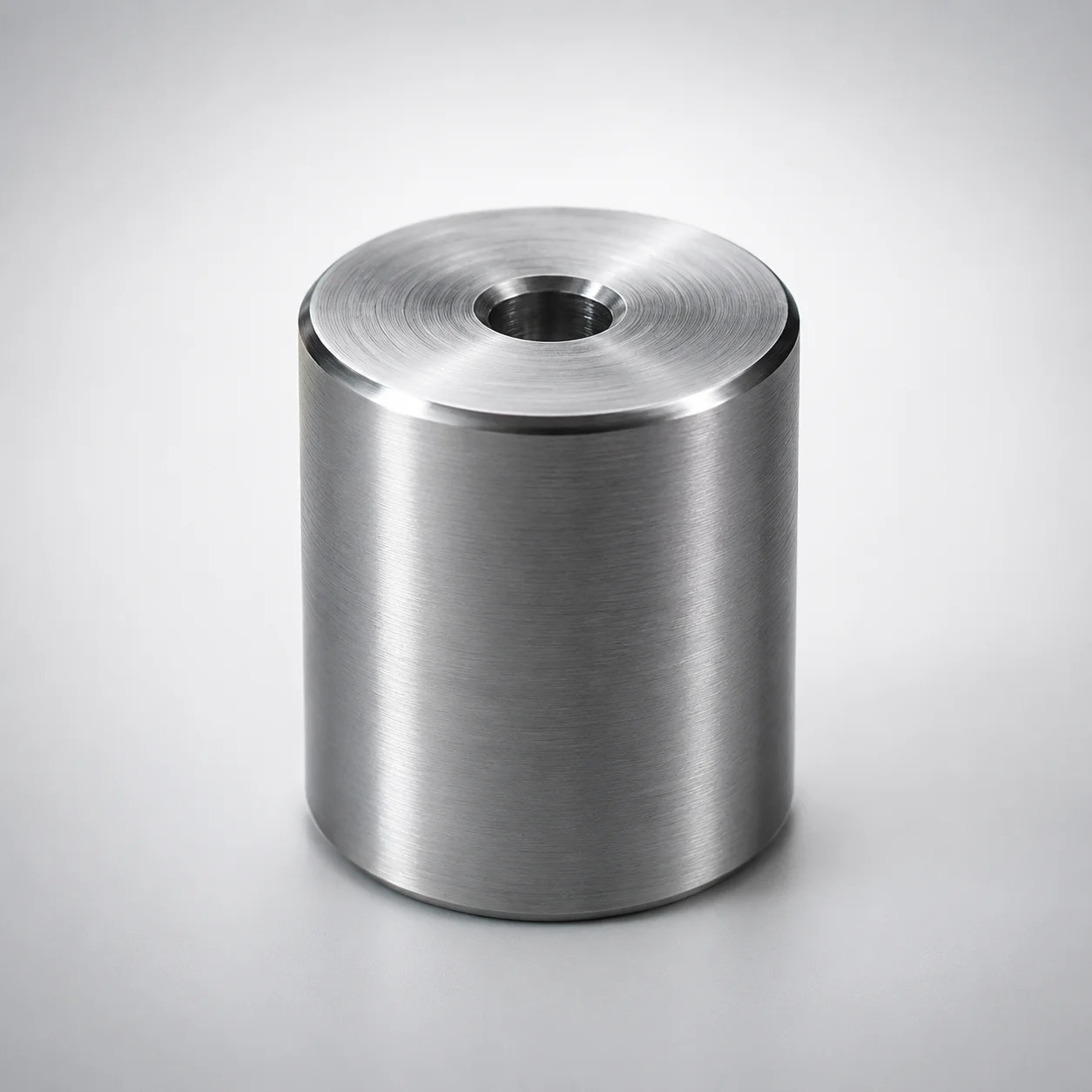
MSTVS Gas Vent Spacer for Cylinder Units
MSTVS gas vent spacer for cylinder units helps efficient air circulation inside industrial molds and supports pressure relief during operation. It is engineered to reduce the risk of gas accumulation and protect sensitive components without sacrificing performance.
- Spacer design promotes controlled gas venting for stable circulation
- Robust construction supports long service life in demanding industrial use
- Consistent fit for reliable operation across varying environmental conditions
- Used with gas vent unit cylinder setups to enhance safety and throughput
Specifications
2 configurations available
| D (Outer diameter) (mm) | T (L dimension) (mm) | type |
|---|---|---|
| 5 | 5 ~ 50 | - |
| 8 | 5 ~ 50 | - |
Product Guide
Application Scenarios+
The MSTVS gas vent spacer is used in industrial injection mold tooling where cylinder-driven systems require controlled airflow and reliable pressure relief. In cylinder-unit vent assemblies, the spacer is installed alongside a gas vent unit to help channel venting and reduce the likelihood of trapped air or gas accumulation.
Automated molding lines benefit from this variant because it maintains consistent spacing across the operating envelope, supporting stable circulation during repeated cycles. This helps protect sensitive mold components from overpressure conditions caused by intermittent gas buildup.
In multi-cavity or high-throughput molds, the spacer supports safer venting behavior without interrupting normal operation. The part’s defined outer diameter options (5 mm and 8 mm) and compact thickness range are suited for retrofit and build configurations that require tight integration with existing gas vent cylinder setups.
- Controlled gas venting alongside cylinder unit components
- Supports pressure relief and reduced gas accumulation risk
- Compatible with cylinder-based vent unit installations
Material & Process Details+
Specific steel grade and heat-treatment state are not provided in the available product specifications for this MSTVS gas vent spacer. As a result, hardness (HRC), exact wear resistance rating, and any nitriding/quenching process details cannot be stated from the input data.
From a materials engineering standpoint, gas vent spacers in injection mold applications are typically selected to balance wear resistance (for long cyclic life in vent interfaces) with adequate toughness (to resist chipping or cracking under thermal cycling and vibration). When sourcing replacements, confirm the supplied material grade and heat treatment certificate from the manufacturer to ensure dimensional stability and surface integrity under repeated venting loads.
If multiple material options exist, compare them on:
- Hardness/HRC for abrasive/erosion resistance
- Toughness for fracture resistance at edges
- Surface treatment (e.g., nitriding) when corrosion or galling is a concern
Sizing & Selection Guide+
To select the correct spacer dimensions for your mold vent assembly, match the spacer outer diameter D and thickness/length T to the corresponding gas vent unit and cylinder setup interface.
- D (Outer diameter): available sizes are 5 mm and 8 mm. Choose the D that fits the vent unit’s receiving geometry with proper seating and without binding.
- T (L dimension): fixed thickness range is 5 mm to 50 mm. Select T to achieve the required spacing for airflow path geometry and to maintain the designed alignment between the vent components.
Dimensional fit impacts vent performance: an oversized D can restrict airflow or interfere with installation, while an undersized D may cause misalignment and inconsistent venting. If your vent unit interface requires tight tolerances, verify the assembly drawing callouts for clearance and stack-up (spacer + vent unit + any shoulder/fixture features).
Where your design has configurable stack height, you can use different T values to fine-tune spacing while keeping the same D.
Frequently Asked Questions
Which outer diameter (D) options are available for the MSTVS gas vent spacer used in cylinder-unit vent assemblies?+
The spacer is specified with D (outer diameter) options of 5 mm and 8 mm. Select the D that matches the receiving geometry on your gas vent unit cylinder setup to ensure proper seating and alignment.
What thickness/length (T) range can I order for stack-height tuning in a gas vent spacer application?+
The T (L dimension) is specified as 5 mm to 50 mm. Use different T values to achieve the airflow-path spacing and component alignment required by your mold vent design.
How does spacer sizing (D and T) affect venting performance and pressure relief in injection mold cylinders?+
Correct D ensures the spacer seats properly with the gas vent unit, maintaining the intended airflow channel. Correct T sets the spacing that supports stable circulation and consistent pressure relief behavior across cycles.
Can I replace this MSTVS spacer in an existing mold, and what compatibility checks should I perform?+
Replacement compatibility should be confirmed by matching D = 5 or 8 mm and selecting the appropriate T within 5–50 mm. Also verify that your vent unit’s interface geometry and stack-up tolerances allow correct fit without interference or loss of alignment.
Is the material/heat treatment (HRC, nitriding, quench & temper) documented for this spacer variant?+
The provided specifications only list D (5 or 8 mm) and T (5–50 mm), and do not include the steel grade, hardness (HRC), or heat-treatment details. For hardness and durability assurance, request the material grade and heat-treatment documentation from the supplier for your exact part number.
Related Products
Need Custom Specifications?
Our engineering team can help with custom configurations, material selection, and volume pricing.