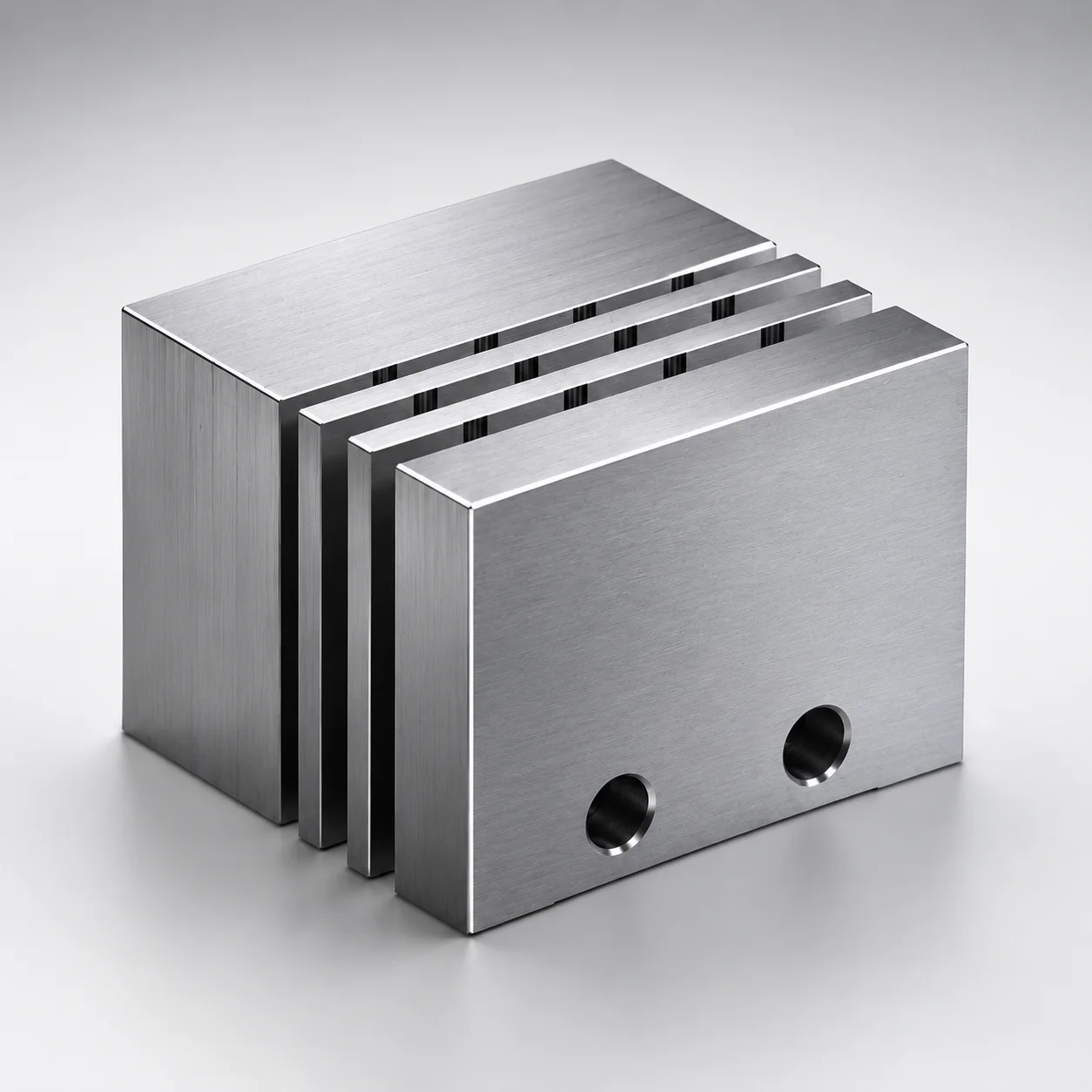
Cavity Stuck Up Inserts for Gas Release
Cavity stuck up inserts for gas release (SUS420J2 equivalent) are designed for larger molds, offering a hassle-free venting solution with corrosion-resistant construction. Disassemble the inserts for maintenance without replacing the entire unit.
- Built to support gas release in larger mold cavities for improved exhaust consistency
- Uses SUS420J2 equivalent material for strong corrosion resistance in harsh environments
- In-house making process with LBGV-X insert type for reliable fit and serviceability
- Structured for maintenance access, enabling disassembly to reduce downtime during upkeep
Specifications
1 configurations available
| Width [B] (mm) | Thickness [T] (mm) | type |
|---|---|---|
| 70 ~ 100 | 100 ~ 120 | - |
Product Guide
Application Scenarios+
This cavity stuck-up vent insert is used in larger injection mold cavities where consistent gas evacuation is critical, such as automotive interior and appliance enclosures with deep ribs and dense part geometry. The stuck-up geometry helps maintain a stable vent path, supporting predictable exhaust during filling and reducing the risk of burn marks or surface defects.
It is also suitable for packaging and electronics housings produced with materials that release more entrapped air, where uniform venting improves appearance and dimensional stability. The SUS420J2-equivalent corrosion-resistant construction is well-suited for tooling environments exposed to moisture, cleaning agents, or corrosive molding conditions.
Because the insert is designed for disassembly for maintenance, it fits well into plants that minimize downtime by servicing only the vent component rather than replacing an entire cavity insert assembly.
Material & Process Details+
This product uses a SUS420J2-equivalent stainless steel construction, selected for corrosion resistance in humid or washdown environments and for tooling exposed to cleaning chemicals. SUS420J2 is typically chosen where adequate hardness and wear behavior must be balanced with resistance to rust.
- Corrosion resistance: Improved resistance compared with plain carbon steels, helping maintain vent performance over repeated production cycles.
- Hardness and trade-offs: As a stainless grade, it offers good toughness for insert functionality, while aggressive wear resistance may be lower than highly wear-optimized tool steels.
- Heat treatment state: In service, SUS420J2 is commonly supplied in a hardened and tempered condition to achieve usable hardness for inserts; exact HRC is application-dependent.
Manufacturing is typically performed via machining and in-house fabrication, then finished to ensure the LBGV-X insert-type fit required for stable vent alignment.
Sizing & Selection Guide+
Selection starts with matching the insert envelope to the cavity/core vent feature. For this variant, the fixed width (B) is 70–100 mm and the fixed thickness (T) is 100–120 mm. Choose B to match the vent land or pocket width in the cavity insert system so the stuck-up surface aligns with the intended gas escape region.
- Width (B): Select within 70–100 mm to cover the required vent aperture area and maintain stable vent positioning.
- Thickness (T): Select within 100–120 mm to ensure the insert height supports the stuck-up vent geometry without interfering with neighboring tooling features.
- Tolerance/fit: While specific tolerances are not provided here, maintain standard mold-fit practices (e.g., controlled pocket dimensions and secure seating) so disassembly/replacement does not compromise vent alignment.
If your design uses an LBGV-X insert-type system, keep the pocket geometry consistent with that interface so the serviceable vent insert can be disassembled and reinstalled reliably.
Frequently Asked Questions
What mold cavity venting problems are best addressed by a stuck-up cavity insert in larger molds?+
This insert type is used where consistent gas release is needed across a larger cavity cross-section. The stuck-up vent geometry helps maintain an exhaust path, improving the consistency of trapped gas evacuation during filling.
Why choose the SUS420J2-equivalent corrosion-resistant insert material for gas vent applications?+
For tools exposed to moisture, washdown, or corrosive cleaning conditions, a SUS420J2-equivalent grade helps resist rust and maintains long-term vent performance. It provides a practical balance of corrosion resistance and insert durability for repeated production cycles.
How do I select the correct width (B) and thickness (T) for this cavity gas release insert?+
Use the fixed ranges: B = 70–100 mm and T = 100–120 mm. Match B to the required vent pocket/land width and match T to the available cavity insert thickness so the stuck-up vent does not interfere with adjacent mold features.
Does this insert design require replacing the full cavity insert during maintenance?+
No. The design explicitly supports disassembly for maintenance, allowing servicing of the vent insert without replacing an entire cavity insert unit. This reduces downtime during routine upkeep of gas vent components.
What does “LBGV-X insert type” imply for compatibility with the mold pocket?+
The LBGV-X insert type indicates the insert follows a defined interface intended to provide reliable seating and alignment. To ensure correct vent positioning and straightforward disassembly, the cavity pocket should be designed to match the expected LBGV-X fit interface.
Related Products
Need Custom Specifications?
Our engineering team can help with custom configurations, material selection, and volume pricing.