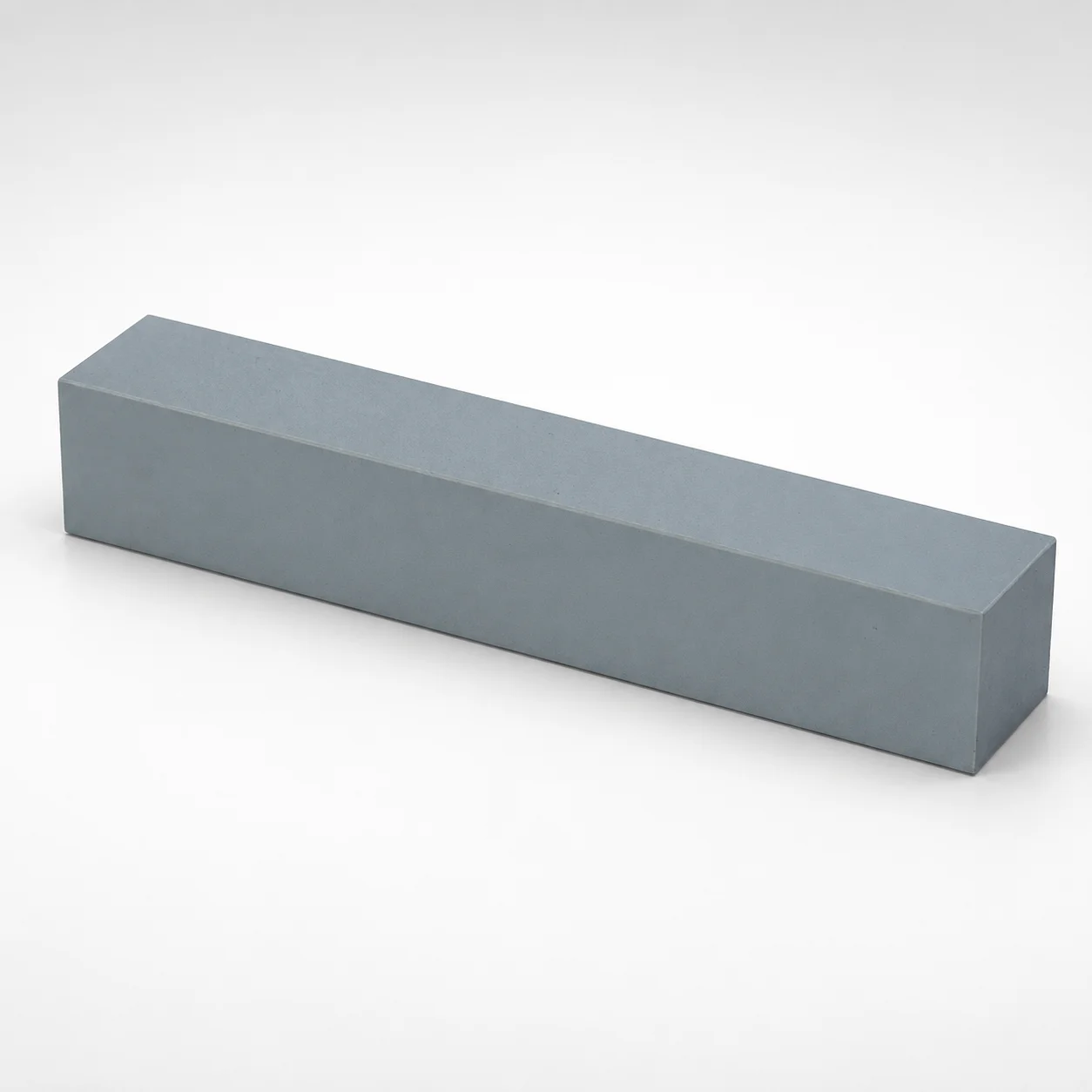
UDN Type Urethane Pads - Shore A70
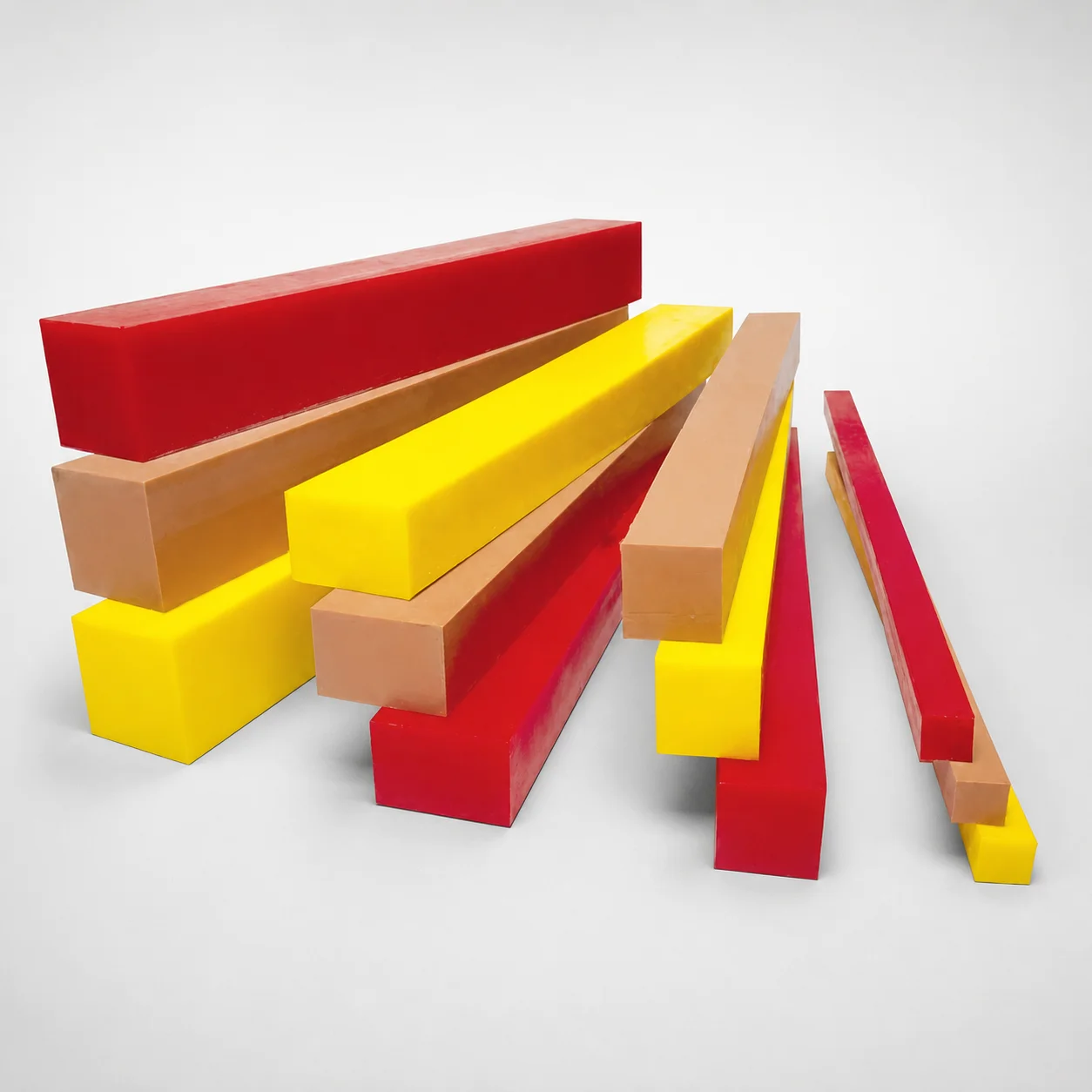
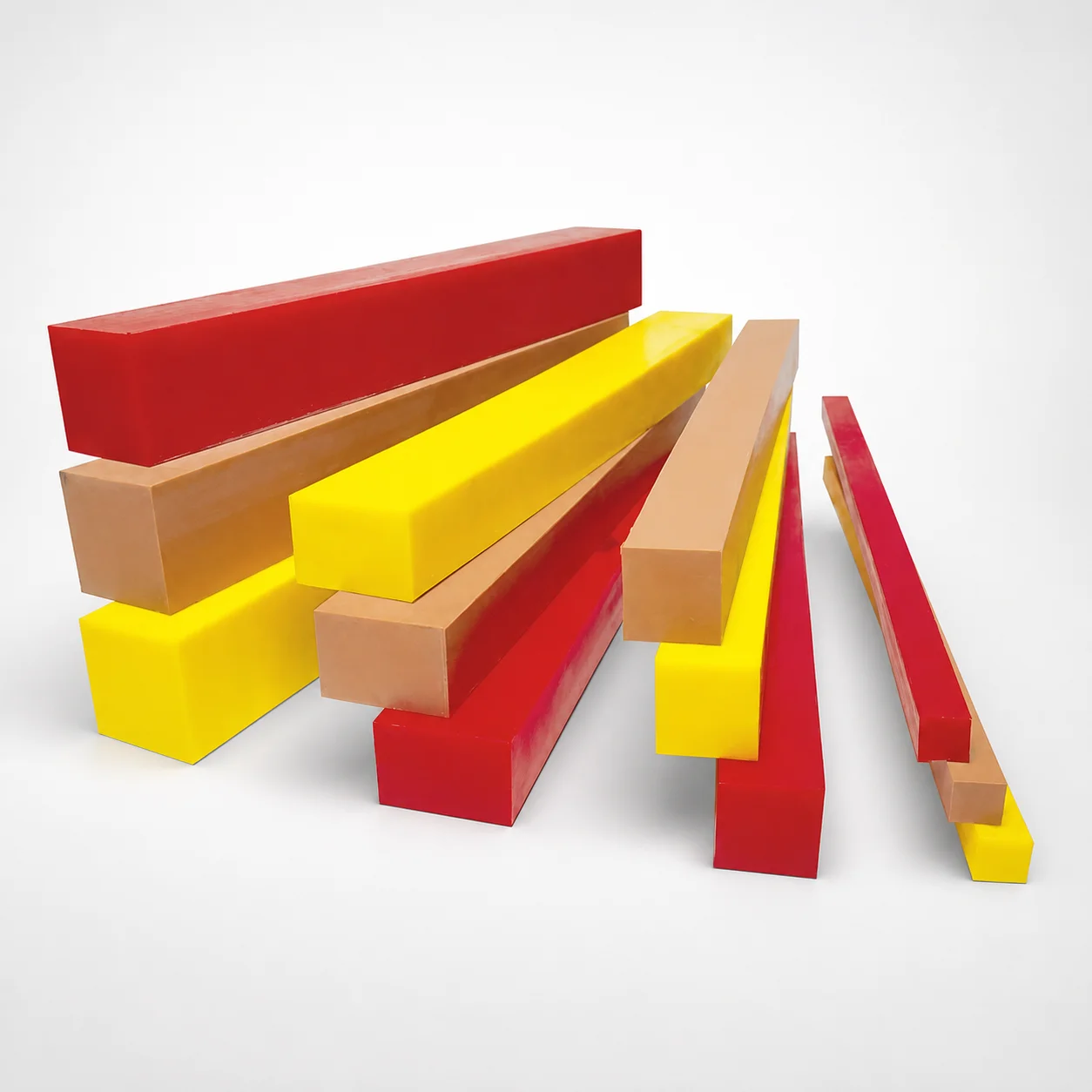
UDN type urethane pads (low repulsion urethanes) in Shore A70 provide reliable cushioning for tool and fixture setups where stable contact and predictable compression matter.
- Pad shape for easy alignment in jigs, stops, and support assemblies
- Low repulsion urethane helps maintain consistent contact during use
- Shore A70 balances softness with dimensional stability under load
- Configurable length (L) and side/width dimensions for fit in varied die spaces
Specifications
6 configurations available
| Length (L) (mm) | A (Width) (mm) | B (Width) (mm) | type |
|---|---|---|---|
| 50 | 25 | 25 | - |
| 100 | 25 | 25 | - |
| 300 | 25 | 25 | - |
| 50 | 50 | 50 | - |
| 100 | 50 | 50 | - |
| 300 | 50 | 50 | - |
Product Guide
Application Scenarios+
These Shore A70 urethane pads are used as low-repulsion cushioning elements in injection mold tooling and peripheral fixtures where a stable, predictable contact pressure is required. Because the UDN-type material helps control bounce and rebound, they suit applications that need repeatable positioning after tool closure or part ejection.
Automotive and electronics connector mold support: Use them under localized stops or pad-mounted supports to absorb small misalignments while maintaining consistent compression during repeated cycles.
Medical device housing fixture damping: They can serve as controlled-damping interfaces for clamps or inspection fixtures, reducing shock loads that may affect delicate surface features.
General jig and die seating: Select the configurable L, A, and B dimensions to fit the available die space, ensuring the pad sits flat and compresses uniformly.
- Low repulsion urethane supports controlled return behavior
- Shore A70 balances softness and dimensional stability under load
Material & Process Details+
This product uses an UDN-type urethane formulation engineered for low repulsion, meaning it provides controlled rebound rather than a high-bounce return. The specified Shore A70 hardness targets a balance between cushioning and dimensional stability when subjected to repeated compression.
- Hardness: Shore A70 (soft, elastomeric response)
- Wear behavior: Urethane supports good damping for contact cycling, with performance dependent on compression level and surface finish of the mating part.
- Toughness trade-off: Softer Shore ratings generally improve cushioning but can increase long-term indentation if the load is excessive or the pad is not evenly supported.
As a urethane elastomer component, it is not supplied as a heat-treated steel tool element; therefore heat-treatment steps (e.g., quench & temper, nitriding) are not part of the material specification for this pad.
Sizing & Selection Guide+
To select the correct pad size, match the pad’s Length (L), Width A, and Width B to the available space and the intended contact area in your mold or fixture.
- Length (L): choose from 50, 100, or 300 mm based on how far the cushioning element must span across the contact zone.
- Widths: select A (25 or 50 mm) and B (25 or 50 mm) to fit the die cavity/core opening or mounting pocket.
For stable damping, ensure the pad is supported across its footprint so compression distributes evenly. If the pad is mounted in a recess, design the pocket so the pad does not shift during tool closure; target full surface contact to avoid edge loading.
Configurable vs fixed: L, A, and B are configurable within the provided discrete size options; select the closest fit to the cavity/core geometry to minimize clearance-related misalignment.
Frequently Asked Questions
Why choose Shore A70 UDN-type urethane pads instead of a harder urethane for mold contact damping?+
What are the available dimensions for selecting the correct pad size (L, A, B)?+
How should I fit the pad in a mold fixture to achieve uniform compression and avoid edge loading?+
Does this urethane pad require steel-like heat treatment (quenching, nitriding) to reach hardness?+
What applications benefit most from the 'low repulsion' behavior of UDN-type urethane?+
Related Products
Need Custom Specifications?
Our engineering team can help with custom configurations, material selection, and volume pricing.