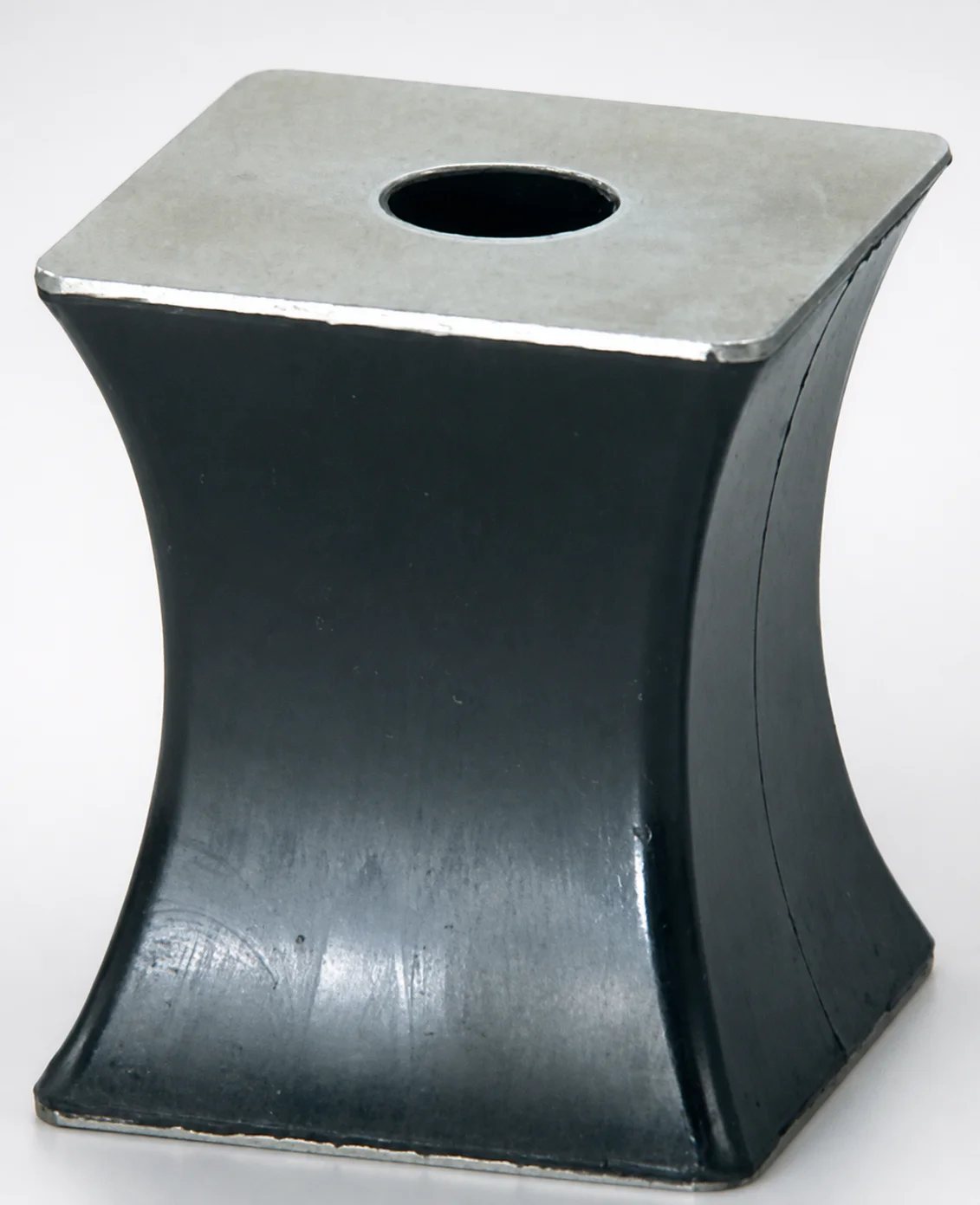
QX Type Heavy Load Shore A90 Urethane Pads With Hole
QX type heavy load Shore A90 urethane pads with hole (rectangular hourglass shape) are designed to maintain reliable compression and load support in demanding mold and tooling setups. The Formathane-style urethane compound offers controlled deformation for steady performance under stress.
- Rectangular hourglass geometry helps stabilize contact under heavy loads
- Shore A90 urethane for balanced stiffness and controlled elongation
- Maximum elongation up to 30% supports consistent compression cycle behavior
- Type QX configuration with through hole simplifies mounting and alignment
Specifications
11 configurations available
| Maximum Load (N) | Length (L) (mm) | A (Width) (mm) | type |
|---|---|---|---|
| 18633 | 62 | 60 | - |
| 18633 | 82 | 60 | - |
| 25497 | 62 | 70 | - |
| 25497 | 82 | 70 | - |
| 25497 | 92 | 70 | - |
| 49033 | 82 | 95 | - |
| 49033 | 103 | 95 | - |
| 49033 | 123 | 95 | - |
| 73550 | 103 | 120 | - |
| 73550 | 123 | 120 | - |
| 73550 | 143 | 120 | - |
Product Guide
Application Scenarios+
QX heavy-load urethane pads with a through hole are used in injection mold tooling wherever controlled compression and stable positioning are needed. The rectangular hourglass geometry helps maintain consistent contact area when the press cycle induces high forces, reducing the risk of slip or uneven loading.
- Automotive connector and bracket molds: Use these pads behind ejector-actuation plates or in backing supports to absorb shock and hold a repeatable compression setting across cycles. Shore A90 stiffness supports load-bearing while still allowing controlled deformation.
- Appliance and industrial housing molds: In long-cavity or large-part tools, the pad’s up-to-30% maximum elongation helps maintain steady compressive behavior under variable deflection from parting loads.
- Medical device housings and fixtures: The hole simplifies fast alignment during assembly, supporting secure positioning in fixtures that require repeatability during clamping and demolding.
This variant is suited to heavy-load setups because it combines QX configuration, hourglass stability, and A90 urethane behavior for reliable compression cycling.
Material & Process Details+
This product uses a Formathane-style urethane compound designed for controlled elastic deformation under repeated molding cycles. The specified Shore A90 grade provides a stiffness level that balances wear resistance and load support against the need for moderate compliance.
- Hardness / performance: Shore A90 targets reliable compression with controlled elongation behavior.
- Deformation capability: Maximum elongation up to 30% helps sustain compression cycle consistency when tooling deflects.
- Heat treatment: Urethane pads are typically manufactured as polymer cast/formed components; they are not hardened like steel. Instead, performance depends on the cured urethane structure rather than quench-and-temper or nitriding.
Compared with softer urethane options (lower Shore A), A90 generally improves load capacity and dimensional stability, while higher elongation demands may favor careful selection to prevent overstretching beyond the 30% limit.
Sizing & Selection Guide+
Select the urethane pad based on the required compression load, the available mounting envelope, and the alignment method.
- Match load capacity: Choose the maximum load rating from 18633, 25497, 49033, or 73550 N to cover the highest expected tooling force at the compression interface.
- Match length (L): Available lengths are 62, 82, 92, 103, 123, and 143 mm. Ensure the pad length fits the backing area behind the compression zone.
- Match width (A): Width options are 60, 70, 95, and 120 mm. Pick the width that provides stable contact for the hourglass geometry under load.
The through hole supports secure positioning during assembly; align the pad so the hole pattern corresponds to your fixture/bolt location. The dimensions listed above are configurable only to these offered sizes; use the closest available L and A that preserve the required contact area and avoid over-compression beyond the specified deformation capability (up to 30%).
Frequently Asked Questions
How do I choose the correct QX heavy-load urethane pad for a given mold clamp or ejection force?+
Start by selecting the pad variant with a Maximum Load (N) that exceeds your highest expected compression load. This series offers 18633, 25497, 49033, and 73550 N options.
Then confirm the available mounting area using the available L (62–143 mm) and A (60–120 mm) sizes to ensure stable contact for the rectangular hourglass geometry.
What role does the hole play in installation and alignment for tooling builds?+
The QX pad includes a through hole designed for secure positioning during assembly. This simplifies alignment to a bolt or locating feature in your mold base, fixture, or backing plate.
Use the provided size options for L and A to fit the tooling envelope while relying on the hole to maintain repeatable placement during compression cycles.
Is Shore A90 suitable when the mold tooling deflects and needs compression cycle stability?+
Shore A90 is intended to provide a stiffness level that supports heavy loads while still allowing controlled deformation. The pad supports maximum elongation up to 30%, which helps maintain consistent compression behavior under tooling deflection.
To prevent performance loss, avoid operating conditions that would require elongation beyond the 30% limit.
What combinations of pad length (L) and width (A) are available in this series?+
Available Length (L) values are 62, 82, 92, 103, 123, and 143 mm.
Available Width (A) values are 60, 70, 95, and 120 mm. Select L and A based on the backing/support contact area behind the compression zone.
Does this urethane pad require steel-type heat treatment (quench, temper, nitriding) for durability?+
No. This component is a urethane polymer pad, and its performance is governed by urethane hardness (specified as Shore A90) and the cured material structure.
Unlike tool steels, it is not hardened using quenching and tempering or nitriding; instead, reliability comes from controlled elastic deformation for repeat compression cycles.
Related Products
Need Custom Specifications?
Our engineering team can help with custom configurations, material selection, and volume pricing.