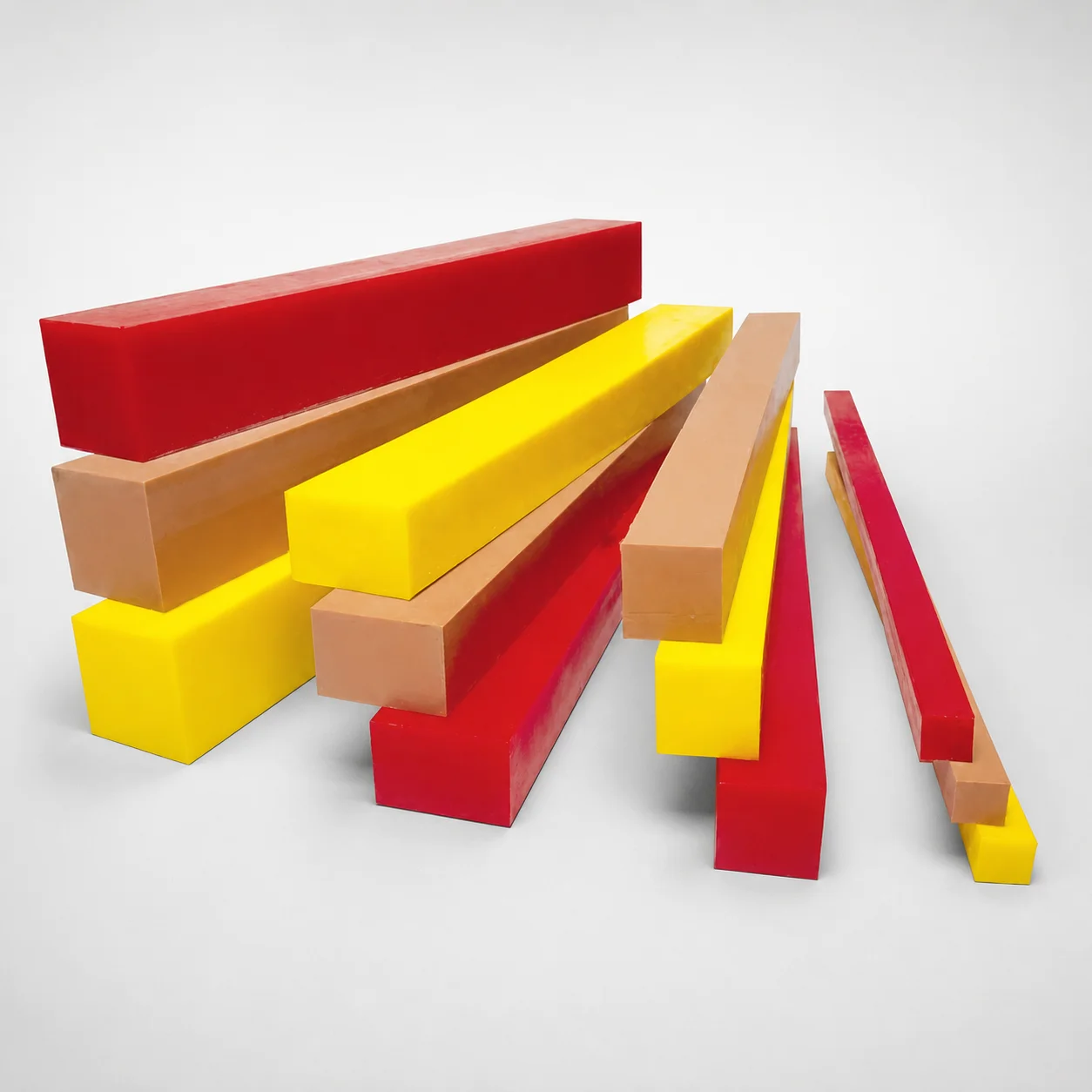
Formathane Urethane Pad Blocks with Holes | Inch Precision-Cast
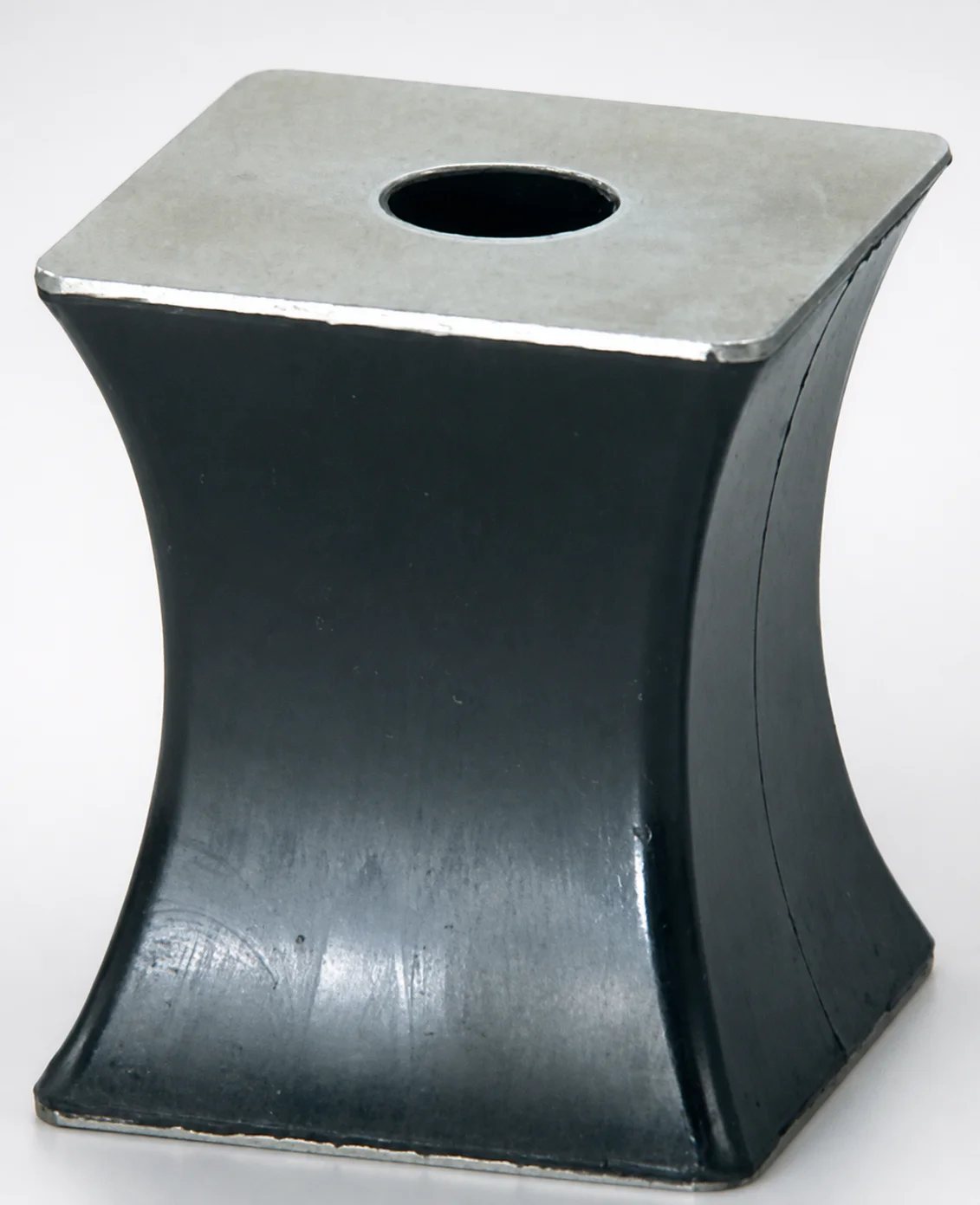
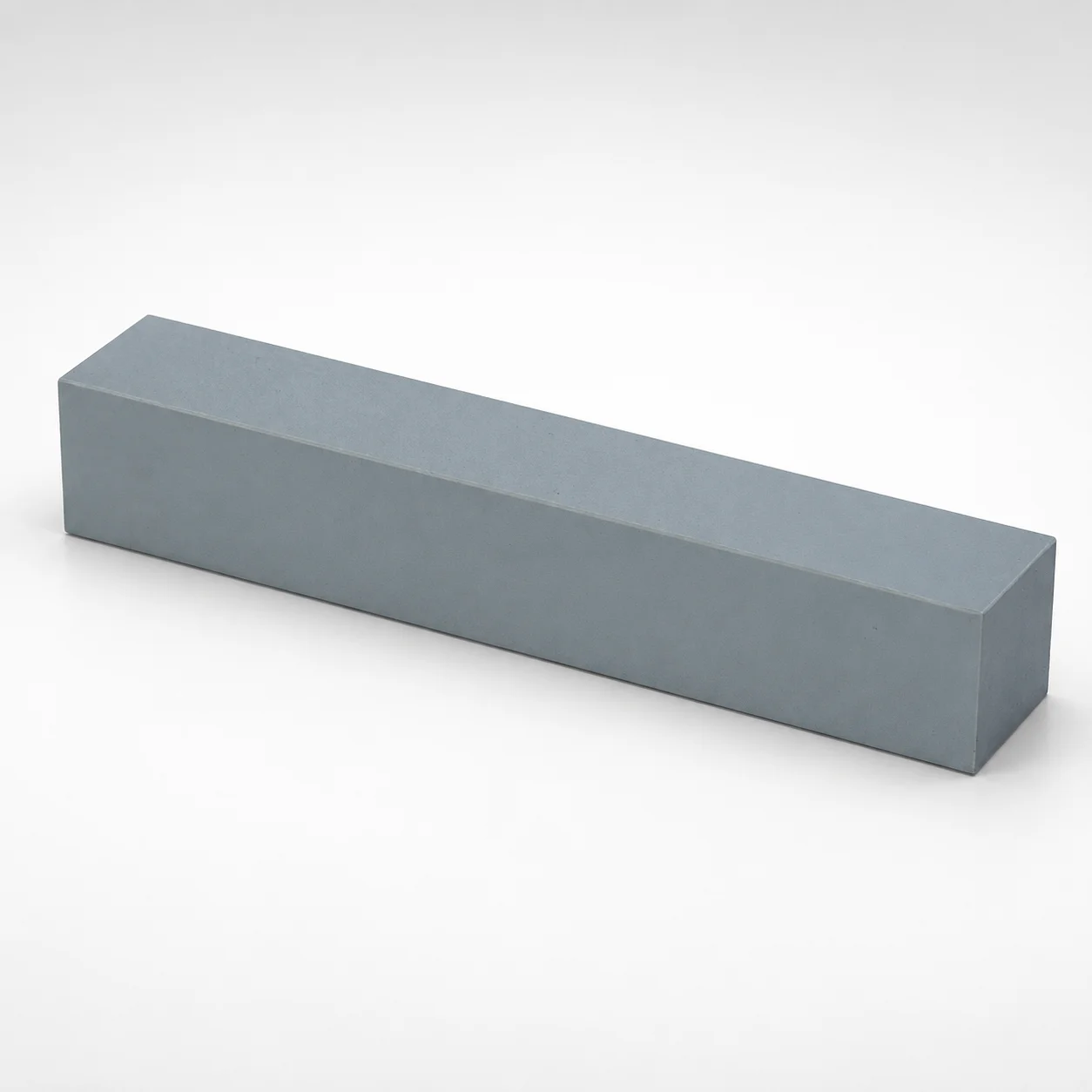
Formathane urethane pad blocks with holes (Inch precision-cast) are engineered pad supports with a through Hole for reliable mounting and positioning in die and fixture assemblies. Select the urethane formulation to match your load requirements and service life needs.
- Pad shape: Pad designed for stable contact and consistent support
- Integrated mounting Hole simplifies alignment to fixtures
- Urethane options support different load profiles: CU-290, PO-670, PO-652, PO-650
- Inch precision-cast construction suits repeatable setup in production tooling
Specifications
220 configurations available
| Urethane Type | Length (L) (in) |
|---|---|
| PO-652 Tan (Very high load) | 2 |
| PO-670 Black (Very low load) | 2 |
| PO-650 Red (Medium load) | 2 |
| CU-290 Yellow (High load) | 2 |
| PO-652 Tan (Very high load) | 12 |
| PO-670 Black (Very low load) | 12 |
| PO-650 Red (Medium load) | 12 |
| CU-290 Yellow (High load) | 12 |
| PO-652 Tan (Very high load) | 24 |
| PO-670 Black (Very low load) | 24 |
| PO-650 Red (Medium load) | 24 |
| CU-290 Yellow (High load) | 24 |
| PO-652 Tan (Very high load) | 36 |
| PO-670 Black (Very low load) | 36 |
| PO-650 Red (Medium load) | 36 |
| CU-290 Yellow (High load) | 36 |
| PO-652 Tan (Very high load) | 48 |
| PO-670 Black (Very low load) | 48 |
| PO-650 Red (Medium load) | 48 |
| CU-290 Yellow (High load) | 48 |
| PO-652 Tan (Very high load) | 2 |
| PO-670 Black (Very low load) | 2 |
| PO-650 Red (Medium load) | 2 |
| CU-290 Yellow (High load) | 2 |
| PO-652 Tan (Very high load) | 12 |
| PO-670 Black (Very low load) | 12 |
| PO-650 Red (Medium load) | 12 |
| CU-290 Yellow (High load) | 12 |
| PO-652 Tan (Very high load) | 24 |
| PO-670 Black (Very low load) | 24 |
| PO-650 Red (Medium load) | 24 |
| CU-290 Yellow (High load) | 24 |
| PO-652 Tan (Very high load) | 36 |
| PO-670 Black (Very low load) | 36 |
| PO-650 Red (Medium load) | 36 |
| CU-290 Yellow (High load) | 36 |
| PO-652 Tan (Very high load) | 48 |
| PO-670 Black (Very low load) | 48 |
| PO-650 Red (Medium load) | 48 |
| CU-290 Yellow (High load) | 48 |
| PO-652 Tan (Very high load) | 2 |
| PO-670 Black (Very low load) | 2 |
| PO-650 Red (Medium load) | 2 |
| CU-290 Yellow (High load) | 2 |
| PO-652 Tan (Very high load) | 12 |
| PO-670 Black (Very low load) | 12 |
| PO-650 Red (Medium load) | 12 |
| CU-290 Yellow (High load) | 12 |
| PO-652 Tan (Very high load) | 24 |
| PO-670 Black (Very low load) | 24 |
Product Guide
Application Scenarios+
These inch precision-cast urethane pad blocks with a through mounting hole are used inside injection mold tooling and production fixtures wherever stable, repeatable support is required. The integrated hole simplifies fast alignment to locating pins, clamp plates, or bolted fixture backs, reducing setup variation between tool cycles.
- Automotive and appliance sub-assembly jigs: Select a load-matched urethane type (e.g., PO-652 for very high load or CU-290 for high load) to maintain consistent contact under repeated clamp/close forces.
- Packaging and thin-wall molding fixtures: Use PO-670 (very low load) or PO-650 (medium load) to support without over-compressing soft components, helping prevent part deformation.
- Die set wear-compensation in production tooling: Longer lengths (L = 24/36/48 in) provide stable bearing area to support flat or square inserts while absorbing minor tolerance stack-up.
This variant is suited because the hole enables precise positioning and the urethane formulation can be matched directly to the required load profile.
Material & Process Details+
These are Formathane urethane pad blocks cast in precision-cast tooling style, using a selectable urethane formulation to tune load response. Unlike metal wear plates, urethane provides compliant support that helps manage shock and deflection at the contact interface.
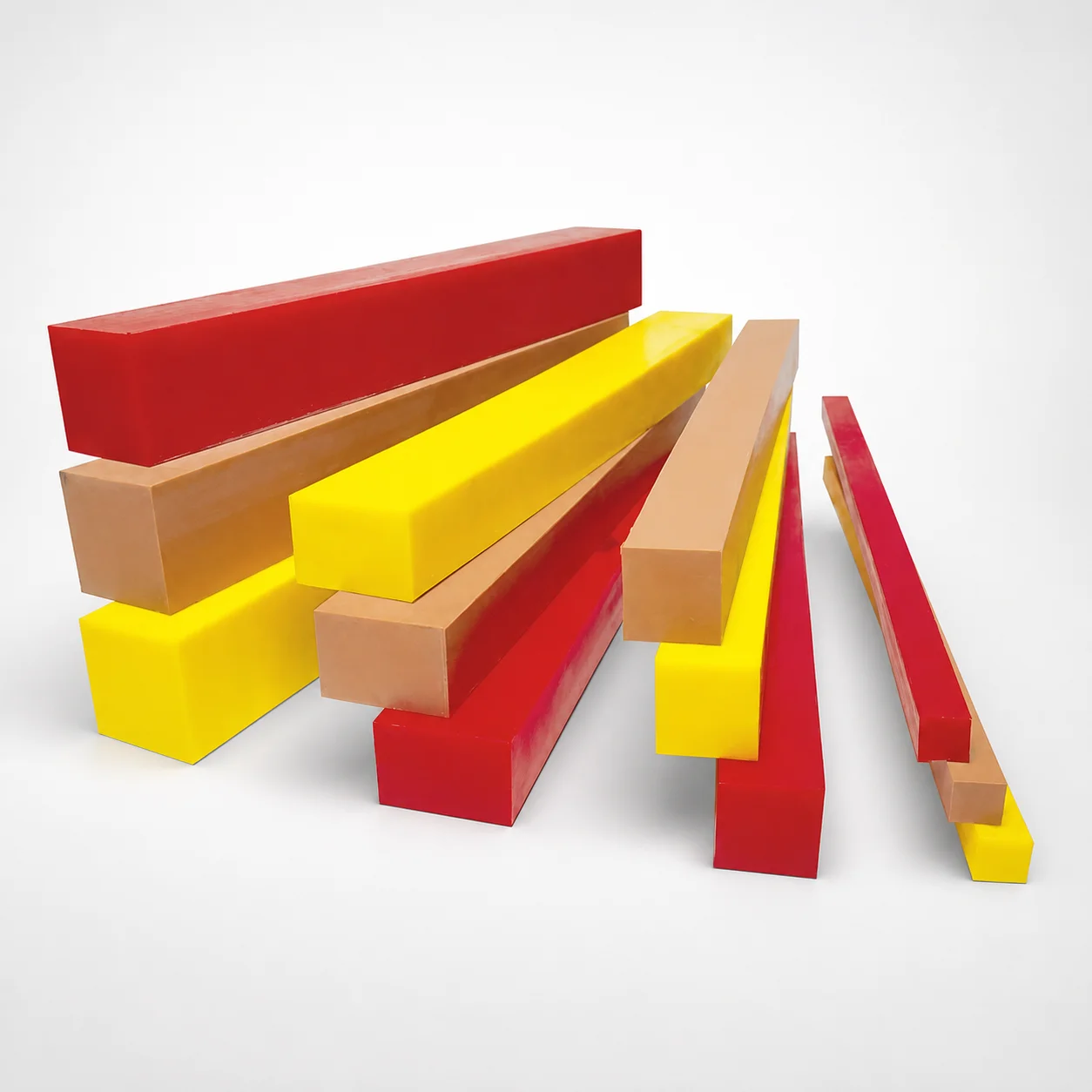
- Urethane types (load-matched): PO-652 (Tan, very high load), PO-670 (Black, very low load), PO-650 (Red, medium load), CU-290 (Yellow, high load).
- Heat treatment: No steel quench/temper or nitriding is specified for this urethane component; performance is controlled primarily by the urethane selection and precision-cast manufacturing.
Hardness/wear-toughness trade-off: The intended trade is between compressive support under higher loads (e.g., very high/high load grades) and increased compliance for delicate parts (very low/medium load grades). For material hardness in HRC terms, the provided data does not specify a steel hardness value because the component is urethane-based.
Sizing & Selection Guide+
To select the correct dimension, match the length (L) of the pad to the supporting area in your die or fixture. The available lengths are L = 2, 12, 24, 36, or 48 in.
- Match contact/bearing needs: For broader support or longer alignment interfaces, choose L = 24/36/48 in to increase stable support length and reduce local stress concentration.
- Use compact pads for limited space: Choose L = 2 or 12 in when the mounting envelope or fixture layout restricts pad travel or footprint.
- Load-profile selection: Pair the selected length with the correct urethane type for the expected contact force—PO-652 (very high), CU-290 (high), PO-650 (medium), or PO-670 (very low).
The block includes a through hole for mounting and positioning; ensure the hole location aligns with your fixture plate or die base datum. The provided specifications list length options but do not provide hole diameter or tolerance values, so confirm hole-to-fastener fit on your drawings.
Frequently Asked Questions
Which Formathane urethane type should I use for stable support under high clamp loads?+
What urethane type is best when I need lower force to avoid part deformation in thin-wall molding?+
How do I choose the correct pad length (L) for my die or fixture bearing area?+
Is this component a steel insert that requires quenching, tempering, or nitriding?+
Can I use the same pad block design across different tooling load profiles by changing only the urethane type?+
Related Products
Need Custom Specifications?
Our engineering team can help with custom configurations, material selection, and volume pricing.