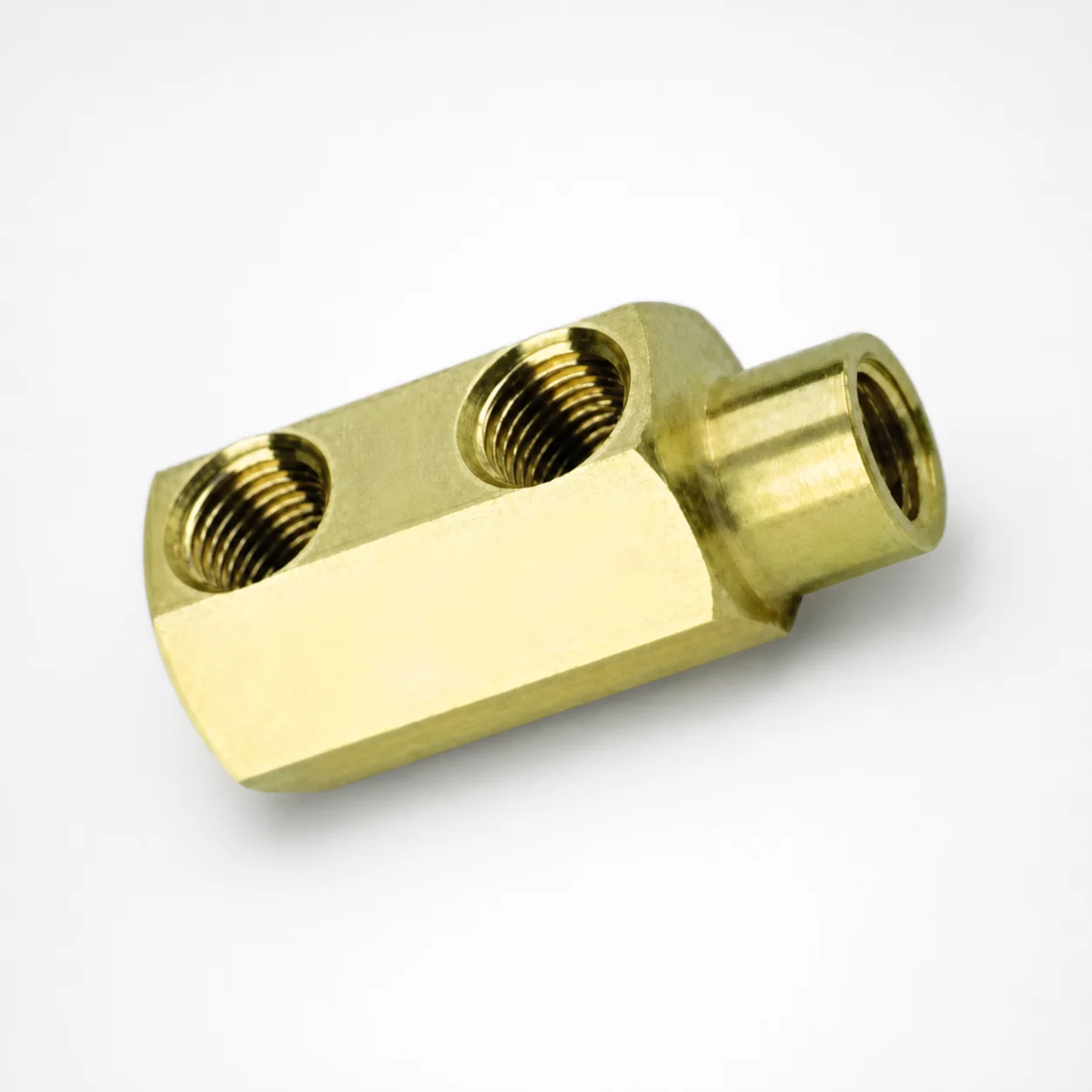
Inch Replacement Heads for High-Flow Assemblies Brass
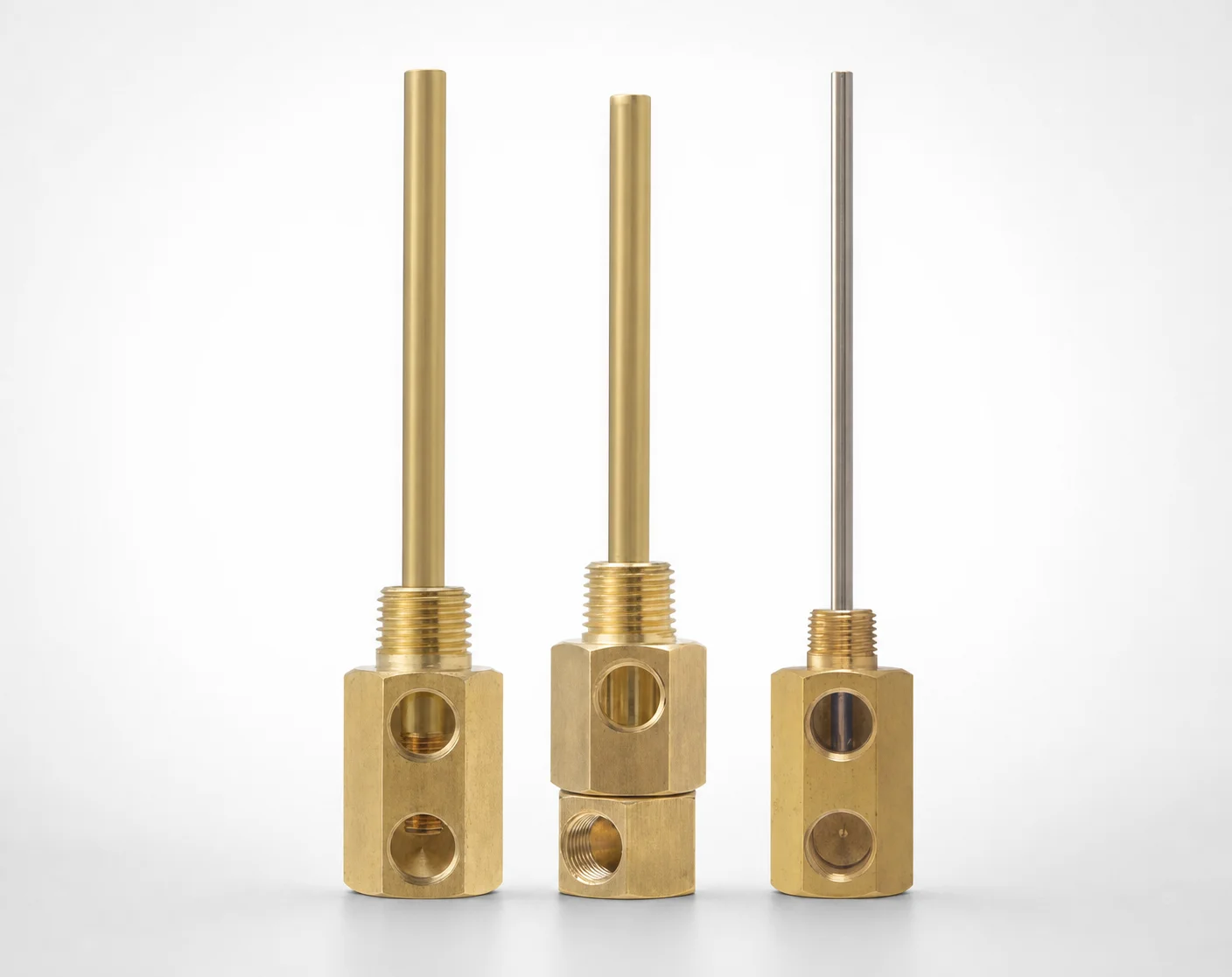
Inch replacement heads for high-flow assemblies (solid brass) are engineered as replacement components for high-flow tubes only, helping maintain unrestricted flow. The offset design supports deeper threads to reduce leakage and pressure drop.
- Solid brass construction for durable sealing in high-flow systems
- Offset head design enables deeper threads to help eliminate leaks
- Use with high flow stainless tubes to match thread interface
- Inch assembly replacement heads for reliable maintenance during service
Specifications
2 configurations available
| Pipe Tap Size (NPT) | Tube Thread Size (in) |
|---|---|
| 1/8" | 1/4"-28 |
| 3/8" | 7/16"-20 |
Product Guide
Application Scenarios+
These inch replacement heads are designed for servicing high-flow tube assemblies inside injection molds where stable coolant circulation is critical. They are intended specifically as replacement components for high-flow stainless tubes, helping maintain unrestricted flow and minimizing restrictions that can contribute to uneven thermal profiles.
- Automotive and appliance mold cooling: Use on interior cooling pipe networks fed by high-flow tubes. The solid brass head supports reliable sealing under repeated heat cycles, while the offset head geometry supports deeper threads to help reduce leakage and pressure drop.
- High-throughput production tooling: When maintenance intervals require fast component replacement, these heads help restore the original thread interface and flow path without redesigning the cooling circuit.
- Multi-cavity molds with dense cooling layouts: The compact, inch-threaded interface (NPT and tube thread sizes) supports fitting into existing cooling manifolds and return lines where misalignment can cause flow imbalance.
The offset design and brass sealing behavior make this variant suitable for maintaining flow integrity at the tube-to-head interface in real mold maintenance scenarios.
Material & Process Details+
This component is manufactured from solid brass, selected for its sealing reliability and machinability in mold cooling pipe interfaces. Brass provides good corrosion resistance in typical mold cooling environments and maintains dimensional stability for threaded connections during service.
- Heat treatment state: The provided specifications do not specify a hardness or quench/temper condition; treat brass as supplied by machining/finishing rather than heat-treated steel tooling.
- Wear resistance vs. toughness: In this application, the primary functional requirement is threaded leak prevention, not cutting wear. Brass offers adequate bearing and thread stability for repeated assembly/disassembly, with toughness suited to handling stresses at the interface.
- Material comparison: Compared with hardened tool steels, brass is not used for cutting or extreme wear; instead, it is optimized for sealing performance and compatibility with the tube thread interface.
For high-flow systems, maintaining the correct interface geometry is typically more important than high hardness, since leakage prevention depends on thread fit and sealing surfaces.
Sizing & Selection Guide+
Select the replacement head by matching both the pipe tap size (NPT) and the tube thread size used in your high-flow stainless tube assembly. This product provides the following ranges:
- Pipe Tap Size (NPT): 1/8" or 3/8"
- Tube Thread Size (in): 1/4"-28 or 7/16"-20
To size correctly, pair the NPT tap in the mold cooling port with the matching tube thread specified for your tube-to-head interface. Choose the variant whose tube thread size aligns with the stainless tube thread so the offset head can engage properly and support leak-reducing deep thread engagement.
- Tolerance/fit: Because threaded seals depend on engagement depth, confirm that the mating port tap and tube threads are manufactured to the same nominal standards (NPT vs. straight tube thread). If your assembly uses nonstandard chase depth or thread length, verify thread engagement before installation.
- Configurable vs. fixed: The supplied options are fixed by the available NPT sizes (1/8", 3/8") and tube thread sizes (1/4"-28, 7/16"-20); there are no adjustable dimensions.
Frequently Asked Questions
Which NPT pipe tap sizes are available for these inch replacement heads?+
This series is specified for Pipe Tap Size (NPT) options of 1/8" and 3/8". When selecting a replacement, match the NPT size to the mold’s existing tapped cooling port to ensure the threaded interface seats correctly.
What tube thread sizes (in) are compatible with the replacement head?+
The available tube thread sizes are 1/4"-28 and 7/16"-20. These correspond to the thread interface used on the high-flow stainless tubes, so the selected head must match the tube thread size to prevent incomplete engagement and potential leakage.
Is this brass replacement head intended for stainless high-flow tubes, or can it be used with other tube materials?+
The provided description specifies use with high flow stainless tubes to match the thread interface. The component is engineered as a replacement head for those high-flow stainless assemblies, so compatibility is best when the mating tube threads and port standards align with the stated sizes.
How does the offset head design help prevent leaks in injection mold cooling circuits?+
The offset head design is described as enabling deeper threads, which helps eliminate leaks and reduce pressure drop at the tube-to-head interface. In practice, correct selection of the NPT size and tube thread size is required so the deeper engagement occurs where intended.
Does the brass material require special heat treatment to achieve performance in mold cooling?+
The specifications provided do not list a hardness target or any quench/temper/nitriding heat treatment for this brass part. As a brass replacement head, performance is primarily governed by correct threaded fit for sealing in high-flow assemblies rather than steel-style heat treatment processes.
Related Products
Need Custom Specifications?
Our engineering team can help with custom configurations, material selection, and volume pricing.