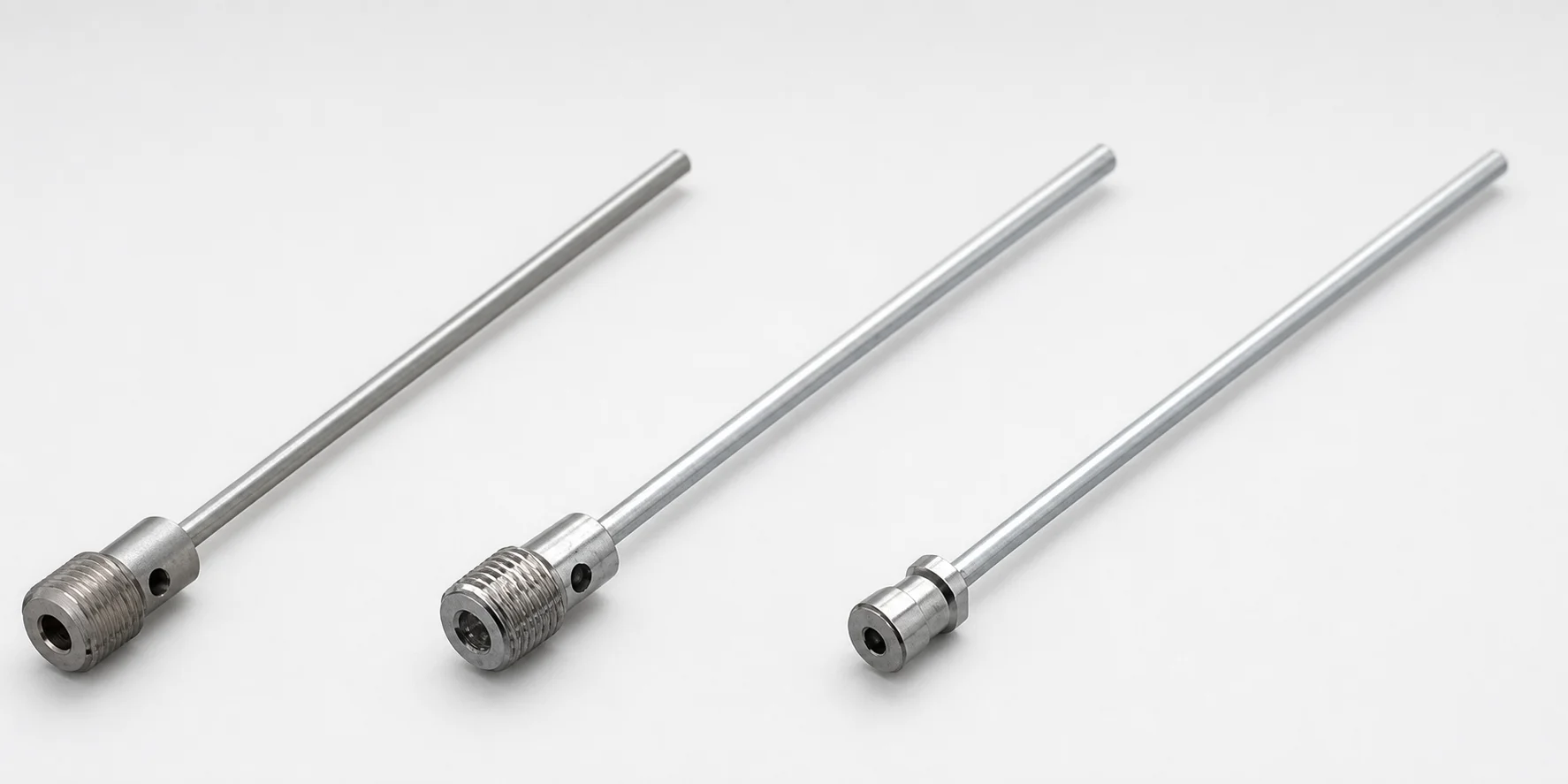
Cooling Pipes Tapered Thread Stainless Steel Inside Mount
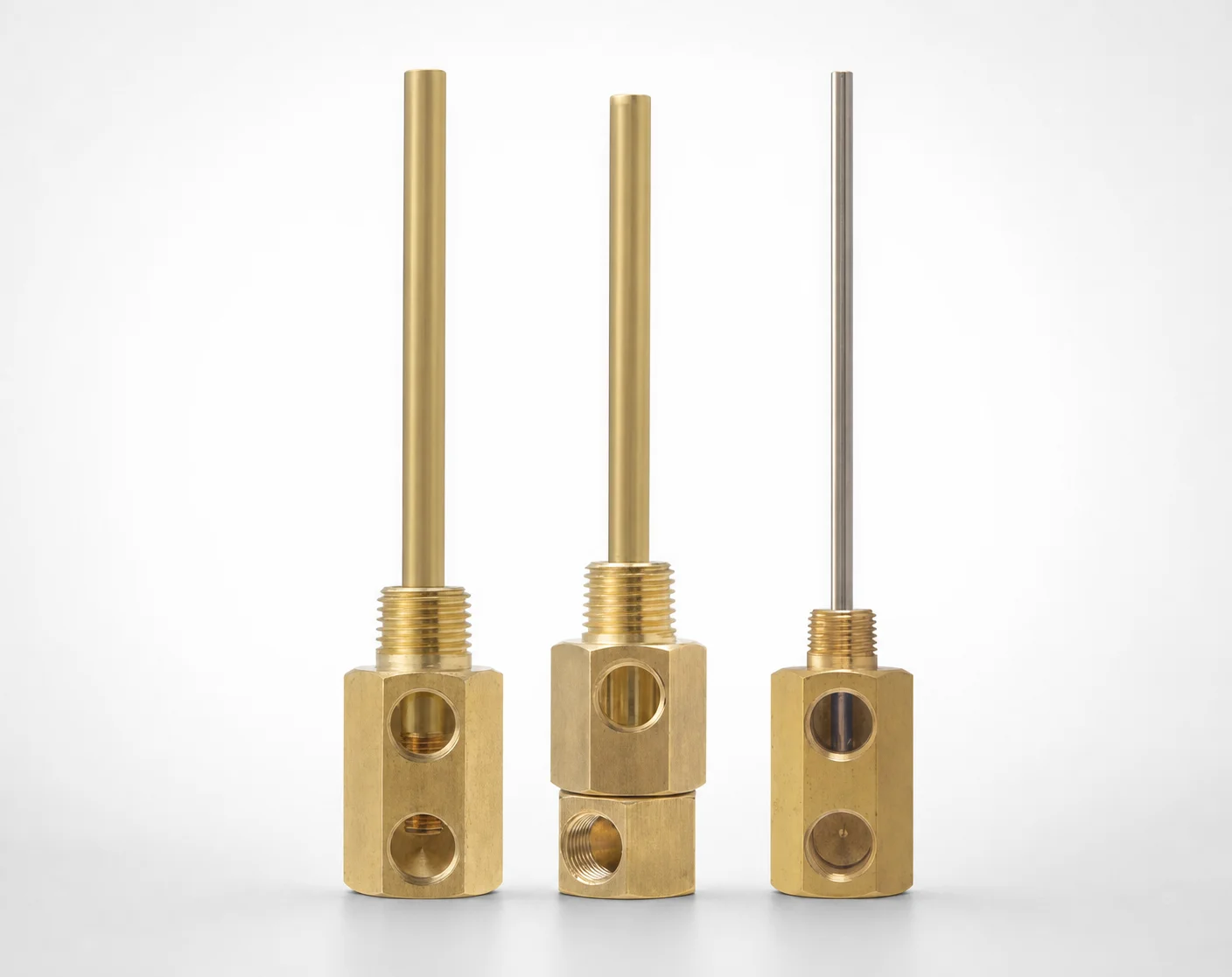
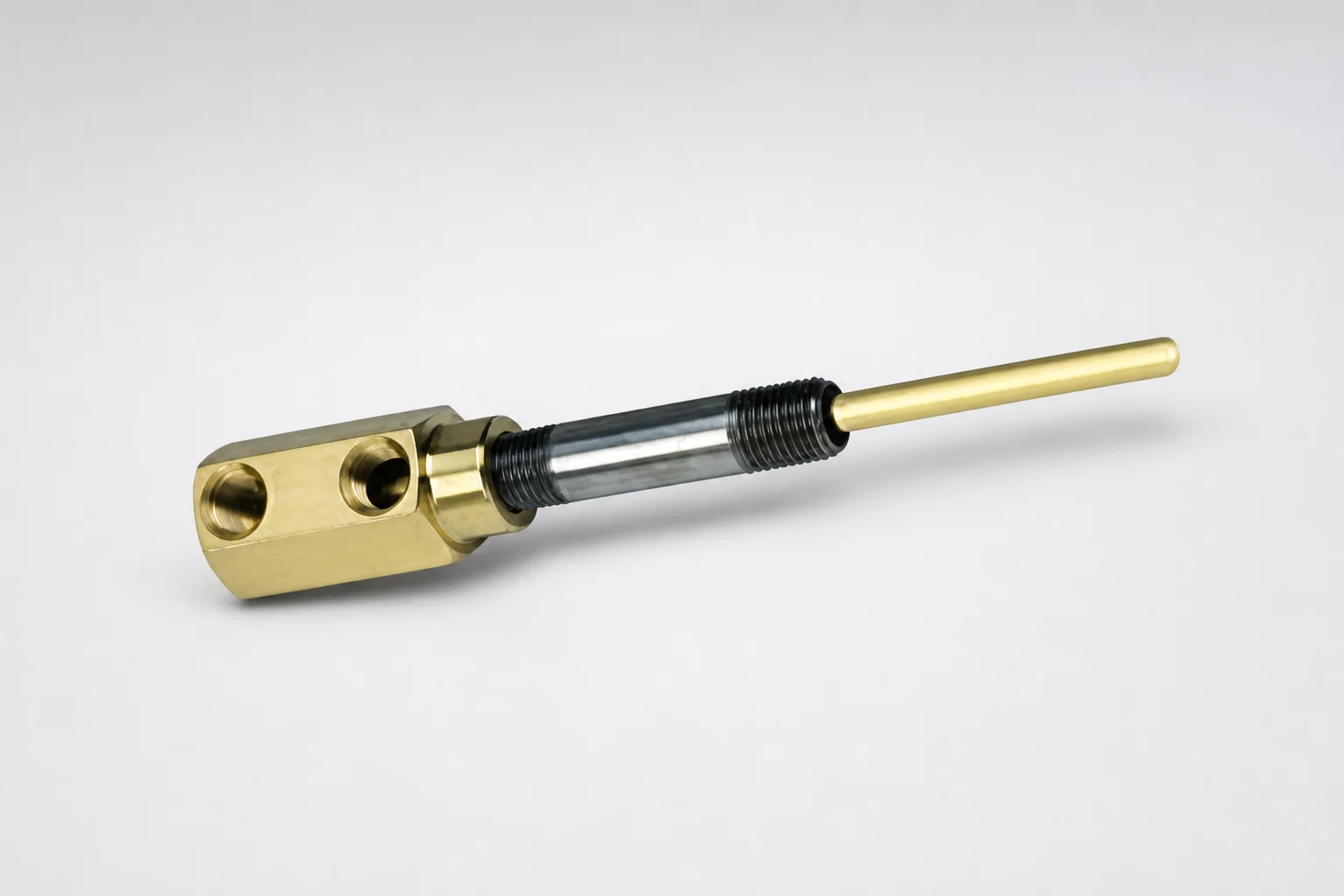
Cooling Pipes tapered thread (stainless steel pipe with brass holder) are designed for inside mounting to build reliable cooling channels. The tapered screw thread improves assembly stability and alignment in cooling layouts.
- Inside mounting configuration for compact mold and manifold integration
- Stainless steel pipe with brass holder supports corrosion resistance
- Tapered screw thread connection helps maintain consistent assembly positioning
- Commonly used in tool cooling circuits for efficient heat removal
Specifications
19 configurations available
| Clamping Method | D (Pipe Diameter) (mm) | Length L (mm) | type |
|---|---|---|---|
| Parallel pipe thread type | 2 | 100 | - |
| Parallel pipe thread type | 2 | 200 | - |
| Parallel pipe thread type | 3 | 100 | - |
| Parallel pipe thread type | 3 | 200 | - |
| Parallel pipe thread type | 3 | 300 | - |
| Parallel pipe thread type | 4 | 200 | - |
| Parallel pipe thread type | 4 | 300 | - |
| Tapered screw | 2 | 100 | - |
| Tapered screw | 2 | 200 | - |
| Tapered screw | 3 | 100 | - |
| Tapered screw | 3 | 200 | - |
| Tapered screw | 4 | 200 | - |
| Caulking type | 2 | 100 | - |
| Caulking type | 2 | 200 | - |
| Caulking type | 3 | 100 | - |
| Caulking type | 3 | 200 | - |
| Caulking type | 3 | 300 | - |
| Caulking type | 4 | 200 | - |
| Caulking type | 4 | 300 | - |
Product Guide
Application Scenarios+
This tapered-thread cooling pipe is used for inside-mount cooling circuits where tubing must be secured in the mold interior with accurate positioning. The tapered screw thread helps the connection seat consistently, reducing play that can disturb coolant flow paths during assembly and service.
It is well suited for automotive and industrial connector injection molds that require compact cooling near multi-cavity inserts. With stainless steel pipe and a brass holder, the setup supports stable cooling layout integration while resisting corrosion from typical mold cooling media.
Engineers also use it in electronics housings and appliance components where repeatable thermal control is critical for dimensional stability. Available pipe diameters (D = 2–4 mm) and lengths (L = 100–300 mm) make it practical for aligning to core/cavity heat removal zones without rerouting manifolds.
Material & Process Details+
The product uses a stainless steel pipe paired with a brass holder. This combination is selected for cooling-channel reliability: stainless steel supports corrosion resistance in water/glycol systems, while the brass holder improves secure installation and stable seating against the mold interior.
Heat treatment details (e.g., specific grade, hardness HRC, or quench/tempered state) are not provided in the supplied specifications, so hardness and wear-resistance targets cannot be stated from the available data. In general, stainless pipes are chosen for chemical resistance rather than maximum abrasion wear, while the holder design focuses on assembly integrity.
- Stainless steel pipe: corrosion-resistant wetted surface for coolant stability
- Brass holder: supports fit and fastening stability at the mounting interface
- Trade-off: prioritizes corrosion/assembly stability over extremely high wear performance
Sizing & Selection Guide+
Selection is primarily based on matching the coolant routing geometry using the provided ranges: pipe diameter D = 2, 3, or 4 mm and length L = 100, 200, or 300 mm. Choose D to fit the available internal drilling/canal space and to achieve the desired flow cross-section for the cooling layout.
Match L to the measured run distance from the inlet connection region to the targeted heat extraction zone inside the mold. For core and cavity proximity cooling, confirm that the straight run length does not interfere with ejector components, lifters, or mold shut-off surfaces.
- Dimension matching: set D to the designed channel size; set L to the required interior routing length
- Threaded fit: tapered screw connection should be seated consistently during assembly to avoid misalignment
- Configurable vs. fixed: D and L are selectable from the listed values; other mounting behavior follows the specified tapered-screw design
Frequently Asked Questions
Which clamping method/thread standard does this cooling pipe use, and how does it affect installation in the mold interior?+
Its clamping method is listed as tapered screw (also referenced alongside parallel pipe thread type and caulking type as variable options within the series). The tapered screw thread helps the assembly seat with consistent alignment, which is important for stable inside-mounted cooling circuit installation. Select this variant when you need reliable positioning in compact mold interiors.
How do I choose the correct pipe diameter (D) for my cooling circuit?+
The available D values are 2, 3, and 4 mm. Use D to match the available space and the intended coolant flow cross-section for the local heat removal zone around the core/cavity area. If you have multiple circuit branches, keep diameters consistent with the rest of the cooling layout to avoid flow imbalance.
What length (L) options are available for inside mounting, and how should I verify routing clearance?+
Available lengths are L = 100, 200, or 300 mm. Measure the interior run distance from the mounting/interface area to the target cooling location, then verify clearance from moving components (ejectors/lifters) and mold shut-off surfaces. If the run is near obstructions, pick the shortest length that still reaches the intended heat extraction zone.
Is the stainless steel pipe suitable for corrosion resistance in typical coolant systems?+
The product description specifies a stainless steel pipe with a brass holder, targeting reliable cooling circuit installation with corrosion resistance. This makes it appropriate for common mold cooling media where corrosion at wetted surfaces is a concern. Final suitability depends on your coolant chemistry and operating conditions, which should be confirmed in your tooling specification.
What design considerations apply when using tapered-thread cooling pipes with brass holders?+
The tapered screw thread improves assembly stability and alignment, which helps maintain consistent positioning after installation. Because the holder provides the interface to the mold interior, ensure your mounting geometry and tightening sequence allow full seating of the tapered connection. This reduces the risk of misalignment that can compromise coolant routing accuracy.
Related Products
Need Custom Specifications?
Our engineering team can help with custom configurations, material selection, and volume pricing.