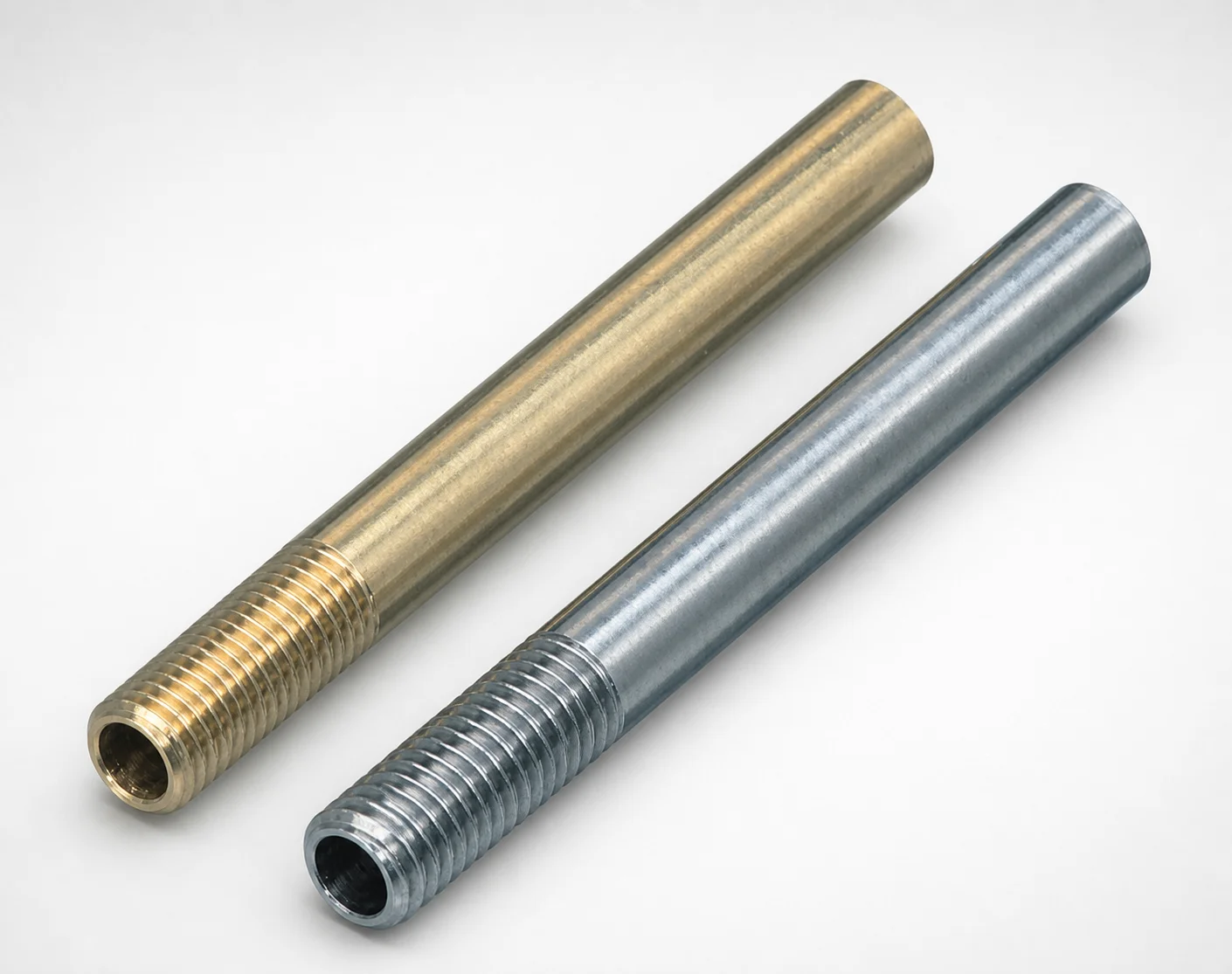
Cooling Pipes Fine Pitch Thread Stainless Steel or Brass
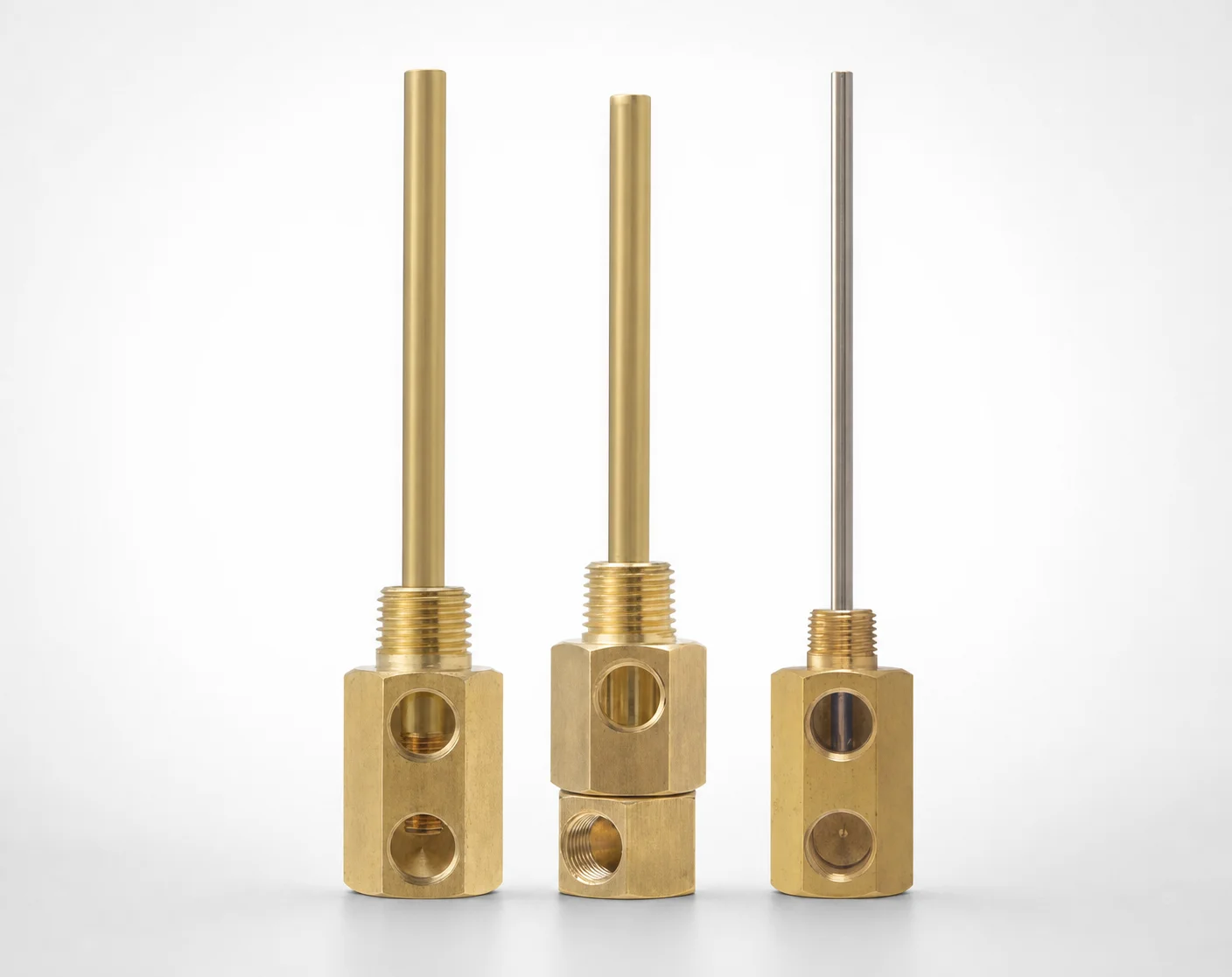
Cooling Pipes Fine Pitch Thread (Stainless steel or brass) deliver stable, inside-mounted cooling connections for mold and fixture designs. The fine screw thread clamp helps maintain consistent positioning under process loads.
- Fine pitch screw clamping method for secure retention
- Inside mounting position supports compact cooling layouts
- Stainless steel or brass pipe material for corrosion resistance
- Available for multiple pipe diameters to match cooling requirements
Specifications
64 configurations available
| Material | Pipe Material | D (Pipe Diameter) (mm) | Length L (mm) | type |
|---|---|---|---|---|
| Brass | Brass | 3 | 50 | - |
| Brass | Brass | 3 | 100 | - |
| Brass | Brass | 3 | 150 | - |
| Brass | Brass | 3 | 200 | - |
| Brass | Brass | 4 | 50 | - |
| Brass | Brass | 4 | 100 | - |
| Brass | Brass | 4 | 150 | - |
| Brass | Brass | 4 | 200 | - |
| Brass | Brass | 5 | 50 | - |
| Brass | Brass | 5 | 100 | - |
| Brass | Brass | 5 | 150 | - |
| Brass | Brass | 5 | 200 | - |
| Brass | Brass | 5 | 250 | - |
| Brass | Brass | 5 | 300 | - |
| Brass | Brass | 6 | 50 | - |
| Brass | Brass | 6 | 100 | - |
| Brass | Brass | 6 | 150 | - |
| Brass | Brass | 6 | 200 | - |
| Brass | Brass | 6 | 250 | - |
| Brass | Brass | 6 | 300 | - |
| Brass | Brass | 8 | 50 | - |
| Brass | Brass | 8 | 100 | - |
| Brass | Brass | 8 | 150 | - |
| Brass | Brass | 8 | 200 | - |
| Brass | Brass | 8 | 250 | - |
| Brass | Brass | 8 | 300 | - |
| Brass | Brass | 10 | 50 | - |
| Brass | Brass | 10 | 100 | - |
| Brass | Brass | 10 | 150 | - |
| Brass | Brass | 10 | 200 | - |
| Brass | Brass | 10 | 250 | - |
| Brass | Brass | 10 | 300 | - |
| Stainless Steel | Stainless Steel | 3 | 50 | - |
| Stainless Steel | Stainless Steel | 3 | 100 | - |
| Stainless Steel | Stainless Steel | 3 | 150 | - |
| Stainless Steel | Stainless Steel | 3 | 200 | - |
| Stainless Steel | Stainless Steel | 4 | 50 | - |
| Stainless Steel | Stainless Steel | 4 | 100 | - |
| Stainless Steel | Stainless Steel | 4 | 150 | - |
| Stainless Steel | Stainless Steel | 4 | 200 | - |
| Stainless Steel | Stainless Steel | 5 | 50 | - |
| Stainless Steel | Stainless Steel | 5 | 100 | - |
| Stainless Steel | Stainless Steel | 5 | 150 | - |
| Stainless Steel | Stainless Steel | 5 | 200 | - |
| Stainless Steel | Stainless Steel | 5 | 250 | - |
| Stainless Steel | Stainless Steel | 5 | 300 | - |
| Stainless Steel | Stainless Steel | 6 | 50 | - |
| Stainless Steel | Stainless Steel | 6 | 100 | - |
| Stainless Steel | Stainless Steel | 6 | 150 | - |
| Stainless Steel | Stainless Steel | 6 | 200 | - |
Product Guide
Application Scenarios+
This fine-pitch threaded cooling pipe is used for inside-mounted cooling layouts where space is limited and stable flow geometry is required. The fine screw-thread clamping style helps hold the pipe position during thermal cycling and clamping loads, making it suitable for repeatable cooling performance.
Common scenarios include:
- Automotive part injection molds: inside connection points near the cavity reduce flow length and improve temperature uniformity; stainless steel variants suit environments with higher corrosion risk.
- Electronics and connector housings: compact cooling channels benefit from the pipe’s small available diameters (D = 3–10 mm) to maintain tight mold spacing.
- Industrial tooling fixtures: brass versions are often selected when galvanic/corrosion conditions and thermal requirements favor brass, while retaining secure threaded retention.
Select the diameter (D) and length (L) to match the mold’s drilled mounting position and the internal cooling circuit path.
Material & Process Details+
These cooling pipes are supplied in either stainless steel or brass. The stainless option is intended for corrosion resistance in environments exposed to moisture, cleaning agents, or frequent water-based cooling—supporting long service intervals for inside mold cooling.
The brass option prioritizes machinability and thermal conduction behavior suitable for many mold cooling circuits, while still using the same fine-pitch screw clamping concept for secure positioning.
- Hardness / heat treatment: specific HRC values and heat-treatment steps are not provided in the supplied product data, so hardness and temper/nitriding details should be confirmed with the supplier for your exact material lot.
- Wear vs. toughness trade-off: because the cooling pipe is primarily a fluid/connection component (not a wear-critical punch surface), material selection is typically driven by corrosion resistance and fit/assembly stability rather than maximizing impact toughness.
Choose stainless for corrosion-demanding applications; choose brass when the process conditions support brass performance.
Sizing & Selection Guide+
To select the correct dimension, start from the mold’s drilled mounting interface and the required internal cooling path length. This series offers pipe diameters D = 3, 4, 5, 6, 8, 10 mm and lengths L = 50, 100, 150, 200, 250, 300 mm.
Selection steps:
- Match diameter (D): choose the pipe diameter that aligns with your mold’s inside mounting bore and the cooling channel geometry to avoid excessive clearance or forced fit.
- Match reach length (L): set the length so the pipe end positions correctly within the cavity/core cooling layout, accounting for the mounting depth and any internal obstructions.
- Clamp/position stability: the fine-pitch screw clamping design depends on proper thread engagement; ensure the mounting features provide sufficient engagement length for repeatable positioning.
Because tolerances are not specified in the provided data, confirm your target fit class (clearance vs. interference) with your mold shop drawings for the chosen material and diameter.
Frequently Asked Questions
Which pipe diameter (D) should I choose for a tight inside cooling layout using this fine-pitch threaded design?+
How do I determine the required length (L) for the inside-mounted reach into the cooling circuit?+
When should I pick stainless steel versus brass for these cooling pipes in injection mold tooling?+
Does the fine-pitch screw clamping help with thermal cycling and pipe positioning accuracy?+
Are there any required heat-treatment or hardness targets I should assume for this cooling pipe series?+
Related Products
Need Custom Specifications?
Our engineering team can help with custom configurations, material selection, and volume pricing.