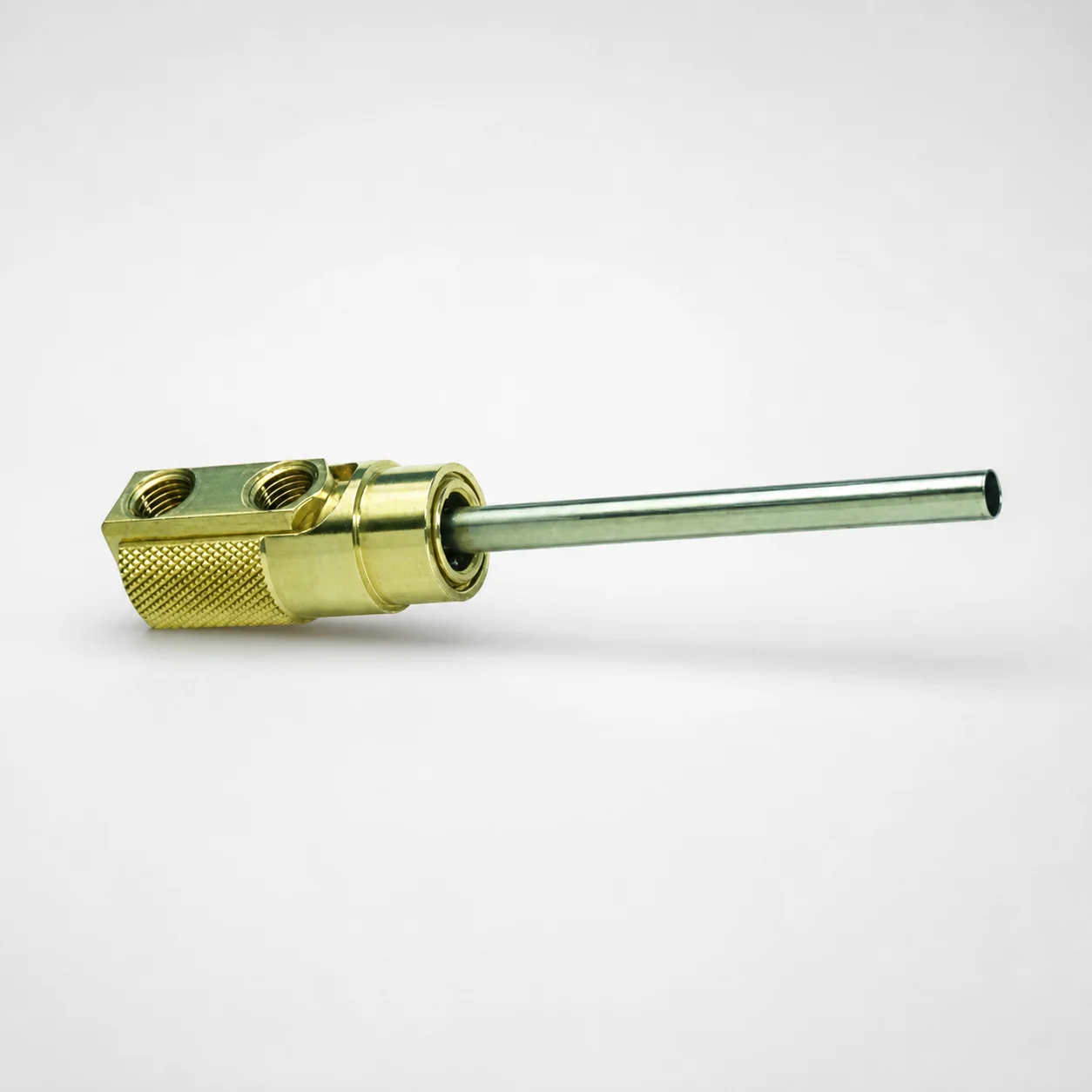
Quick-Coupler Type Cascade Assemblies Inch
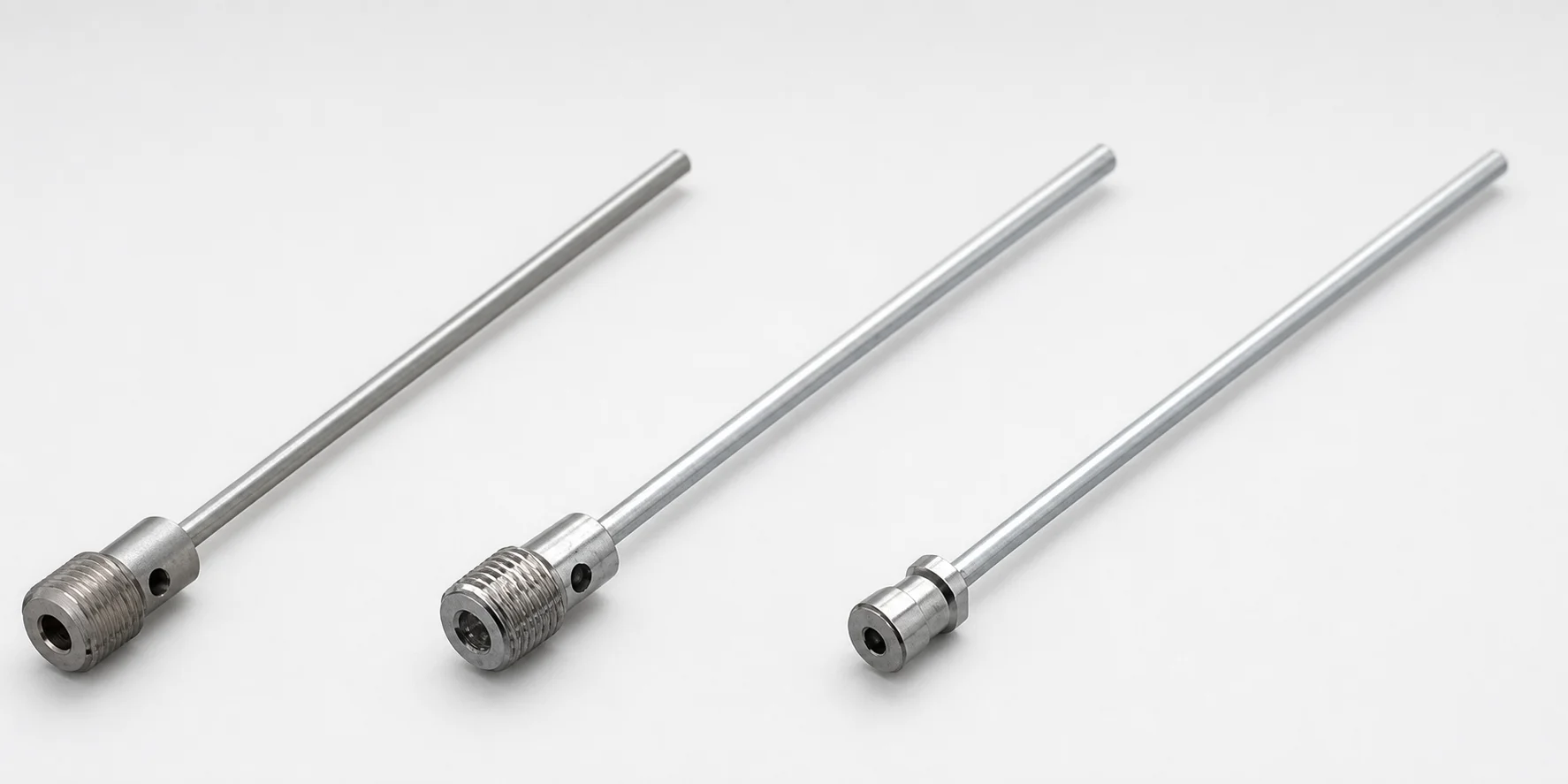
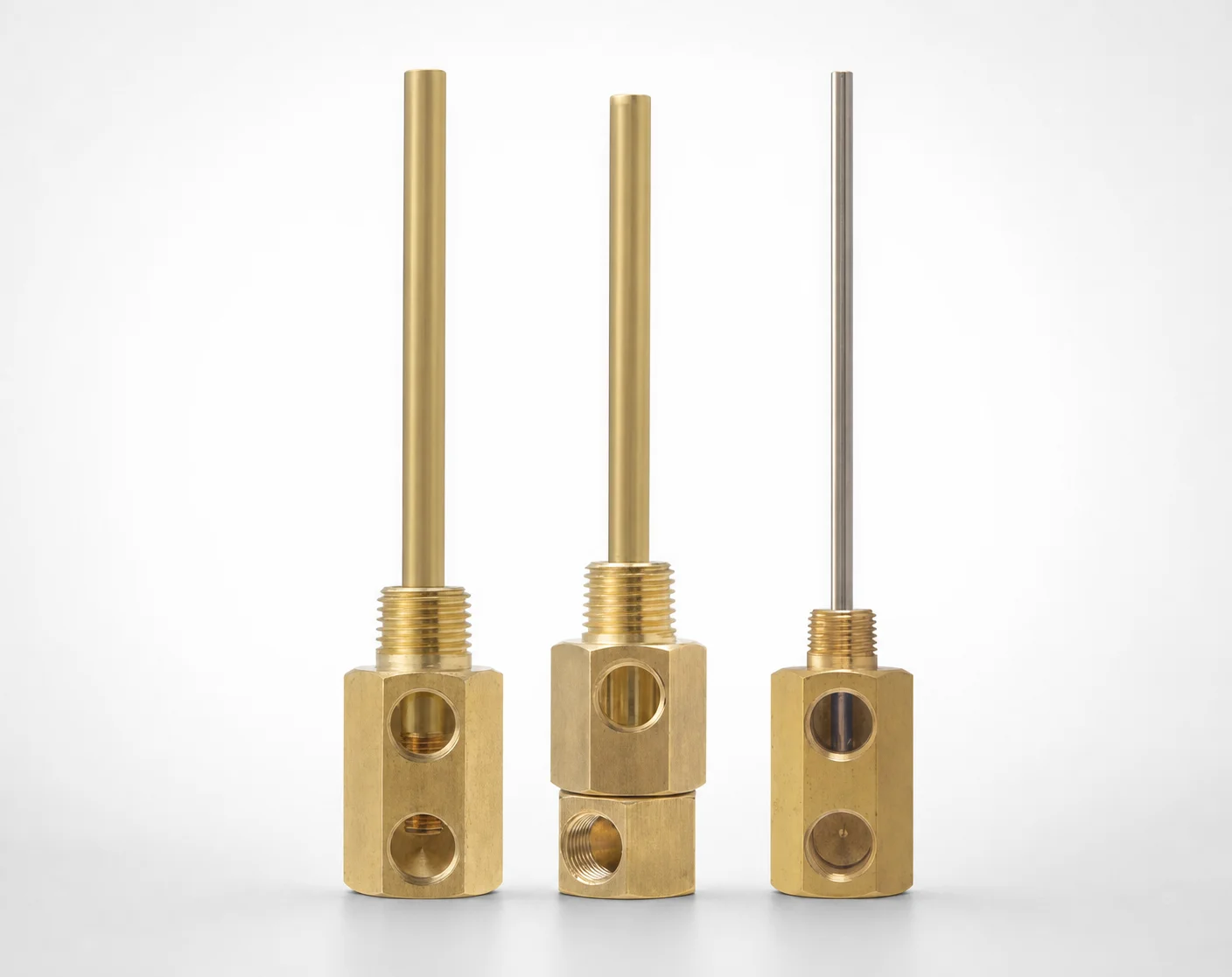
Quick-Coupler Type Cascade Assemblies Inch deliver high-flow cooling using thin-wall stainless steel tubes, while Viton seals support dependable performance in a closed coolant circuit. The quick-coupler design allows installation and removal without disconnecting coolant lines.
- High-flow cascade configuration for maximum cooling rates
- Thin-wall stainless steel tubes improve heat transfer
- Included Viton seals help maintain leak-tight sealing
- Brass head and pipe plug design supports long service life
Product Guide
Application Scenarios+
These quick-coupler cascade assemblies are used inside injection mold cooling circuits where designers need predictable, high-flow temperature control across multiple mold zones. The cascade configuration supports faster heat removal, which is especially useful in automotive connector and housing molds that require tight thermal consistency to prevent sink marks and dimensional drift.
Because the assembly uses thin-wall stainless steel tubes, it promotes efficient heat transfer while keeping the internal flow path responsive to pump changes. The quick-coupler interface is suited for rapid mold maintenance scenarios, such as routine seal replacement during production downtime, since coolant lines can be isolated without fully disconnecting the system.
In medical device and diagnostic device housings, Viton seals help maintain a reliable closed-loop coolant seal to reduce leakage risk around internal couplers during repeated thermal cycling.
- Install/remove coupler components for service without disconnecting all coolant lines
- Maintain leak-tight performance using Viton seals
- Use for high-flow, zone-based cooling where response time matters
Material & Process Details+
This assembly combines thin-wall stainless steel tubes with Viton seals and a brass head with pipe plug design. Stainless steel provides corrosion resistance in closed coolant circuits and supports good thermal conductivity for transferring heat efficiently from the mold steel to the coolant.
Viton (FKM) is selected for its chemical compatibility and durable sealing behavior under repeated heating and cooling cycles. Its performance helps maintain leak-tight operation at the coupler interface where micro-leakage can cause air ingress or coolant loss.
The brass head and pipe plug promote stable assembly and reliable sealing contact surfaces. While the system is not a heat-treated cutting tool, the manufacturing approach is typically tube forming/bending for the cascade geometry, followed by coupler and seal assembly to ensure concentric fit and consistent compression on the Viton seals.
- Stainless tube: corrosion resistance + heat transfer efficiency
- Viton seals: resilient sealing under thermal cycling
- Brass hardware: stable coupling interface for long service life
Sizing & Selection Guide+
Although this product listing does not provide explicit dimensional ranges, correct selection is determined by matching the coupler interface and cascade flow layout to your mold’s internal cooling design. Start by identifying the target cooling strategy (single-pass vs. cascade) and the number of cooling zones that will share the coupler assembly.
Next, verify three fit points in your mold plumbing plan:
- Coupler connection geometry: confirm the quick-coupler type matches the corresponding coolant line manifold or coupler port in your mold base.
- Tube path clearances: ensure the thin-wall tube routing fits within drilled water channels without violating minimum wall thickness or causing interference with ejector hardware.
- Seal compression compatibility: ensure the Viton seal housing and mating surfaces maintain proper compression; inadequate compression can reduce leak-tight performance.
If any dimensions are provided on your project drawings or by the mold plumbing standard you use, treat the coupler as fixed-geometry and adapt the surrounding channel drilling and manifold ports to it, rather than expecting the assembly to fit variable-width housings.
Frequently Asked Questions
How does the cascade configuration improve cooling compared with straight-line coolant channels?+
The cascade design is intended for high-flow cooling by supporting a zone-based flow path that increases overall heat removal performance. This helps reduce thermal gradients across the cavity and can improve part consistency.
In practice, engineers pair the cascade with thin-wall tubing and a quick-coupler interface so flow behavior remains predictable during operation and maintenance.
What is the role of Viton seals in a quick-coupler cooling loop?+
Viton seals are used at the coupler interface to help maintain leak-tight sealing in the closed coolant circuit. This is important because small leaks can lead to coolant loss, pressure instability, and air ingress.
The seal material is also chosen to better tolerate repeated thermal cycling common in injection molding.
Why use thin-wall stainless steel tubes inside the mold cooling circuit?+
Thin-wall stainless steel tubes are selected to enhance heat transfer from the mold region to the coolant while keeping flow paths efficient. The stainless choice also supports corrosion resistance where water-based or mixed coolants are used.
This combination supports stable thermal control in high-demand molding applications.
Is this quick-coupler cascade assembly designed for maintenance without disconnecting all coolant lines?+
Yes. The quick-coupler design is intended to allow installation and removal of the coupler components without fully disconnecting the coolant lines across the mold.
This reduces downtime during activities such as seal inspection or replacement while keeping the rest of the cooling plumbing intact.
Since no dimensions are listed, how should I confirm compatibility with my mold’s drilled cooling channels and manifolds?+
Confirm compatibility by matching the quick-coupler connection interface to your mold’s corresponding manifold or coupler port geometry. Then check tube routing clearances for interference with other internal mold components and verify that the seal seats can achieve correct compression.
Because the listing provides no specific shaft/length ranges, treat the assembly as fixed-geometry and adapt surrounding plumbing layouts in your design drawings.
Related Products
Need Custom Specifications?
Our engineering team can help with custom configurations, material selection, and volume pricing.