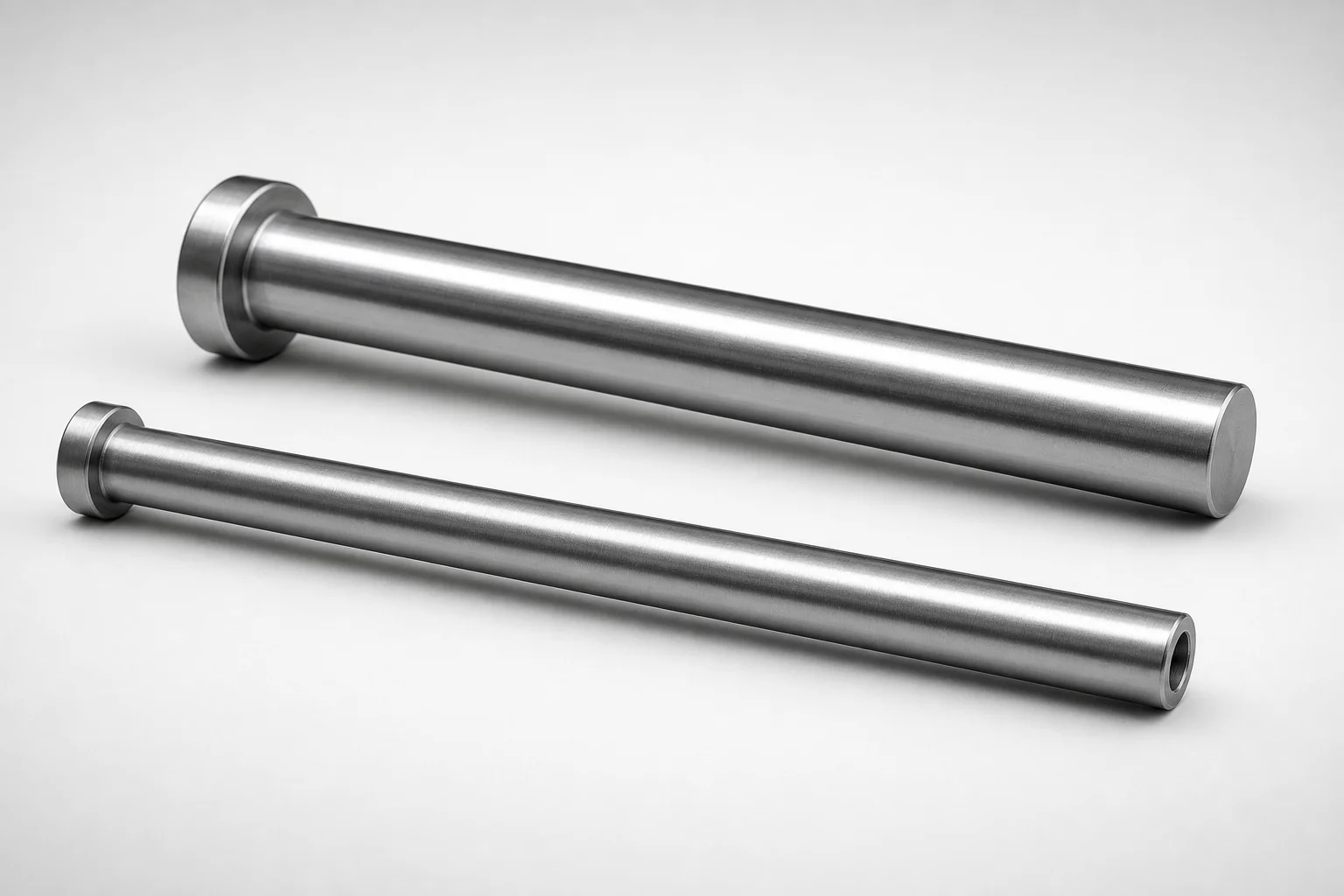
JIS Standard SKH51 Steel Straight Ejector Sleeve Tapered
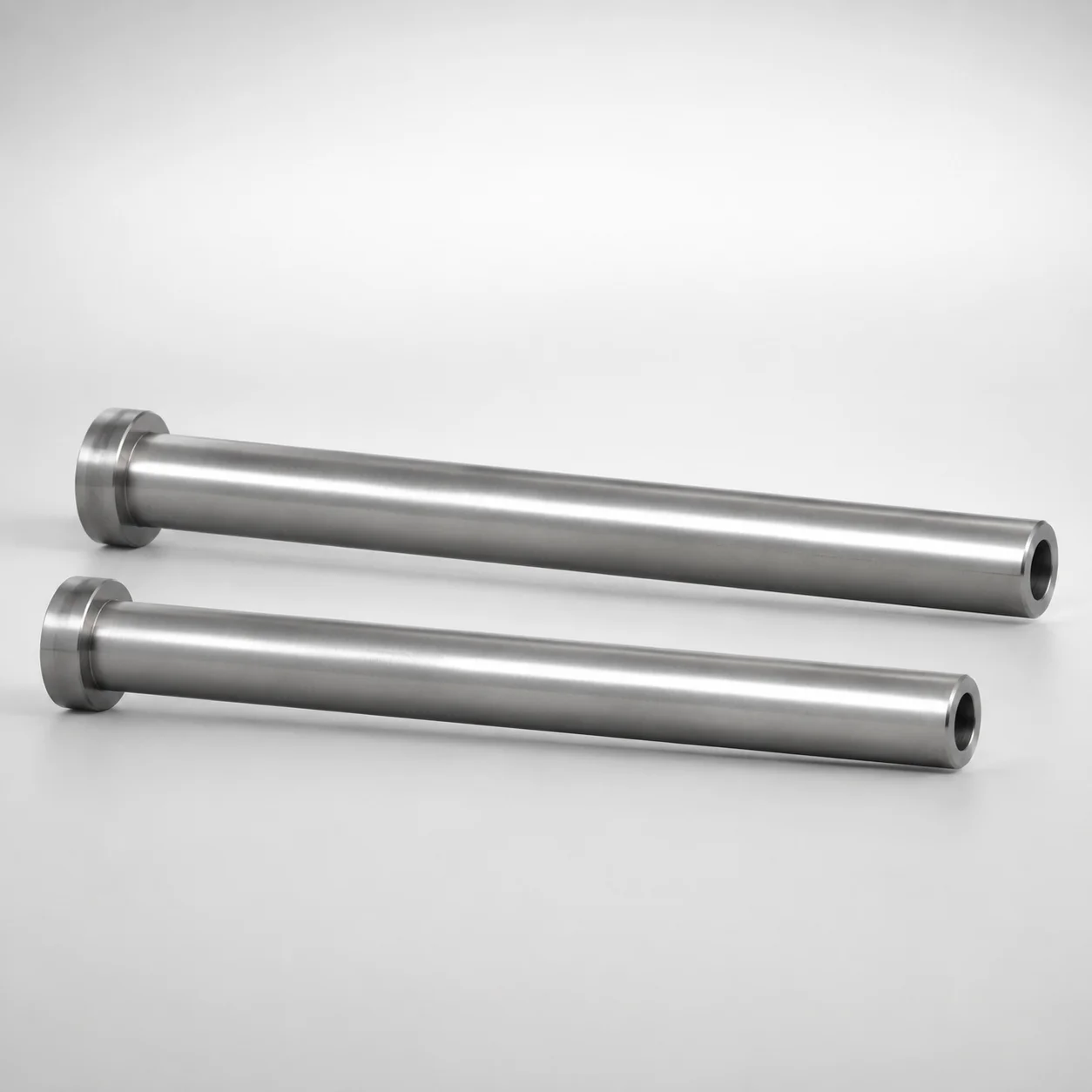
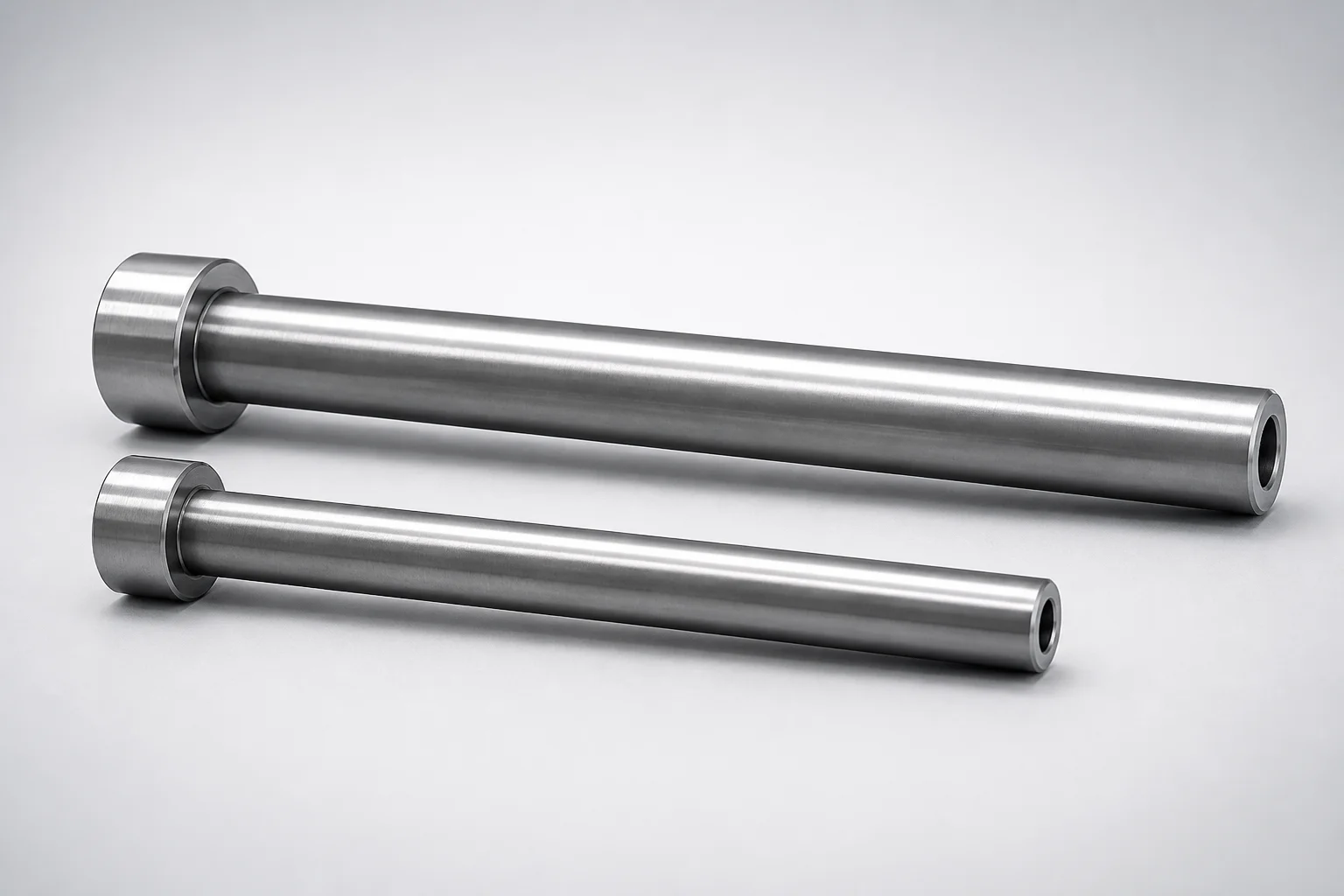
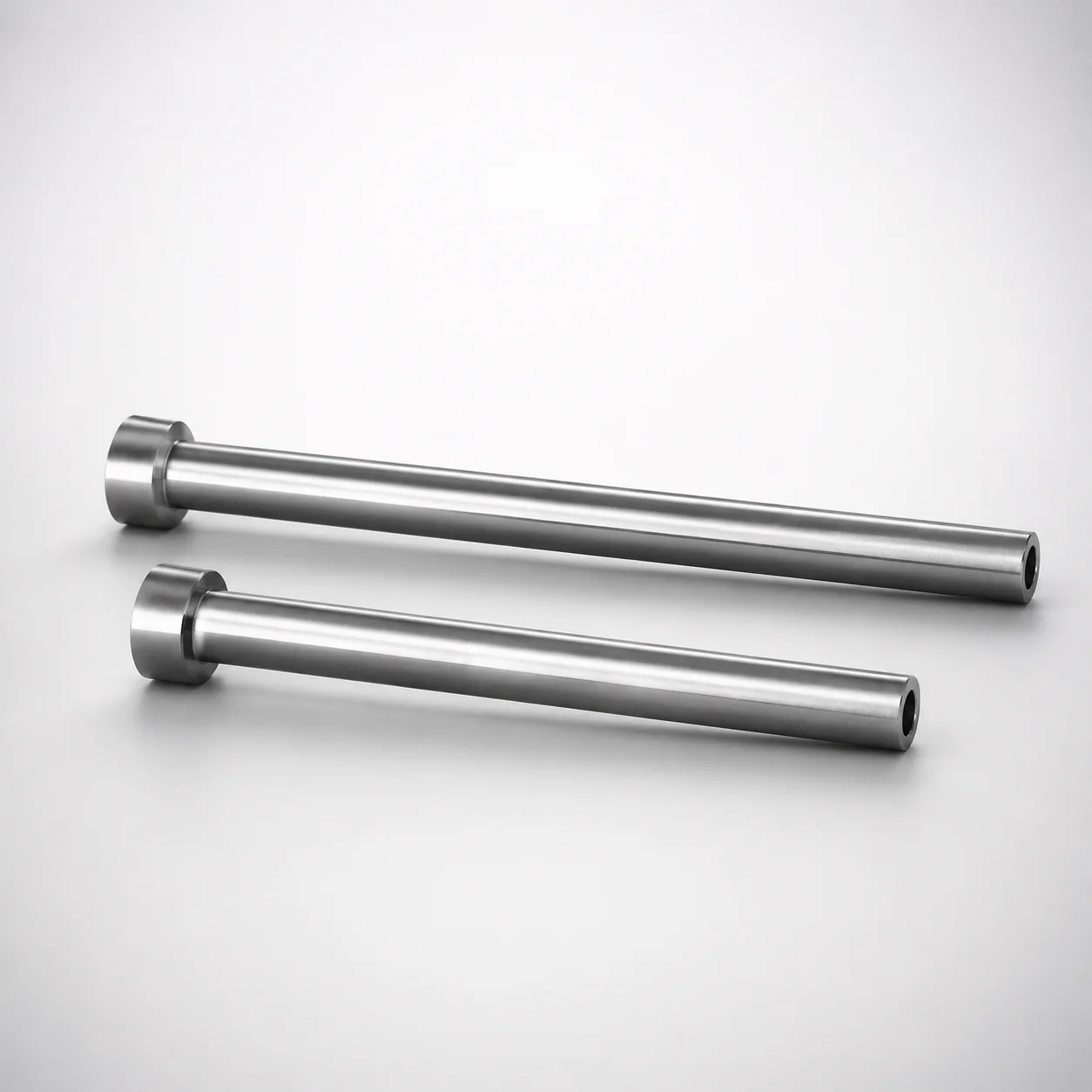
Straight ejector sleeve (SKH51 steel) features a tapered outer geometry with a 4 mm head thickness, supporting smooth guidance and reliable ejection alignment in production molds. Designed as a single sleeve component for straightforward assembly.
- Tapered sleeve design for controlled fit and stable alignment during ejector operation
- SKH51 steel construction with hardened-steel wear resistance for long service life
- Inner diameter tolerance reference +0.005/0 supports consistent sleeve-to-shaft engagement
- Compatible with standard ejector sleeve mounting in die sets and molding tooling
Specifications
12 configurations available
| D/P (Shaft Diameter) (mm) | V (Hole Diameter) (mm) | Hole-Shaft Diameter Concentricity | No. (Nominal diameter) (mm) | L (L dimension) (mm) | C (Recess diameter) (mm) | S (V hole diameter length) (mm) | type |
|---|---|---|---|---|---|---|---|
| 2.5 ~ 3 | 1 ~ 2.4 | ◎0.003 | 3 | 20 ~ 110 | 1.2 ~ 2.6 | 2 ~ 7 | - |
| 3.01 ~ 4 | 1 ~ 3.4 | ◎0.003 | 4 | 20 ~ 110 | 1.2 ~ 3.6 | 2 ~ 10 | - |
| 4.01 ~ 5 | 1 ~ 4.4 | ◎0.003 | 5 | 20 ~ 110 | 1.2 ~ 4.6 | 2 ~ 13 | - |
| 5.01 ~ 6 | 1 ~ 5.4 | ◎0.003 | 6 | 20 ~ 110 | 1.2 ~ 5.6 | 2 ~ 16 | - |
| 6.01 ~ 7 | 1 ~ 6.4 | ◎0.003 | 7 | 20 ~ 110 | 1.2 ~ 6.6 | 2 ~ 19 | - |
| 7.01 ~ 8 | 1 ~ 7.4 | ◎0.003 | 8 | 20 ~ 110 | 1.2 ~ 7.6 | 2 ~ 22 | - |
| 2.5 ~ 3 | 1 ~ 2.4 | ◎0.005 | 3 | 20 ~ 110 | 1.2 ~ 2.6 | 2 ~ 7 | - |
| 3.01 ~ 4 | 1 ~ 3.4 | ◎0.005 | 4 | 20 ~ 110 | 1.2 ~ 3.6 | 2 ~ 10 | - |
| 4.01 ~ 5 | 1 ~ 4.4 | ◎0.005 | 5 | 20 ~ 110 | 1.2 ~ 4.6 | 2 ~ 13 | - |
| 5.01 ~ 6 | 1 ~ 5.4 | ◎0.005 | 6 | 20 ~ 110 | 1.2 ~ 5.6 | 2 ~ 16 | - |
| 6.01 ~ 7 | 1 ~ 6.4 | ◎0.005 | 7 | 20 ~ 110 | 1.2 ~ 6.6 | 2 ~ 19 | - |
| 7.01 ~ 8 | 1 ~ 7.4 | ◎0.005 | 8 | 20 ~ 110 | 1.2 ~ 7.6 | 2 ~ 22 | - |
Product Guide
Application Scenarios+
This tapered straight ejector sleeve made from JIS SKH51 is used to guide ejector components in injection molding and related tooling where alignment must remain stable under repeated stroke cycles.
- Die casting tooling: The tapered outer geometry and 4 mm head thickness help maintain consistent sleeve-to-shaft engagement, reducing misalignment risk during high-load ejection.
- Automotive and electronics connector molds: When tight fit is required around ejector shafts, the provided inner diameter tolerance reference +0.005/0 supports predictable guidance and repeatable ejection behavior.
- High-cycle production inserts: The hardened wear-resistant steel construction is suited for long service life in molds that experience frequent ejector actuation.
Its straight, single-sleeve component design simplifies integration into standard die sets while the concentricity options (◎0.003 or ◎0.005) support smooth travel through the mold.
Material & Process Details+
SKH51 (JIS standard) is a high-speed steel grade selected for sliding and wear-guiding applications in mold ejector systems. It is typically supplied and used in a hardened condition (quench-and-temper practice) to balance wear resistance with sufficient toughness against shock loads during ejection.
- Wear resistance: SKH51 is known for good abrasion resistance at the sleeve-to-shaft interface, supporting stable guidance over long production runs.
- Toughness trade-off: Higher hardness improves scuff and wear resistance, but can reduce resistance to sudden impact compared with lower-alloy tool steels—making correct fit and alignment important.
- Heat treatment/process: Standard practice for SKH-series steels is quench and temper to reach the working hardness suited to ejector wear surfaces.
If lower-cost alternatives are considered, other tool steels may offer different toughness-to-wear balances; however, this product variant is specifically specified for the SKH51 hardened wear performance needed for tight-guidance die casting and ejection applications.
Sizing & Selection Guide+
To select the correct sleeve geometry, start with your ejector shaft size and then match the sleeve hole/taper features to the mold’s core/cavity layout.
- Match shaft diameter (D/P): Choose from the available ranges: 2.5–3, 3.01–4, 4.01–5, 5.01–6, 6.01–7, or 7.01–8 mm.
- Select hole diameter (V): Use the corresponding hole diameter options available for each selection set, such as 1–2.4, 1–3.4, up to 1–7.4 mm, ensuring the hole aligns with the required guidance clearance and fit.
- Verify length (L): The fixed L = 20–110 mm must cover the effective guidance zone in your ejector path without bottoming on mating components.
- Concentricity considerations: Use the provided concentricity options (◎0.003 or ◎0.005) to control sleeve-to-shaft alignment performance.
The design intent is a tight fit; follow the specified inner diameter tolerance reference +0.005/0 when confirming assembly fit against the ejector shaft.
Frequently Asked Questions
Which shaft diameter (D/P) ranges are supported for this tapered straight ejector sleeve?+
This series provides available D/P (shaft diameter) ranges of 2.5–3, 3.01–4, 4.01–5, 5.01–6, 6.01–7, and 7.01–8 mm.
Select the range that fully encompasses your ejector shaft’s measured diameter to maintain consistent engagement through the tapered guide.
How do I choose the hole diameter (V) and ensure proper fit with the shaft?+
The sleeve offers multiple V (hole diameter) ranges that correspond to different size sets, including 1–2.4, 1–3.4, 1–4.4, up to 1–7.4 mm.
For tight guidance, confirm the inner diameter tolerance reference +0.005/0 against the actual shaft diameter and target clearance.
What concentricity levels are available, and where do they matter in ejection alignment?+
Two concentricity options are listed: ◎0.003 and ◎0.005.
Concentricity impacts sleeve-to-shaft runout, which directly affects smooth ejector travel and reduces risk of side-loading during repeated ejection strokes.
Is the length (L) configurable, and what is the effective selection range for mold design?+
The L (L dimension) is fixed as a product parameter with an available range of 20–110 mm.
Choose L to cover the functional guidance length in the mold while avoiding interference with adjacent ejector components during full stroke.
Why is SKH51 steel used for this ejector sleeve, especially for die casting tooling?+
This variant specifies JIS SKH51 steel to provide hardened wear resistance at the sleeve-to-shaft interface.
In die casting and high-cycle ejector systems, this supports stable alignment and longer service life by resisting abrasion and maintaining guidance under repetitive motion.
Related Products
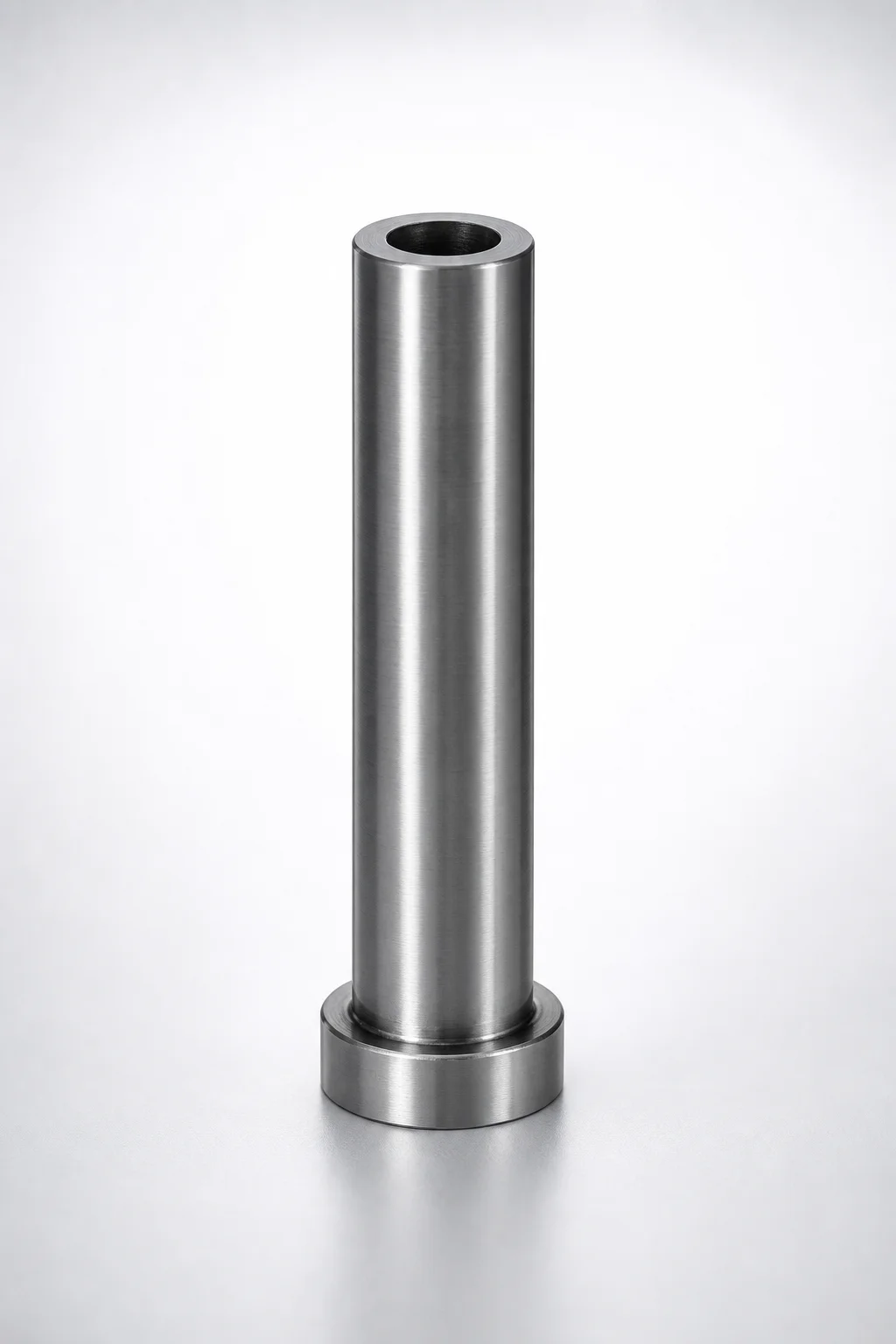
SKD61 Steel Short Straight Ejector Sleeves with Nitride Coating - Head T4
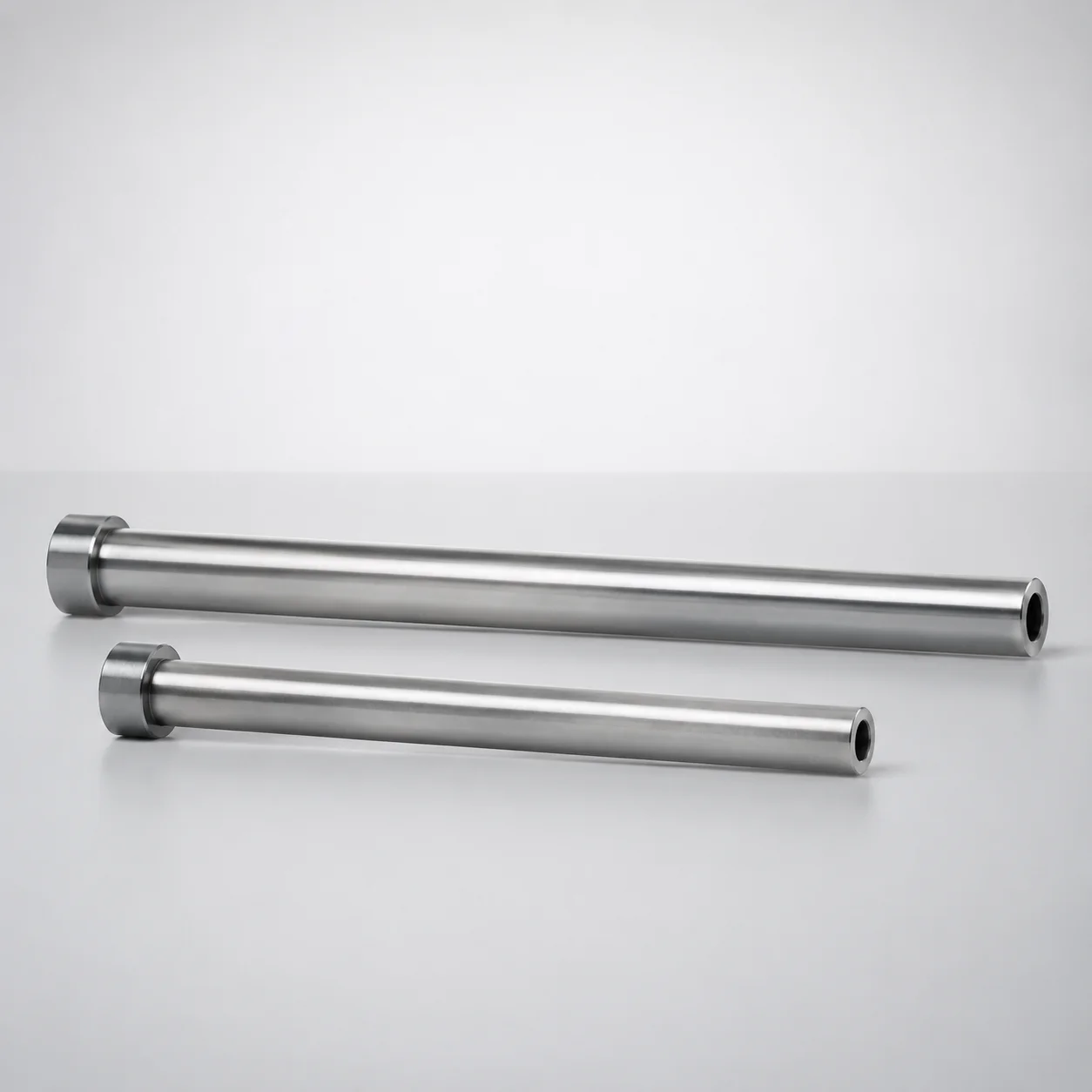
SKD61 Steel Nitrided Straight Ejector Sleeves (ESNV) Head T=4 mm
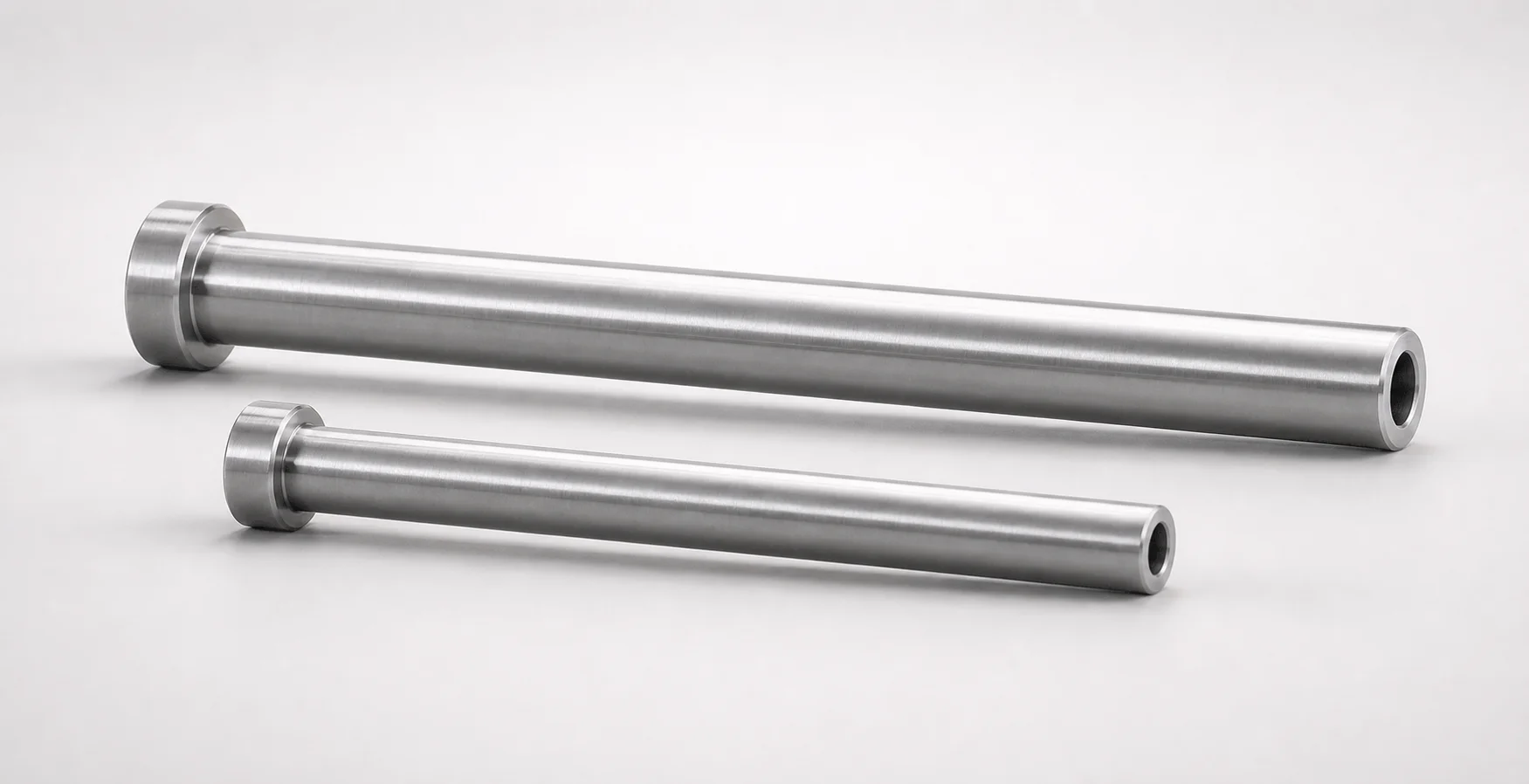
SKD61 Steel Nitrided Straight Ejector Sleeves
SKD61 Steel Nitrided Straight Ejector Sleeves Head T4
JIS Standard SKD61 Steel Nitrided Straight Ejector Sleeves H7 Bore
SKD61 Steel Nitrided Straight Ejector Sleeves
Need Custom Specifications?
Our engineering team can help with custom configurations, material selection, and volume pricing.