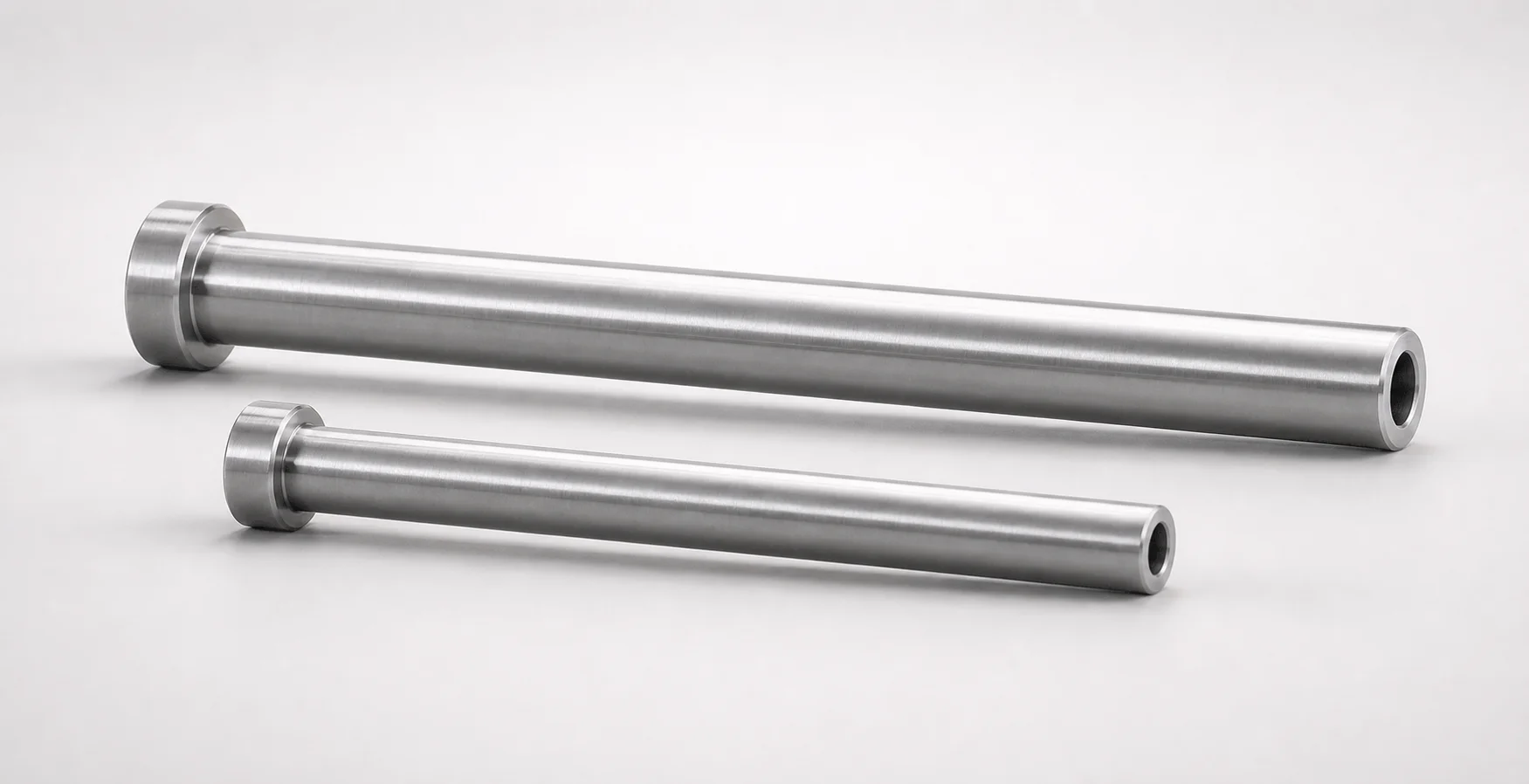
SKD61 Steel Nitrided Straight Ejector Sleeves
SKD61 steel nitrided straight ejector sleeves (ESNV-LC) provide a wear-resistant, single-sleeve solution for stable alignment in ejection systems. The H7 inner bore tolerance supports consistent fit and long production runs.
- Single straight sleeve design for reliable ejector guidance under load
- Nitrided SKD61 construction improves surface wear resistance in molds
- Precision H7 inner diameter tolerance supports tight assembly control
- 4 mm head thickness (T4) for compatibility with standard ejector setups
Specifications
11 configurations available
| D/P (Shaft Diameter) (mm) | V (Hole Diameter) (mm) | L (L dimension) (mm) | type |
|---|---|---|---|
| 4 | 1.5 ~ 2.5 | 50 ~ 200 | - |
| 4.5 | 1.5 ~ 2.5 | 50 ~ 200 | - |
| 5 | 2 ~ 3 | 50 ~ 200 | - |
| 5.5 | 2 ~ 3 | 50 ~ 200 | - |
| 6 | 2.5 ~ 4 | 50 ~ 250 | - |
| 6.5 | 2.5 ~ 4 | 50 ~ 250 | - |
| 7 | 2.5 ~ 5 | 50 ~ 250 | - |
| 7.5 | 3 ~ 4 | 50 ~ 250 | - |
| 8 | 4 ~ 6 | 50 ~ 250 | - |
| 9 | 6 ~ 7 | 80 ~ 300 | - |
| 10 | 6 ~ 8 | 80 ~ 300 | - |
Product Guide
Application Scenarios+
This nitrided straight ejector sleeve with an H7 inner bore tolerance is used in injection mold ejector systems where guided, repeatable movement is critical. In automotive connector and small housing molds, the sleeve helps stabilize ejector pins during high-cycle ejection, reducing the risk of binding caused by minor misalignment and debris.
For appliance and consumer electronics housings, the wear-resistant surface improves long-run performance under repeated start-stop motion and sliding contact between the ejector components.
The T4 head thickness (4 mm) makes this variant suitable for common ejector sleeve mounting layouts where a standardized interface thickness is expected. The ESNV-LC single-sleeve guidance geometry is particularly suited when you want consistent alignment using one integrated sleeve rather than multi-part guide arrangements.
Material & Process Details+
The sleeve is manufactured from SKD61 steel, which is widely used for hot-work and mold applications and is commonly referenced as comparable to AISI H13 in performance range. The component is supplied in a nitrided condition, targeting improved surface hardness and wear resistance in the sliding region.
- Heat treatment / surface treatment: nitriding is applied to create a hard, wear-resistant surface layer while maintaining a tougher core for shock resistance.
- Hardness (typical nitrided guidance): nitriding generally raises surface hardness to a level that supports excellent abrasion and fretting resistance during ejection cycling.
- Trade-off: nitriding improves wear and scuff resistance, but dimensional control must consider nitride case growth and machining allowances to maintain the specified fit.
Compared with non-nitrided guide sleeves, the nitrided SKD61 variant is better suited for long production runs where surface wear and guide friction directly affect ejection stability.
Sizing & Selection Guide+
Select dimensions by matching the ejector system shaft and hole sizes to the sleeve’s provided ranges: D/P (shaft diameter) = 4 ~ 10 mm, V (hole diameter) = 1.5 ~ 6 mm, and L (length) = 50 ~ 200 mm, 50 ~ 250 mm, or 80 ~ 300 mm depending on the specific configuration.
- Match the sliding fit: choose the sleeve size where D/P corresponds to the ejector pin/shaft you will guide, and rely on the H7 inner bore tolerance for precise alignment during assembly.
- Verify packaging into the tool: select L so the guided travel and engagement length meet your ejection stroke and sleeve coverage requirements without bottoming.
- Confirm interface geometry: use V to ensure compatible hole/feature sizing in your holder or mounting layout.
Because H7 tolerances govern fit, ensure your mating shaft dimensions and tool steel shrink/finish processes are consistent to avoid excessive clearance or binding. Head thickness is T4 = 4 mm, which is fixed for this variant.
Frequently Asked Questions
How do I choose the correct sleeve size based on the ejector shaft diameter (D/P 4–10 mm)?+
What does the H7 inner bore tolerance imply for alignment and assembly in an ejector system?+
Why use nitrided SKD61 for straight ejector sleeves instead of an untreated guide?+
How do I select the sleeve length (L options 50–200, 50–250, or 80–300 mm) for my ejection stroke?+
Is the T4 head thickness (4 mm) compatible with standard ejector sleeve mounting layouts?+
Related Products
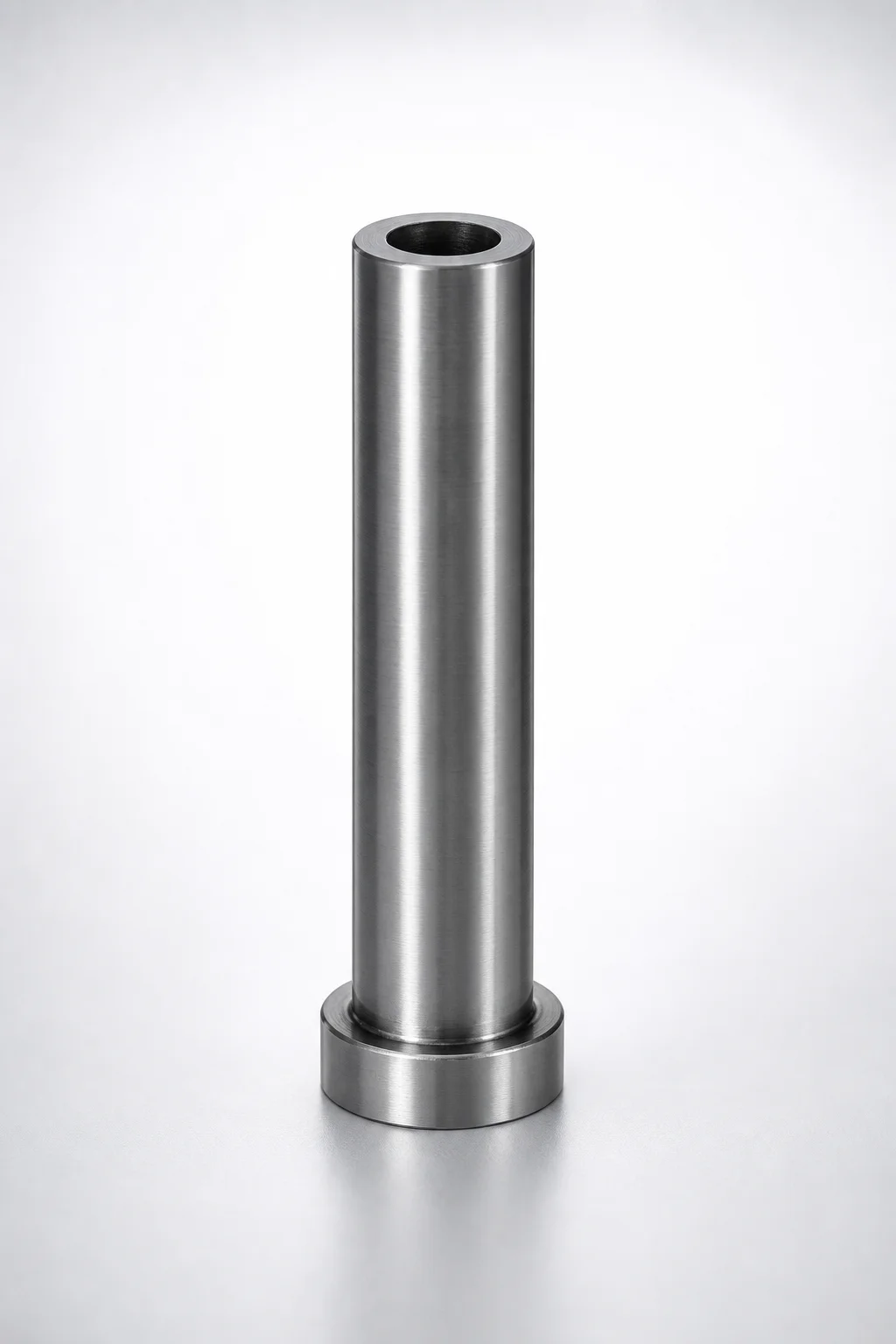
SKD61 Steel Short Straight Ejector Sleeves with Nitride Coating - Head T4
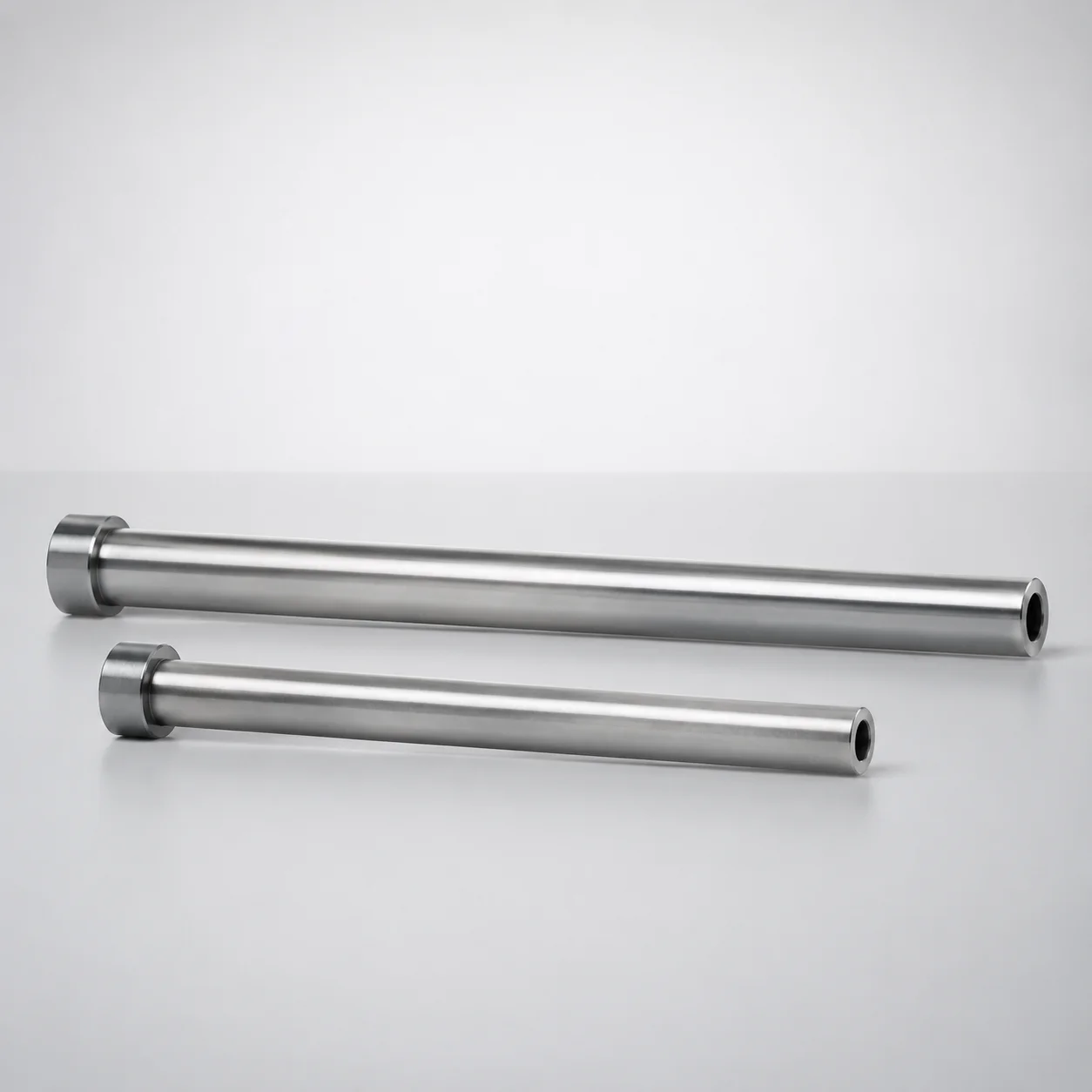
SKD61 Steel Nitrided Straight Ejector Sleeves (ESNV) Head T=4 mm
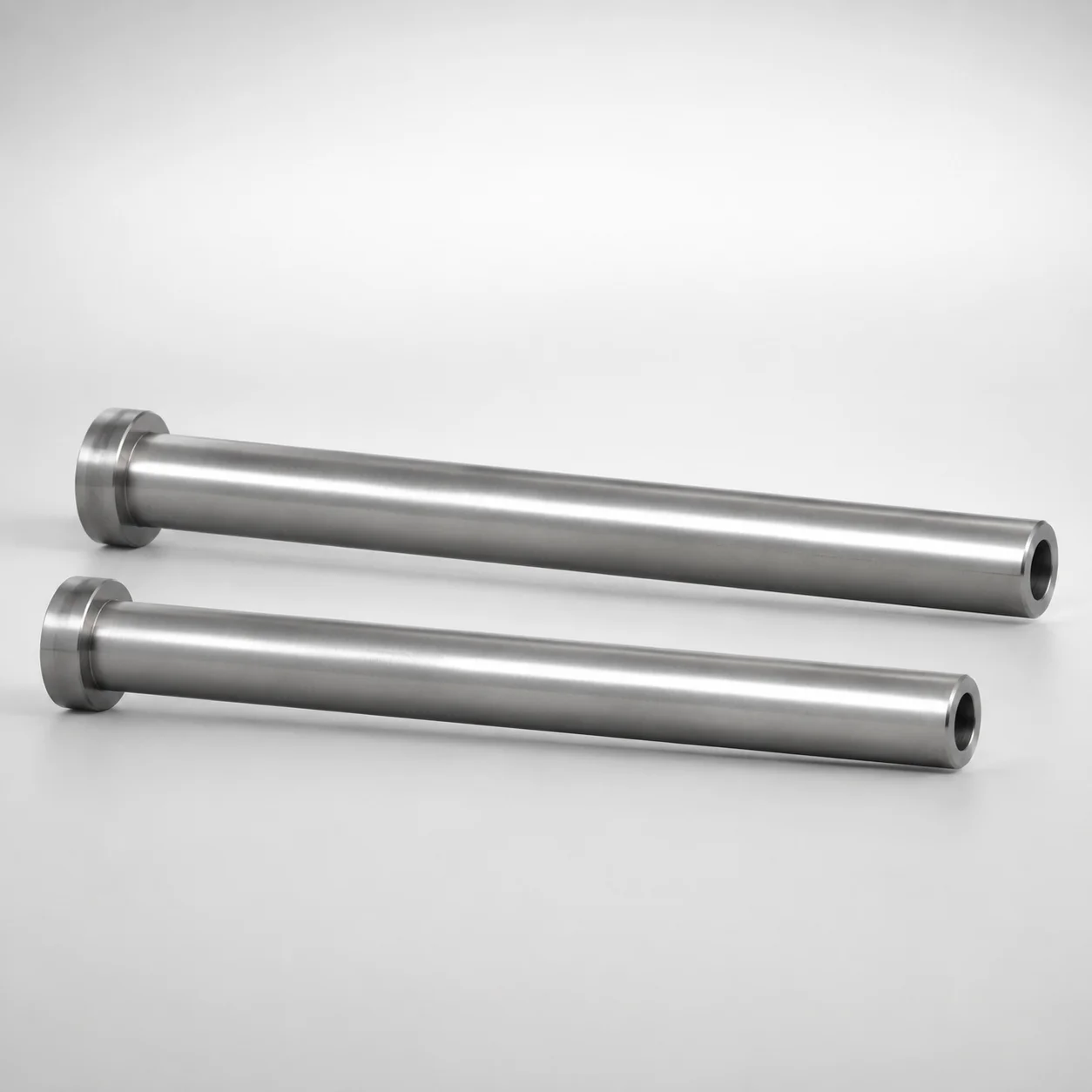
SKD61 Steel Nitrided Straight Ejector Sleeves Head T4
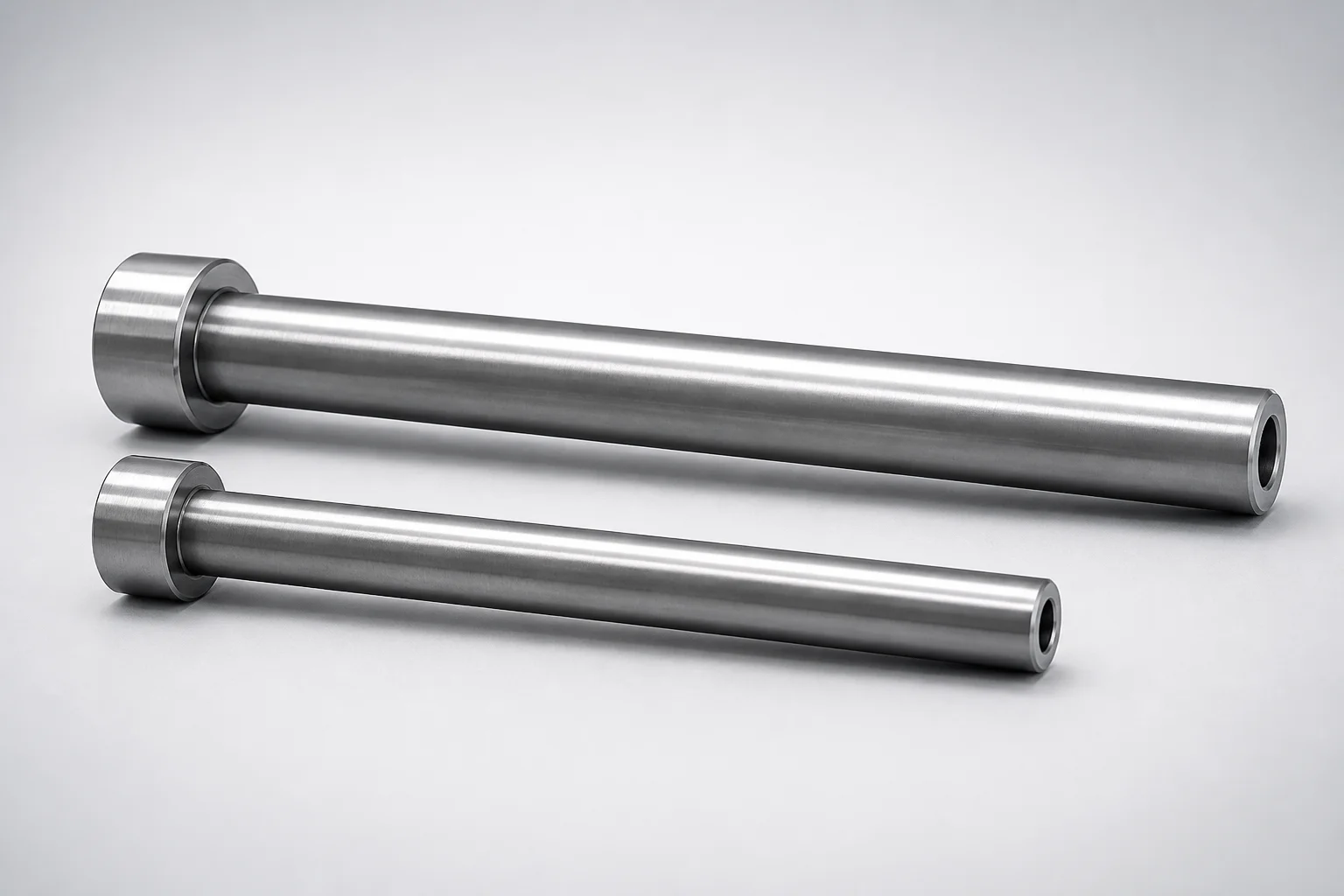
JIS Standard SKD61 Steel Nitrided Straight Ejector Sleeves H7 Bore
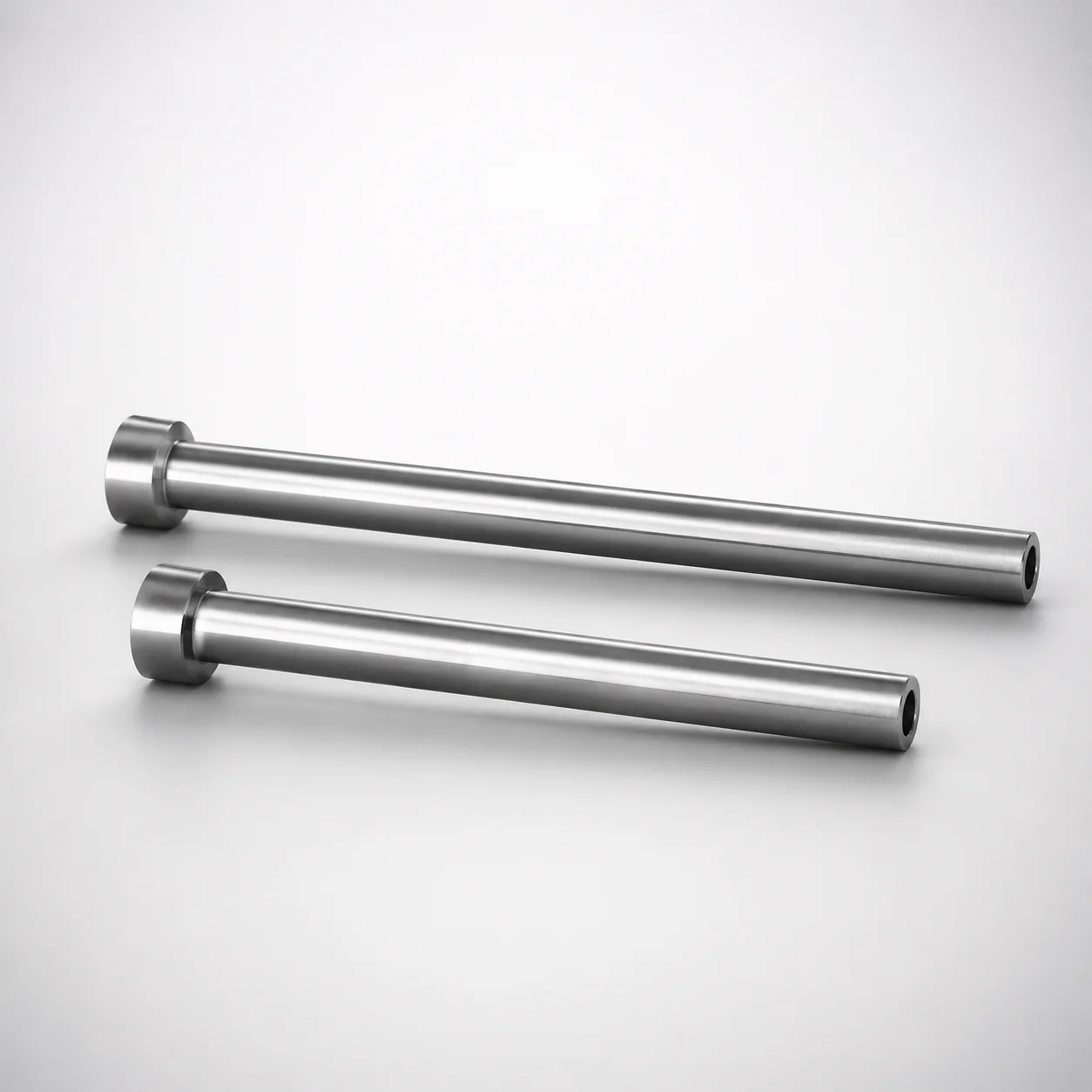
SKD61 Steel Nitrided Straight Ejector Sleeves
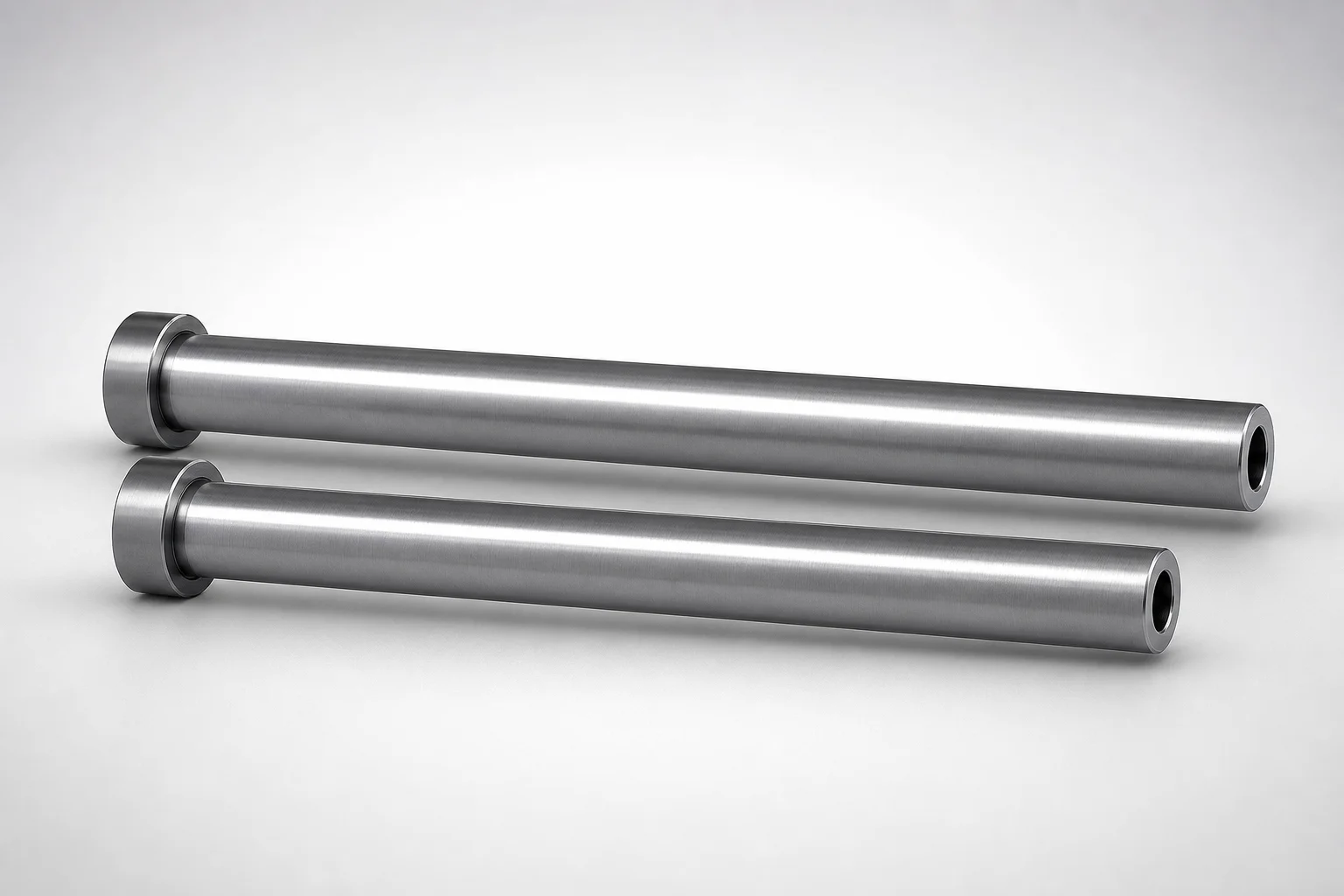
JIS Standard SKD61 Steel Nitrided Straight Ejector Sleeves
Need Custom Specifications?
Our engineering team can help with custom configurations, material selection, and volume pricing.