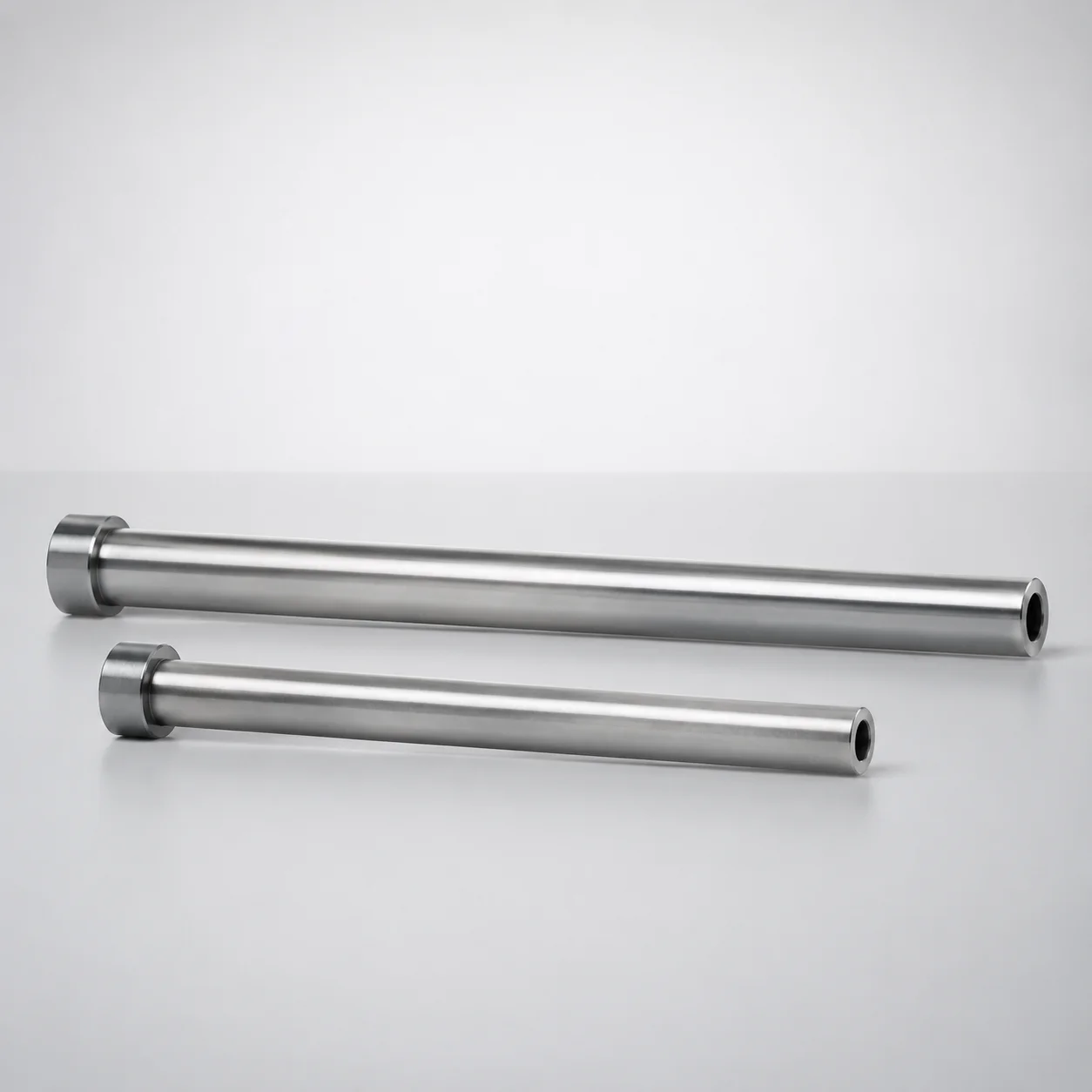
SKD61 Steel Nitrided Straight Ejector Sleeves (ESNV) Head T=4 mm
Straight ejector sleeves (SKD61 steel) feature a nitrided surface and ESNV construction to support stable sleeve guidance under repeated ejection cycles. The Head T=4 mm design helps ensure reliable alignment in precision molds.
- ESNV single-sleeve design for consistent alignment during ejection
- Nitrided SKD61 steel for improved wear resistance and surface durability
- H7 inner diameter tolerance supports tight fit for accurate guidance
- Head thickness T4 suitable for standard straight ejector sleeve assemblies
Specifications
11 configurations available
| D/P (Shaft Diameter) (mm) | V (Hole Diameter) (mm) | L (L dimension) (mm) | type |
|---|---|---|---|
| 4 | 1.5 ~ 2.5 | 75 ~ 200 | - |
| 4.5 | 1.5 ~ 2.5 | 75 ~ 200 | - |
| 5 | 2 ~ 3 | 75 ~ 200 | - |
| 5.5 | 2 ~ 3.5 | 75 ~ 200 | - |
| 6 | 2.5 ~ 4 | 75 ~ 250 | - |
| 6.5 | 2.5 ~ 4 | 75 ~ 250 | - |
| 7 | 2.5 ~ 5 | 75 ~ 250 | - |
| 7.5 | 3 ~ 5 | 75 ~ 250 | - |
| 8 | 4 ~ 6 | 75 ~ 250 | - |
| 9 | 6 ~ 7 | 100 ~ 300 | - |
| 10 | 6 ~ 8 | 100 ~ 300 | - |
Product Guide
Application Scenarios+
These SKD61 nitrided straight ejector sleeves are used inside injection mold base tooling to guide ejector pins and maintain straight, repeatable ejection throughout production cycles. The nitrided surface helps resist scuffing and fretting where the moving ejector components slide under load.
- Automotive electrical connector molds: In long-run tooling where many parts cycle at high frequency, the ESNV single-sleeve guidance supports stable pin alignment and reduces the risk of ejector mis-travel.
- Precision consumer appliance housings: For molds requiring consistent ejection across multiple cavities, the H7 inner-bore tolerance supports a tight guidance fit for smooth movement and dimensional stability.
- General straight ejector sleeve assemblies: The Head T=4 mm variant is suited to standard straight sleeve stack-ups where head thickness must match the assembly interface.
Material & Process Details+
This component uses SKD61 steel, selected for its balance of hardenability, toughness, and wear resistance typical of hot-work and mold components. SKD61 is commonly regarded as equivalent to AISI H13 in practice, supporting robust performance under cyclic mechanical loading.
- Nitriding: The sleeve includes a nitrided surface to increase surface hardness and improve wear resistance at the sliding guidance area. This surface treatment is especially beneficial for limiting galling during repeated ejection.
- Hardness / trade-off: Nitriding primarily raises near-surface hardness while retaining a tougher steel core. This helps balance wear resistance with resistance to cracking compared with fully high-hardness through-treatment.
- Manufacturing approach: A hardened/tempered SKD61 base is typically machined to size, then nitrided to finalize the low-friction, wear-resistant guidance surface.
If alternative steels were used, they would typically be selected based on whether priority is higher core toughness or higher surface wear performance; this SKD61 + nitride combination targets reliable guidance life.
Sizing & Selection Guide+
To select the correct ejector sleeve, match the sleeve’s bore and overall length to your ejector pin and cavity/core geometry. This variant is specified for D/P (shaft diameter) = 4 ~ 10 mm and V (hole diameter) = 1.5 ~ 6 mm.
- Step 1: Choose guidance fit via inner bore (V): Select the sleeve with the required H7 inner-bore tolerance to achieve accurate, repeatable pin guidance. Use the closest matching V value within 1.5 ~ 6 mm.
- Step 2: Confirm shaft diameter (D/P): Ensure the intended ejector shaft falls within 4 ~ 10 mm so the guidance relationship is maintained.
- Step 3: Set length (L): Use one of the available L ranges—75–200, 75–250, or 100–300 mm—based on your stack height and required support length.
- Head interface: The Head T=4 mm is fixed for this series, so verify it matches the assembly seating thickness in your tool design.
Because the bore is specified to H7, maintain proper clearance with the ejector pin per your fit standard; tighter guidance reduces side play but may increase sensitivity to surface finish and pin alignment.
Frequently Asked Questions
What shaft diameter range (D/P) and hole diameter range (V) are compatible with SKD61 nitrided ESNV straight ejector sleeves?+
This series supports D/P (shaft diameter) = 4 ~ 10 mm and V (hole diameter) = 1.5 ~ 6 mm. Select the sleeve so your ejector shaft diameter falls within the D/P range and the guidance bore matches the required V value.
How does the H7 inner bore tolerance affect ejector sleeve guidance fit in multi-cavity molds?+
The inner bore is specified to H7, which is intended to provide a tight, controlled guidance fit for the ejector pin. In multi-cavity applications, this helps maintain straight ejection and reduces mis-travel sensitivity caused by clearance variation.
For best results, ensure pin alignment and surface finish are consistent with the H7 guidance requirement.
What is the benefit of nitriding SKD61 for straight ejector sleeve sliding surfaces?+
The sleeve uses nitrided SKD61 to improve sliding wear resistance at the guidance interface. Nitriding strengthens the near-surface layer to help resist scuffing and fretting during repeated ejection cycles.
The core retains toughness characteristics typical of SKD61/H13-class steels, supporting durability rather than brittle wear-only performance.
Is the head thickness (T=4 mm) fixed, and how should it be accounted for in ejector sub-assembly stack-ups?+
For this SKU series, the head thickness is specified as Head T=4 mm and is treated as fixed. When designing the ejector sleeve/pin assembly, confirm this thickness matches the seating or locating interface in your straight sleeve stack-up.
What length options (L) are available, and how do they map to required support for stable ejection?+
Available L ranges are 75–200 mm, 75–250 mm, and 100–300 mm. Choose a longer support length when additional guidance stability is needed over the stroke and when your mold’s ejector layout requires deeper sleeve engagement.
Related Products
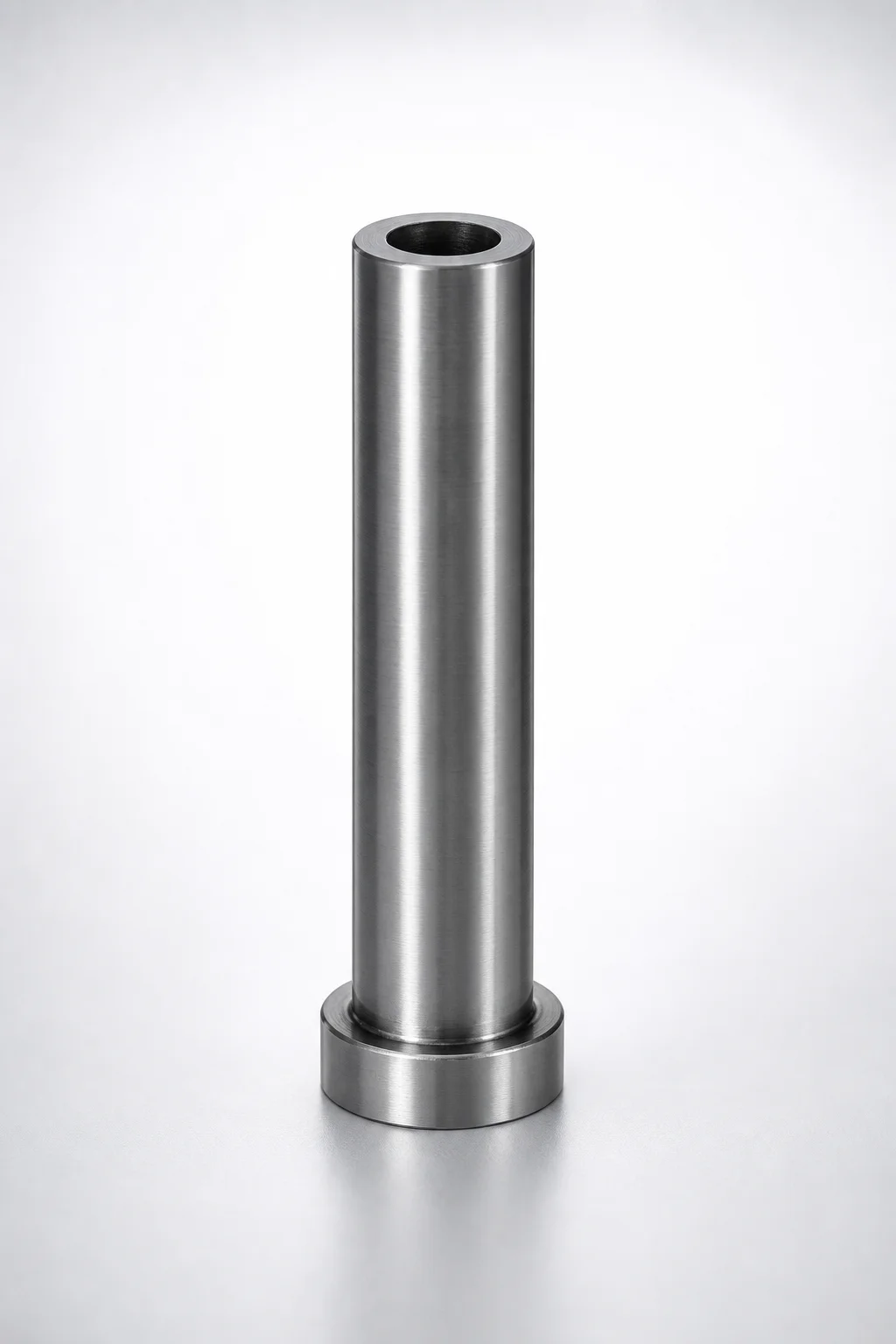
SKD61 Steel Short Straight Ejector Sleeves with Nitride Coating - Head T4
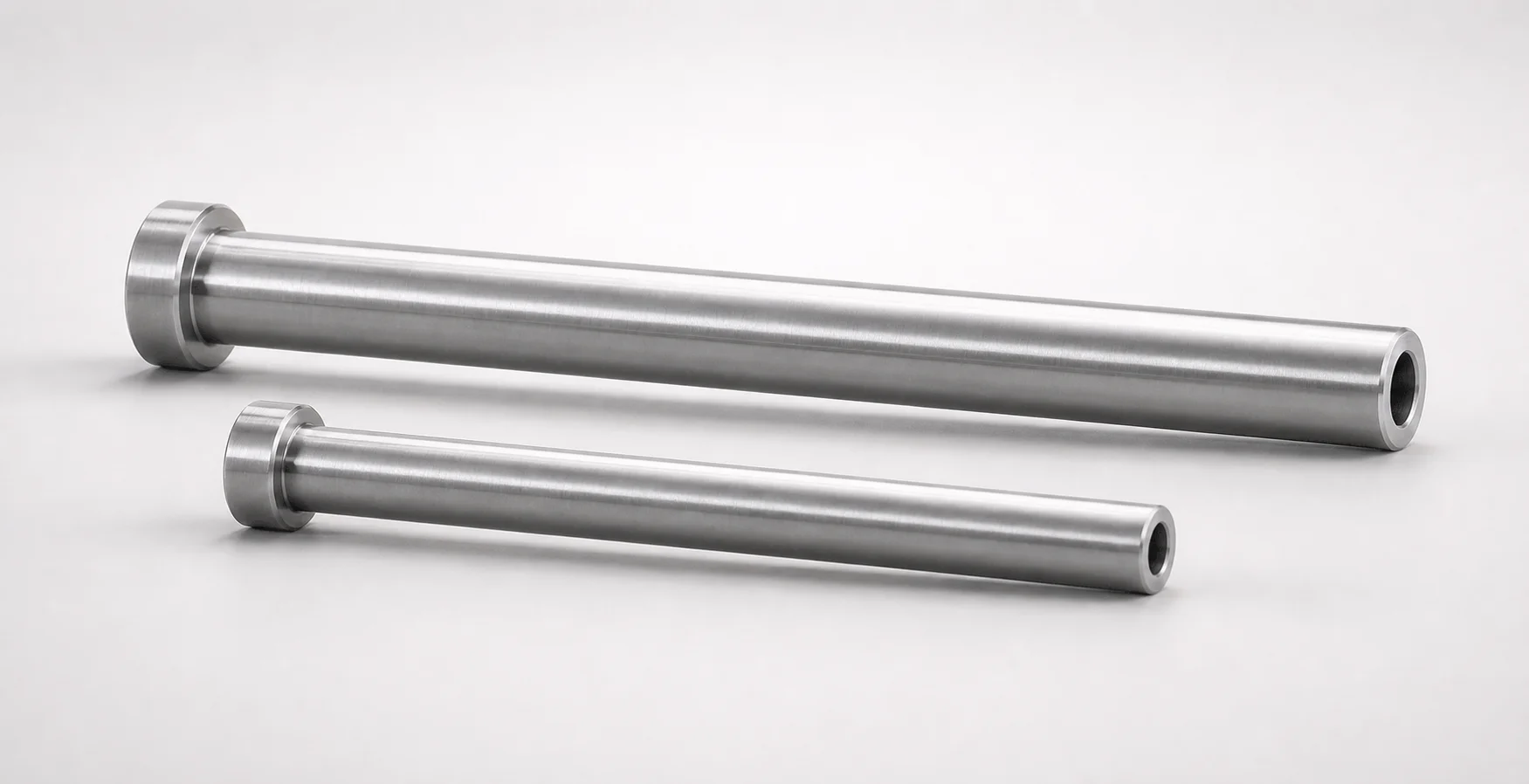
SKD61 Steel Nitrided Straight Ejector Sleeves
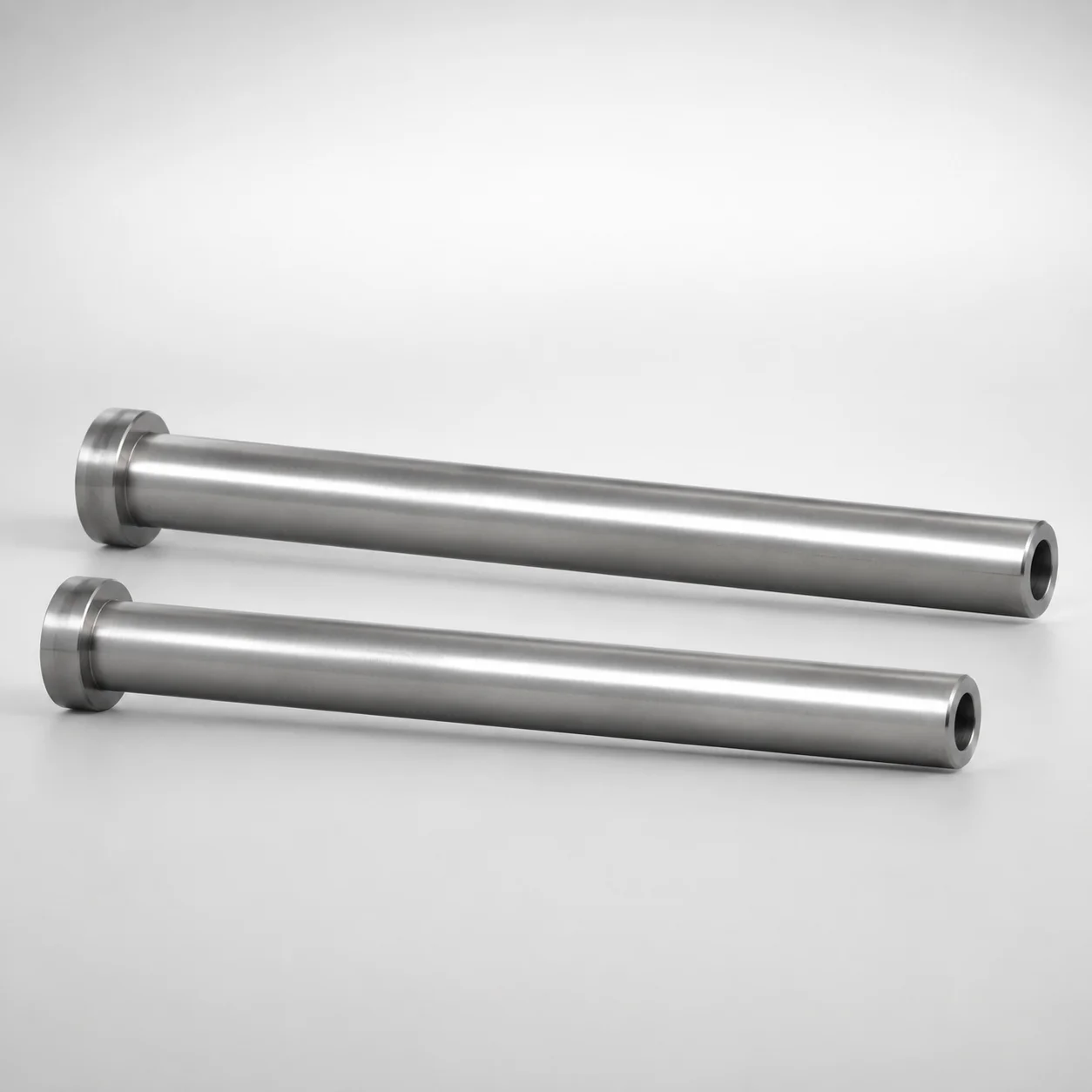
SKD61 Steel Nitrided Straight Ejector Sleeves Head T4
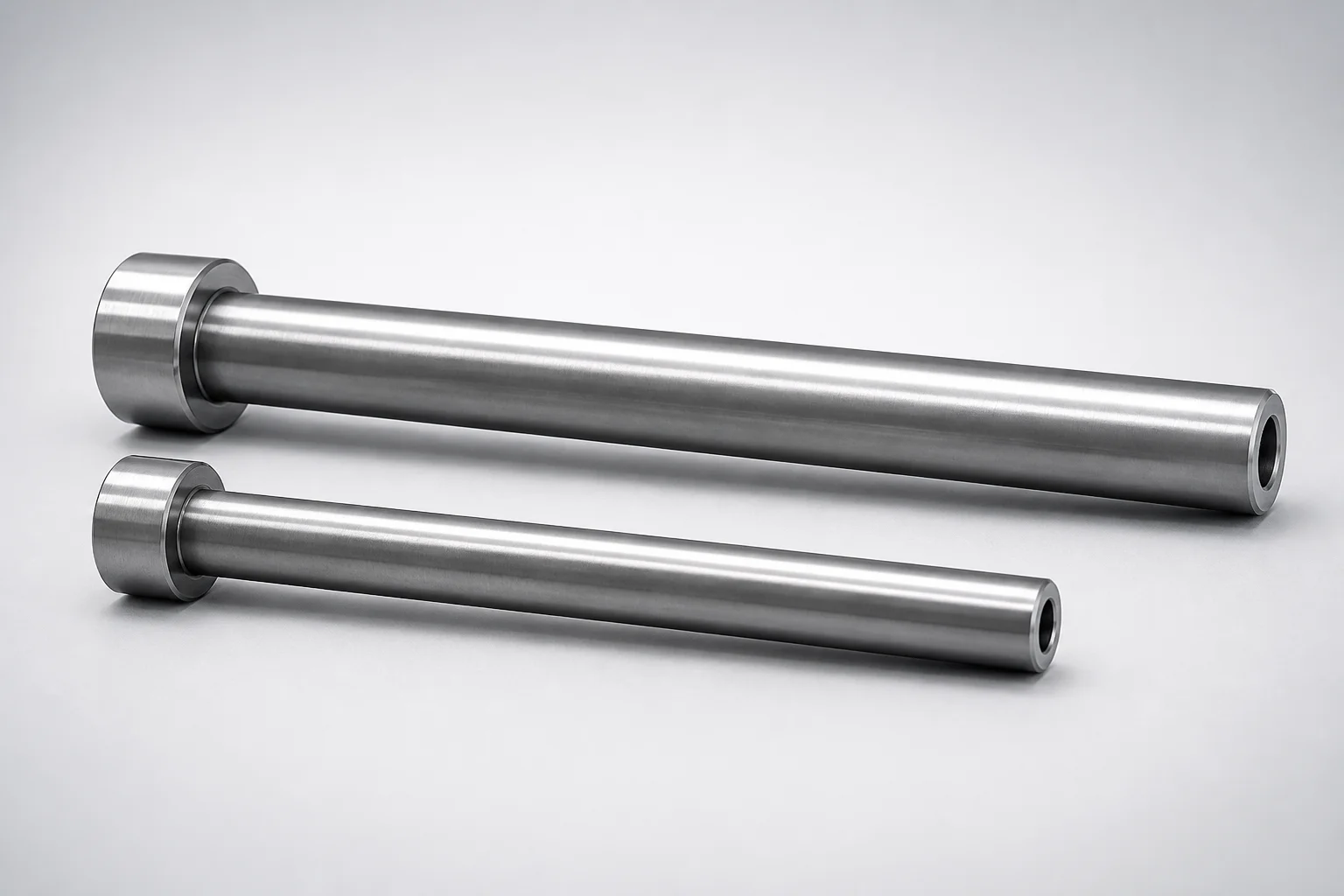
JIS Standard SKD61 Steel Nitrided Straight Ejector Sleeves H7 Bore
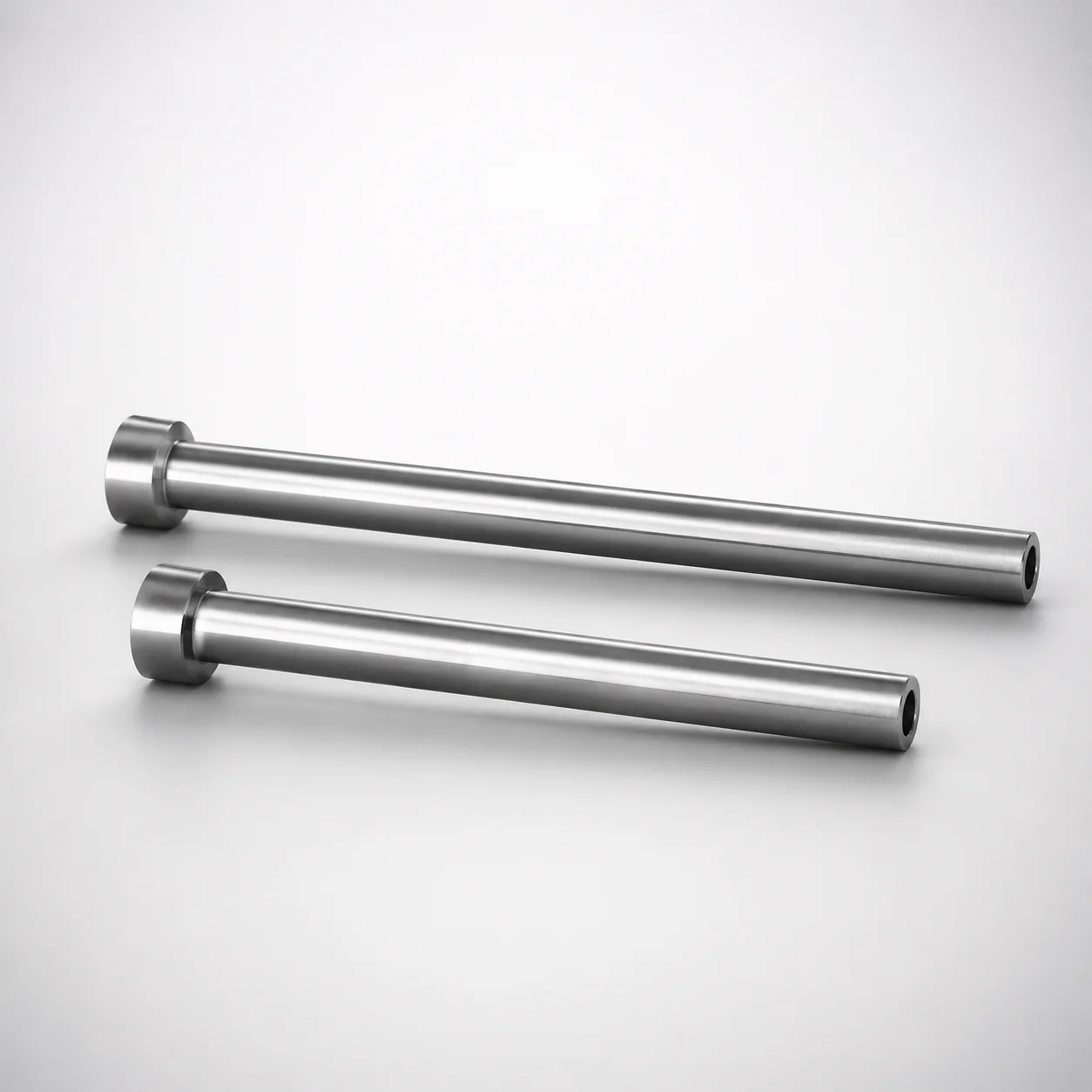
SKD61 Steel Nitrided Straight Ejector Sleeves
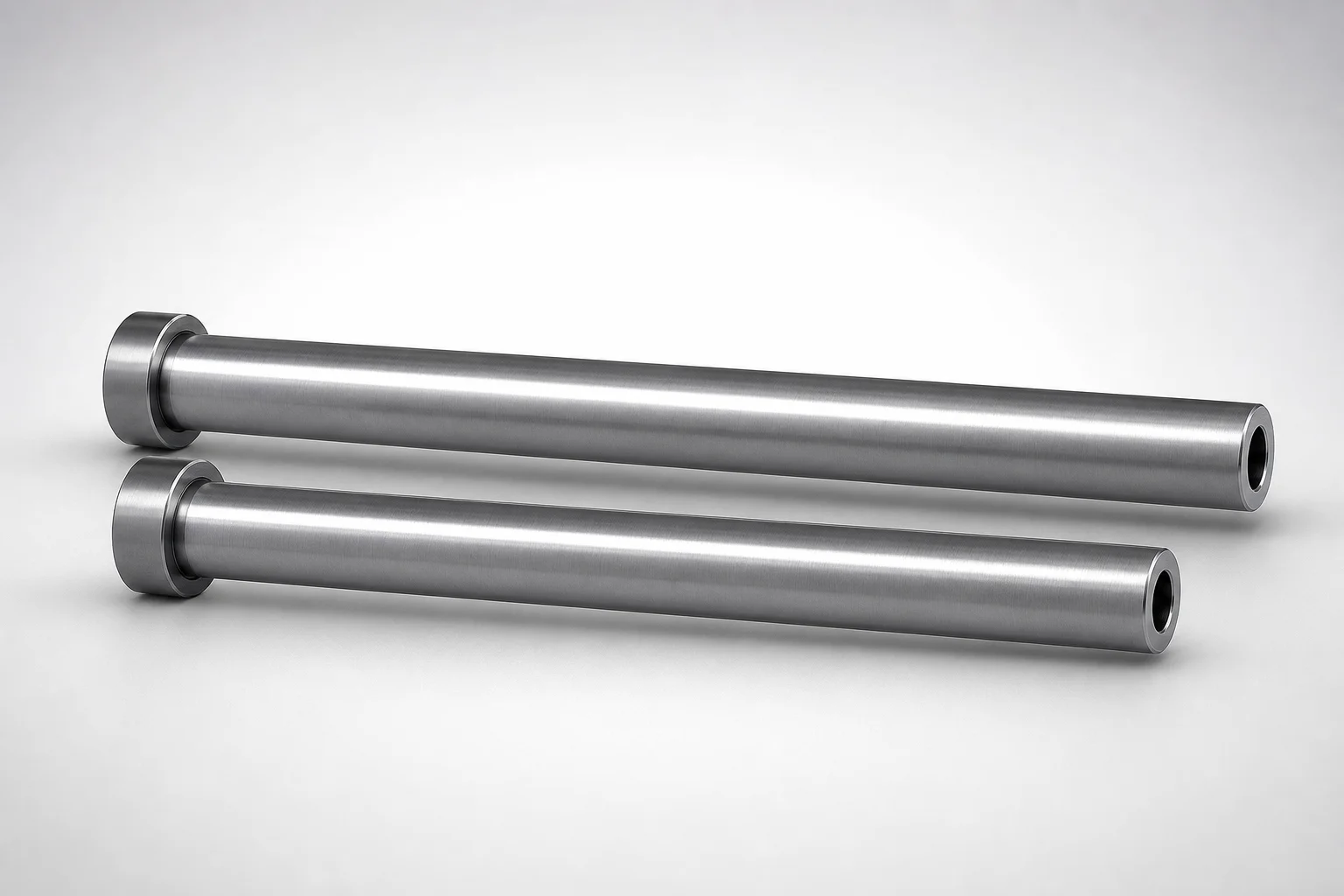
JIS Standard SKD61 Steel Nitrided Straight Ejector Sleeves
Need Custom Specifications?
Our engineering team can help with custom configurations, material selection, and volume pricing.