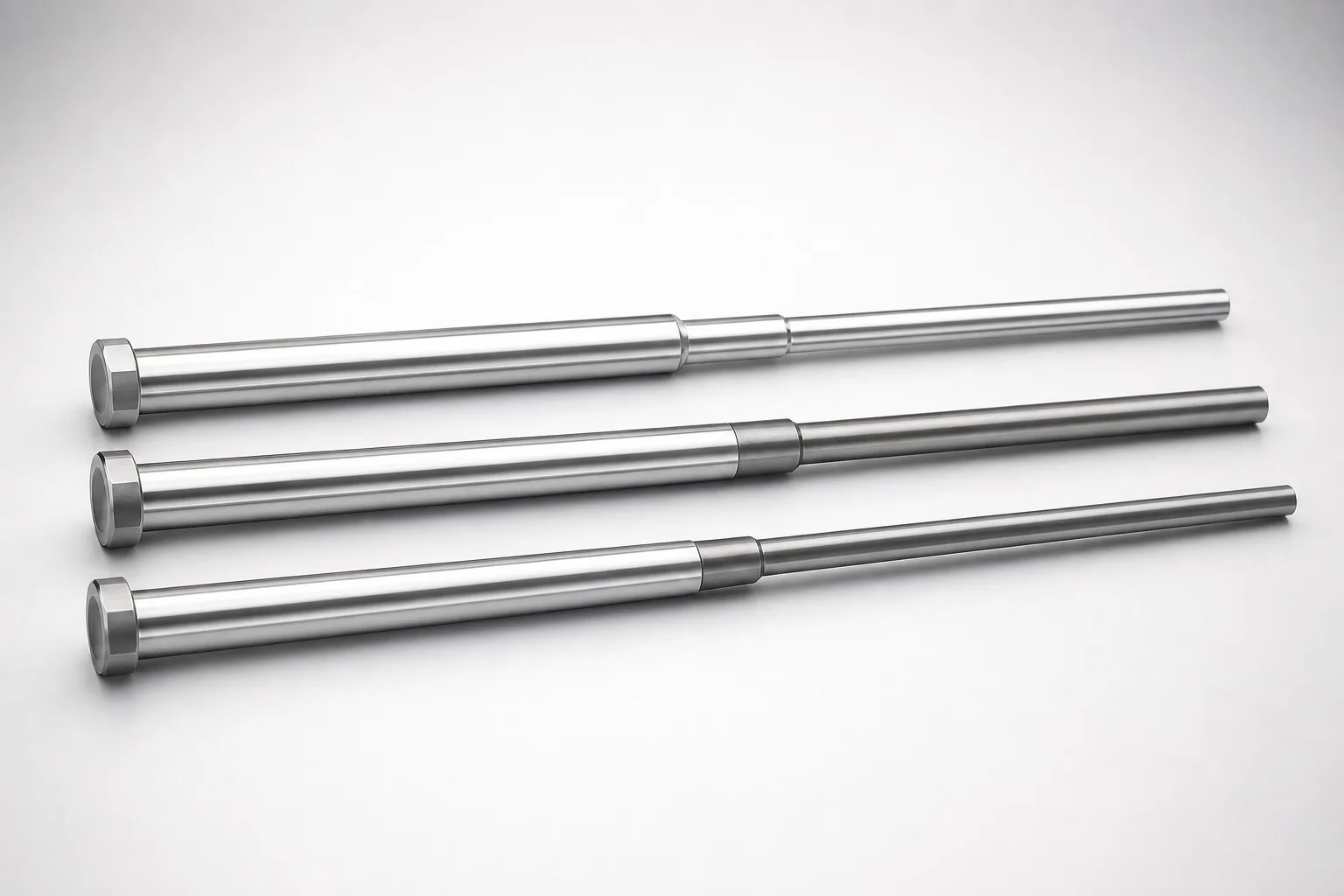
JIS Standard SKH51 Steel Precision Stepped Ejector Sleeves
Precision stepped ejector sleeves (SKH51 steel) (ESVFX) are built as a single sleeve for stable guided ejection in precision mold assemblies, with a tapered geometry that improves seating and alignment. Tight inner-bore control supports consistent performance over repeated cycles.
- Single sleeve with tapered stepped profile for reliable location during ejection
- SKH51 steel construction with wear-resistant performance for long service life
- Inner dia. tolerance of +0.005/0 for controlled fit with mating ejector components
- Designed for JIS mold build-ups where precision guided movement is required
Specifications
6 configurations available
| D/P (Shaft Diameter) (mm) | V (Hole Diameter) (mm) | P (Tip Diameter) (mm) | L (L dimension) (mm) | Dimension N (mm) | S (V hole diameter length) (mm) | type |
|---|---|---|---|---|---|---|
| 3 | 1 ~ 1.5 | 2.5 ~ 3 | 100 ~ 150 | 50 ~ 120 | 2 ~ 4 | - |
| 4 | 1 ~ 2 | 3 ~ 4 | 100 ~ 150 | 50 ~ 120 | 2 ~ 6 | - |
| 5 | 1 ~ 3 | 3.5 ~ 5 | 100 ~ 200 | 50 ~ 170 | 2 ~ 9 | - |
| 6 | 1 ~ 4 | 4.5 ~ 6 | 100 ~ 200 | 50 ~ 170 | 2 ~ 12 | - |
| 7 | 1 ~ 5 | 5.5 ~ 7 | 100 ~ 200 | 50 ~ 170 | 2 ~ 15 | - |
| 8 | 1 ~ 6 | 6.5 ~ 8 | 100 ~ 200 | 50 ~ 170 | 2 ~ 18 | - |
Product Guide
Application Scenarios+
Guided ejection systems rely on straight ejector sleeves to keep the ejector motion stable under load. This tapered, single-sleeve stepped design is well-suited for precision mold assemblies where alignment directly impacts part surface quality and cycle reliability.
In automotive connector and housing molds, the controlled inner-bore tolerance supports consistent guidance during repeated ejection strokes, helping reduce side-loading and sticking as molded plastic cools.
For consumer electronics and small mechanical components, this variant’s tight inner diameter control and stepped profile help maintain concentric movement for thin-wall or tight-tolerance geometries.
For medical device housings and other precision parts, the JIS-based sleeve approach is used to improve seating and positioning, supporting repeatable ejection with reduced wobble.
- Tapered single-sleeve geometry improves seating and alignment during ejection
- Tight inner-bore tolerance (+0.005/0) supports controlled fit with mating ejector elements
Material & Process Details+
This ejector sleeve is manufactured from JIS Standard SKH51 precision steel, selected for its balance of wear resistance and toughness in guided motion components.
In tooling usage, SKH51 is typically supplied for precision applications in a hardened condition that supports stable geometry under cyclic contact. Final performance is achieved through appropriate quench-and-temper and finishing processes to lock in hardness while maintaining toughness against shock loads.
- Wear resistance: improved due to the high-hardness SKH51 tool-steel character, supporting long service life during repeated ejection
- Toughness trade-off: higher hardness improves wear but can reduce tolerance to impact if over-thermal treated
Comparison: compared with softer construction steels, SKH51 provides superior abrasion resistance for inner-bore guidance. Compared with higher-alloy wear grades, it still prioritizes precision stability for ejector sleeve fit and motion control.
Sizing & Selection Guide+
Select dimensions to match both the ejector shaft that passes through the sleeve and the guided hole interface where the sleeve seats in the mold base.
- D/P (shaft diameter) must match the mating ejector element within the available range: 3, 4, 5, 6, 7, 8 mm.
- V (hole diameter) defines the inner bore size depending on configuration (1 ~ 1.5, 1 ~ 2, 1 ~ 3, 1 ~ 4, 1 ~ 5, 1 ~ 6 mm).
- P (tip diameter) is chosen to suit the stepped geometry: 2.5 ~ 3, 3 ~ 4, 3.5 ~ 5, 4.5 ~ 6, 5.5 ~ 7, 6.5 ~ 8 mm.
Choose L (100 ~ 150 mm or 100 ~ 200 mm) for required engagement length, and N (50 ~ 120 mm or 50 ~ 170 mm) for overall layout constraints. S (2 ~ 4, 2 ~ 6, 2 ~ 9, 2 ~ 12, 2 ~ 15, 2 ~ 18 mm) should match the available V-hole length.
Because the inner-bore control is specified as +0.005/0, maintain a controlled fit with the mating ejector component to ensure consistent guidance and minimize side-loading.
Frequently Asked Questions
How do I choose D/P (shaft diameter) vs. the inner hole V to ensure guided ejection fit?+
Match D/P to the mating ejector shaft diameter from the available set (3, 4, 5, 6, 7, 8 mm). Then select the corresponding inner-bore configuration using V (1 ~ 1.5 up to 1 ~ 6 mm depending on the sleeve variant).
For stable guidance, rely on the specified inner-bore control of +0.005/0 to maintain consistent clearance/fit with the ejector component.
What are the practical implications of the tapered single-sleeve stepped design (ESVFX) for alignment and seating?+
The sleeve is built as a single tapered stepped unit, which improves seating and alignment during ejection. This geometry helps maintain concentric guided motion, particularly when parts eject under load.
In design terms, ensure the selected L engagement length (100 ~ 150 or 100 ~ 200 mm) provides adequate guidance distance for your stroke and part geometry.
Which length parameters (L, N, S) should I use for cavity/core layout constraints?+
Use L to define the overall sleeve length needed for engagement: 100 ~ 150 mm or 100 ~ 200 mm. Use N for the constrained dimensional block (50 ~ 120 mm or 50 ~ 170 mm) based on your mold base and mounting space.
Use S to match the required V-hole diameter length: 2 ~ 4 through 2 ~ 18 mm depending on design.
How does SKH51 steel affect wear resistance and the hardness/toughness balance for ejection sleeve service?+
SKH51 is chosen to provide wear resistance during repeated guided ejection cycles in precision mold builds. Proper quench-and-temper processing in the hardened condition supports stable inner-bore performance.
As hardness increases, toughness can decrease if the treatment is not optimized, so avoid over-aggressive thermal processing that could reduce resistance to shock.
Is this sleeve available in multiple size ranges for V hole diameter and P tip diameter, and how should I correlate them?+
Yes. The available ranges include V (1 ~ 1.5, 1 ~ 2, 1 ~ 3, 1 ~ 4, 1 ~ 5, 1 ~ 6 mm) and P (2.5 ~ 3, 3 ~ 4, 3.5 ~ 5, 4.5 ~ 6, 5.5 ~ 7, 6.5 ~ 8 mm).
To correlate them correctly, select the configuration that matches your ejector shaft diameter (D/P) and the required stepped tip geometry while keeping the controlled inner-bore fit (+0.005/0) for guidance accuracy.
Related Products
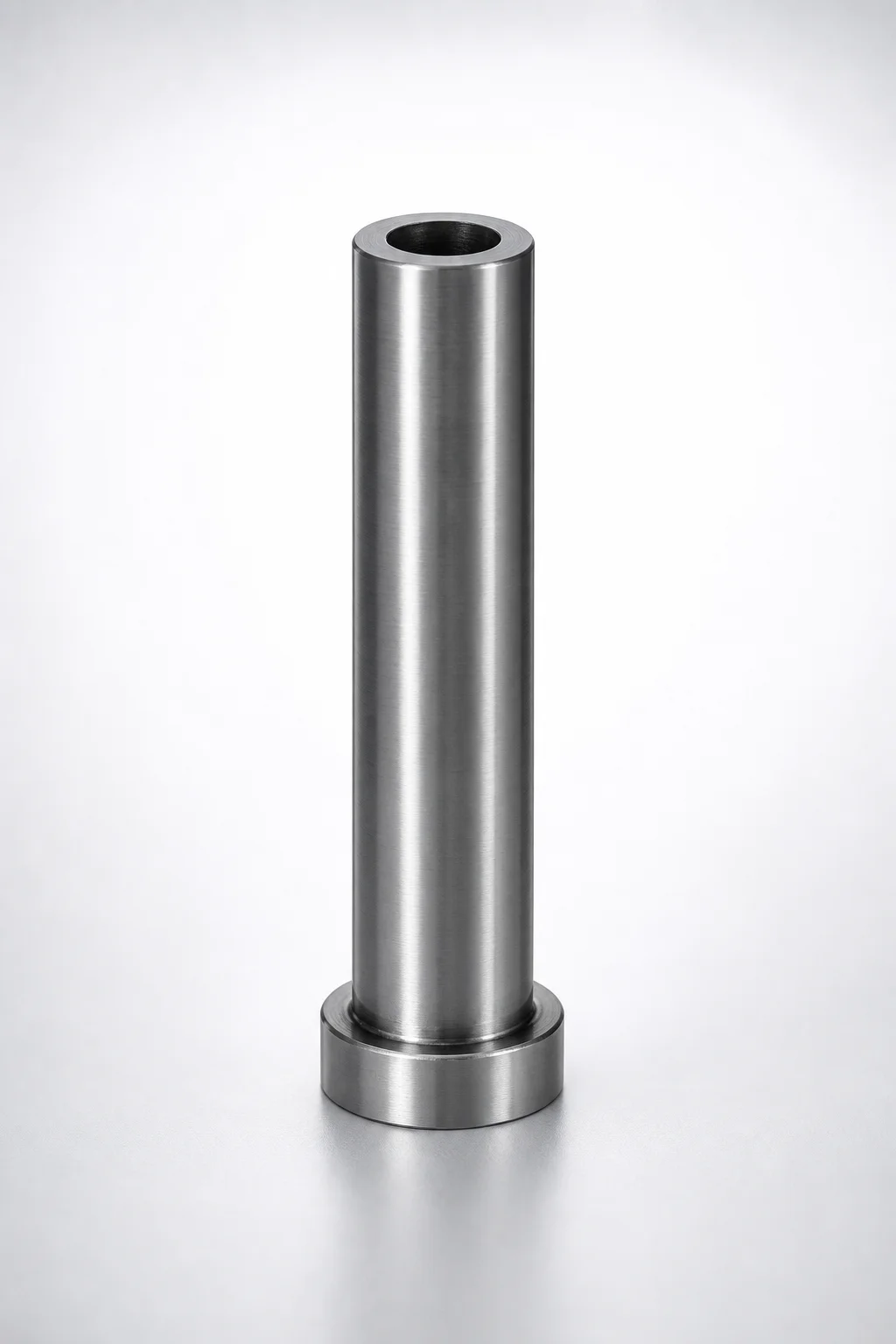
SKD61 Steel Short Straight Ejector Sleeves with Nitride Coating - Head T4
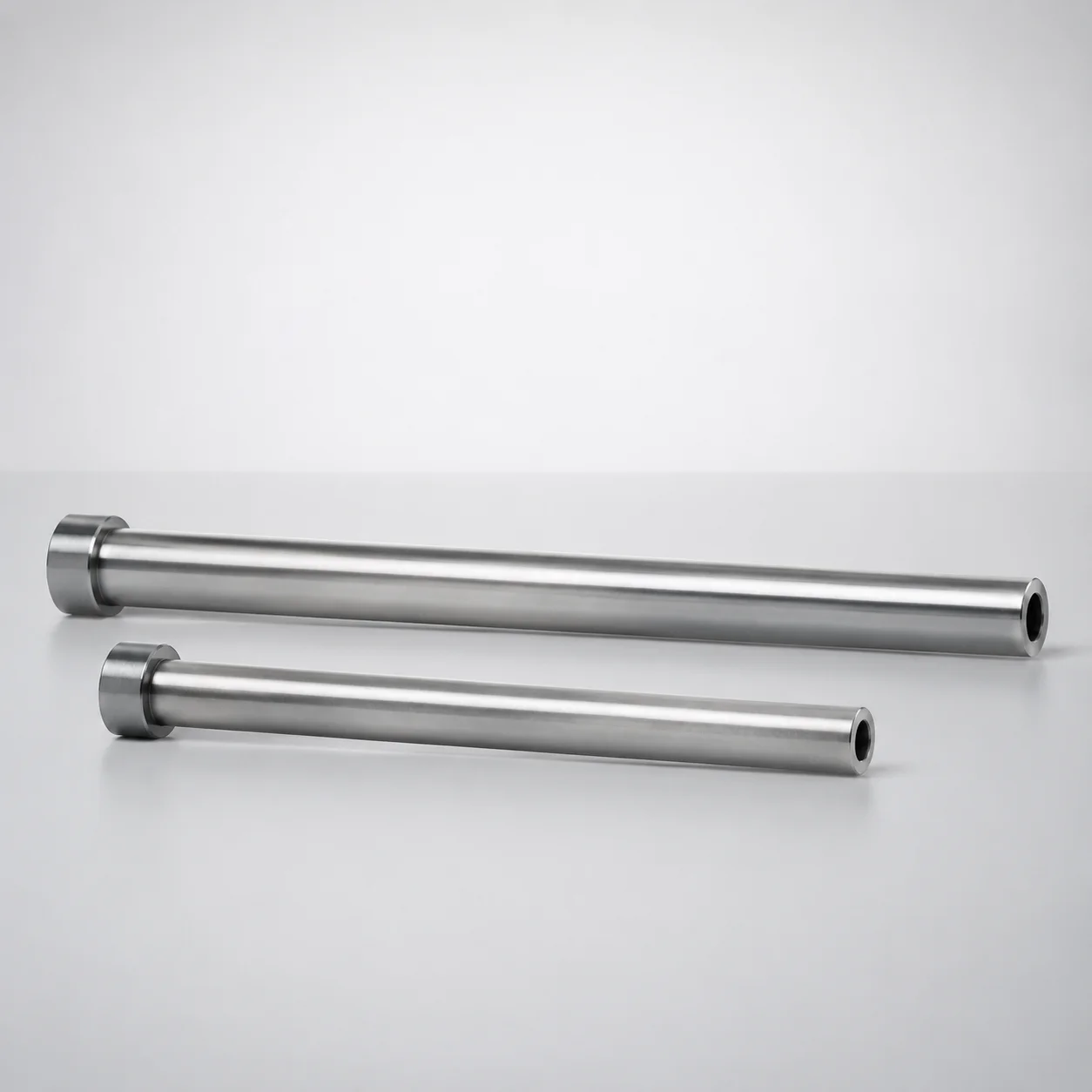
SKD61 Steel Nitrided Straight Ejector Sleeves (ESNV) Head T=4 mm
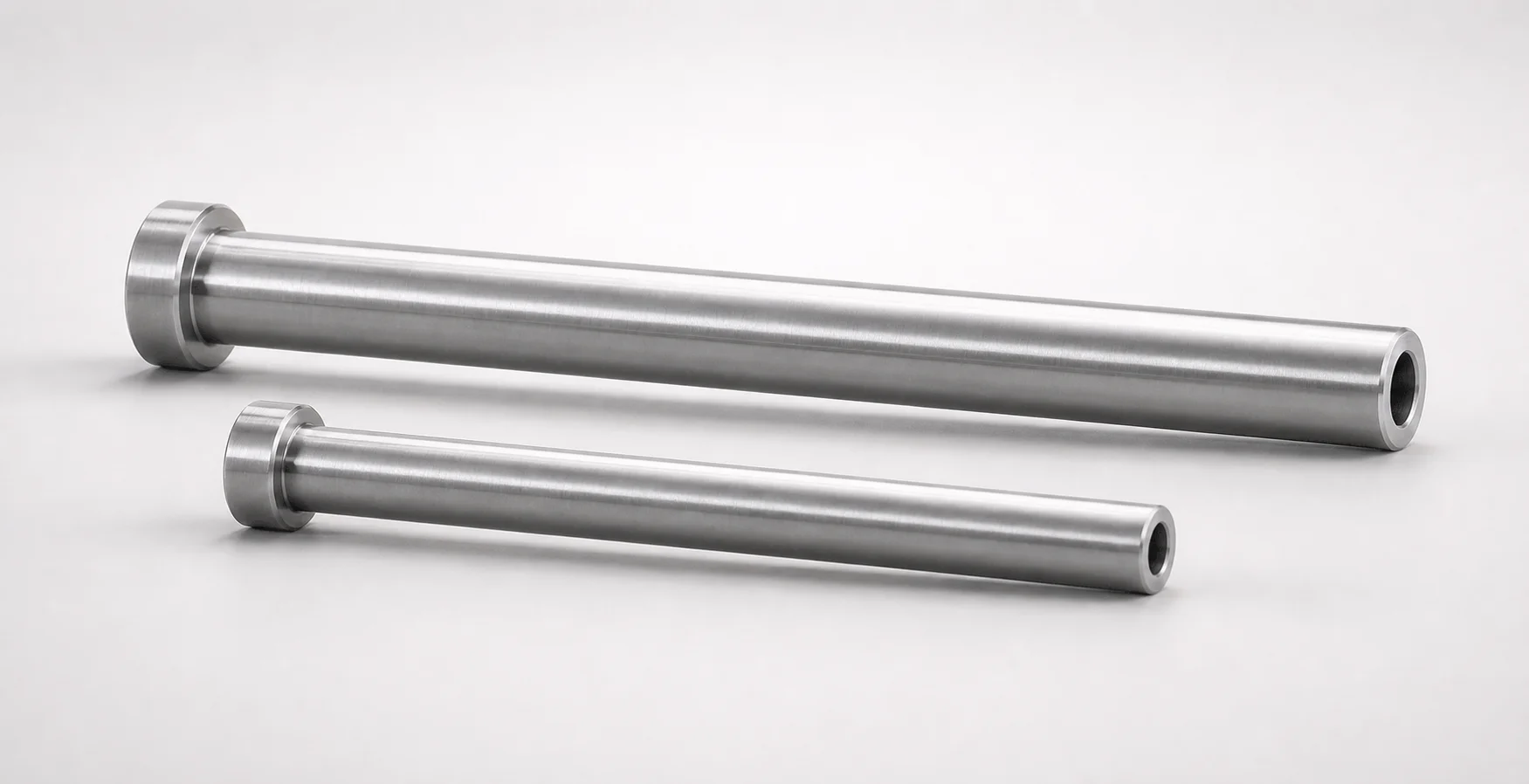
SKD61 Steel Nitrided Straight Ejector Sleeves
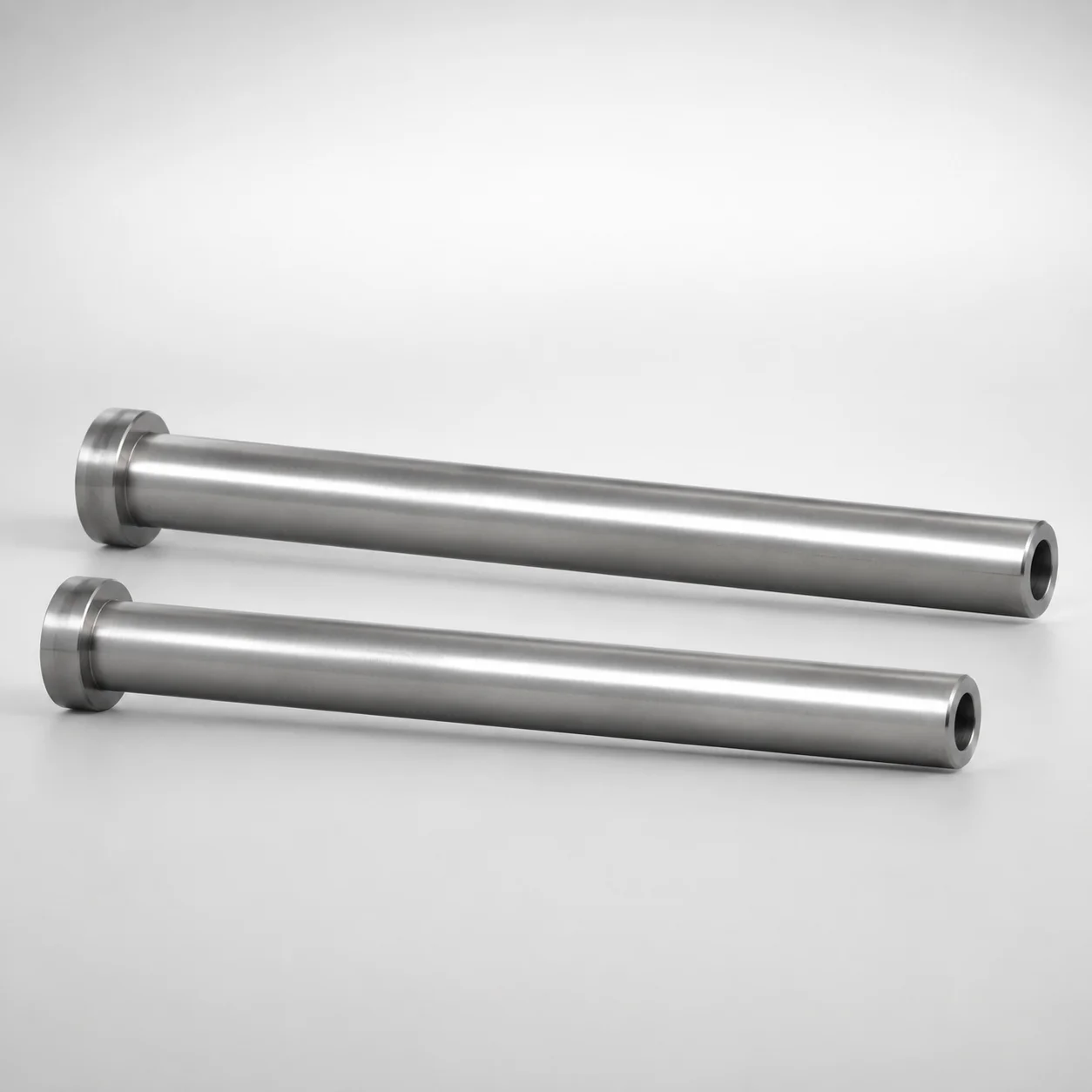
SKD61 Steel Nitrided Straight Ejector Sleeves Head T4
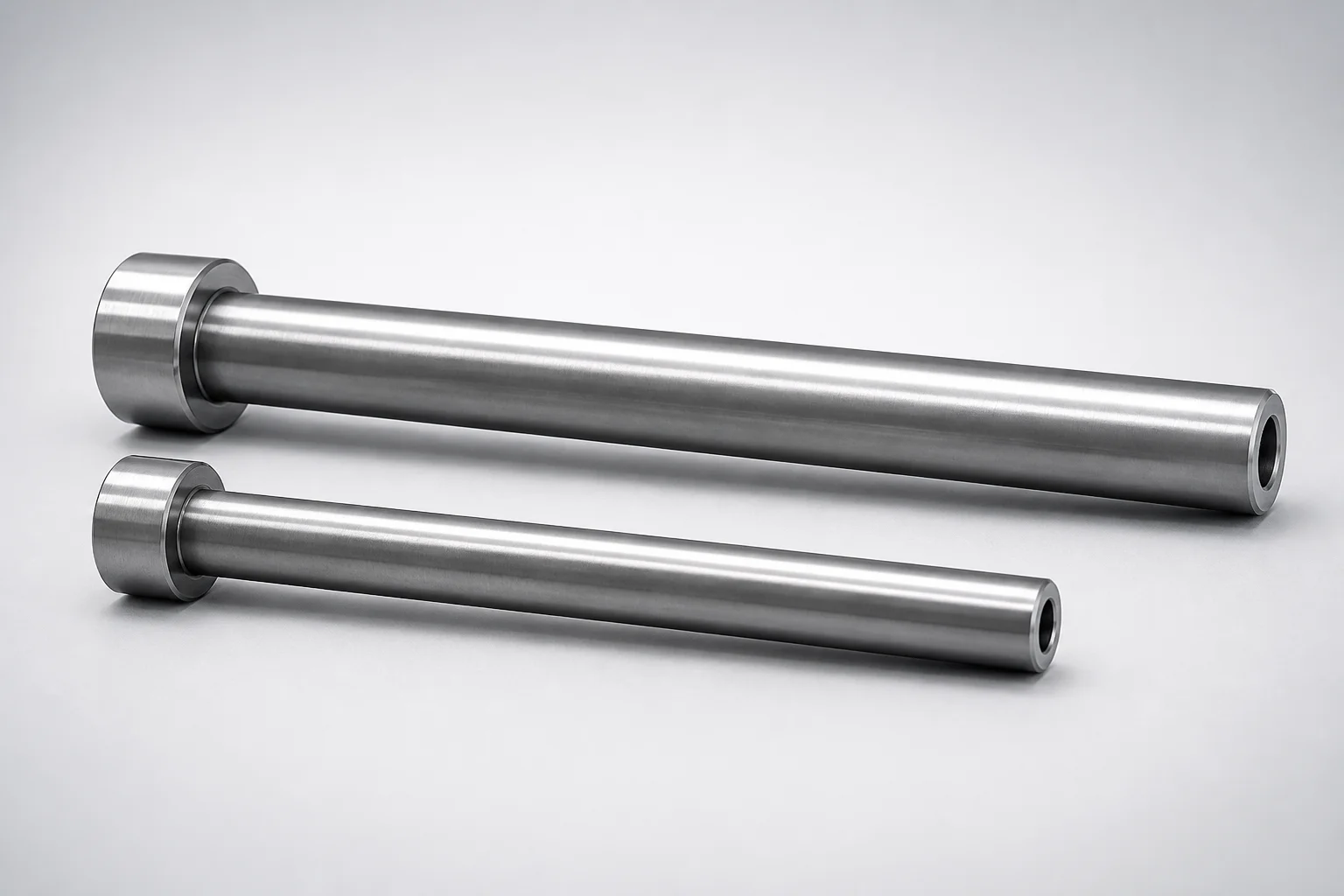
JIS Standard SKD61 Steel Nitrided Straight Ejector Sleeves H7 Bore
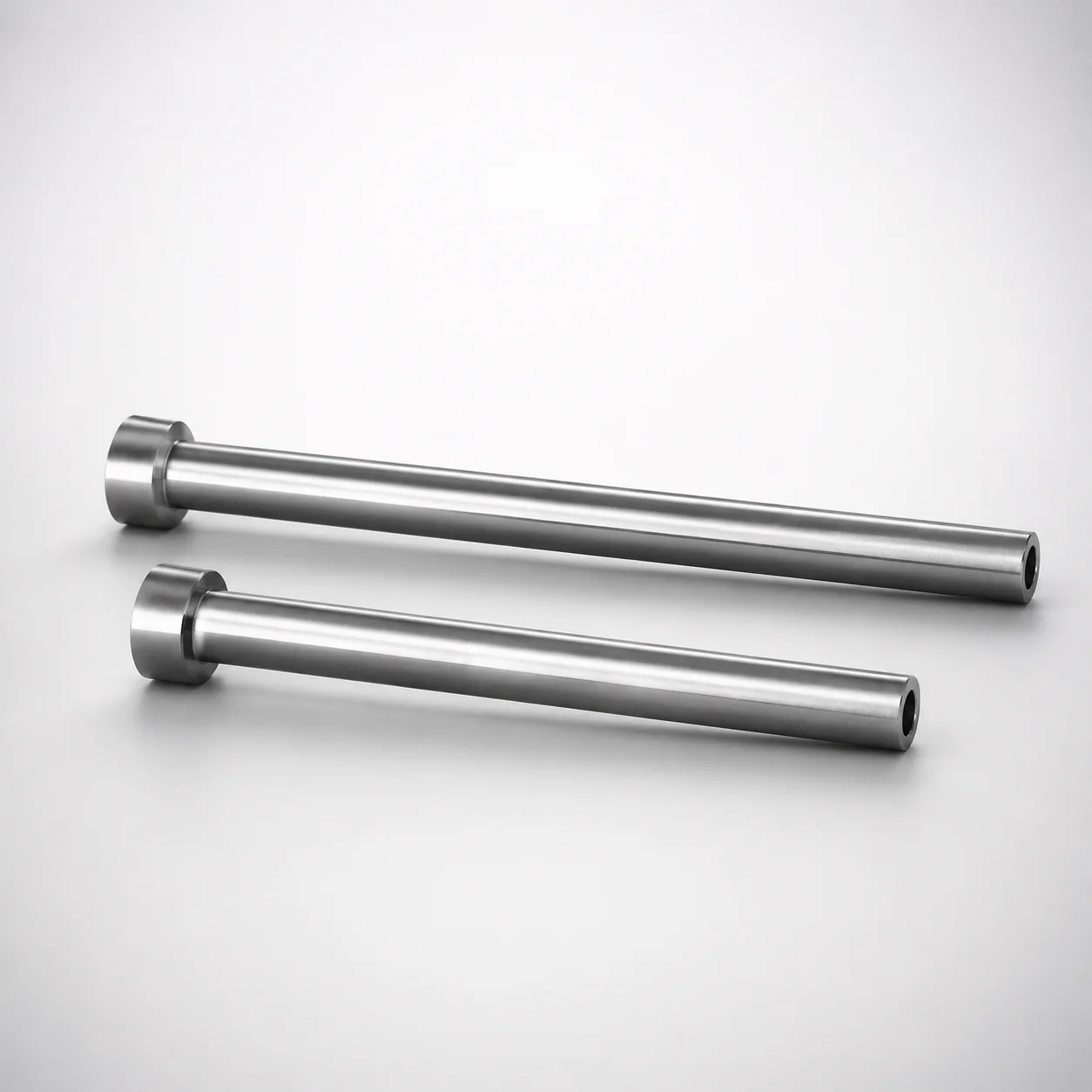
SKD61 Steel Nitrided Straight Ejector Sleeves
Need Custom Specifications?
Our engineering team can help with custom configurations, material selection, and volume pricing.