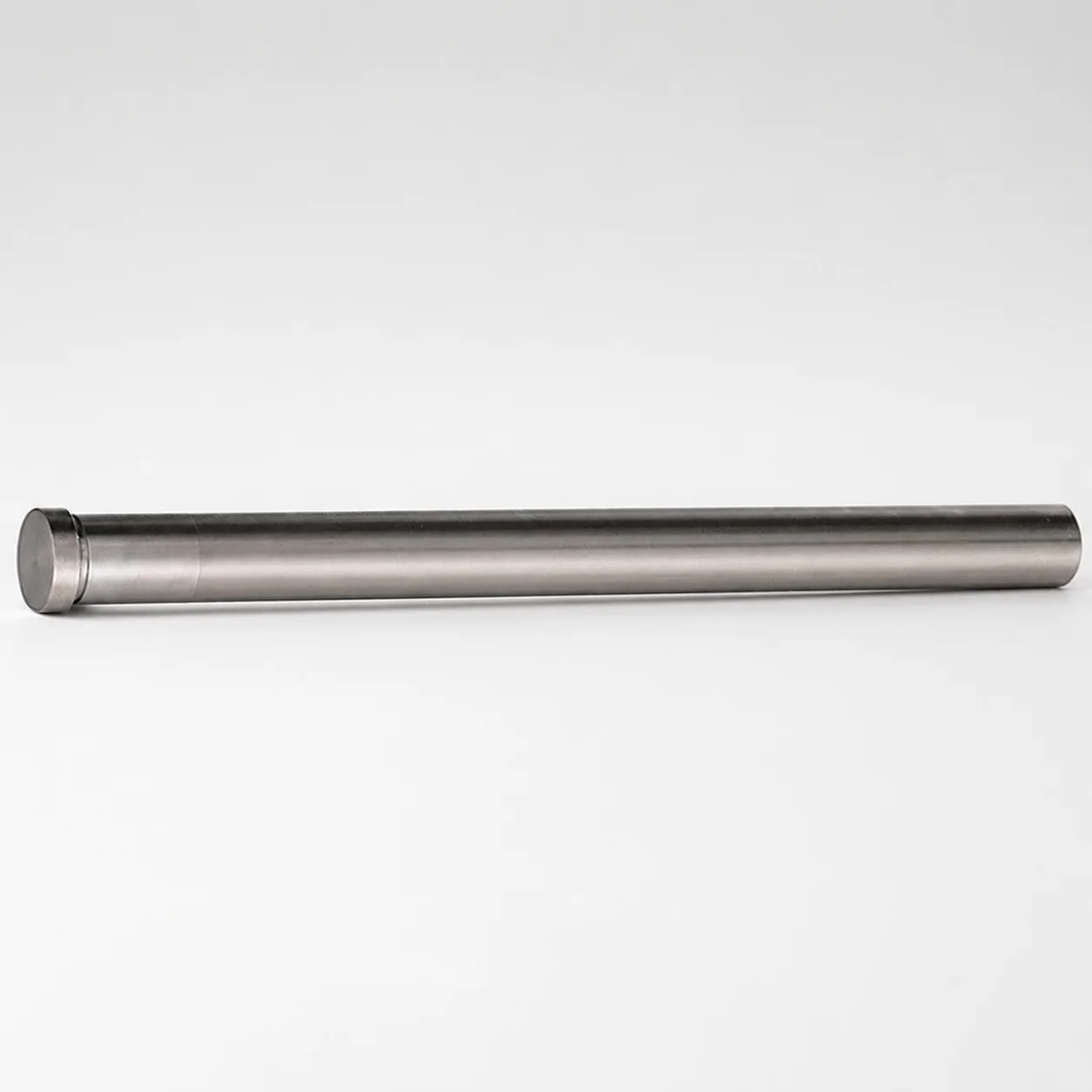
Inch Radius Angle Pins Nitrided Hotwork Steel
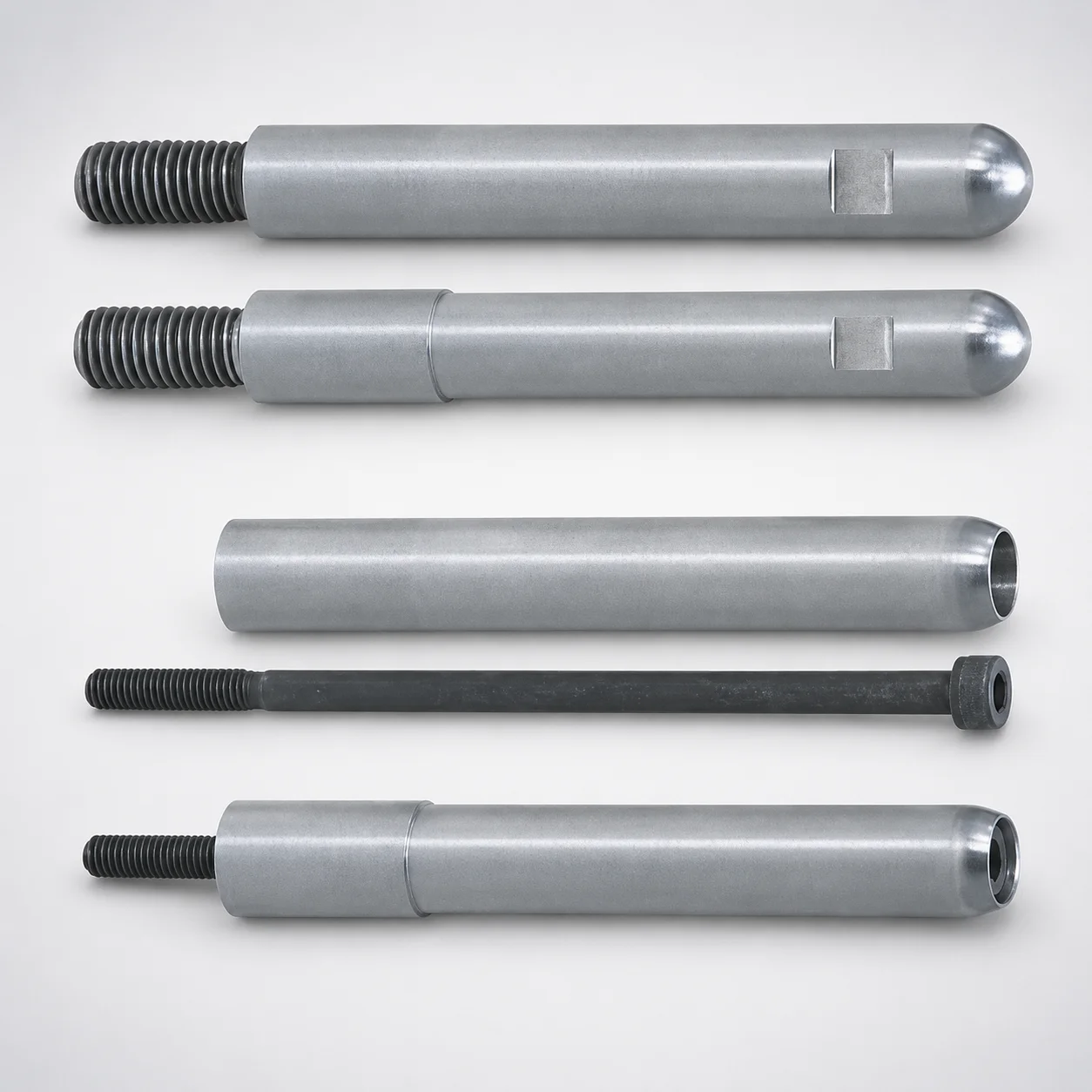
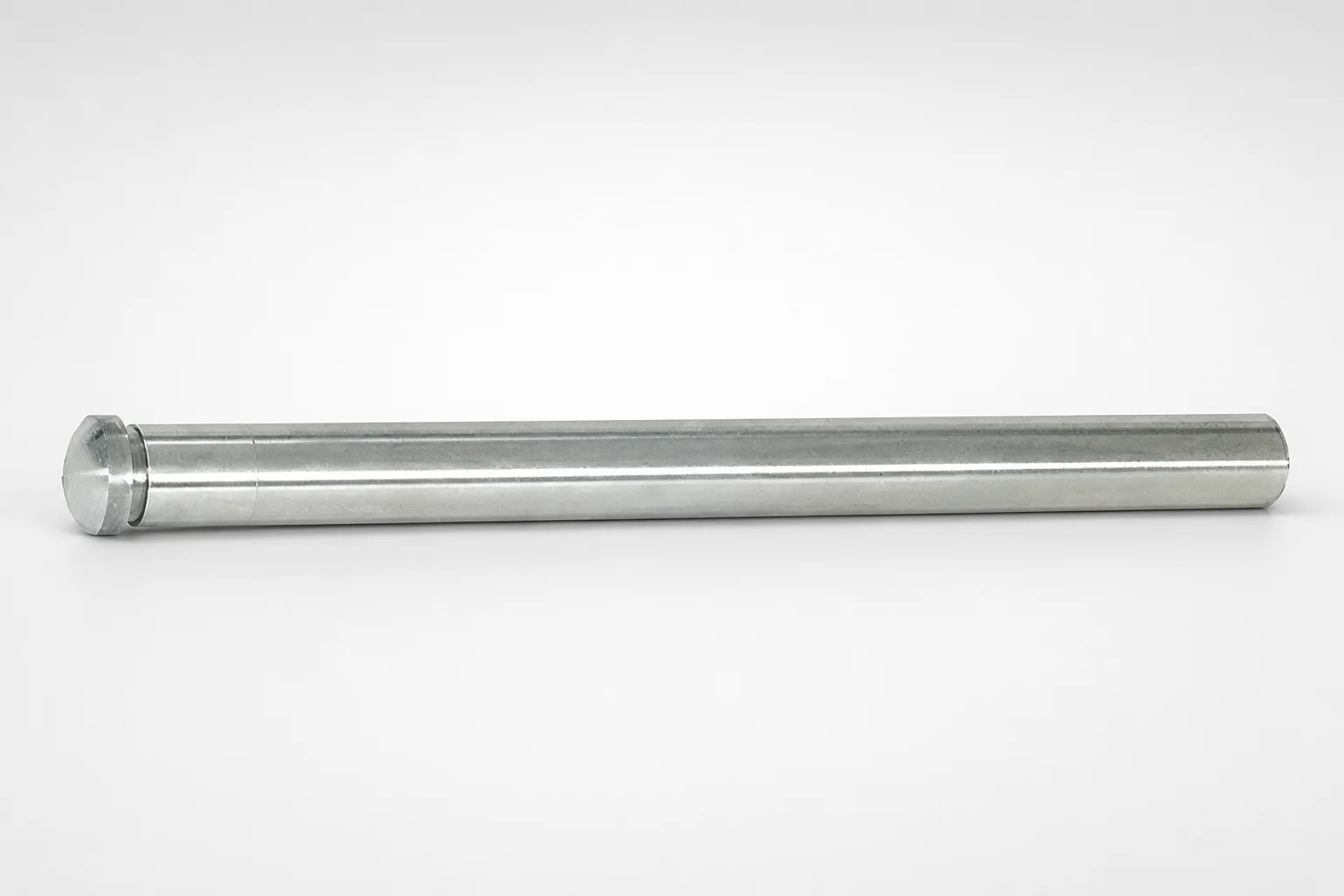
Inch radius angle pins (nitrided hotwork steel) are precision ground angle locating pins designed for press-fit mounting on PCS lifters and slides, supporting stable, repeatable movement.
- Angle pin geometry for reliable slide and lifter alignment
- Nitrided surface with 65–74 Rc hardness, core 35–40 Rc
- Precision ground finish for consistent fit in press-fit applications
- Typical use with PCS lifters and slides in inch-scale tooling
Specifications
6 configurations available
| Nominal Pin Diameter (in) | D (Actual Pin Diameter) (in) | L (Overall Length) (in) | H (Head Diameter (in) |
|---|---|---|---|
| 3/8" | 0.374" | 6" | 1/2" |
| 1/2" | 0.499" | 6" | 5/8" |
| 1/2" | 0.499" | 10" | 5/8" |
| 5/8" | 0.624" | 6" | 3/4" |
| 5/8" | 0.624" | 10" | 3/4" |
| 3/4" | 0.749" | 10" | 7/8" |
Product Guide
Application Scenarios+
This radius angle locating pin is used in inch-scale injection mold tooling where slides and lifters require stable, repeatable alignment. In typical setups, the pin supports smooth motion in automotive connector and housing molds by helping guide parting and ejector movement while maintaining consistent positioning through repeated cycles.
It is also well-suited for consumer electronics enclosures that use lifters to clear undercuts. The angle geometry and precision-ground finish improve contact reliability during press-fit assembly, reducing the risk of positional drift as the slide reciprocates.
Because the pin is nitrided hotwork steel, it is a strong choice for tooling sections exposed to wear and frequent wipe action. The press-fit installation concept allows integration with PCS inch lifters and slides, supporting firm retention without additional fasteners.
Material & Process Details+
The pin is manufactured from nitrided hotwork steel, selected for a surface-focused wear and scuff resistance performance that suits moving ejector components. The treated surface hardness is 65–74 HRC, while the core hardness is 35–40 HRC, providing a balance between abrasion resistance and toughness.
Manufacturing typically involves precision grinding of the angle pin features, followed by nitriding to harden the surface while preserving a tougher, less brittle core. This trade-off helps maintain edge integrity under repeated sliding and contact loading.
- High surface hardness (65–74 HRC): better resistance to wear at the locating surfaces
- Tough core (35–40 HRC): improved impact resistance for cyclic motion
- Performance emphasis: nitrided wear life over maximizing through-hardness
No alternate material grades are provided in the input; the material state described is nitrided hotwork steel with the stated hardness levels.
Sizing & Selection Guide+
Select the pin size by matching the nominal diameter and the specified actual pin diameter D to your PCS slide/lifter locating requirements. Available nominal diameters are 3/8", 1/2", 5/8", 3/4", with corresponding actual diameters D = 0.374", 0.499", 0.624", 0.749". Use the correct diameter to ensure the intended press-fit relationship and stable alignment.
- Length (L): choose 6" or 10" based on the required engagement depth through the slide or lifter
- Head diameter (H): select from 1/2", 5/8", 3/4", 7/8" to match the stop/retention geometry
For press-fit installation, design the mating bore(s) to achieve the required interference for your assembly process. Given the precision-ground nature, confirm whether your drawing uses nominal or actual dimensions and apply your standard tolerance/fit practice so the pin seats fully without excessive stress.
Frequently Asked Questions
Which diameter should I specify for press-fit design: nominal 3/8" or actual D = 0.374"?+
What hardness should I expect on the nitrided locating surface vs the core?+
How do I choose between L = 6" and L = 10" for a slide or lifter application?+
What are the available head diameter sizes and how do they relate to retention geometry?+
Is this pin intended for PCS inch slides and lifters, and is press-fit installation required?+
Related Products
Need Custom Specifications?
Our engineering team can help with custom configurations, material selection, and volume pricing.