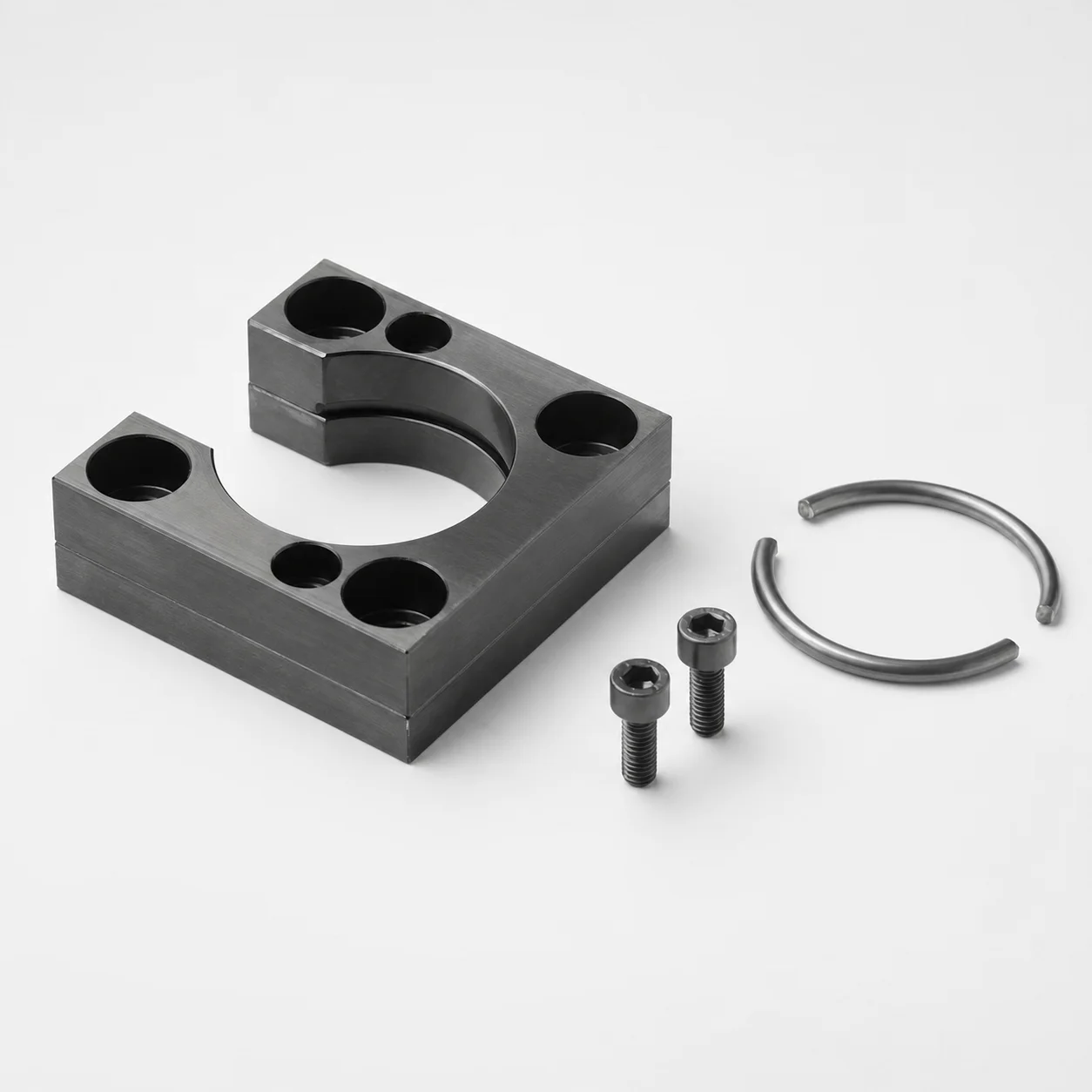
Gas Spring Plate - Lower Groove Fixed, FFS Type
Gas Spring Plate - Lower Groove Fixed, FFS Type is a mounting plate designed to be fixed in the lower groove of the gas spring body, providing stable positioning for reliable motion in industrial assemblies. Built for straightforward installation where the lower groove attachment is required.
- Fixed mounting plate for the lower groove of the gas spring body
- FFS type design supports consistent fit across compatible configurations
- Designed for secure retention during repeated opening and closing cycles
- Used in ergonomic mechanisms, lift assist, and machine motion control systems
Specifications
4 configurations available
| Outer diameter (D) (mm) | type |
|---|---|
| 50 | - |
| 75 | - |
| 95 | - |
| 120 | - |
Product Guide
Application Scenarios+
This fixed mounting plate is used in gas spring cylinder assemblies where the component must locate and retain reliably in the lower groove of the gas spring body. Because it is an FFS (Fixed Fixed Structure) type, it supports repeatable positioning across compatible assemblies, helping maintain consistent motion under repeated load cycles.
- Ergonomic lift-assist mechanisms: Mount the plate to stabilize the connection point so the gas spring responds smoothly during frequent opening/closing.
- Machine motion control systems: The fixed groove engagement helps reduce relative movement at the interface, which supports predictable actuator behavior.
- Industrial ergonomic workstations: Use in lift supports and assist frames where reliable retention is needed for long service life.
For these applications, selecting the correct outer diameter variant (D) is critical because the plate must match the groove region geometry of the gas spring cylinder to ensure secure fit.
Material & Process Details+
The provided product data specifies dimensional variants (outer diameter D) for a groove-fixed FFS mounting plate, but it does not list the steel grade, hardness (HRC), heat-treatment state, or surface treatment. Therefore, no material property, wear-resistance, or toughness trade-off claims can be stated from the current specifications.
When material information is available for comparable components in the same series, engineers typically evaluate: wear resistance for groove-interface abrasion, toughness to avoid edge deformation under cyclic loading, and hardness (HRC) to balance scuffing vs. brittleness. Heat-treatment options commonly considered for such plates include quenching & tempering and nitriding, depending on whether the application prioritizes core toughness or surface durability.
- Data limitation: material grade and HRC are not provided for this exact item.
- Next step: request the material spec sheet from Axiom Molds if your design requires confirmation of steel grade and treatment.
Sizing & Selection Guide+
Select the plate variant by matching the outer diameter (D) to the groove region requirements of the gas spring cylinder. This product is offered in discrete sizes: D = 50, 75, 95, or 120 mm.
- Step 1—Identify your cylinder/groove interface: Determine which lower-groove gas spring body geometry your assembly uses and confirm its required mounting plate outer diameter.
- Step 2—Choose the matching variant: Select the plate with the corresponding D value (50/75/95/120 mm).
- Step 3—Check fit and retention: Because this is a fixed groove mount, small differences in groove-related dimensions can affect retention and alignment during cycling.
Tolerance guidance is not included in the provided specifications, so ensure your supplier-provided drawing or tolerance report is reviewed for fit verification. The only configurable dimension in the given data is outer diameter (D); other dimensions are fixed to the series variant.
Frequently Asked Questions
How do I choose the correct outer diameter (D) when mounting to the gas spring lower groove?+
This item is available in discrete outer diameter variants: D = 50, 75, 95, or 120 mm. Match the plate’s D to the lower-groove region requirement of your specific gas spring body geometry to ensure proper groove engagement and stable positioning.
If your bill of materials references a specific cylinder standard, confirm the required mounting-plate interface with the gas spring drawing before selecting a D size.
What does FFS type mean for a lower groove fixed mounting plate in gas spring assemblies?+
FFS indicates a fixed-type design intended to support consistent fit across compatible configurations. For this lower-groove mount, the plate is meant to remain securely positioned during repeated opening and closing cycles.
Because compatibility depends on the groove interface, ensure the selected D variant aligns with the gas spring body used in your assembly.
Is this mounting plate intended for applications with frequent cyclic loading?+
Yes. The component is designed as a fixed mounting plate for the lower groove to provide stable positioning and secure retention during repeated actuation cycles.
To ensure performance under cyclic loading, select the correct D size (50/75/95/120 mm) so the interface geometry is compatible.
Do you provide material grade, heat treatment, or hardness (HRC) for this gas spring plate?+
The provided specifications list only the outer diameter options (D = 50/75/95/120 mm) and do not include steel grade, hardness (HRC), or heat-treatment details.
For designs that require material verification (e.g., wear resistance targets), request the material and heat-treatment documentation associated with series code 110110589229.
What tolerances should I consider when designing the lower groove interface with this fixed plate?+
Tolerance values are not included in the current product data. Because this is a fixed groove mount, fit and retention can be sensitive to dimensional variation at the groove interface.
Use the supplier drawing/tolerance report for the selected D variant to validate clearances, assembly conditions, and alignment before final design freeze.
Related Products

Need Custom Specifications?
Our engineering team can help with custom configurations, material selection, and volume pricing.