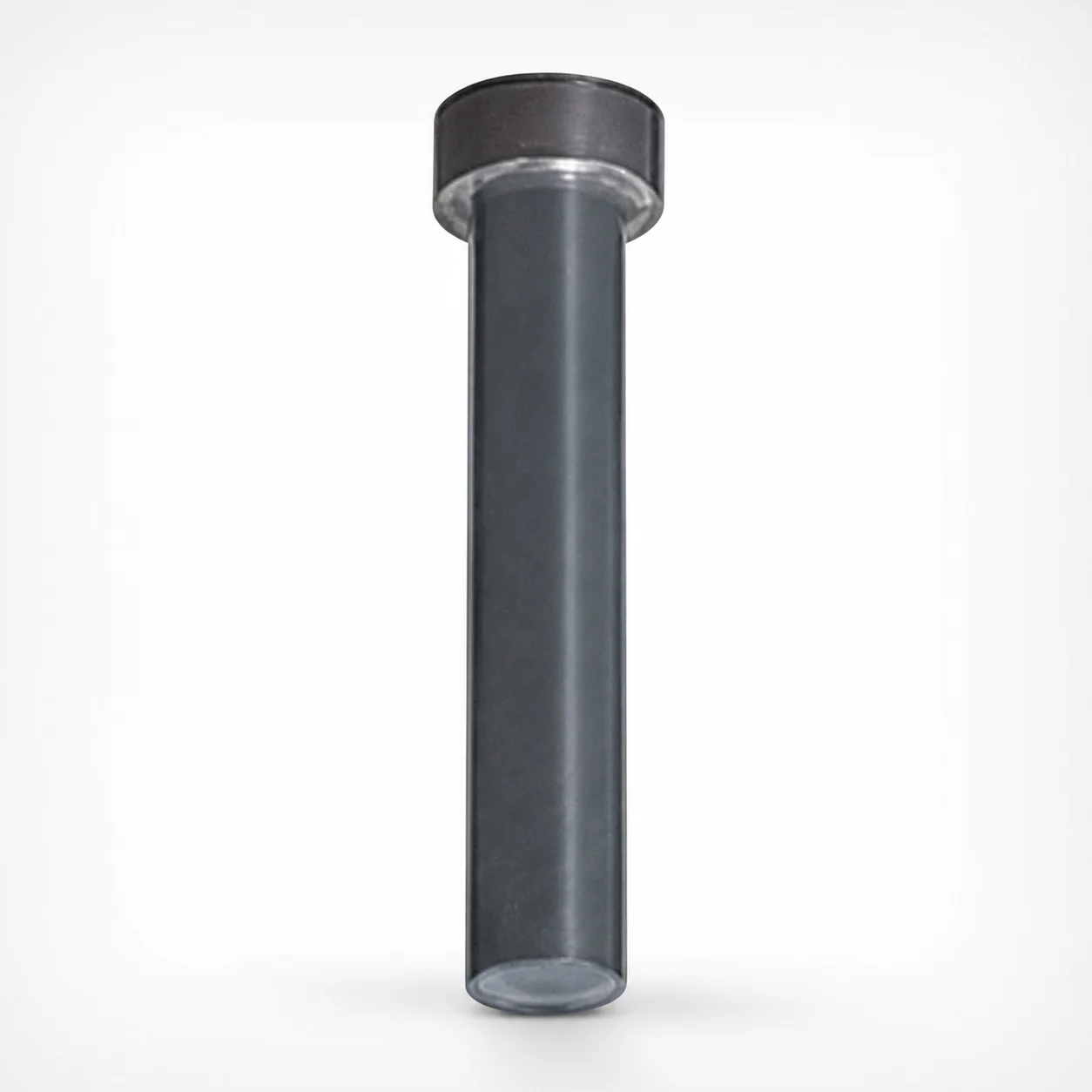
TiCN Coated Heavy Load Straight Shank Punches (M2 Equivalent Steel)
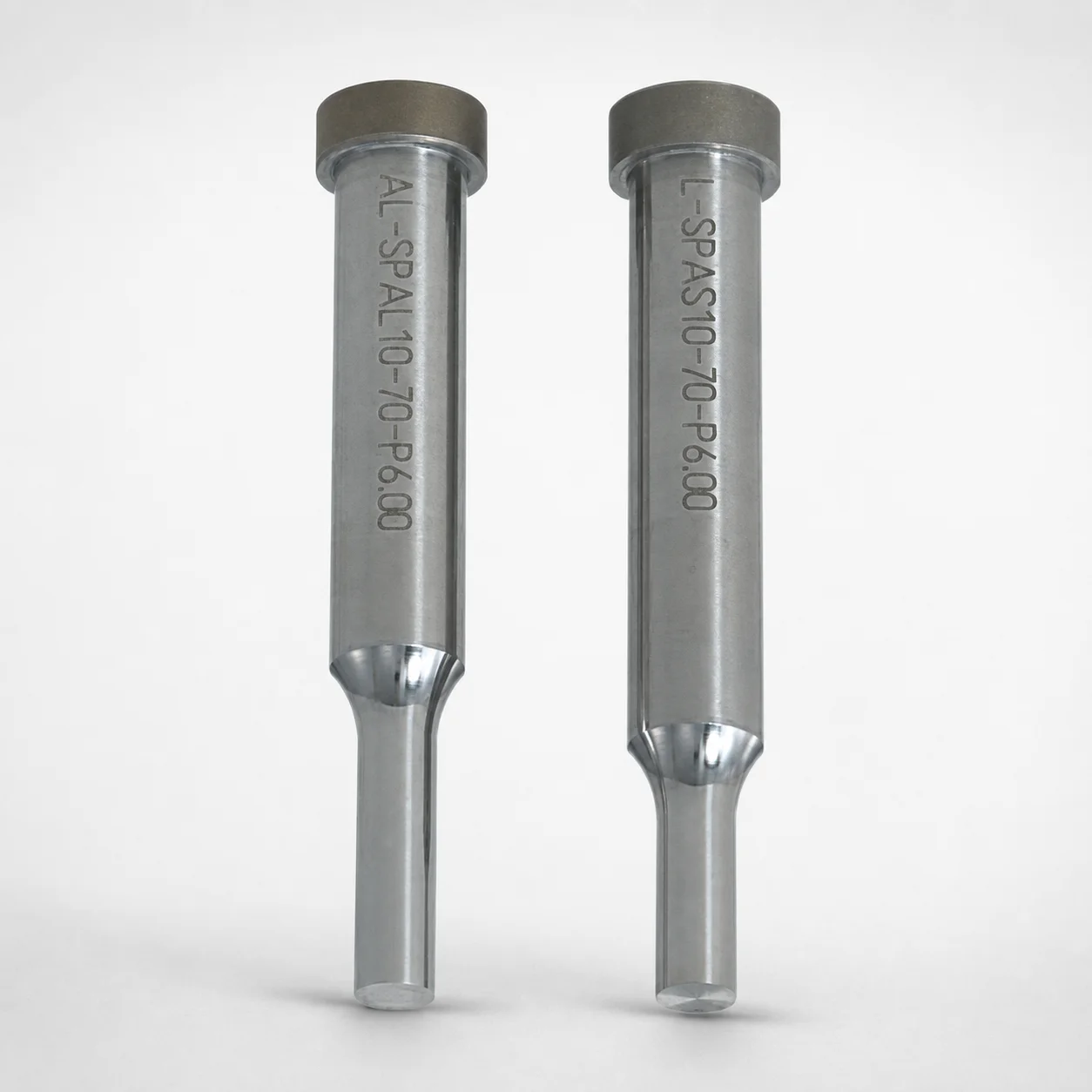
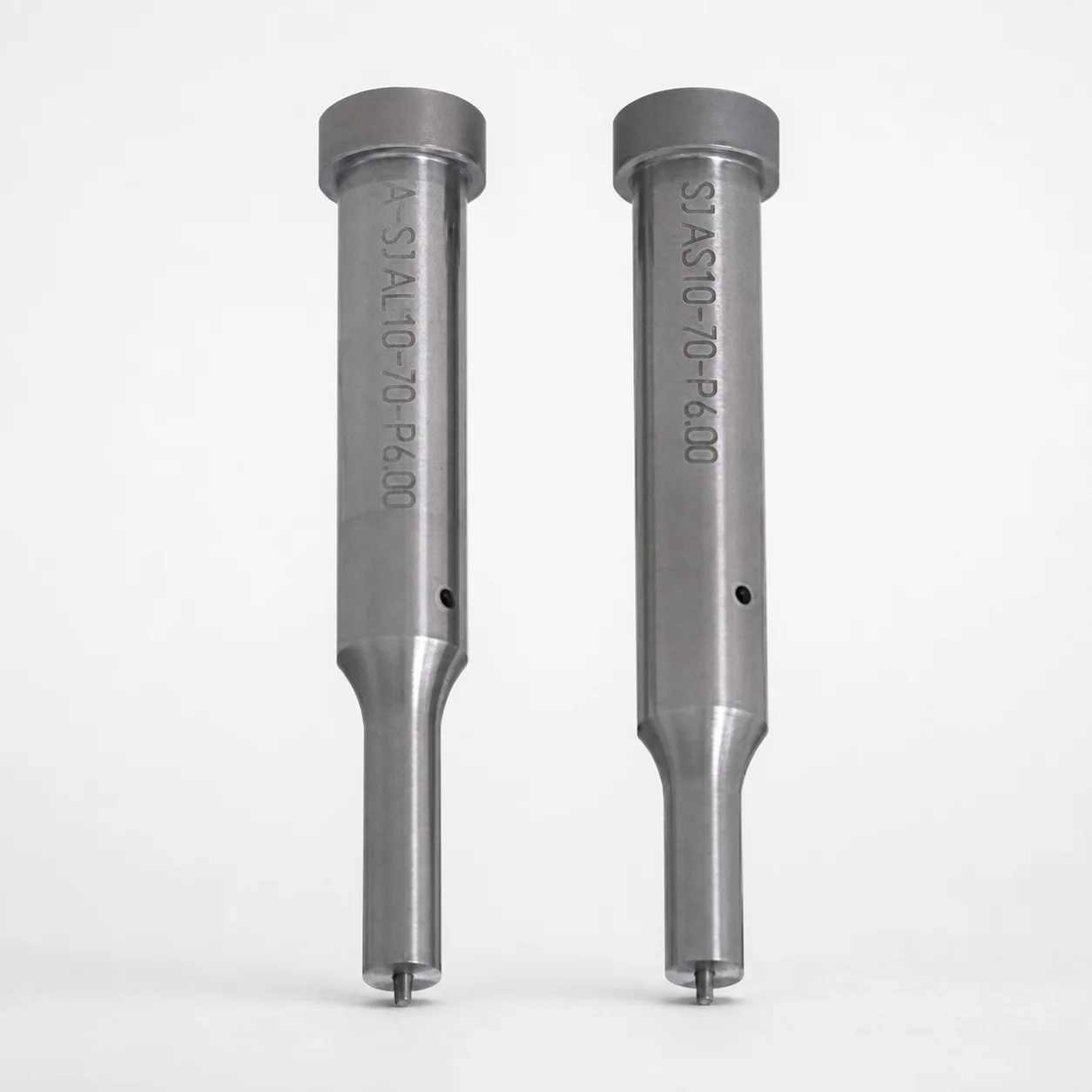
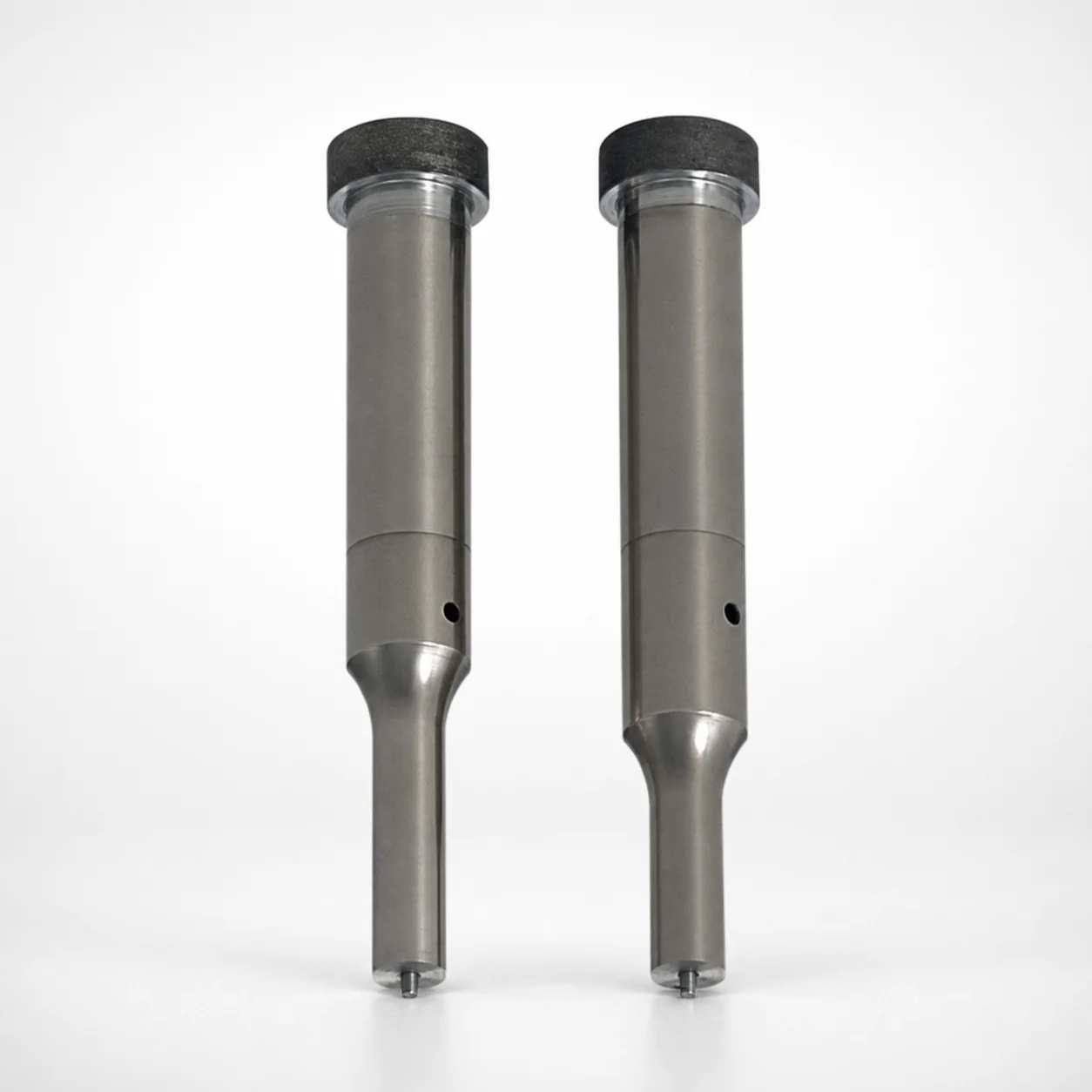
TiCN coated heavy load straight shank punches (powder high-speed steel / M2 equivalent) are engineered for stable, repeatable performance in high-stress punching and die applications. The TiCN coating improves surface durability, helping reduce wear while maintaining accuracy through production runs.
- Heavy-load straight shank with round tip supports consistent punch guidance
- Coated wear resistance with TiCN coating for longer service life
- Powder high-speed steel construction with SKH40/M2 equivalent metallurgy
- Suitable for die punching tasks where dimensional stability under load matters
Specifications
36 configurations available
| Material | No. (Nominal diameter) (mm) | P (Tip dimension) (mm) | L (L dimension) (mm) | LC (Full length alteration) (mm) | type |
|---|---|---|---|---|---|
| SKH51 Equivalent (M2) | 4 | 3 ~ 4 | 40 ~ 80 | - | - |
| SKH51 Equivalent (M2) | 4 | 3 ~ 4 | - | 20 ~ 80 | - |
| SKH51 Equivalent (M2) | 5 | 4 ~ 5 | 40 ~ 80 | - | - |
| SKH51 Equivalent (M2) | 5 | 4 ~ 5 | - | 20 ~ 80 | - |
| SKH51 Equivalent (M2) | 6 | 5 ~ 6 | 40 ~ 80 | - | - |
| SKH51 Equivalent (M2) | 6 | 5 ~ 6 | - | 20 ~ 80 | - |
| SKH51 Equivalent (M2) | 8 | 6 ~ 8 | 40 ~ 100 | - | - |
| SKH51 Equivalent (M2) | 8 | 6 ~ 8 | - | 20 ~ 100 | - |
| SKH51 Equivalent (M2) | 10 | 8 ~ 10 | 40 ~ 100 | - | - |
| SKH51 Equivalent (M2) | 10 | 8 ~ 10 | - | 20 ~ 100 | - |
| SKH51 Equivalent (M2) | 13 | 10 ~ 13 | 40 ~ 120 | - | - |
| SKH51 Equivalent (M2) | 13 | 10 ~ 13 | - | 20 ~ 120 | - |
| SKH51 Equivalent (M2) | 16 | 13 ~ 16 | 40 ~ 120 | - | - |
| SKH51 Equivalent (M2) | 16 | 13 ~ 16 | - | 20 ~ 120 | - |
| SKH51 Equivalent (M2) | 20 | 16 ~ 20 | 40 ~ 120 | - | - |
| SKH51 Equivalent (M2) | 20 | 16 ~ 20 | - | 20 ~ 120 | - |
| SKH51 Equivalent (M2) | 25 | 20 ~ 25 | 40 ~ 120 | - | - |
| SKH51 Equivalent (M2) | 25 | 20 ~ 25 | - | 20 ~ 120 | - |
| SKH40 Equivalent (Powdered High-Speed Steel) | 4 | 3 ~ 4 | 40 ~ 80 | - | - |
| SKH40 Equivalent (Powdered High-Speed Steel) | 4 | 3 ~ 4 | - | 20 ~ 80 | - |
| SKH40 Equivalent (Powdered High-Speed Steel) | 5 | 4 ~ 5 | 40 ~ 80 | - | - |
| SKH40 Equivalent (Powdered High-Speed Steel) | 5 | 4 ~ 5 | - | 20 ~ 80 | - |
| SKH40 Equivalent (Powdered High-Speed Steel) | 6 | 5 ~ 6 | 40 ~ 80 | - | - |
| SKH40 Equivalent (Powdered High-Speed Steel) | 6 | 5 ~ 6 | - | 20 ~ 80 | - |
| SKH40 Equivalent (Powdered High-Speed Steel) | 8 | 6 ~ 8 | 40 ~ 100 | - | - |
| SKH40 Equivalent (Powdered High-Speed Steel) | 8 | 6 ~ 8 | - | 20 ~ 100 | - |
| SKH40 Equivalent (Powdered High-Speed Steel) | 10 | 8 ~ 10 | 40 ~ 100 | - | - |
| SKH40 Equivalent (Powdered High-Speed Steel) | 10 | 8 ~ 10 | - | 20 ~ 100 | - |
| SKH40 Equivalent (Powdered High-Speed Steel) | 13 | 10 ~ 13 | 40 ~ 120 | - | - |
| SKH40 Equivalent (Powdered High-Speed Steel) | 13 | 10 ~ 13 | - | 20 ~ 120 | - |
| SKH40 Equivalent (Powdered High-Speed Steel) | 16 | 13 ~ 16 | 40 ~ 120 | - | - |
| SKH40 Equivalent (Powdered High-Speed Steel) | 16 | 13 ~ 16 | - | 20 ~ 120 | - |
| SKH40 Equivalent (Powdered High-Speed Steel) | 20 | 16 ~ 20 | 40 ~ 120 | - | - |
| SKH40 Equivalent (Powdered High-Speed Steel) | 20 | 16 ~ 20 | - | 20 ~ 120 | - |
| SKH40 Equivalent (Powdered High-Speed Steel) | 25 | 20 ~ 25 | 40 ~ 120 | - | - |
| SKH40 Equivalent (Powdered High-Speed Steel) | 25 | 20 ~ 25 | - | 20 ~ 120 | - |
Product Guide
Application Scenarios+
These TiCN-coated heavy-load straight shank punches are used in injection-mold tooling whenever the punch must pierce features reliably under repeated cycles—especially in high-wear die and secondary tooling. The straight shank geometry improves guidance and alignment, supporting stable dimensional control across production runs.
- Automotive and electronics insert punching: Ideal for punching through sheet-like or laminated inserts in supporting dies where tip contact pressure is high and consistent. The TiCN surface helps resist abrasion while preserving the precision needed for part-to-part repeatability.
- Consumer product die work: Suited for forming or trimming tasks where tool life is driven by edge wear. The heavy-load shank design helps reduce misalignment-related variation during continuous operation.
- General industrial die punching: Works well for mixed material die operations requiring a balance of hardness and toughness from M2-equivalent or powdered HSS construction.
Material & Process Details+
This series is available in SKH51 equivalent (M2) or SKH40 equivalent powdered high-speed steel. Both are high-speed steel grades selected for wear resistance in punching and for maintaining cutting performance under load.
- SKH51 (M2 equivalent): Typically used where higher hardness and abrasion resistance are needed. In practice, M2-class steels are commonly supplied/handled after quench & temper to achieve a target hardness around ~HRC 60–63, trading some toughness for toughness/hardness balance.
- SKH40 (powder HSS equivalent): Powder metallurgy improves uniformity and secondary carbide distribution, which can enhance wear behavior. Heat treatment is likewise based on quench & temper to reach service hardness suitable for die punch edges.
For applications dominated by abrasive wear, TiCN coating plus the chosen HSS grade improves service life; for impact-heavy duty, select the grade that best matches the required toughness.
Sizing & Selection Guide+
Select dimensions by matching the punch tip and overall length to the mold cavity/core requirements and the desired penetration depth. The nominal diameter (4 ~ 25 mm) should match the guide fit and the clearance designed in the punch holder and bushings.
- Tip dimension P (3 ~ 20 mm): Choose P to ensure the punch engages the intended feature profile without excessive edge loading.
- L (40 ~ 80 / 40 ~ 100 / 40 ~ 120 mm): Match L to the required stick-out and the guidance length needed for stable punching through the die stack.
- LC full length alteration (20 ~ 80 / 20 ~ 100 / 20 ~ 120 mm): Use LC to represent the allowable variation/length adjustment for your tool layout while maintaining sufficient guided engagement.
Because punches must maintain alignment under load, keep tolerances consistent with your punch holder and any bushing system. Where a dimension set offers multiple ranges (e.g., L and LC step options), select the closest length family to minimize rework while ensuring safe clearance and correct penetration.
Frequently Asked Questions
Which material should I choose: SKH51 (M2 equivalent) or SKH40 (powdered HSS equivalent) for punching tools?+
Choose SKH51 (M2 equivalent) when you want a strong hardness and abrasion resistance baseline typical of M2-class steels after quench & temper. Choose SKH40 (powdered HSS equivalent) when you prioritize uniform microstructure from powder metallurgy to support stable wear performance during repeated punching cycles.
Both options are designed for die work with TiCN wear protection; the best choice depends on the wear vs. toughness balance in your process.
How do I select the nominal diameter (4–25 mm) for proper guidance in a punch holder?+
Match the punch nominal diameter within the 4 ~ 25 mm range to the pocket and guide/bushing system designed for your tooling. The goal is stable alignment under load to avoid tip deflection and dimensional drift during production.
If your tooling uses a guided interface, ensure the selected diameter family is compatible with the holder bore and the intended fit class.
What tip dimension P (3–20 mm) should be used for a given feature size?+
Select P (3 ~ 20 mm) based on the feature profile your punch must create and the acceptable engagement area. A properly sized P reduces excessive edge pressure and helps maintain cutting accuracy across cycles.
When you adjust P, re-check clearances in the die stack to prevent interference at full stroke.
How should I choose L (40–80/100/120 mm) and LC (20–80/100/120 mm) together?+
Use L to set the required stick-out and guided length so the punch remains aligned while piercing through the tool stack. Use LC within the corresponding 20 ~ 80 / 20 ~ 100 / 20 ~ 120 mm range to reflect your allowed length alteration or adjustment.
Select the closest matching length family to minimize tool changes and ensure sufficient guided engagement without risking bottoming or loss of clearance.
Does the TiCN coating change how I should evaluate wear resistance and service life?+
The TiCN coating is intended to improve surface durability, which typically reduces abrasive wear at the punch tip during high-cycle punching. This helps maintain accuracy over production runs by limiting surface degradation.
Your service life will still depend on the chosen steel variant (M2-equivalent SKH51 vs. powdered SKH40) and the tool geometry defined by P, L, and LC.
Related Products
Need Custom Specifications?
Our engineering team can help with custom configurations, material selection, and volume pricing.