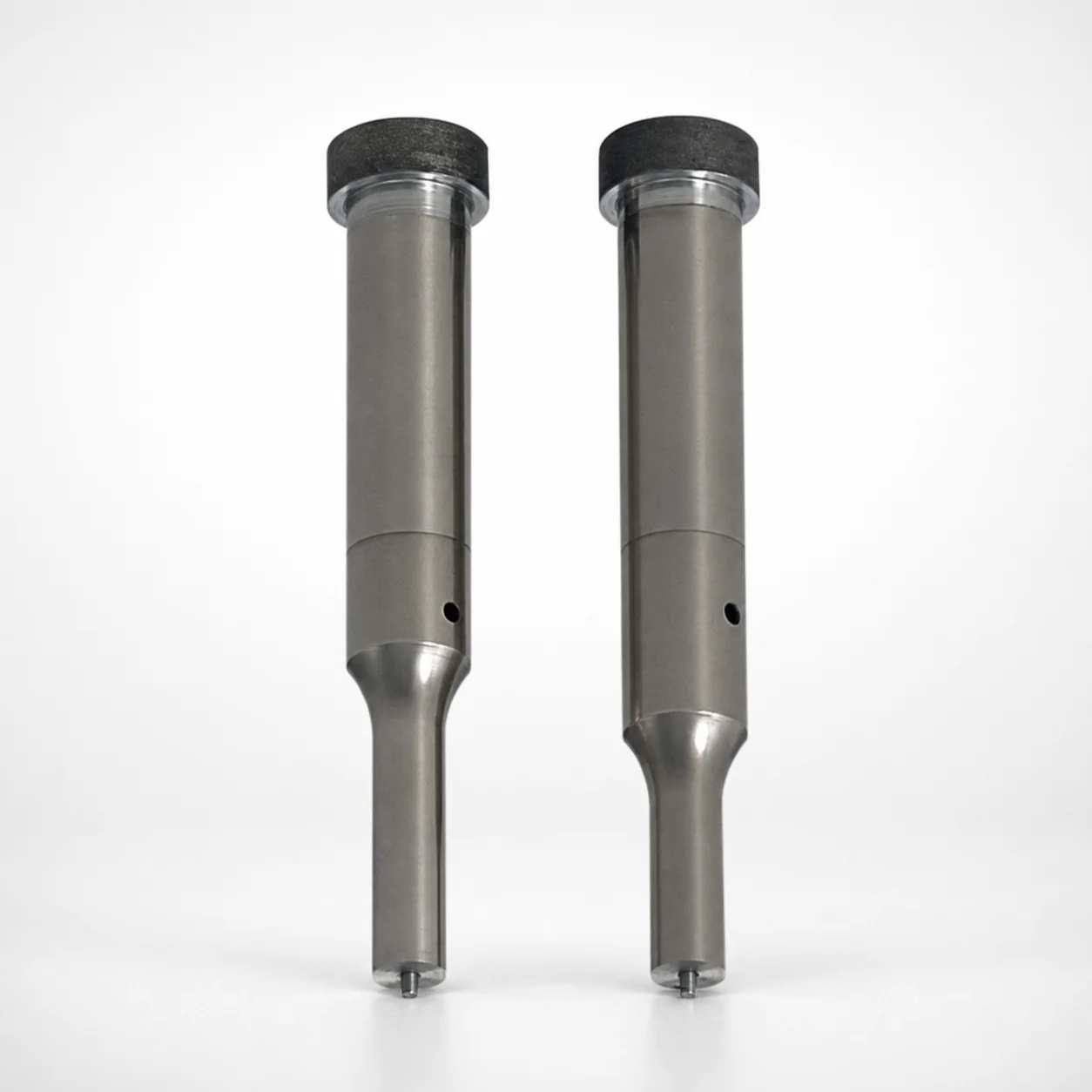
Jector Punches - Dicoat Treatment
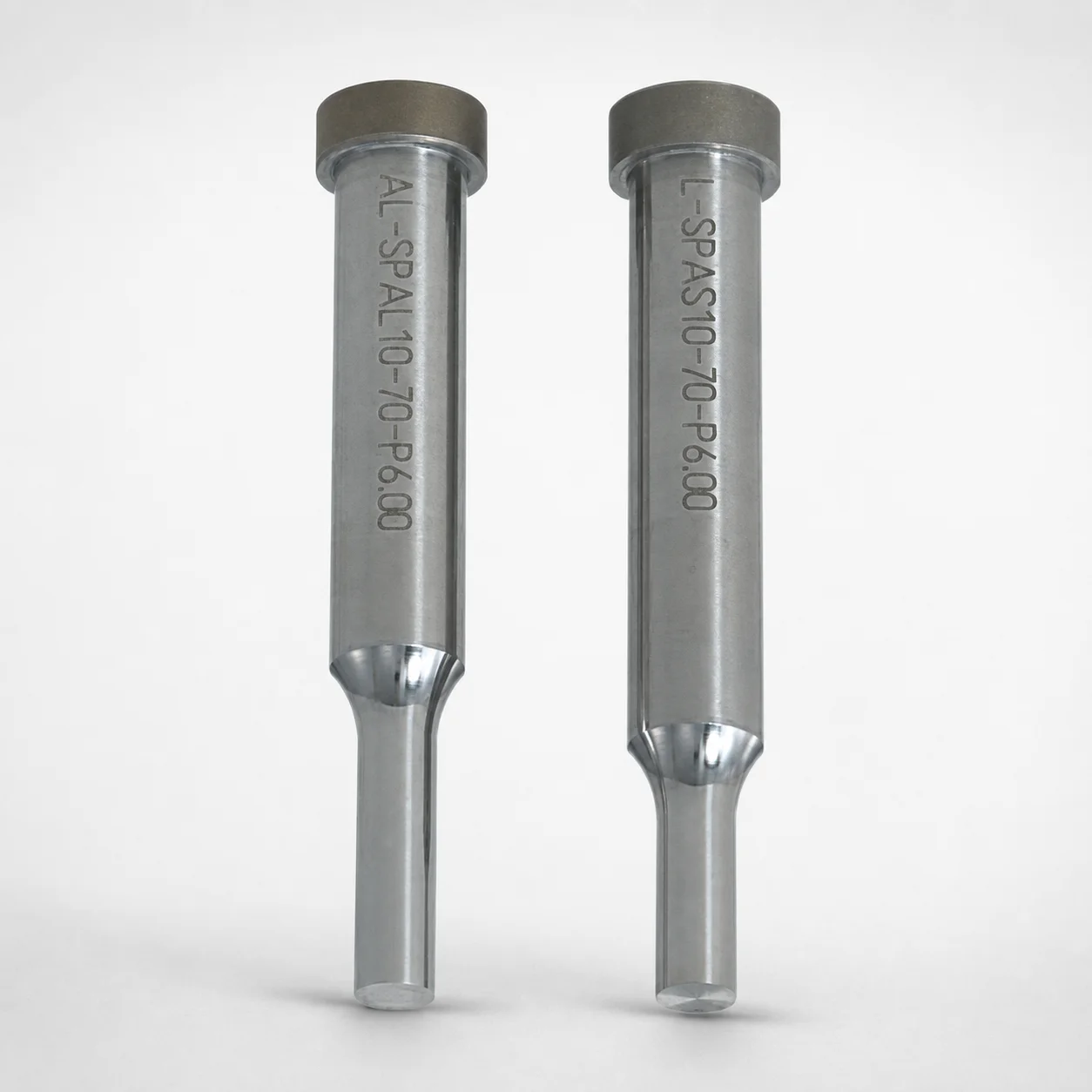
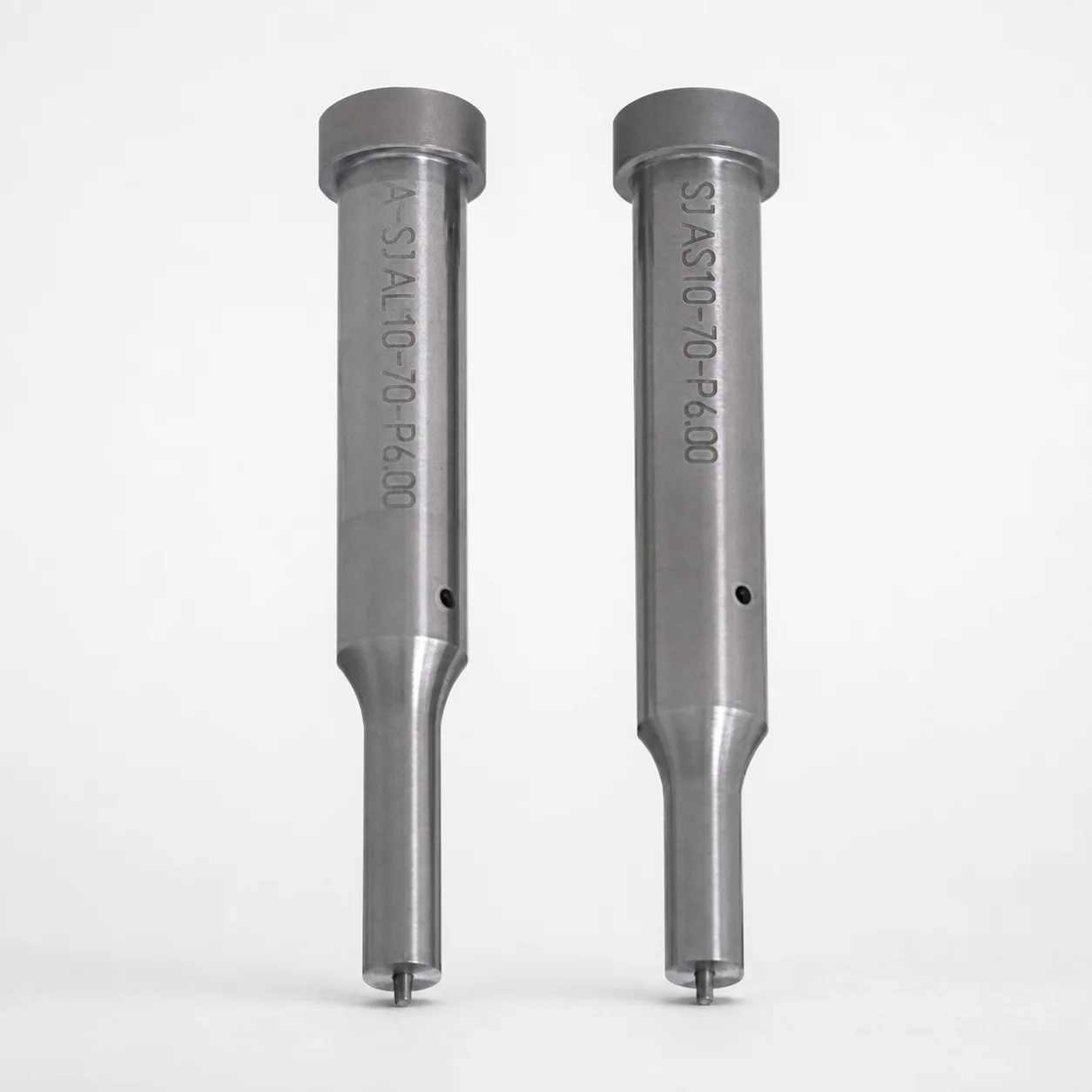
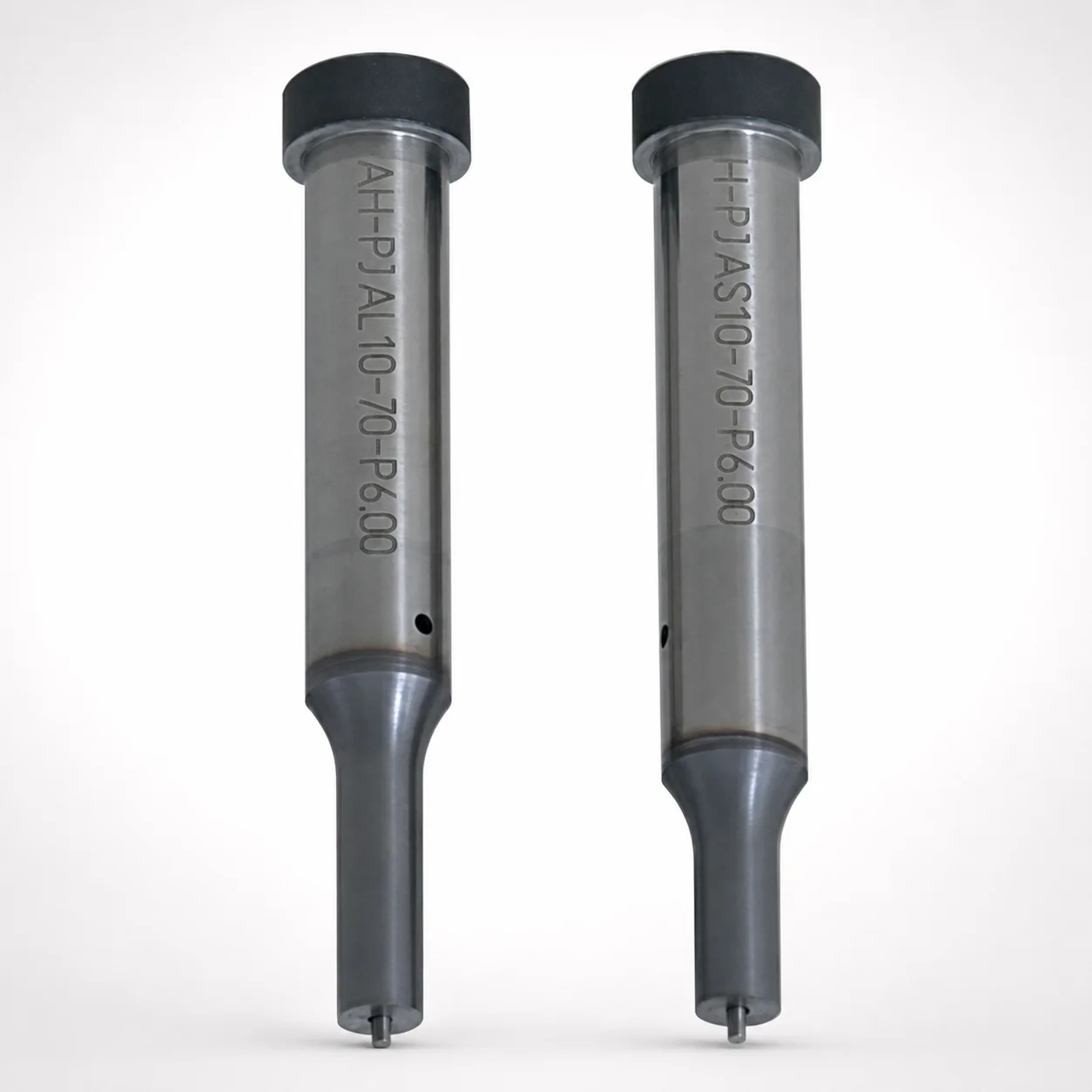
Jector Punches - Dicoat Treatment are designed for reliable mold ejection, using a stable stepped shank and a spring reinforced option for consistent performance under heavy load. The Dicoat surface treatment supports long service life in production environments.
- Stable single-stepped shank improves alignment for repeatable ejection
- Spring reinforced jector design helps maintain dependable operation
- Hardenable tooling steels: SKD11 equivalent (D2) or SKH40 equivalent
- Suitable for standard punch applications where dimensional stability matters
Specifications
4179 configurations available
| Jector | Tip shape | Material | Shank diameter D tolerance | B (Tip length) | D (Shank diameter) (mm) | P (Tip dimension) (mm) | L (L dimension) (mm) | LC (Full length alteration) (mm) | LCT (Head thickness tolerance change + Total length alteration) (mm) | LMT (Head thickness tolerance change + Total length alteration) (mm) | PC (Tip dimension alteration) (mm) | R (Tip corner R) (mm) | W (Tip dimension) (mm) | WC (Tip dimension alteration) (mm) | type |
|---|---|---|---|---|---|---|---|---|---|---|---|---|---|---|---|
| Standard | Round | SKH40 Equivalent (Powdered High-Speed Steel) | +0.005/0 | L | 4 | 1 ~ 3.99 | 50 ~ 80 | - | - | - | - | - | - | - | - |
| Standard | Round | SKH40 Equivalent (Powdered High-Speed Steel) | +0.005/0 | L | 4 | 1 ~ 3.99 | - | 35 ~ 39.9 | - | - | - | - | - | - | - |
| Standard | Round | SKH40 Equivalent (Powdered High-Speed Steel) | +0.005/0 | L | 4 | 1 ~ 3.99 | - | 40.1 ~ 49.9 | - | - | - | - | - | - | - |
| Standard | Round | SKH40 Equivalent (Powdered High-Speed Steel) | +0.005/0 | L | 4 | 1 ~ 3.99 | - | 50.1 ~ 59.9 | - | - | - | - | - | - | - |
| Standard | Round | SKH40 Equivalent (Powdered High-Speed Steel) | +0.005/0 | L | 4 | 1 ~ 3.99 | - | 60.1 ~ 69.9 | - | - | - | - | - | - | - |
| Standard | Round | SKH40 Equivalent (Powdered High-Speed Steel) | +0.005/0 | L | 4 | 1 ~ 3.99 | - | 70.1 ~ 79.9 | - | - | - | - | - | - | - |
| Standard | Round | SKH40 Equivalent (Powdered High-Speed Steel) | +0.005/0 | L | 4 | 1 ~ 3.99 | - | - | 35 ~ 39.9 | - | - | - | - | - | - |
| Standard | Round | SKH40 Equivalent (Powdered High-Speed Steel) | +0.005/0 | L | 4 | 1 ~ 3.99 | - | - | 40.1 ~ 49.9 | - | - | - | - | - | - |
| Standard | Round | SKH40 Equivalent (Powdered High-Speed Steel) | +0.005/0 | L | 4 | 1 ~ 3.99 | - | - | 50.1 ~ 59.9 | - | - | - | - | - | - |
| Standard | Round | SKH40 Equivalent (Powdered High-Speed Steel) | +0.005/0 | L | 4 | 1 ~ 3.99 | - | - | 60.1 ~ 69.9 | - | - | - | - | - | - |
| Standard | Round | SKH40 Equivalent (Powdered High-Speed Steel) | +0.005/0 | L | 4 | 1 ~ 3.99 | - | - | 70.1 ~ 79.9 | - | - | - | - | - | - |
| Standard | Round | SKH40 Equivalent (Powdered High-Speed Steel) | +0.005/0 | L | 4 | 1 ~ 3.99 | - | - | - | 35 ~ 39.9 | - | - | - | - | - |
| Standard | Round | SKH40 Equivalent (Powdered High-Speed Steel) | +0.005/0 | L | 4 | 1 ~ 3.99 | - | - | - | 40.1 ~ 49.9 | - | - | - | - | - |
| Standard | Round | SKH40 Equivalent (Powdered High-Speed Steel) | +0.005/0 | L | 4 | 1 ~ 3.99 | - | - | - | 50.1 ~ 59.9 | - | - | - | - | - |
| Standard | Round | SKH40 Equivalent (Powdered High-Speed Steel) | +0.005/0 | L | 4 | 1 ~ 3.99 | - | - | - | 60.1 ~ 69.9 | - | - | - | - | - |
| Standard | Round | SKH40 Equivalent (Powdered High-Speed Steel) | +0.005/0 | L | 4 | 1 ~ 3.99 | - | - | - | 70.1 ~ 79.9 | - | - | - | - | - |
| Standard | Round | SKH40 Equivalent (Powdered High-Speed Steel) | +0.005/0 | L | 5 | 2 ~ 4.99 | 50 ~ 80 | - | - | - | - | - | - | - | - |
| Standard | Round | SKH40 Equivalent (Powdered High-Speed Steel) | +0.005/0 | L | 5 | 2 ~ 4.99 | - | 35 ~ 79.9 | - | - | - | - | - | - | - |
| Standard | Round | SKH40 Equivalent (Powdered High-Speed Steel) | +0.005/0 | L | 5 | 2 ~ 4.99 | - | - | 35 ~ 79.9 | - | - | - | - | - | - |
| Standard | Round | SKH40 Equivalent (Powdered High-Speed Steel) | +0.005/0 | L | 5 | 2 ~ 4.99 | - | - | - | 35 ~ 79.9 | - | - | - | - | - |
| Standard | Round | SKH40 Equivalent (Powdered High-Speed Steel) | +0.005/0 | L | 6 | 2 ~ 5.99 | 50 ~ 80 | - | - | - | - | - | - | - | - |
| Standard | Round | SKH40 Equivalent (Powdered High-Speed Steel) | +0.005/0 | L | 6 | 2 ~ 5.99 | - | 35 ~ 79.9 | - | - | - | - | - | - | - |
| Standard | Round | SKH40 Equivalent (Powdered High-Speed Steel) | +0.005/0 | L | 6 | 2 ~ 5.99 | - | - | 35 ~ 79.9 | - | - | - | - | - | - |
| Standard | Round | SKH40 Equivalent (Powdered High-Speed Steel) | +0.005/0 | L | 6 | 2 ~ 5.99 | - | - | - | 35 ~ 79.9 | - | - | - | - | - |
| Standard | Round | SKH40 Equivalent (Powdered High-Speed Steel) | +0.005/0 | L | 8 | 3 ~ 7.99 | 50 ~ 100 | - | - | - | - | - | - | - | - |
| Standard | Round | SKH40 Equivalent (Powdered High-Speed Steel) | +0.005/0 | L | 8 | 3 ~ 7.99 | - | 35 ~ 99.9 | - | - | - | - | - | - | - |
| Standard | Round | SKH40 Equivalent (Powdered High-Speed Steel) | +0.005/0 | L | 8 | 3 ~ 7.99 | - | - | 35 ~ 99.9 | - | - | - | - | - | - |
| Standard | Round | SKH40 Equivalent (Powdered High-Speed Steel) | +0.005/0 | L | 8 | 3 ~ 7.99 | - | - | - | 35 ~ 99.9 | - | - | - | - | - |
| Standard | Round | SKH40 Equivalent (Powdered High-Speed Steel) | +0.005/0 | L | 10 | 3 ~ 9.99 | 50 ~ 100 | - | - | - | - | - | - | - | - |
| Standard | Round | SKH40 Equivalent (Powdered High-Speed Steel) | +0.005/0 | L | 10 | 3 ~ 9.99 | - | 35 ~ 99.9 | - | - | - | - | - | - | - |
| Standard | Round | SKH40 Equivalent (Powdered High-Speed Steel) | +0.005/0 | L | 10 | 3 ~ 9.99 | - | - | 35 ~ 99.9 | - | - | - | - | - | - |
| Standard | Round | SKH40 Equivalent (Powdered High-Speed Steel) | +0.005/0 | L | 10 | 3 ~ 9.99 | - | - | - | 35 ~ 99.9 | - | - | - | - | - |
| Standard | Round | SKH40 Equivalent (Powdered High-Speed Steel) | +0.005/0 | L | 13 | 6 ~ 12.99 | 50 ~ 100 | - | - | - | - | - | - | - | - |
| Standard | Round | SKH40 Equivalent (Powdered High-Speed Steel) | +0.005/0 | L | 13 | - | 50 ~ 100 | - | - | - | 5 ~ 5.99 | - | - | - | - |
| Standard | Round | SKH40 Equivalent (Powdered High-Speed Steel) | +0.005/0 | L | 13 | 6 ~ 12.99 | - | 35 ~ 99.9 | - | - | - | - | - | - | - |
| Standard | Round | SKH40 Equivalent (Powdered High-Speed Steel) | +0.005/0 | L | 13 | - | - | 35 ~ 99.9 | - | - | 5 ~ 5.99 | - | - | - | - |
| Standard | Round | SKH40 Equivalent (Powdered High-Speed Steel) | +0.005/0 | L | 13 | 6 ~ 12.99 | - | - | 35 ~ 99.9 | - | - | - | - | - | - |
| Standard | Round | SKH40 Equivalent (Powdered High-Speed Steel) | +0.005/0 | L | 13 | - | - | - | 35 ~ 99.9 | - | 5 ~ 5.99 | - | - | - | - |
| Standard | Round | SKH40 Equivalent (Powdered High-Speed Steel) | +0.005/0 | L | 13 | 6 ~ 12.99 | - | - | - | 35 ~ 99.9 | - | - | - | - | - |
| Standard | Round | SKH40 Equivalent (Powdered High-Speed Steel) | +0.005/0 | L | 13 | - | - | - | - | 35 ~ 99.9 | 5 ~ 5.99 | - | - | - | - |
| Standard | Round | SKH40 Equivalent (Powdered High-Speed Steel) | +0.005/0 | S | 4 | 1 ~ 3.99 | 40 ~ 80 | - | - | - | - | - | - | - | - |
| Standard | Round | SKH40 Equivalent (Powdered High-Speed Steel) | +0.005/0 | S | 4 | 1 ~ 3.99 | - | 35 ~ 39.9 | - | - | - | - | - | - | - |
| Standard | Round | SKH40 Equivalent (Powdered High-Speed Steel) | +0.005/0 | S | 4 | 1 ~ 3.99 | - | 44 ~ 49.9 | - | - | - | - | - | - | - |
| Standard | Round | SKH40 Equivalent (Powdered High-Speed Steel) | +0.005/0 | S | 4 | 1 ~ 3.99 | - | 54 ~ 59.9 | - | - | - | - | - | - | - |
| Standard | Round | SKH40 Equivalent (Powdered High-Speed Steel) | +0.005/0 | S | 4 | 1 ~ 3.99 | - | 64 ~ 69.9 | - | - | - | - | - | - | - |
| Standard | Round | SKH40 Equivalent (Powdered High-Speed Steel) | +0.005/0 | S | 4 | 1 ~ 3.99 | - | 74 ~ 79.9 | - | - | - | - | - | - | - |
| Standard | Round | SKH40 Equivalent (Powdered High-Speed Steel) | +0.005/0 | S | 4 | 1 ~ 3.99 | - | - | 35 ~ 39.9 | - | - | - | - | - | - |
| Standard | Round | SKH40 Equivalent (Powdered High-Speed Steel) | +0.005/0 | S | 4 | 1 ~ 3.99 | - | - | 44 ~ 49.9 | - | - | - | - | - | - |
| Standard | Round | SKH40 Equivalent (Powdered High-Speed Steel) | +0.005/0 | S | 4 | 1 ~ 3.99 | - | - | 54 ~ 59.9 | - | - | - | - | - | - |
| Standard | Round | SKH40 Equivalent (Powdered High-Speed Steel) | +0.005/0 | S | 4 | 1 ~ 3.99 | - | - | 64 ~ 69.9 | - | - | - | - | - | - |
Product Guide
Application Scenarios+
These stepped shank jector punches are used in injection mold tooling where consistent part ejection and dimensional repeatability are critical. In automotive connector and housings, the alignment-supporting shank helps maintain stable ejection forces across cycle-to-cycle variations, supporting reliable demolding of thin ribs and snap-feature components. The Dicoat surface treatment is selected to improve wear behavior in continuous production, helping preserve the punch geometry that drives uniform ejection.
For heavy-load ejection applications such as thick-wall enclosures or multi-cavity molds, the spring reinforced jector option helps maintain dependable operation when higher ejection loads would otherwise accelerate sticking or micro-deflection. Tip geometry options (round, rectangle, oblong, and radiused variants) support matching the ejector contact area to your gate/runner layout and part undercuts.
- Spring reinforced version suited to demanding demolding and load fluctuations
- Stepped shank supports alignment for repeatable ejection
- Dicoat treatment targets long service life under wear
Material & Process Details+
This jector punch line is available in two hardenable tooling steel options: SKD11 equivalent (D2) and SKH40 equivalent (powdered high-speed steel). The SKD11/D2 path emphasizes good wear resistance for standard punch and jector duties, balancing hardness with toughness to manage chipping risk. SKH40 is chosen where higher hot hardness and abrasion resistance are advantageous for sustained ejection performance.
- SKD11/D2 (equivalent): typically used with quench-and-temper heat treatment to reach target hardness for punches and ejectors.
- SKH40 (powdered HSS equivalent): commonly selected for enhanced wear resistance; heat treatment is generally tailored for optimal hardness while controlling toughness.
- Trade-off: higher wear performance can reduce impact toughness, so spring reinforced jector geometry is often beneficial under heavy-load conditions.
Coating/treatment: the Dicoat surface treatment is applied to improve service life by reducing wear at the working surfaces.
Sizing & Selection Guide+
Select the jector punch dimensions by matching the shank diameter and tip/contact geometry to the mating punch bore, strip plate, and ejector load path in your mold. The shank diameter D is available from 4 to 25 mm with a tolerance specified as +0.005/0, m5; choose the diameter that corresponds to your guide/bushing bore so the fit supports alignment during ejection.
- Choose Tip dimension P within 1 to 18 mm based on the required contact size to avoid part surface damage.
- Pick Tip length (B) as L or S depending on how much penetration is needed for your demold distance.
- Use L (length) from the available ranges such as 50–80, 50–100, 40–80, 40–100, 60–100, and 40–100 to align overall protrusion.
Verify full-length alteration LC and head thickness tolerance change/total length alteration (LCT, LMT) ranges (35–74 mm) for your tolerance stack-up. Tip corner radius R = 0.15 mm and width W = 1 to 6 mm help match the contact profile. Tip-shape options (round/rectangle/oblong/etc.) are configurable via the selected model, while key ranges above remain fixed by the chosen part number.
Frequently Asked Questions
Which jector option should I choose for heavy-load ejection: standard or spring reinforced?+
What shank diameter tolerance should I consider when fitting these jector punches into mold bores?+
How do I match tip geometry to avoid damaging the molded part surface?+
What material should I select: SKD11 equivalent (D2) or SKH40 equivalent (powdered HSS), for long service life?+
How do I ensure the selected overall length and head thickness stack correctly in my mold build?+
Related Products
Need Custom Specifications?
Our engineering team can help with custom configurations, material selection, and volume pricing.