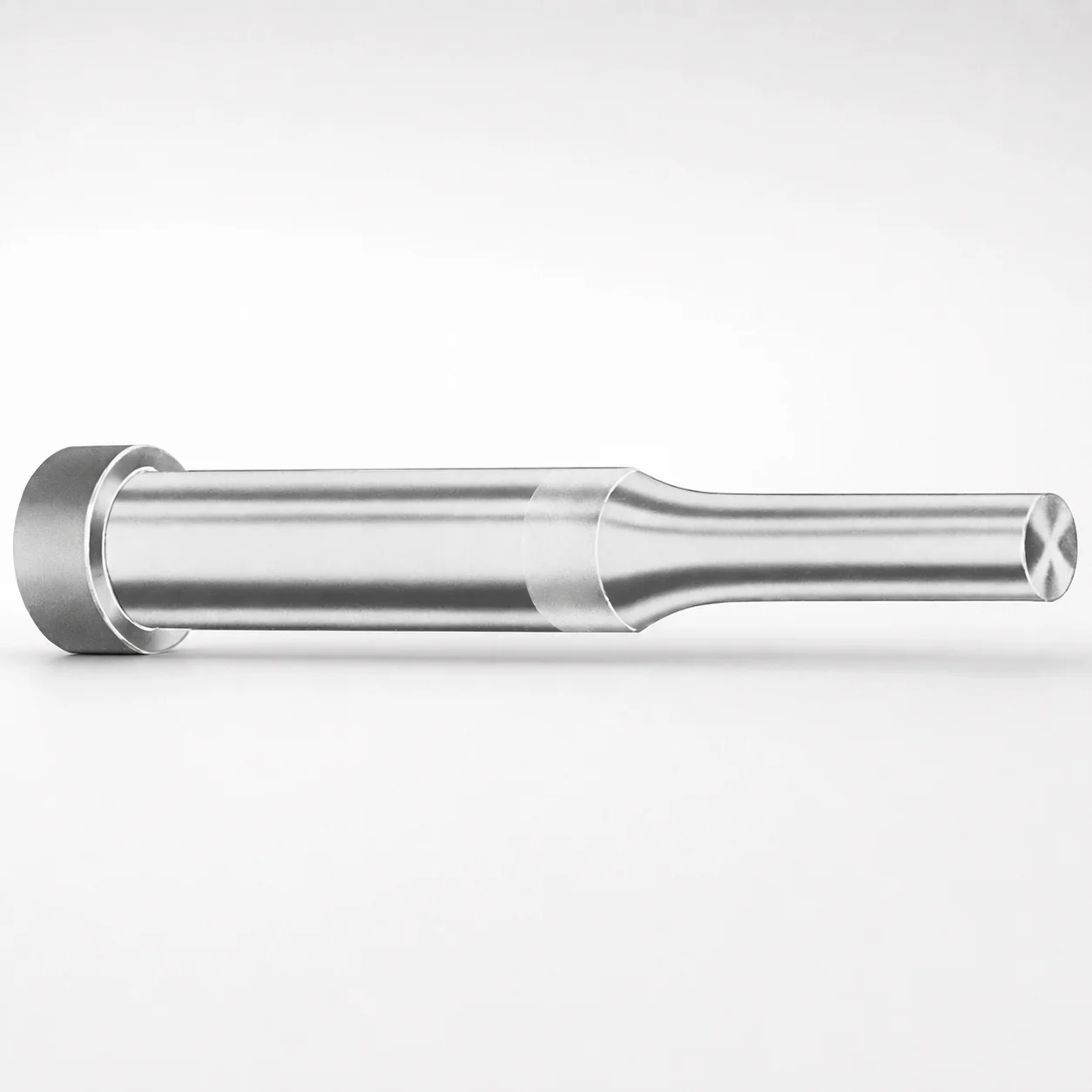
Metric XN DayTride Regular Punches
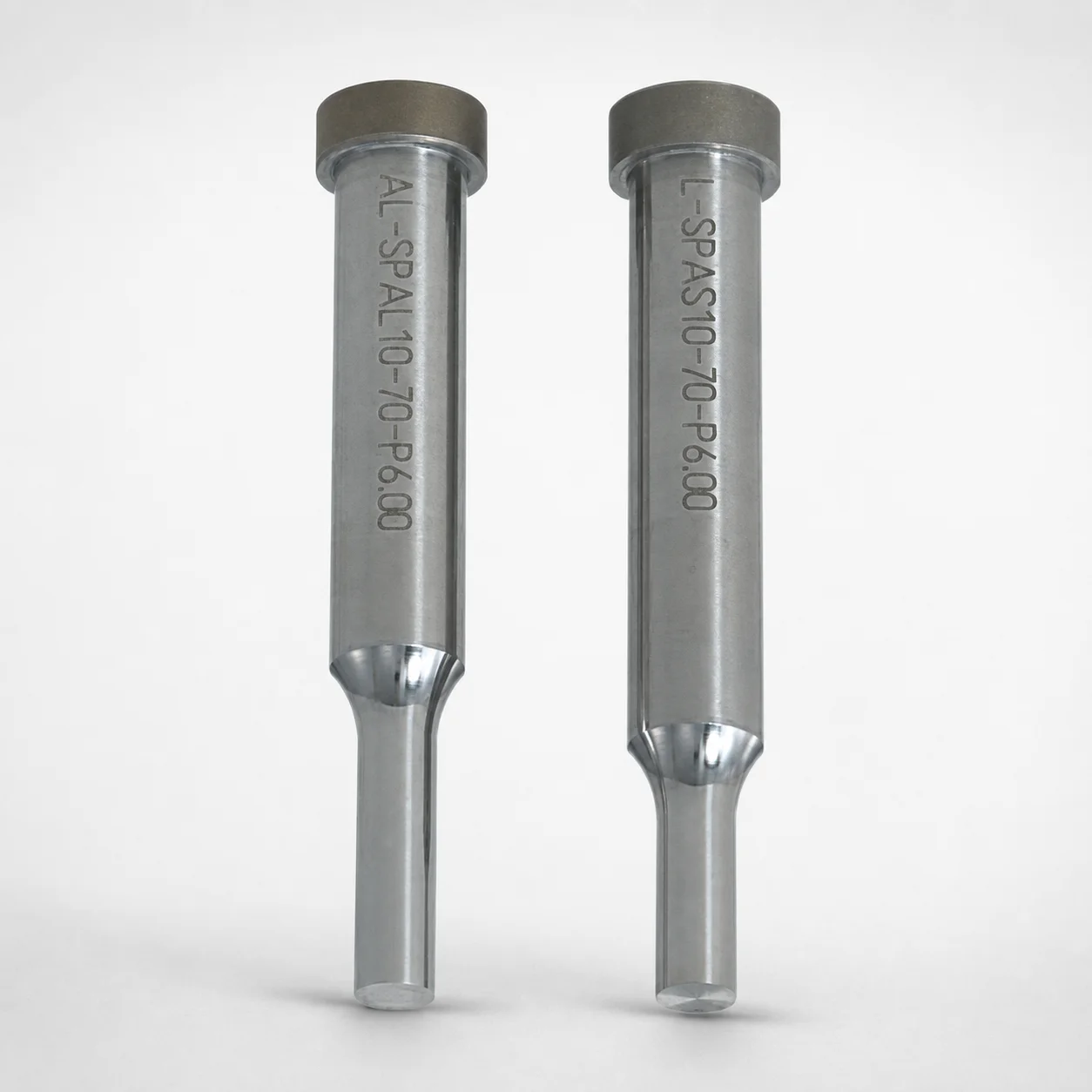
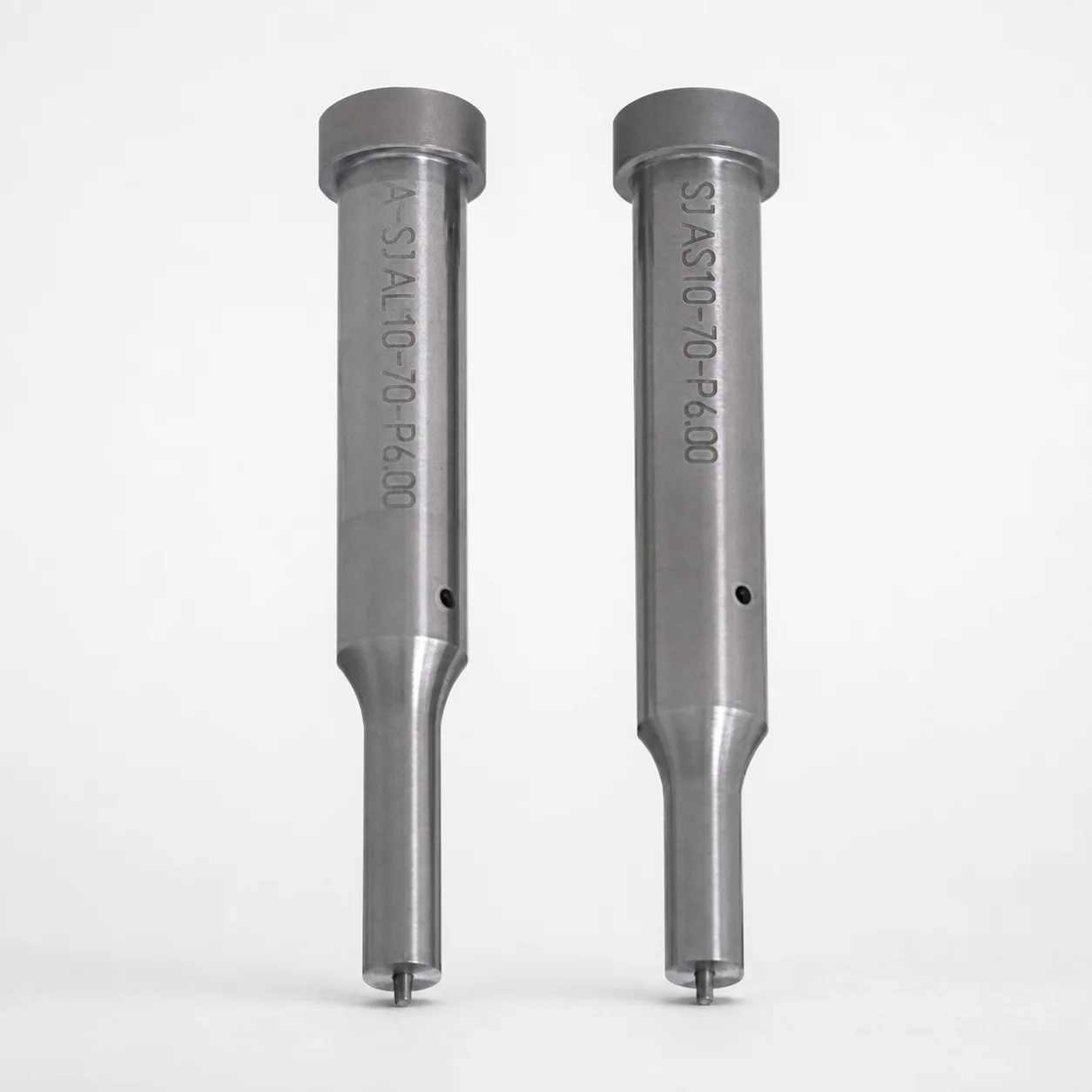
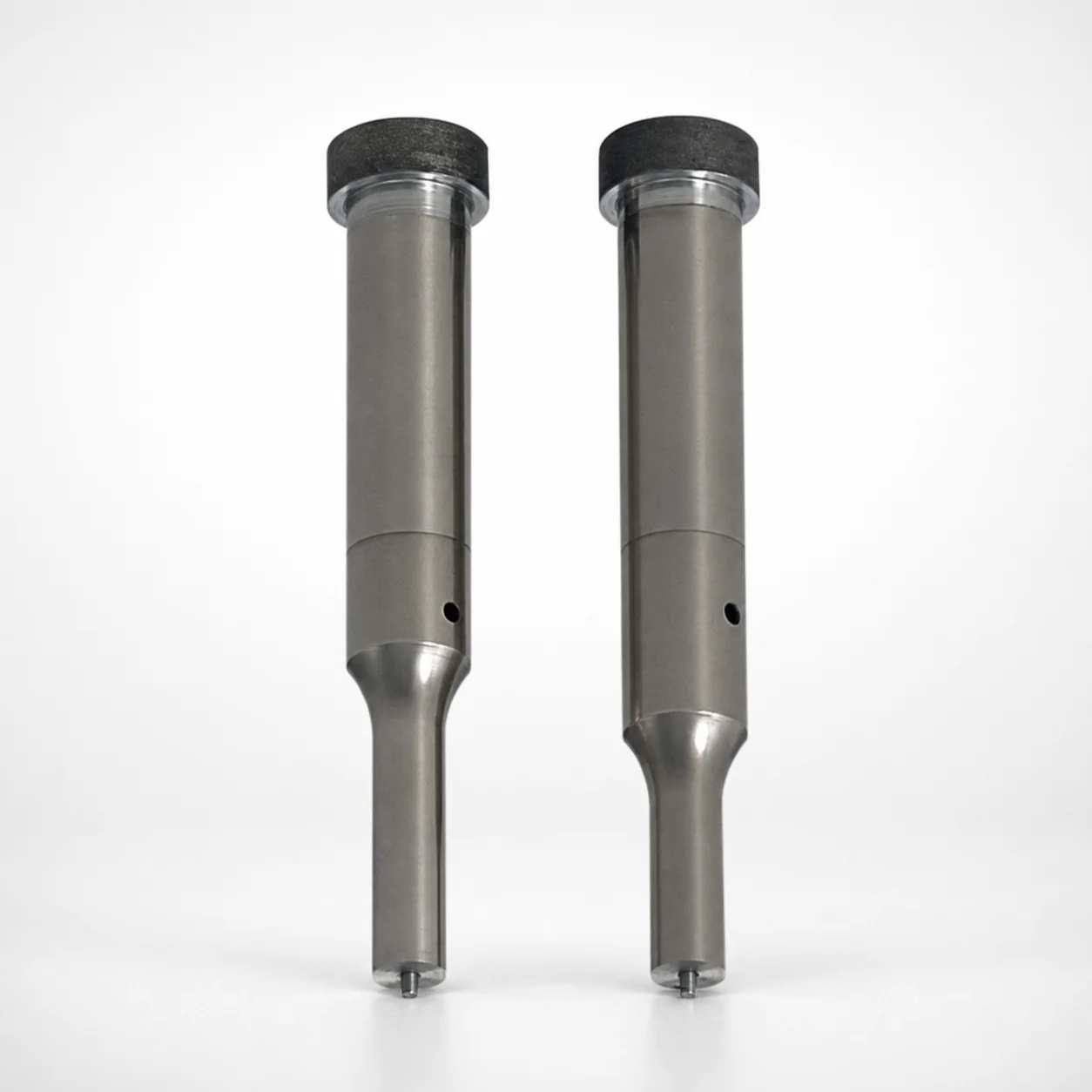
Metric Regular Punches with XN DayTride® coating deliver consistent punch performance for press tooling. The XN DayTride surface is designed to improve wear resistance during repeated punching cycles.
- Close-space punch geometry options with multiple tip shapes for forming setups
- Coating-ready steel options for stable wear behavior in production
- Standardized part format supports faster, more accurate part selection and matching
- Typical use in sheet metal punching, progressive dies, and precision forming lines
Specifications
318 configurations available
| Tip shape | Material | D (Shank dia.) (mm) | L1 (Point Length) (mm) | L (Length) (mm) | P Dimension (mm) | W Dimension (mm) | R Dimension (mm) |
|---|---|---|---|---|---|---|---|
| H | M2 | 04 | 8 ~ 13 | 40 ~ 100 | 1.3 ~ 3.95 | 1.3 ~ 1.59 | - |
| H | M2 | 04 | 8 ~ 13 | 40 ~ 100 | 1.3 ~ 3.95 | 1.6 ~ 3.95 | - |
| H | PS | 04 | 8 ~ 13 | 40 ~ 100 | 1.3 ~ 3.95 | 1.3 ~ 1.59 | - |
| H | PS | 04 | 8 ~ 13 | 40 ~ 100 | 1.3 ~ 3.95 | 1.6 ~ 3.95 | - |
| H | M2 | 05 | 13 ~ 19 | 40 ~ 100 | 1.6 ~ 4.95 | 1.6 ~ 4.95 | - |
| H | PS | 05 | 13 ~ 19 | 40 ~ 100 | 1.6 ~ 4.95 | 1.6 ~ 4.95 | - |
| H | M2 | 06 | 13 ~ 19 | 40 ~ 100 | 1.6 ~ 5.95 | 1.6 ~ 5.95 | - |
| H | PS | 06 | 13 ~ 19 | 40 ~ 100 | 1.6 ~ 5.95 | 1.6 ~ 5.95 | - |
| H | M2 | 08 | 19 ~ 25 | 50 ~ 100 | 2.5 ~ 7.95 | 2.5 ~ 7.95 | - |
| H | PS | 08 | 19 ~ 25 | 50 ~ 100 | 2.5 ~ 7.95 | 2.5 ~ 7.95 | - |
| H | M2 | 10 | 19 ~ 25 | 50 ~ 100 | 3.2 ~ 9.95 | 3.2 ~ 9.95 | - |
| H | PS | 10 | 19 ~ 25 | 50 ~ 100 | 3.2 ~ 9.95 | 3.2 ~ 9.95 | - |
| H | M2 | 13 | 19 ~ 25 | 50 ~ 100 | 4 ~ 12.95 | 4 ~ 4.49 | - |
| H | M2 | 13 | 19 ~ 25 | 50 ~ 100 | 4 ~ 12.95 | 4.5 ~ 12.95 | - |
| H | PS | 13 | 19 ~ 25 | 50 ~ 100 | 4 ~ 12.95 | 4 ~ 4.49 | - |
| H | PS | 13 | 19 ~ 25 | 50 ~ 100 | 4 ~ 12.95 | 4.5 ~ 12.95 | - |
| H | M2 | 16 | 19 ~ 25 | 50 ~ 100 | 6 ~ 15.95 | 6 ~ 15.95 | - |
| H | PS | 16 | 19 ~ 25 | 50 ~ 100 | 6 ~ 15.95 | 6 ~ 15.95 | - |
| H | M2 | 20 | 19 ~ 25 | 56 ~ 100 | 6 ~ 19.95 | 6 ~ 7.99 | - |
| H | M2 | 20 | 19 ~ 25 | 56 ~ 100 | 6 ~ 19.95 | 8 ~ 19.95 | - |
| H | PS | 20 | 19 ~ 25 | 56 ~ 100 | 6 ~ 19.95 | 6 ~ 7.99 | - |
| H | PS | 20 | 19 ~ 25 | 56 ~ 100 | 6 ~ 19.95 | 8 ~ 19.95 | - |
| H | M2 | 25 | 19 ~ 25 | 56 ~ 100 | 6 ~ 24.95 | 6 ~ 8.99 | - |
| H | M2 | 25 | 19 ~ 25 | 56 ~ 100 | 6 ~ 24.95 | 9 ~ 24.95 | - |
| H | PS | 25 | 19 ~ 25 | 56 ~ 100 | 6 ~ 24.95 | 6 ~ 8.99 | - |
| H | PS | 25 | 19 ~ 25 | 56 ~ 100 | 6 ~ 24.95 | 9 ~ 24.95 | - |
| H | M2 | 32 | 25 ~ 30 | 63 ~ 100 | 7.2 ~ 31.95 | 7.2 ~ 9.99 | - |
| H | M2 | 32 | 25 ~ 30 | 63 ~ 100 | 7.2 ~ 31.95 | 10 ~ 31.95 | - |
| H | PS | 32 | 25 ~ 30 | 63 ~ 100 | 7.2 ~ 31.95 | 7.2 ~ 9.99 | - |
| H | PS | 32 | 25 ~ 30 | 63 ~ 100 | 7.2 ~ 31.95 | 10 ~ 31.95 | - |
| J | M2 | 04 | 8 ~ 13 | 40 ~ 100 | 1.3 ~ 3.95 | 1.3 ~ 1.59 | - |
| J | M2 | 04 | 8 ~ 13 | 40 ~ 100 | 1.3 ~ 3.95 | 1.6 ~ 3.95 | - |
| J | PS | 04 | 8 ~ 13 | 40 ~ 100 | 1.3 ~ 3.95 | 1.3 ~ 1.59 | - |
| J | PS | 04 | 8 ~ 13 | 40 ~ 100 | 1.3 ~ 3.95 | 1.6 ~ 3.95 | - |
| J | M2 | 05 | 13 ~ 19 | 40 ~ 100 | 1.6 ~ 4.95 | 1.6 ~ 4.95 | - |
| J | PS | 05 | 13 ~ 19 | 40 ~ 100 | 1.6 ~ 4.95 | 1.6 ~ 4.95 | - |
| J | M2 | 06 | 13 ~ 19 | 40 ~ 100 | 1.6 ~ 5.95 | 1.6 ~ 5.95 | - |
| J | PS | 06 | 13 ~ 19 | 40 ~ 100 | 1.6 ~ 5.95 | 1.6 ~ 5.95 | - |
| J | M2 | 08 | 19 ~ 25 | 50 ~ 100 | 2.5 ~ 7.95 | 2.5 ~ 7.95 | - |
| J | PS | 08 | 19 ~ 25 | 50 ~ 100 | 2.5 ~ 7.95 | 2.5 ~ 7.95 | - |
| J | M2 | 10 | 19 ~ 25 | 50 ~ 100 | 3.2 ~ 9.95 | 3.2 ~ 9.95 | - |
| J | PS | 10 | 19 ~ 25 | 50 ~ 100 | 3.2 ~ 9.95 | 3.2 ~ 9.95 | - |
| J | M2 | 13 | 19 ~ 25 | 50 ~ 100 | 4 ~ 12.95 | 4 ~ 4.49 | - |
| J | M2 | 13 | 19 ~ 25 | 50 ~ 100 | 4 ~ 12.95 | 4.5 ~ 12.95 | - |
| J | PS | 13 | 19 ~ 25 | 50 ~ 100 | 4 ~ 12.95 | 4 ~ 4.49 | - |
| J | PS | 13 | 19 ~ 25 | 50 ~ 100 | 4 ~ 12.95 | 4.5 ~ 12.95 | - |
| J | M2 | 16 | 19 ~ 25 | 50 ~ 100 | 6 ~ 15.95 | 6 ~ 15.95 | - |
| J | PS | 16 | 19 ~ 25 | 50 ~ 100 | 6 ~ 15.95 | 6 ~ 15.95 | - |
| J | M2 | 20 | 19 ~ 25 | 56 ~ 100 | 6 ~ 19.95 | 6 ~ 7.99 | - |
| J | M2 | 20 | 19 ~ 25 | 56 ~ 100 | 6 ~ 19.95 | 8 ~ 19.95 | - |
Product Guide
Application Scenarios+
Metric Regular Punches with an XN DayTride® surface coating are used in press tooling where stable wear is critical across long production runs. Their standardized part format helps toolrooms and die shops quickly match punch sets to existing progressive die layouts.
- Automotive and appliance sheet metal: Select suitable tip shapes (H, J, K, L, N, O, R, V, X, Y, Z) to form specific hole or contour features in progressive dies, benefiting from improved surface wear behavior under repeated cycles.
- Close-space precision forming: Use the regular punch geometry options for workpieces that require tight spacing between features; the XN DayTride® coating supports reliable forming performance when contact is frequent and localized.
- Custom forming lines: When building or maintaining precision punch stations, choose the appropriate shank diameter (D: 4–32 mm) and point length ranges to maintain consistent penetration and stripping.
Choose the XN DayTride variant when you need predictable punch life and performance in production-ready punching operations.
Material & Process Details+
This punch series is available in M2 or PS steel options, designed to be compatible with the XN DayTride® coating approach described for improved wear during repeated punching. M2 is a high-speed steel typically selected for higher abrasion resistance, while PS is commonly used where toughness and dependable forming behavior are prioritized.
- M2 option: Generally offers stronger wear resistance under repeated cutting action; hardness is commonly targeted around the HRC 60–62 range for punch applications (final value depends on your heat treatment cycle).
- PS option: Often provides a favorable toughness/edge stability balance; the hardness level is typically set below fully hardened HSS to reduce chipping risk.
- Manufacturing process: Punch blanks are precision-ground to final shank/point dimensions, then coated with XN DayTride® for reduced surface wear in continuous forming.
For best results, confirm hardness after heat treatment and ensure coating readiness for the selected steel grade.
Sizing & Selection Guide+
To select the correct Metric Regular Punch, start by matching the punch shank diameter (D) and overall length range to the punch holder and guide requirements in your press tooling.
- Shank diameter (D): Choose from 4–32 mm to fit your holder/guide system without forcing alignment.
- Point length (L1): Select the appropriate geometry based on penetration depth needs: 8–13, 13–19, 19–25, or 25–30 mm.
- Length (L): Pick from the available ranges—40–100, 50–100, 56–100, or 63–100 mm—to ensure safe engagement and correct stack height.
- Feature geometry: Match P (0.8–10 mm) and W (1.3–10 mm) to the die opening and stripping profile for the formed feature; verify R (0.2–0.2 mm) for edge radius compatibility.
Because punch fit affects alignment and wear, maintain tooling-clearance targets used in your house standard for close-space work. Tip shape (H, J, K, L, N, O, R, V, X, Y, Z) is configurable and should be chosen based on the cavity/core contour that produces the final part feature.
Frequently Asked Questions
Which tip shape options (H, J, K, L, N, O, R, V, X, Y, Z) should I select for close-space punch features?+
How do I choose between the M2 and PS material options for long-run punching with XN DayTride®?+
What dimensional checks matter most when selecting the shank diameter (D) and overall length (L) for a punch station?+
How do I match point length (L1) to penetration depth and die clearance?+
Are P, W, and R dimensions fixed, or do they vary by selection in this punch series?+
Related Products
Need Custom Specifications?
Our engineering team can help with custom configurations, material selection, and volume pricing.