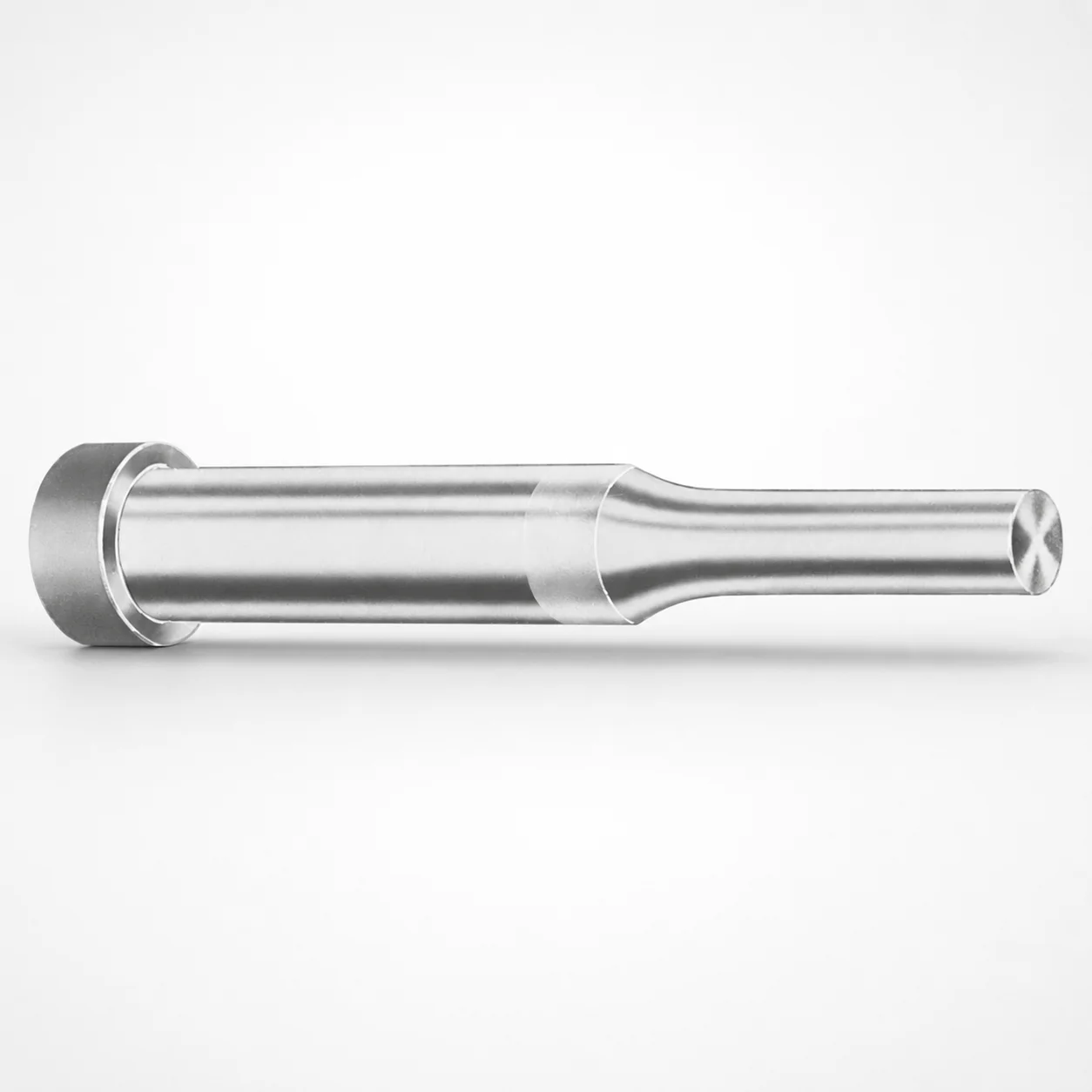
Regular Punches Metric XCN Coating
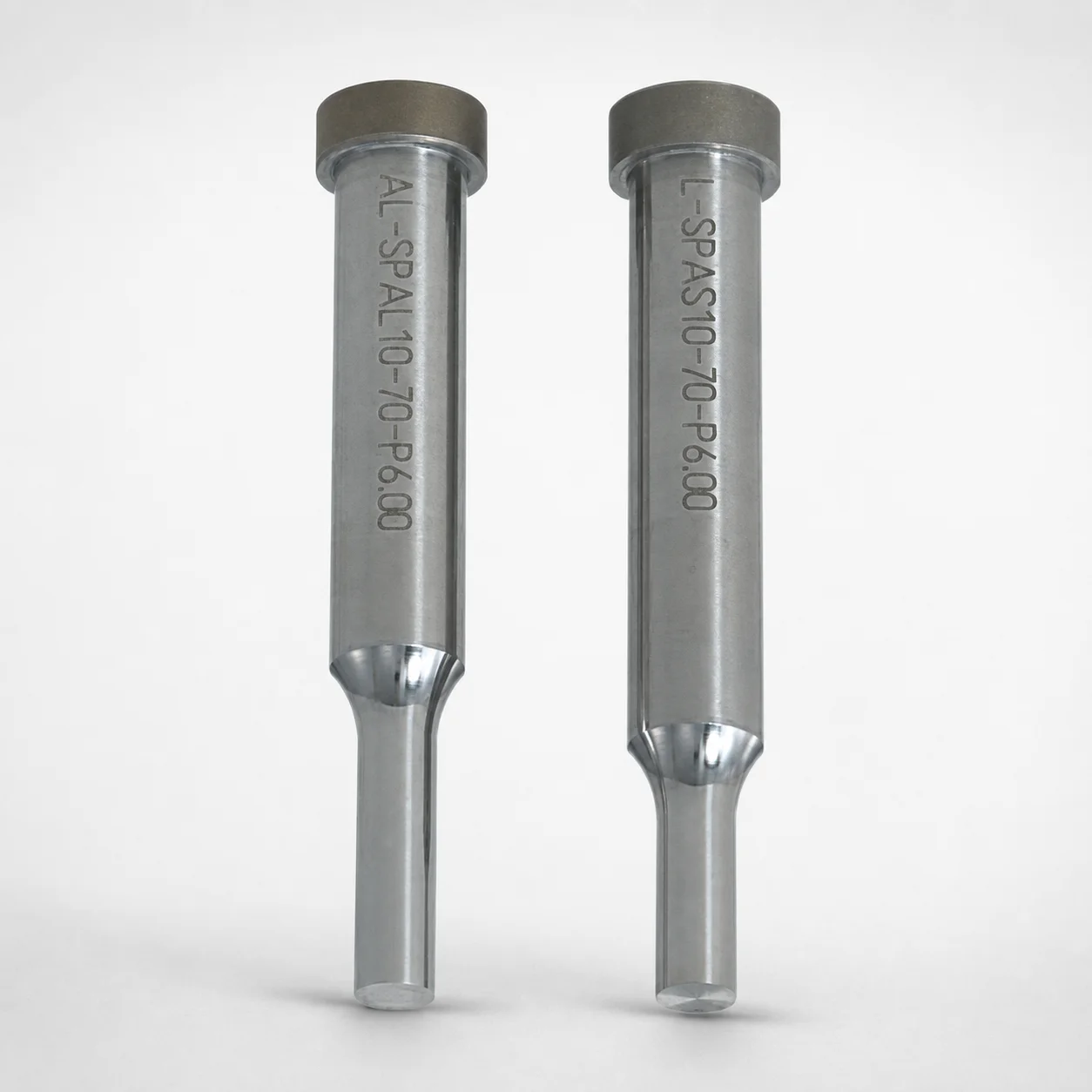
Regular Punches - Metric XCN Coating from DAYTON are designed for punching operations where controlled lubrication and improved wear performance help extend punch life. Metric configurations support consistent forming in progressive and single-stage tooling.
- XCN coating improves surface durability for long-running punching cycles
- Standardized shank and tip geometry supports reliable positioning in die blocks
- Designed for metric applications with balanced toughness and abrasion resistance
- Built to DAYTON/Lamina part number formatting for faster procurement and matching
Specifications
318 configurations available
| Tip shape | Material | D (Shank dia.) (mm) | L1 (Point Length) (mm) | L (Length) (mm) | P Dimension (mm) | W Dimension (mm) | R Dimension (mm) |
|---|---|---|---|---|---|---|---|
| H | M2 | 04 | 8 ~ 13 | 40 ~ 100 | 1.3 ~ 3.95 | 1.3 ~ 1.59 | - |
| H | M2 | 04 | 8 ~ 13 | 40 ~ 100 | 1.3 ~ 3.95 | 1.6 ~ 3.95 | - |
| H | PS | 04 | 8 ~ 13 | 40 ~ 100 | 1.3 ~ 3.95 | 1.3 ~ 1.59 | - |
| H | PS | 04 | 8 ~ 13 | 40 ~ 100 | 1.3 ~ 3.95 | 1.6 ~ 3.95 | - |
| H | M2 | 05 | 13 ~ 19 | 40 ~ 100 | 1.6 ~ 4.95 | 1.6 ~ 4.95 | - |
| H | PS | 05 | 13 ~ 19 | 40 ~ 100 | 1.6 ~ 4.95 | 1.6 ~ 4.95 | - |
| H | M2 | 06 | 13 ~ 19 | 40 ~ 100 | 1.6 ~ 5.95 | 1.6 ~ 5.95 | - |
| H | PS | 06 | 13 ~ 19 | 40 ~ 100 | 1.6 ~ 5.95 | 1.6 ~ 5.95 | - |
| H | M2 | 08 | 19 ~ 25 | 50 ~ 100 | 2.5 ~ 7.95 | 2.5 ~ 7.95 | - |
| H | PS | 08 | 19 ~ 25 | 50 ~ 100 | 2.5 ~ 7.95 | 2.5 ~ 7.95 | - |
| H | M2 | 10 | 19 ~ 25 | 50 ~ 100 | 3.2 ~ 9.95 | 3.2 ~ 9.95 | - |
| H | PS | 10 | 19 ~ 25 | 50 ~ 100 | 3.2 ~ 9.95 | 3.2 ~ 9.95 | - |
| H | M2 | 13 | 19 ~ 25 | 50 ~ 100 | 4 ~ 12.95 | 4 ~ 4.49 | - |
| H | M2 | 13 | 19 ~ 25 | 50 ~ 100 | 4 ~ 12.95 | 4.5 ~ 12.95 | - |
| H | PS | 13 | 19 ~ 25 | 50 ~ 100 | 4 ~ 12.95 | 4 ~ 4.49 | - |
| H | PS | 13 | 19 ~ 25 | 50 ~ 100 | 4 ~ 12.95 | 4.5 ~ 12.95 | - |
| H | M2 | 16 | 19 ~ 25 | 50 ~ 100 | 6 ~ 15.95 | 6 ~ 15.95 | - |
| H | PS | 16 | 19 ~ 25 | 50 ~ 100 | 6 ~ 15.95 | 6 ~ 15.95 | - |
| H | M2 | 20 | 19 ~ 25 | 56 ~ 100 | 6 ~ 19.95 | 6 ~ 7.99 | - |
| H | M2 | 20 | 19 ~ 25 | 56 ~ 100 | 6 ~ 19.95 | 8 ~ 19.95 | - |
| H | PS | 20 | 19 ~ 25 | 56 ~ 100 | 6 ~ 19.95 | 6 ~ 7.99 | - |
| H | PS | 20 | 19 ~ 25 | 56 ~ 100 | 6 ~ 19.95 | 8 ~ 19.95 | - |
| H | M2 | 25 | 19 ~ 25 | 56 ~ 100 | 6 ~ 24.95 | 6 ~ 8.99 | - |
| H | M2 | 25 | 19 ~ 25 | 56 ~ 100 | 6 ~ 24.95 | 9 ~ 24.95 | - |
| H | PS | 25 | 19 ~ 25 | 56 ~ 100 | 6 ~ 24.95 | 6 ~ 8.99 | - |
| H | PS | 25 | 19 ~ 25 | 56 ~ 100 | 6 ~ 24.95 | 9 ~ 24.95 | - |
| H | M2 | 32 | 25 ~ 30 | 63 ~ 100 | 7.2 ~ 31.95 | 7.2 ~ 9.99 | - |
| H | M2 | 32 | 25 ~ 30 | 63 ~ 100 | 7.2 ~ 31.95 | 10 ~ 31.95 | - |
| H | PS | 32 | 25 ~ 30 | 63 ~ 100 | 7.2 ~ 31.95 | 7.2 ~ 9.99 | - |
| H | PS | 32 | 25 ~ 30 | 63 ~ 100 | 7.2 ~ 31.95 | 10 ~ 31.95 | - |
| J | M2 | 04 | 8 ~ 13 | 40 ~ 100 | 1.3 ~ 3.95 | 1.3 ~ 1.59 | - |
| J | M2 | 04 | 8 ~ 13 | 40 ~ 100 | 1.3 ~ 3.95 | 1.6 ~ 3.95 | - |
| J | PS | 04 | 8 ~ 13 | 40 ~ 100 | 1.3 ~ 3.95 | 1.3 ~ 1.59 | - |
| J | PS | 04 | 8 ~ 13 | 40 ~ 100 | 1.3 ~ 3.95 | 1.6 ~ 3.95 | - |
| J | M2 | 05 | 13 ~ 19 | 40 ~ 100 | 1.6 ~ 4.95 | 1.6 ~ 4.95 | - |
| J | PS | 05 | 13 ~ 19 | 40 ~ 100 | 1.6 ~ 4.95 | 1.6 ~ 4.95 | - |
| J | M2 | 06 | 13 ~ 19 | 40 ~ 100 | 1.6 ~ 5.95 | 1.6 ~ 5.95 | - |
| J | PS | 06 | 13 ~ 19 | 40 ~ 100 | 1.6 ~ 5.95 | 1.6 ~ 5.95 | - |
| J | M2 | 08 | 19 ~ 25 | 50 ~ 100 | 2.5 ~ 7.95 | 2.5 ~ 7.95 | - |
| J | PS | 08 | 19 ~ 25 | 50 ~ 100 | 2.5 ~ 7.95 | 2.5 ~ 7.95 | - |
| J | M2 | 10 | 19 ~ 25 | 50 ~ 100 | 3.2 ~ 9.95 | 3.2 ~ 9.95 | - |
| J | PS | 10 | 19 ~ 25 | 50 ~ 100 | 3.2 ~ 9.95 | 3.2 ~ 9.95 | - |
| J | M2 | 13 | 19 ~ 25 | 50 ~ 100 | 4 ~ 12.95 | 4 ~ 4.49 | - |
| J | M2 | 13 | 19 ~ 25 | 50 ~ 100 | 4 ~ 12.95 | 4.5 ~ 12.95 | - |
| J | PS | 13 | 19 ~ 25 | 50 ~ 100 | 4 ~ 12.95 | 4 ~ 4.49 | - |
| J | PS | 13 | 19 ~ 25 | 50 ~ 100 | 4 ~ 12.95 | 4.5 ~ 12.95 | - |
| J | M2 | 16 | 19 ~ 25 | 50 ~ 100 | 6 ~ 15.95 | 6 ~ 15.95 | - |
| J | PS | 16 | 19 ~ 25 | 50 ~ 100 | 6 ~ 15.95 | 6 ~ 15.95 | - |
| J | M2 | 20 | 19 ~ 25 | 56 ~ 100 | 6 ~ 19.95 | 6 ~ 7.99 | - |
| J | M2 | 20 | 19 ~ 25 | 56 ~ 100 | 6 ~ 19.95 | 8 ~ 19.95 | - |
Product Guide
Application Scenarios+
This metric punch set is used in industrial die tooling for blanking, piercing, and form-cut steps, especially where wear at the punch face and flank reduces tool life. The XCN coating is suited for long-running production because it helps maintain surface durability during repeated cycles and controlled lubrication conditions.
- Progressive automotive connector and terminal tooling: punches with the selected tip shape (H/J/K/L/N/O/R/V/X/Y/Z) can be matched to feature geometry, helping keep dimensional stability as abrasive contacts accumulate.
- Electrical parts stamping and brackets: metric shank diameters in the 4–32 mm range support stable alignment in die blocks, reducing vibration-related wear in high cadence operations.
- General metalworking die and punch stations: choosing the appropriate point length band (e.g., 8–13 mm, 13–19 mm, 19–25 mm) supports proper engagement depth for consistent cutting performance.
Material & Process Details+
These standard punches are offered in M2 or PS materials. M2 is a high-speed steel grade commonly selected for a balance of hardness and wear resistance in cutting and punching service; however, increased hardness can reduce toughness if severely shocked or overloaded. PS is typically chosen when the application prioritizes wear performance with practical toughness for stable forming in tooling environments.
Regardless of grade, the key performance driver for this variant is the XCN coating, which provides an additional wear-protective surface layer to improve punch life under repetitive sliding and abrasive contact. Heat treatment is typically provided as a hardened cutting-tool condition (commonly quenched and tempered for steels), so the working hardness supports abrasion resistance while maintaining controlled toughness for punching impacts.
Sizing & Selection Guide+
Select a punch geometry by matching the required shank fit, point/working length, and tip shape to the die design and cutting gap. The shank diameter D is available from 4–32 mm; choose the D size that corresponds to the guide/bushing and die block hole diameter for stable positioning.
- Point length (L1): choose the band that matches the needed engagement depth: 8–13, 13–19, 19–25, or 25–30 mm.
- Total length (L): available ranges include 40–100, 50–100, 56–100, and 63–100 mm, allowing clearance to mounting height and stripper/die set stack-up.
- Tip profile parameters: pick the required tip shape (H, J, K, L, N, O, R, V, X, Y, Z) and confirm feature dimensions such as P (0.8–10 mm), W (1.3–10 mm), and R (0.2 mm).
For best results, design tolerances around the mounting fit (shank-to-block) to avoid side loading; ensure the point length provides full working contact without bottoming in the die cavity.
Frequently Asked Questions
Which tip shape options (H/J/K/L/N/O/R/V/X/Y/Z) should I consider for different punching geometries?+
This punch series supports multiple tip shapes: H, J, K, L, N, O, R, V, X, Y, Z. Choose the tip shape based on the desired cutting profile and land/contact area requirements of your piercing or blanking feature. Confirm compatibility by matching the tip-related dimensions P (0.8–10 mm), W (1.3–10 mm), and the fixed R (0.2 mm) where applicable.
How do I select the correct shank diameter D and length L for die block alignment?+
The shank diameter D is available from 4–32 mm, and it must match your guide/bushing or die block hole requirements to maintain alignment. Total length L is offered in ranges: 40–100, 50–100, 56–100, and 63–100 mm, so you can accommodate the die set stack-up and provide proper clearance. Use shank diameter selection first to control side loading, then select a length range to avoid bottoming.
What point length L1 ranges are available, and how does L1 affect punch engagement depth?+
The point length L1 is available as bands: 8–13, 13–19, 19–25, and 25–30 mm. L1 determines the working engagement depth during punching; too short may reduce cutting consistency, while too long can increase bottoming risk. Match L1 to the required penetration and die cavity/station depth for your material and tool layout.
Between M2 and PS, which material should I choose for wear resistance versus toughness in punching?+
This series is available in M2 and PS. If your priority is strong wear resistance under abrasive punching conditions, M2 is commonly selected for its high hardness performance; if you need a more practical balance that supports stable forming conditions, PS can be a suitable alternative. Final selection should consider your press speed, load/shock level, and lubrication strategy along with the XCN coating wear surface.
How does the XCN coating improve tool life for progressive and single-stage dies?+
The XCN coating is intended to improve surface durability during repeated punching cycles, helping reduce wear at the punch working surfaces. This is particularly valuable in progressive and single-stage tooling where the punch experiences ongoing sliding/abrasive contact. Select the coating variant when your cycle count is high or when the operation demands longer punch life under controlled lubrication conditions.
Related Products
Need Custom Specifications?
Our engineering team can help with custom configurations, material selection, and volume pricing.